Best of Ninh Binh: Attractions, Tips & Travel Guide

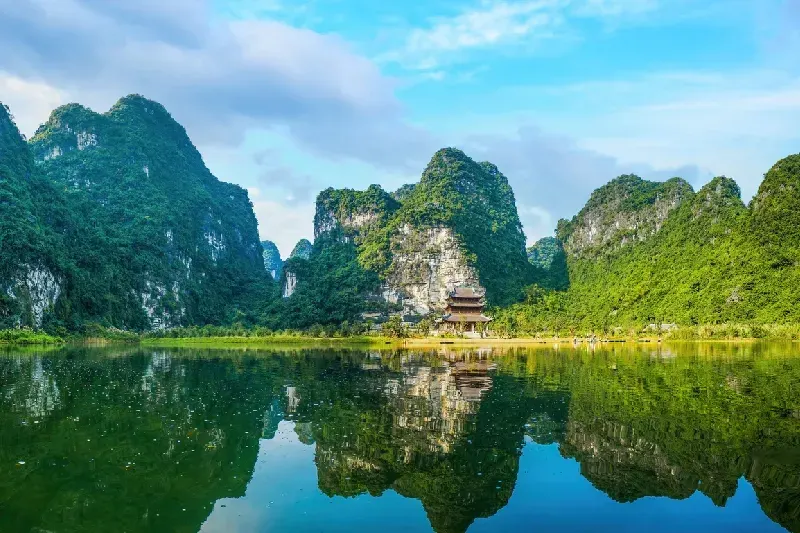
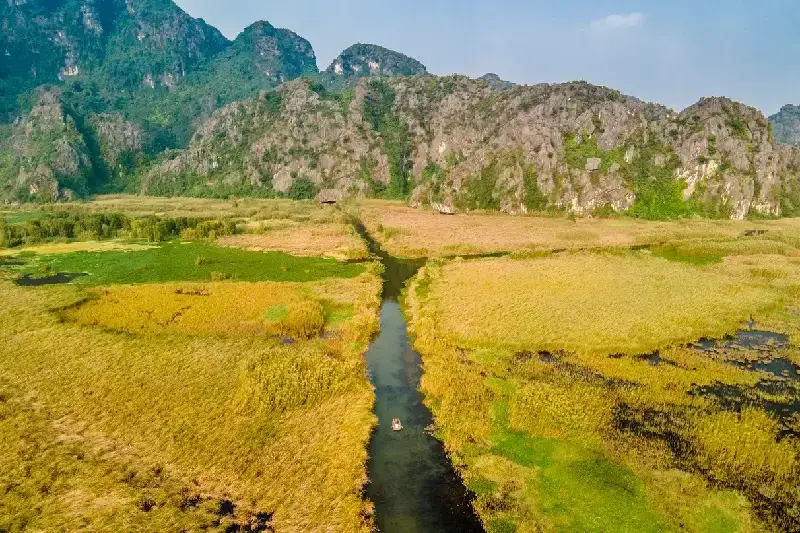
If you've ever seen photos of limestone karsts rising dramatically from glassy rivers while a wooden boat glides silently underneath, that wasn't Halong Bay. It was Ninh Binh.
Located about 90 kilometres south of Hanoi in northern Vietnam, Ninh Binh is one of those places that sneaks up on you. It doesn't have the backpacker buzz of Hoi An or the coastal energy of Da Nang, but what it does have is a raw, timeless beauty that's genuinely hard to find elsewhere. The province sits where the Red River Delta meets the mountains, creating a landscape of ancient caves, flooded rice paddies, and jagged peaks, all woven together by a network of rivers and narrow waterways.
The "Halong Bay on Land" nickname isn't just a marketing tagline. The geology really is similar: the same dramatic limestone formations, just without the ocean. But many travellers who visit both actually prefer Ninh Binh. It's quieter, more accessible, easier to explore on your own terms, and you can cycle through it, which is something you definitely can't do in Halong Bay.
What makes Ninh Binh stand apart is how it layers nature, history, and culture in such a compact area. Within a single day, you can explore ancient royal temples, drift through cathedral-like cave systems by rowboat, and watch water buffalo plough rice fields that look unchanged from centuries ago.
Ninh Binh isn't just pretty, it's historically significant in a way that most visitors don't fully appreciate until they're standing in the middle of it.
This region was the first capital of a unified, independent Vietnam. Back in the 10th century, after Vietnam broke free from over a thousand years of Chinese rule, the Dinh Dynasty established its capital here at Hoa Lu in 968 AD. It was a smart strategic choice: the surrounding limestone mountains created a natural fortress, making the capital almost impenetrable to outside attack.
The Dinh and subsequent Le dynasties ruled from here, setting in motion the political foundations of the Vietnamese nation. It wasn't until the early 11th century, when the capital shifted north to what is now Hanoi, that Hoa Lu's political role faded, though its cultural and spiritual importance never really did.
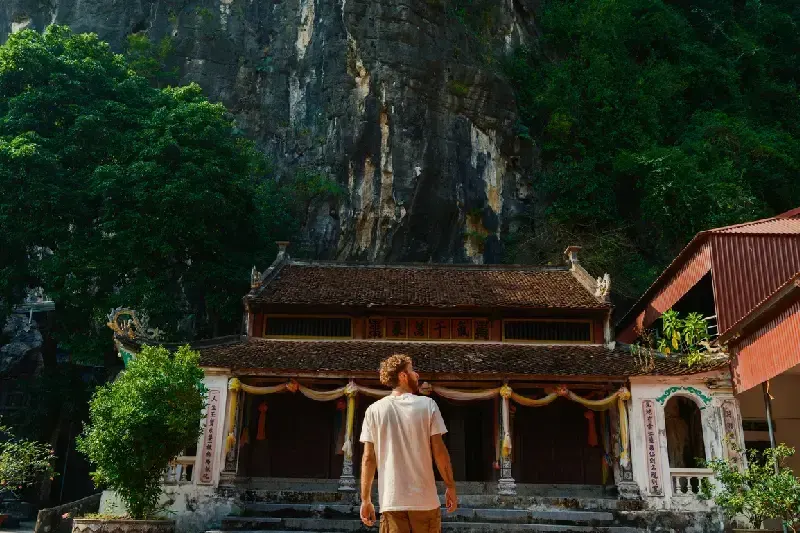
The region also carries deep religious significance. Buddhism took root here early, and the landscape of caves and mountains made it a natural home for temples and pagodas. Many of these sacred sites are built directly into cliff faces or hidden within cave systems, blending so naturally into the rock that they seem to have grown there rather than been built.
Festivals tied to the lunar calendar still draw pilgrims and locals from across the region. If you happen to visit during the Trang An Festival (held around the third month of the lunar calendar), you'll see a side of Ninh Binh that few foreign tourists get to witness.
A UNESCO World Heritage Site: This is the crown jewel, and it's earned its UNESCO World Heritage status many times over. Trang An was inscribed in 2014 as a mixed cultural and natural site, one of only a handful of places on earth to receive that dual recognition.
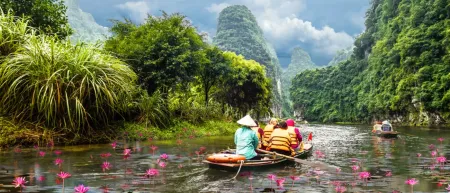
The Boat Tour Experience: The experience here is built around a boat tour. You sit in a small wooden rowboat (often rowed by local women using their feet, a skill that takes years to develop) and drift through a network of rivers and lakes, passing through a series of caves along the way. The caves range from short, low tunnels to vast cathedral chambers where the roof disappears into darkness above you.
The water is calm and mirror-clear, the limestone peaks rise hundreds of metres on either side, and the whole thing takes around two to three hours depending on which route you choose. There are three main routes available, and it's worth asking at the ticket office which one suits your interest, some routes pass more temples, others focus on longer cave systems.
Get in touch with our local experts for an unforgettable journey.
Plan Your Trip
Three Caves, One Iconic River Ride: Tam Coc translates as "Three Caves," and the boat ride through them is one of the most iconic images in Vietnamese tourism. You row (or are rowed) along the Ngo Dong River, passing through three natural tunnels carved through the limestone, with rice fields stretching out on either side.
Best Time for Golden Rice Season: The best time to visit for the famous golden rice season is late May to June and again in September to October, when the paddies turn amber and the whole scene looks like a painting.
Tam Coc gets busier than Trang An, and the surrounding area has developed quite a bit to cater to tourists, expect some hawker boats offering drinks and souvenirs along the route. Go early in the morning to beat the crowds and get the best light for photos.
Temples of the Founding Emperors: This is where Vietnamese history gets tangible. The ancient capital of Hoa Lu now houses two temple complexes dedicated to Emperor Dinh Tien Hoang and Emperor Le Dai Hanh, the founding rulers of independent Vietnam.
A Natural Fortress Still Standing: The temples themselves are beautiful examples of traditional Vietnamese architecture: heavy lacquered timbers, ornate carvings, and courtyards that have a genuine weight of history to them. The surrounding landscape is dramatic, the original palace and city structures are long gone, but the mountains that once protected the capital are still here, and you can easily imagine how formidable this natural fortress must have been.
It's quiet compared to the boat tour sites, and worth spending at least an hour walking around and taking it in.
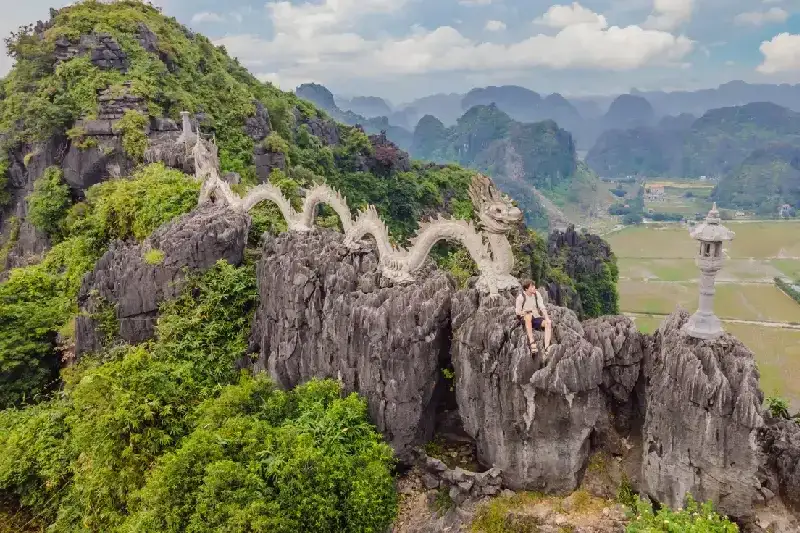
The Best Panoramic View in Ninh Binh: If you've seen a drone shot of Ninh Binh, rice fields below, limestone peaks stretching to the horizon, it was almost certainly taken from the top of Mua Caves. The viewpoint here offers one of the most spectacular panoramas in the whole of northern Vietnam.
The Climb Up: Getting there involves climbing around 500 steps carved into the mountainside, which takes about 20–30 minutes depending on your pace. It's a genuine workout, especially in the heat, but the view at the top is worth every step. Go at sunrise for extraordinary light and almost no other tourists, or late afternoon for golden hour colours.
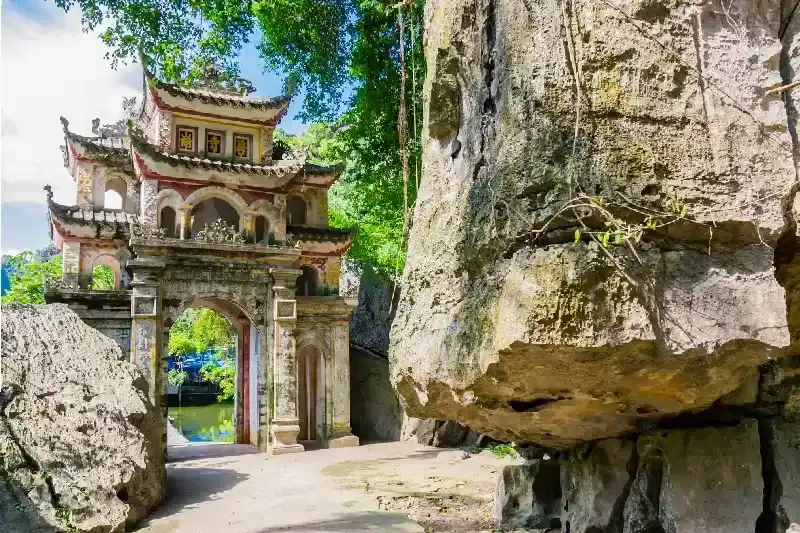
Less visited than the big-ticket sites, Bich Dong is a pagoda built into the face of a limestone mountain, accessible through a series of caves. There are three separate pagoda sections, lower, middle, and upper, each at a different level of the mountain, connected by staircases cut into the rock.
The upper pagoda requires a bit of a scramble but rewards you with a view over the valley and a sense of genuine solitude. It's the kind of place that feels sacred, and it's easy to see why monks chose to build here.
For wildlife enthusiasts or anyone who wants a break from the tourist trail, Van Long is a quiet gem. This wetland reserve is one of the largest in the Red River Delta and is home to Delacour's langur, one of the world's rarest primates. You might also spot birds, butterflies, and the occasional otter if you're quiet and lucky.
Boat tours here are gentler and less structured than Trang An, more like a slow drift through a living landscape. If you're visiting with young children or want a more peaceful morning on the water, Van Long is an excellent choice.
Beyond the major attractions, Ninh Binh rewards slower, more exploratory travel. Cycling is genuinely one of the best ways to experience the countryside, rental bikes are cheap and widely available, and the flat river roads between Tam Coc and Hoa Lu are among the most scenic cycling routes in Vietnam. You'll pass through farming villages, over stone bridges, and along waterways where fishermen cast nets in the early morning.
Ninh Binh can be visited year-round, but the shoulder seasons are genuinely the best. October to April offers dry, cooler weather that makes cycling and hiking far more pleasant. Spring (February to April) brings lush green paddies and mild temperatures.
May to September is the wet season, and while the landscape is strikingly green and the rice fields are at their most vivid, you should expect afternoon downpours and higher humidity. The upside: fewer crowds and lower prices.
Getting here from Hanoi is straightforward and cheap. The most comfortable option is a train, the journey takes around two hours, trains are frequent, and you get proper seats with views of the countryside. Book through the national rail website or a booking platform in advance on busy weekends.
Buses and limousine vans run regularly from Hanoi's My Dinh bus station and some tourist hubs, with journey times of around two to three hours depending on traffic. Guided tours with transfers, drivers, and expert guides are often the smoothest way to experience the region.
Ninh Binh has two dishes you absolutely have to try while you're here:
Thit de (goat meat) is the local speciality, and you'll see restaurants advertising it everywhere. The goat is typically raised on the mountain grass around the limestone karsts, which locals say gives it a distinct flavour. It's served grilled, stir-fried, and in hotpot, the charcoal-grilled version with lemon leaf and fermented shrimp paste is particularly good.
Com chay (crispy rice) is the other must-eat. It's the crunchy crust that forms at the bottom of a traditional clay pot when rice is cooked, scraped out, dried, and then served with various toppings including stir-fried pork, mushrooms, and fragrant vegetables. The texture contrast is genuinely addictive.
Beyond these regional stars, you'll find all the Vietnamese staples done well: fresh pho, bun bo (beef noodle soup), and banh mi. Eating at local restaurants rather than tourist spots will save you money and typically give you a better meal.
Ninh Binh remains predominantly rural, and outside the main tourist zones, life moves at a different pace. Rice farming is still central to the local economy and identity, and the rhythms of planting and harvest season shape the calendar in ways that have barely changed in generations.
The local people tend to be quietly welcoming rather than effusively so, if you make an effort to explore beyond the obvious tourist route, you'll often find yourself invited for tea or offered directions with a level of warmth that feels completely genuine.
Traditional craft villages in the area produce lacquerware, stone carvings (the local limestone is worked into decorative pieces), and embroidery.
Day 1: History and Water Morning: Arrive from Hanoi, check in, rent a bicycle. Mid-morning: Cycle to Hoa Lu Ancient Capital and explore the temples. Lunch: Try thit de at a local restaurant near Hoa Lu. Afternoon: Trang An boat tour (allow 2–3 hours). Evening: Wander Ninh Binh town, try com chay for dinner.
Day 2: Views and Villages Early morning: Mua Caves for sunrise, aim to start the climb before 6am. Breakfast back in town. Mid-morning: Tam Coc boat tour. Afternoon: Cycle through the countryside between Tam Coc and Bich Dong Pagoda, stopping at the pagoda before heading back. Sunset: enjoy views of the karsts from any of the rooftop spots near Tam Coc. Start planning your Ninh Binh adventure today. Whether you're coming for a day trip from Hanoi or building it into a longer Vietnam journey, this region rewards every hour you give it.
You’ll find Ninh Binh famous for its dramatic limestone karst landscapes, peaceful rivers, and scenic boat rides through caves and rice fields, often called “Halong Bay on land.”
You’ll enjoy the best weather from March to May and September to November, when it’s dry, pleasant, and perfect for boat trips and cycling.
You’ll need 2 to 3 days to comfortably explore the main highlights like Trang An, Tam Coc, Hoa Lu, and Mua Caves without rushing.
You’ll still find it absolutely worth it, Ninh Binh offers a quieter, more authentic countryside experience with similar limestone scenery but fewer crowds.
You’ll get around easily by bicycle, motorbike, taxi, or guided tours, depending on your comfort level and how much you want to explore in a day.
Experience Hoan Kiem Lake in Hanoi: stroll the historic paths, admire temples, and enjoy the cultural heartbeat of Vietnam.
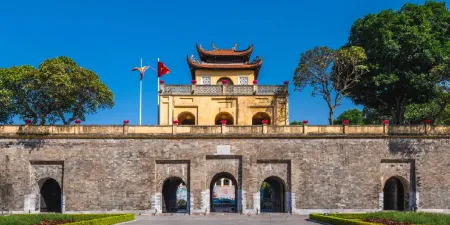
Visit the Imperial Citadel of Thang Long, Hanoi's iconic UNESCO landmark featuring ancient architecture, royal relics, and rich history.
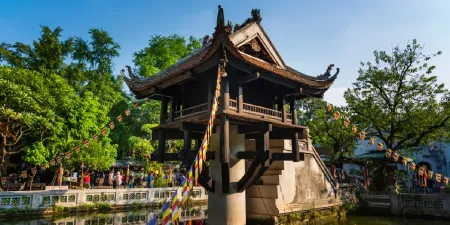
Visit One Pillar Pagoda in Hanoi, a famous Buddhist structure built in 1049, offering rich history and a peaceful cultural experience in Vietnam.
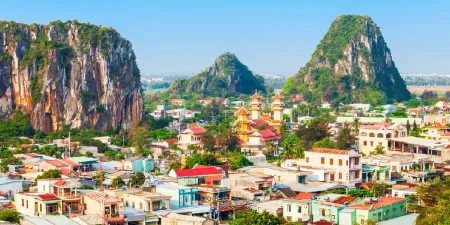
Find the best things to do in Da Nang, from relaxing on sandy beaches to exploring temples, mountains, and vibrant nightlife.
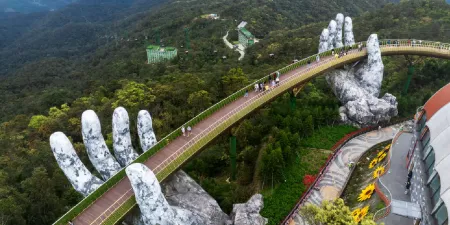
Experience Ba Na Hills in Vietnam with stunning views, the Golden Bridge, Fantasy Park, plus tips on tickets, timing, and key highlights.
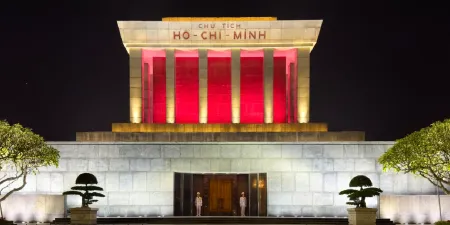
Explore Ho Chi Minh Mausoleum in Hanoi, including opening hours, etiquette rules, history, and travel tips for first-time visitors.
Ho Chi Minh City travel guide: top attractions, local food, and must-see experiences in Vietnam’s largest and most exciting city.
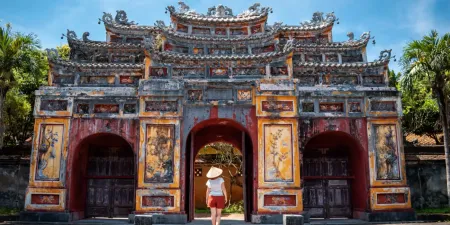
Discover Hue with our complete travel guide, including must-see sights, historic landmarks, and cultural experiences in the former imperial capital.
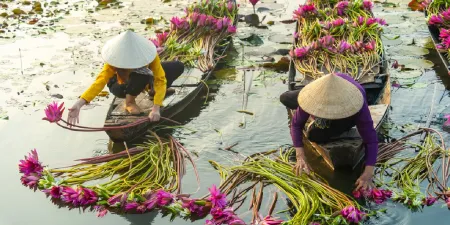
Visit the Mekong Delta: explore river villages, floating markets, tropical fruits, and unique wildlife in southern Vietnam.
Discover the mesmerizing UNESCO World Heritage site in Vietnam, Ha Long Bay. Boasting thousands of limestone karsts and islets emerging from emerald waters. Explore hidden lagoons, kayak through stunning caves, and cruise among iconic rock formations.
Ninh Binh travel guide: explore Trang An, Tam Coc, Mua Cave, and Hoa Lu with practical tips, best time to visit, and itinerary ideas.
Experience Mai Chau’s green valleys, traditional villages, and mountain views with this complete travel guide from Hanoi.
Visit Hanoi, Vietnam’s heart of culture and history, from Hoan Kiem Lake and Old Quarter to street food and ancient temples.
Pu Luong Nature Reserve travel guide covering weather, things to do, trekking, culture, accommodation, and how to get there.
Discover the enchanting allure of Hoi An, a UNESCO World Heritage Site renowned for its well-preserved ancient architecture and vibrant culture. Lose yourself in the labyrinth of narrow, lantern-lit streets, explore bustling markets, and soak in the tranquil beauty of the Thu Bon River. Experience the perfect blend of tradition and modernity in this captivating Vietnamese city.
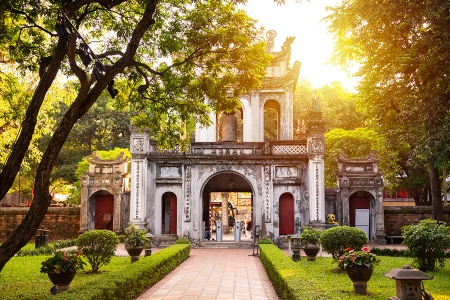
The Temple of Literature in Hanoi stands as one of Vietnam's most cherished historical sites. This ancient complex, dedicated to Confucius and learning, has been a symbol of education and wisdom for nearly a thousand years. As one of the most significant Hanoi landmarks, it offers visitors a glimpse into the rich cultural heritage and intellectual traditions of Vietnam.
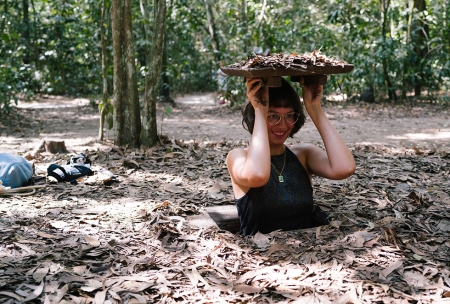
Discover how the Viet Cong utilized these tunnels for survival, communication, and military operations. Learn about the challenges faced by those who lived and fought within the tunnels, and witness firsthand the ingenuity and resilience of the Vietnamese people. Explore the intricate network of underground tunnels that played a crucial role in the Vietnam War.