In this Guide:
#What Are the African Big Five?
#Why East Africa Are the Ultimate Big Five Region
#2. The African Elephant (Loxodonta africana)
#3. The African Buffalo (Syncerus caffer)
#4. The Leopard (Panthera pardus)
#5. The Rhinoceros (Ceratotherium simum & Diceros bicornis)
#East Africa's Big Five Destinations at a Glance
#Start Planning Your East African Safari
Few phrases stir the imagination quite like "The Big Five." For wildlife lovers, photographers, and adventure seekers, these five animals represent the pinnacle of any African safari trip. But what exactly are the Big Five? Where did the term come from? And more importantly, where can you find them?
Buckle up. This is your definitive guide to Africa's most legendary creatures, and the extraordinary East African landscapes they call home.
#What Are the African Big Five?
The term "Big Five" was originally coined by big-game hunters in the 19th and early 20th centuries. It referred not to the five largest animals in Africa, but to the five most dangerous and difficult animals to hunt on foot. The title was a measure of risk, not size.
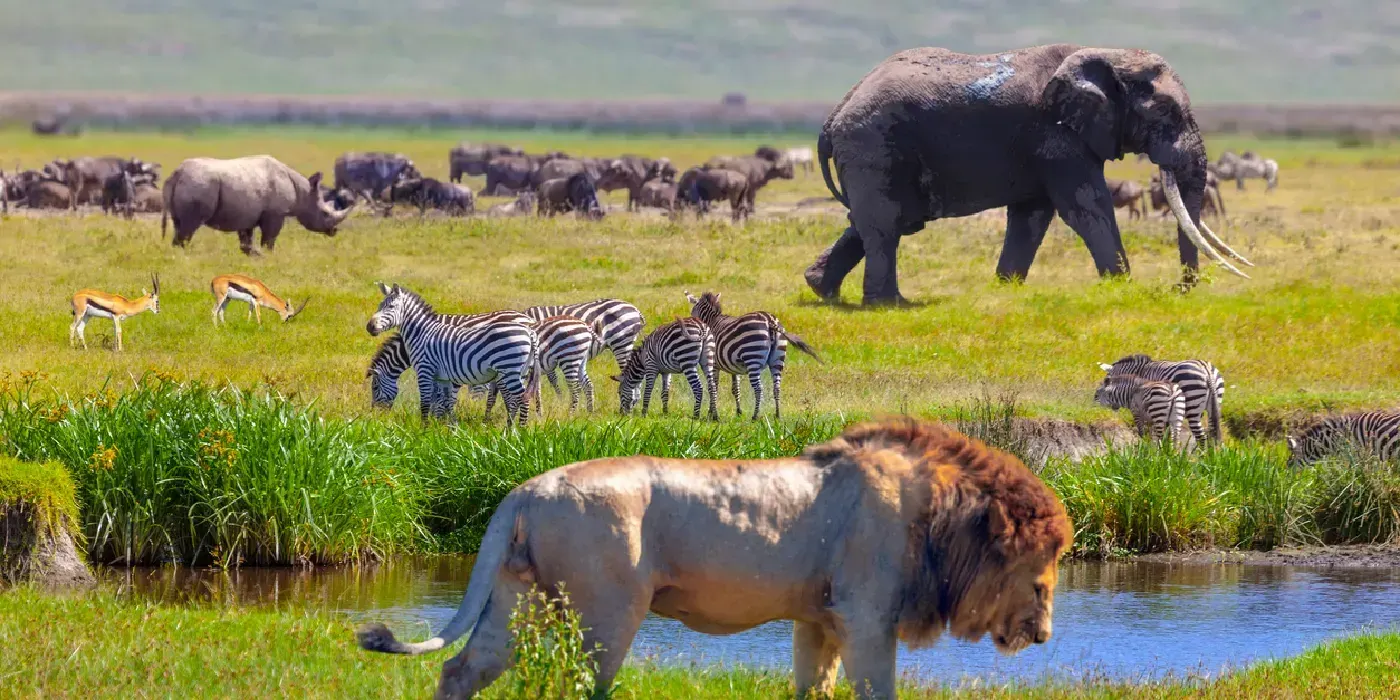
Today, the phrase has been gloriously repurposed. The Big Five are now the most sought-after sightings, pursued by camera lenses instead of rifles. East Africa in particular, spanning Kenya, Tanzania, Rwanda, and Uganda, sits at the very heart of the Big Five country, offering some of the most dramatic, diverse, and accessible wildlife experiences on the planet.
The African Big Five are:
- Lion
- African Elephant
- African Buffalo
- Leopard
- White/Black Rhinoceros
Customize Your Dream Vacation!
Get in touch with our local experts for an unforgettable journey.
Plan Your Trip
#Why East Africa Are the Ultimate Big Five Region
Kenya delivers unmatched variety, from elephants in Amboseli National Park to rhinos in Ol Pejeta Conservancy and big cats in the Masai Mara National Reserve.
Tanzania stands out with icons like Serengeti National Park and Ngorongoro Crater, where wildlife density is among the highest in Africa.
Rwanda has transformed Akagera National Park into a true Big Five destination, alongside gorilla trekking in Volcanoes National Park.
Uganda offers a more adventurous mix, from lions in Queen Elizabeth National Park to rhinos at Ziwa Rhino Sanctuary and gorillas in Bwindi Impenetrable National Park.
Beyond East Africa, South Africa is one of the easiest places to see the Big Five, especially in Kruger National Park and nearby reserves like Sabi Sands Game Reserve, known for frequent sightings and more accessible safari experiences.
Ethiopia offers limited Big Five sightings in places like Omo National Park, though it’s less developed for safaris.
Let's break each one down, with a special focus on where to find them across East Africa.
Turn this into reality with expertly crafted African safari tours!
#1. The Lion (Panthera leo)
The King of the Savanna
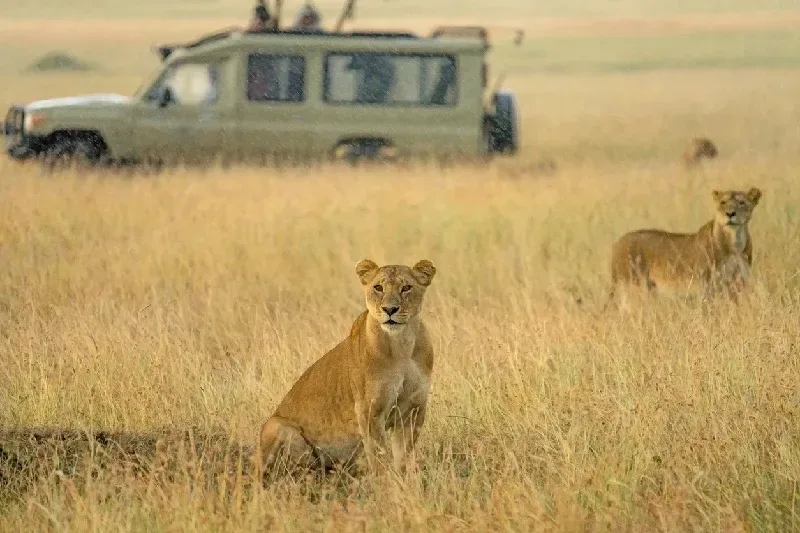
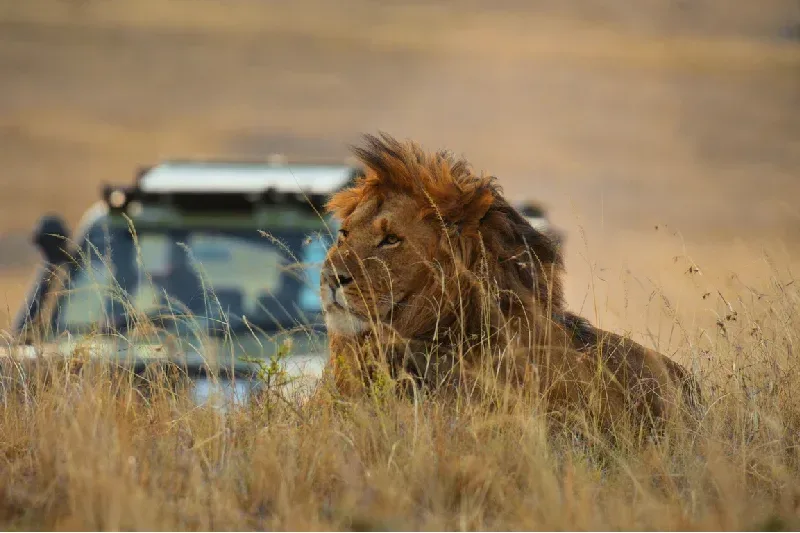
No animal captures the spirit of Africa quite like the lion. Majestic, powerful, and deeply social, lions are the only big cats that live in groups,called prides, which can range from a few individuals to over 30 animals. East Africa's open savannas are tailor-made for lion watching, offering unobstructed views across golden grasslands as prides rest, hunt, and raise their cubs.
Key Facts:
- Adult males can weigh up to 225 kg (496 lbs)
- They sleep up to 20 hours a day, conserving energy for the hunt
- Roars can be heard from 8 km (5 miles) away
- Listed as Vulnerable on the IUCN Red List, with only around 20,000 remaining in the wild
- Females do the majority of hunting; males guard territory and the pride
Where to Find Lions
- Masai Mara National Reserve, Kenya: One of the world's premier lion destinations. The Mara is famous for its large, relaxed prides and incredible predator-prey dynamics. July to October brings the Great Migration, when lions feast on wildebeest crossing the Mara River, among the most dramatic wildlife spectacles on Earth.
- Serengeti National Park, Tanzania: Home to the largest lion population in Africa. The Serengeti's endless plains support over 3,000 lions, and sightings are almost guaranteed year-round. The central Seronera Valley is particularly prolific.
- Ngorongoro Crater, Tanzania: This ancient volcanic caldera acts as a natural enclosure for a thriving resident lion population. With no need to migrate, Ngorongoro's lions are famously relaxed and easy to observe up close.
- Queen Elizabeth National Park, Uganda: Home to Uganda's most famous lion population: the tree-climbing lions of Ishasha. These extraordinary cats lounge high in fig trees, a behaviour rarely seen elsewhere in Africa and utterly unmissable.
- Akagera National Park, Rwanda: Lions were reintroduced to AkaAkagera National Park, Rwanda:gera in 2015 after a 20-year absence, in a landmark conservation success. Sightings are growing as the population establishes itself, making this a genuinely exciting emerging destination for African safari tours.
Pro Tip: Lions are most active at dawn and dusk. Book early morning or late afternoon game drives for the best sightings, and ask your guide to track fresh pugmarks.
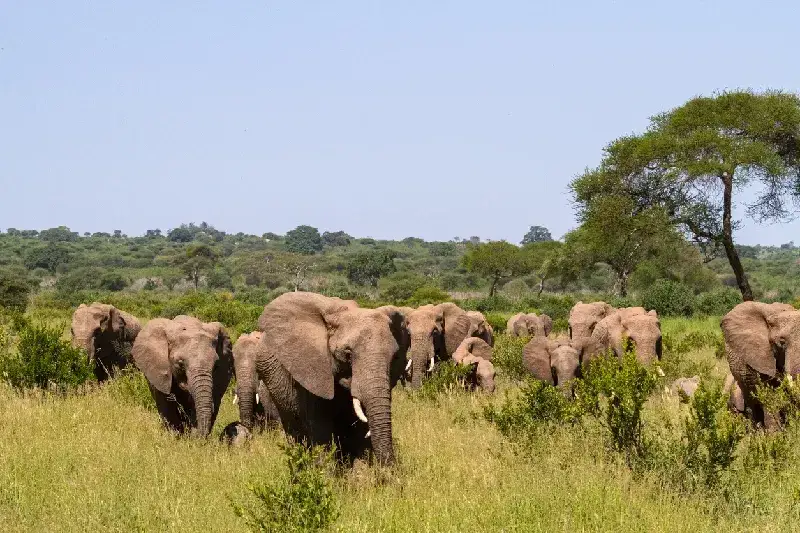
#2. The African Elephant (Loxodonta africana)
The World's Largest Land Animal
Elephants are the giants of the savanna, and utterly unforgettable in person. Standing up to 4 metres tall and weighing as much as 6,000 kg, African elephants are the largest land animals on Earth. But their greatness goes far beyond size. They are highly intelligent, deeply empathetic, and live in complex matriarchal societies led by experienced elder females.
Key Facts:
- They consume up to 150 kg of food and 190 litres of wat er per day
- Their trunks contain over 40,000 muscles and no bones
- Elephants mourn their dead and return to the bones of deceased family members
- Listed as Endangered, poaching and habitat loss remain critical threats
- A pregnancy lasts 22 months, the longest of any land mammal
Where to Find African Elephants
- Amboseli National Park, Kenya: The jewel of Kenya's elephant destinations. Amboseli is famous for its enormous bull elephants, some with tusks that nearly touch the ground, set against the breathtaking backdrop of Mount Kilimanjaro.
- Tarangire National Park, Tanzania: Massively underrated and consistently spectacular. During the dry season (June–October), Tarangire hosts some of the largest elephant congregations in Africa, with hundreds of animals gathering along the Tarangire River beneath ancient baobab trees.
- Serengeti National Park, Tanzania: Elephant herds roam across the northern Serengeti year-round, often encountered during game drives through the Lobo and Lamai areas.
- Queen Elizabeth National Park, Uganda: Large herds are frequently spotted along the Kazinga Channel, a natural waterway connecting Lake George and Lake Edward, especially during afternoon boat safaris.
- Akagera National Park, Rwanda: A growing elephant population calls Akagera home, and sightings in the park's open savanna and wetland zones are increasingly common as conservation efforts take hold across this remarkable park.
Pro Tip: Visit Amboseli at sunrise for the iconic shot of elephants silhouetted against Kilimanjaro in golden light, a bucket-list photograph for any wildlife lover.
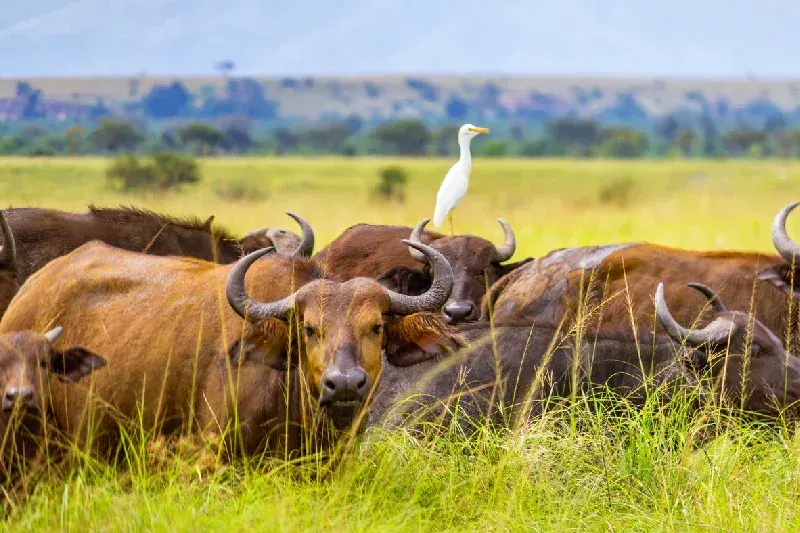
#3. The African Buffalo (Syncerus caffer)
The Black Death
Don't be fooled by appearances. The African buffalo may look like an oversized cow, but it is considered one of the most dangerous animals in Africa, and historically, hunters feared it more than lions. It is unpredictable, relentlessly aggressive when threatened, and known to stalk and ambush even when wounded. The nickname "Black Death" was well earned.
Key Facts:
- Can weigh up to 900 kg (2,000 lbs)
- Herds can number in the thousands
- Both males and females carry horns, the fused base is called a "boss" and acts like a helmet
- Excellent memories, known to ambush hunters who previously shot at them
- Status: Least Concern globally, but local populations declining due to disease and habitat loss
Where to Find African Buffalo
- Serengeti National Park, Tanzania: Enormous buffalo herds sweep across the Serengeti as part of the Great Migration ecosystem. Over 1.2 million wildebeest travel alongside hundreds of thousands of buffalo and zebras, a spectacle of raw, almost unimaginable scale.
- Masai Mara National Reserve, Kenya: The Mara's buffalo herds are large and frequently targeted by lion prides, making this an outstanding destination for watching predator-prey dynamics unfold in real time.
- Ngorongoro Crater, Tanzania: The crater floor supports resident buffalo herds that are almost permanently visible, grazing in dense groups on open grasslands. Close encounters are the norm rather than the exception here.
- Queen Elizabeth National Park, Uganda: Large buffalo herds graze throughout the park's savannas, particularly across the Kasenyi Plains, prime lion country, where buffalo and predators regularly cross paths in dramatic fashion.
- Akagera National Park, Rwanda: Buffalo are among the most commonly sighted animals in Akagera, and large bachelor herds roam near the park's network of lakes and wetlands, offering excellent photographic opportunities.
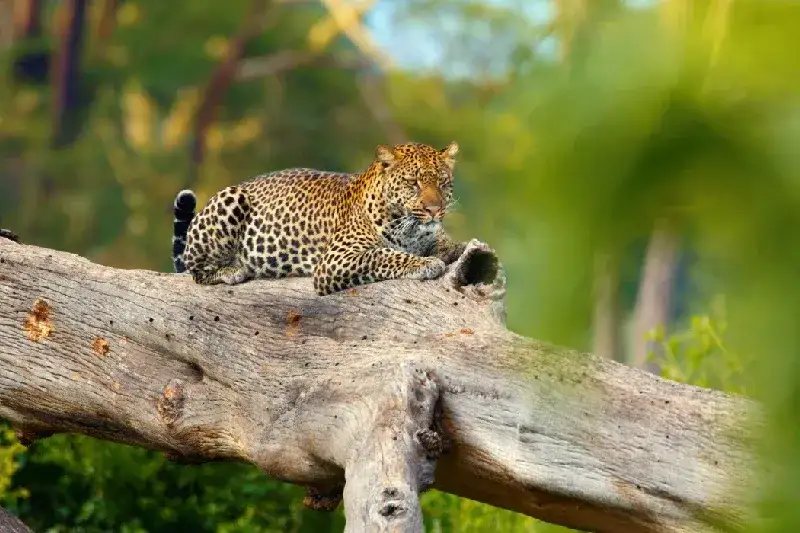
#4. The Leopard (Panthera pardus)
The Ghost of the Bush
Of all the Big Five, the leopard is the most elusive. A master of concealment, this solitary, nocturnal cat spends its days draped invisibly across tree branches or pressed into rocky outcrops. Even experienced guides with decades in the bush can go days without a sighting, which is precisely what makes an encounter with a leopard one of the most thrilling moments in all of wildlife travel.
Key Facts:
- Pound-for-pound, they are the strongest of the big cats
- Can carry prey twice their own weight up into trees, out of reach of lions and hyenas
- Excellent swimmers and climbers
- Listed as Vulnerable, habitat fragmentation and human-wildlife conflict are key threats
- Primarily nocturnal, but occasionally active during golden morning and evening hours
Where to Find Leopards
- Masai Mara National Reserve, Kenya: The Mara's high prey density supports a healthy leopard population. The riverine forests along the Mara River are prime habitat, and sightings have increased significantly as safari camps implement dedicated leopard tracking programmes.
- Serengeti National Park, Tanzania: The Seronera Valley, with its granite kopjes (rocky outcrops) and sausage trees, is arguably the best leopard habitat in East Africa. Resident leopards are regularly spotted draped across branches with kills hoisted beside them, a defining safari image.
- Ngorongoro Crater, Tanzania: The crater walls provide excellent leopard territory. Sightings tend to be brief but spectacular, often catching animals descending the crater walls to hunt on the floor below.
- Bwindi Impenetrable Forest Uganda: While famous for mountain gorillas, Bwindi harbours a secretive population of forest leopards. Rarely seen, but their pugmarks and scratch marks confirm a thriving presence deep within one of Africa's most biodiverse forests.
- Akagera National Park, Rwanda: Leopards inhabit Akagera's wooded hills and savanna fringes. They are the most difficult of the Big Five to spot here, but confirmed resident populations make patient, guided sightings possible, especially at dawn and after dark.
Pro Tip: If night drives are available at your safari camp, always take them. Leopards transform after dark, and a torchlit sighting of one dragging a kill across a moonlit track is an experience you will never forget.
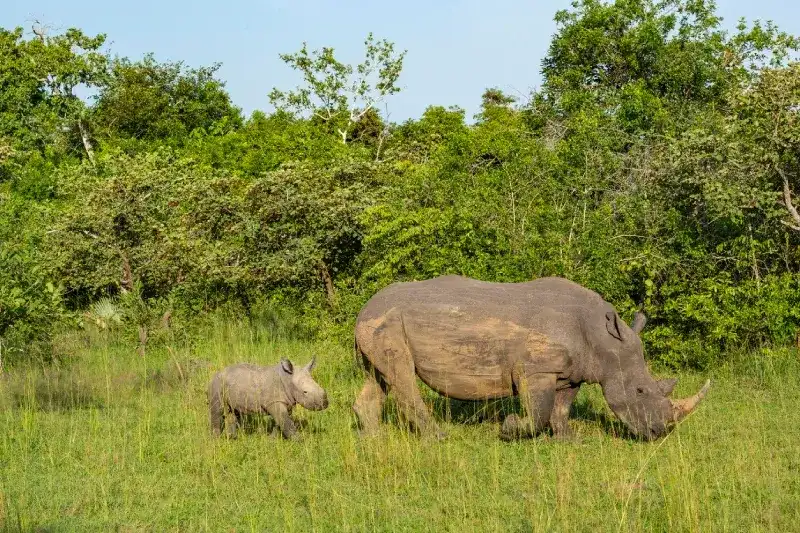
#5. The Rhinoceros (Ceratotherium simum & Diceros bicornis)
Africa's Armoured Giant
The rhinoceros is the most endangered of the Big Five, and the most sobering symbol of the conservation crisis threatening Africa's wildlife. Both the white rhino and black rhino are native to Africa, and both face catastrophic pressure from poaching. Their horns, worth more by weight than gold on the black market, have driven these ancient animals to the very edge of extinction.
East Africa, and Kenya in particular, plays a critical role in rhino conservation globally, running some of the continent's most successful and innovative protection programmes.
Key Facts:
- White rhinos are not white, the name derives from the Afrikaans wyd (wide), referring to their broad, square mouths adapted for grazing
- Black rhinos have a hooked, pointed lip for browsing shrubs and trees
- Can charge at speeds up to 50 km/h (31 mph) despite their bulk
- Northern white rhino: Functionally extinct, only 2 females remain on Earth, both protected at Ol Pejeta, Kenya
- Black rhino: Critically Endangered, fewer than 6,000 survive in the wild globally
Where to Find Rhinos
- Ol Pejeta Conservancy, Kenya: The crown jewel of East African rhino conservation. Ol Pejeta is the largest black rhino sanctuary in East Africa and is also home to Najin and Fatu: the last two northern white rhinos on Earth.
- Lewa Wildlife Conservancy, Kenya: A pioneering private conservancy with a world-class rhino protection programme. Lewa's rhino population has grown dramatically thanks to intensive anti-poaching efforts and community engagement, and game drives here offer extraordinarily close encounters.
- Ngorongoro Crater, Tanzania: One of the last places in Tanzania where black rhinos can be seen in their natural wild habitat. The crater's self-contained ecosystem provides sanctuary for a small but precious population, and sightings, though never guaranteed, are among the most memorable in African wildlife travel.
- Akagera National Park, Rwanda: In a remarkable conservation milestone, black rhinos were reintroduced to Akagera in 2017 after a decade-long absence. This is now one of the very few places in East Africa where you can encounter black rhinos in a genuinely wild setting, a testament to Rwanda's extraordinary commitment to conservation.
- Ziwa Rhino Sanctuary, Uganda: The only place in Uganda where rhinos roam in the wild. Ziwa is a dedicated sanctuary with habituated white rhinos, and guided walking encounters with these armoured giants offer an intimate, powerful experience found nowhere else in the country.
Pro Tip: A visit to Ol Pejeta or Lewa in Kenya pairs beautifully with a Masai Mara game drive, covering the full Big Five in a single Kenya itinerary.
#East Africa's Big Five Destinations at a Glance
|
Destination |
Country |
Big Five? |
Standout Feature |
| Masai Mara | Kenya | All Five | Great Migration; large lion prides; leopards in riverine forest |
| Serengeti | Tanzania | All Five | World's largest lion pop.; legendary Seronera leopard sightings |
| Ngorongoro Crater | Tanzania | All Five | Self-contained ecosystem; black rhinos in the wild |
| Ol Pejeta Conservancy | Kenya | All Five | Last two northern white rhinos; best black rhino sanctuary in E. Africa |
| Amboseli National Park | Kenya | Four (no rhino) | Iconic elephants against Mount Kilimanjaro |
| Tarangire National Park | Tanzania | Four (no rhino) | Massive dry-season elephant herds; ancient baobab forests |
| Akagera National Park | Rwanda | All Five | Reintroduced lions & rhinos; East Africa's most exciting comeback story |
| Queen Elizabeth NP | Uganda | Four (no rhino) | Tree-climbing lions; Kazinga Channel boat safaris |
| Ziwa Rhino Sanctuary | Uganda | Rhinos | Uganda's only wild rhino experience; guided walking |
#Start Planning Your East African Safari
Choose your season: Dry season (June–October) is prime for Big Five viewing across Kenya and Tanzania. Rwanda and Uganda offer excellent year-round wildlife, with gorilla permits available in every month.
Combine countries: A Kenya + Tanzania combination covers the classic Big Five with ease. Add Rwanda for gorillas and Akagera's rhinos, or Uganda for something truly off the beaten track.
Choose your style: From luxury tented camps deep in the Serengeti to family-friendly lodges in Akagera or adventure camps in Uganda, there's an option for every type of traveller.
Book with Africa specialists: Look for operators with deep, on-the-ground knowledge of East Africa who actively support conservation and local communities.
Ready to see the Big Five? Book unforgettable Africa safari trips !
FAQs
Absolutely. Kenya and Tanzania together offer one of the most complete Big Five experiences in the world. A classic itinerary combining the Masai Mara (Kenya) with the Serengeti and Ngorongoro (Tanzania) gives you excellent chances of seeing all five, often within just 7–10 days
Yes, Akagera National Park is Rwanda's only Big Five destination. Lions were reintroduced in 2015, black rhinos in 2017, and the park also has healthy elephant, buffalo, and leopard populations.
Yes, but only at Ziwa Rhino Sanctuary, Uganda's only wild rhino habitat. Guided walking encounters with white rhinos here are a highlight of any Uganda safari. The experience is intimate and deeply moving given how close rhinos have come to extinction.
The leopard is hardest to find due to its nocturnal nature and extraordinary camouflage. The black rhino is rarest by population, with fewer than 6,000 remaining globally, every sighting is a privilege. Your best chances: Seronera Valley, Tanzania for leopard; Ol Pejeta Conservancy or Ngorongoro Crater for black rhino.
A minimum of 7–10 days works well for Kenya or Tanzania alone. Combining two countries (e.g. Kenya + Tanzania, or Tanzania + Rwanda) requires 12–14 days.
The best time to spot the African Big Five is during the dry season (June to October), especially in Kenya and Tanzania, when animals gather around water sources and vegetation is thinner, making wildlife easier to see.
Yes, safaris are designed to be very safe when you follow your guide’s instructions. Game drives take place in secure vehicles led by trained experts who understand animal behavior and keep a respectful distance.
Yes. A professional guide dramatically increases your chances of seeing all five animals. They track fresh footprints, read animal behavior, and communicate with other guides to locate sightings you’d almost certainly miss on your own, especially for elusive species like leopards and rhinos.