Lake Manyara National Park Guide
The lake Manyara national park is a gem in the packed treasury of Tanzania with beautiful scenery and abundant with game.

The lake Manyara national park is a gem in the packed treasury of Tanzania with beautiful scenery and abundant with game.
Vivid forestry and Fascinating animals are the beating heart of Tanzania. With a need to protect what is precious the conception of Lake Manyara National Park was realized and put to action.
The lake is very well known for the tree climbing lions, the biggest population of elephants in Tanzania, and the soda ash lake attracting thousands and thousands of flamingos. Visiting Lake Manyara National Park will definitely add to your Tanzania Safari.
The park is located in the northern part of Tanzania, 126 kilometers west of Arusha town.
1- You can get to Lake Manyara National Park by flying into the Kilimanjaro International Airport (KIA). It is situated 46 kilometres from Arusha.
2- It is also possible to fly into Arusha Airport (ARK) via a domestic connection after arriving at Julius Nyerere International Airport (DAR) in Dar es Salaam.
3- Lake Manyara Airport (LKY) is a small regional airstrip located near Lake Manyara National Park, serving scheduled and charter flights.
4- Charter flights are available from Arusha and Serengeti to Manyara’s airstrip. Then, it is approximately a 20–30 minute drive to the park entrance.
Lake Manyara National Park is located west-southwest of Arusha, so it is easily accessible from Arusha. lt lies 126 kilometres (78 miles). The park is also accessible from Bahati, the capital of Manyara region. One can take a road trip by car from Arusha, with the journey taking approximately 1.5 to 2 hours to reach the park’s entrance gate.
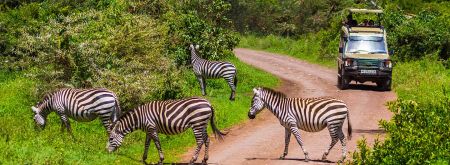
Most people take a circuit by a safari vehicle, considering that Manyara Park is on the way to Ngorongoro crater and the Serengeti.
Lake Manyara National Park experiences a varied climate with distinct wet and dry seasons. The long rainy season occurs from March to May, peaking in April, while the short rainy season lasts from November to December. The dry season runs from June through September.
This seasonal variation supports rich and diverse vegetation, with more than 670 species of flowering plants and ferns recorded in the park, contributing to its lush and scenic landscapes.
Lake Manyara National Park can be visited year-round, as wildlife viewing remains good throughout the year. However, the best game viewing takes place during the dry season, from late June to October, when animals gather around water sources and shorter grass makes wildlife easier to observe.
During the rainy season, particularly in March and April, wildlife viewing is still rewarding, especially for birdwatchers, as many migratory bird species arrive. Travel costs also tend to be lower during this period.
Get in touch with our local experts for an unforgettable journey.
Plan Your Trip
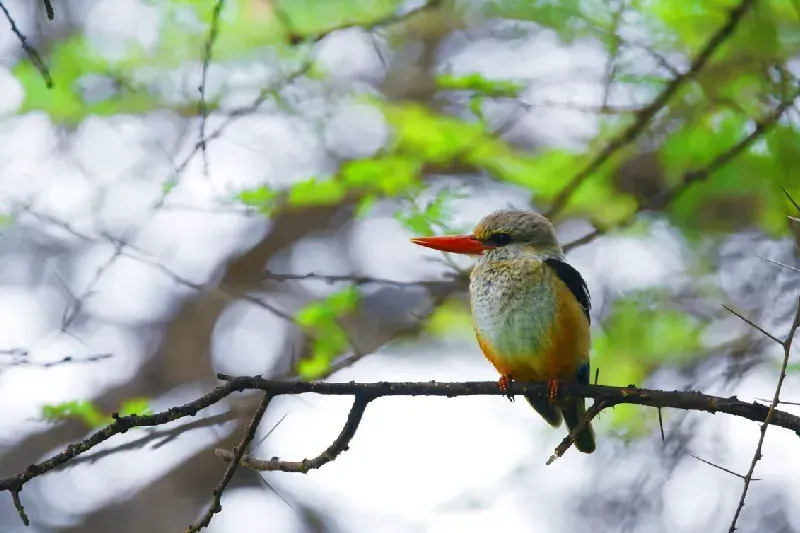
Lake Manyara National Park boasts remarkable biodiversity, offering visitors the chance to see a wide range of mammals, birds, fish, and butterflies. The park is home to notable species such as the lilac-breasted roller, Thomson’s gazelle, and large populations of elephants, along with many other wildlife species.
What sets Lake Manyara National Park apart from other parks in Tanzania is not the sheer concentration of animals, but the presence of unique and iconic species that make it a truly rewarding destination, especially when compared to nearby parks such as Serengeti National Park, Ngorongoro Conservation Area, Tarangire National Park, and Arusha National Park.
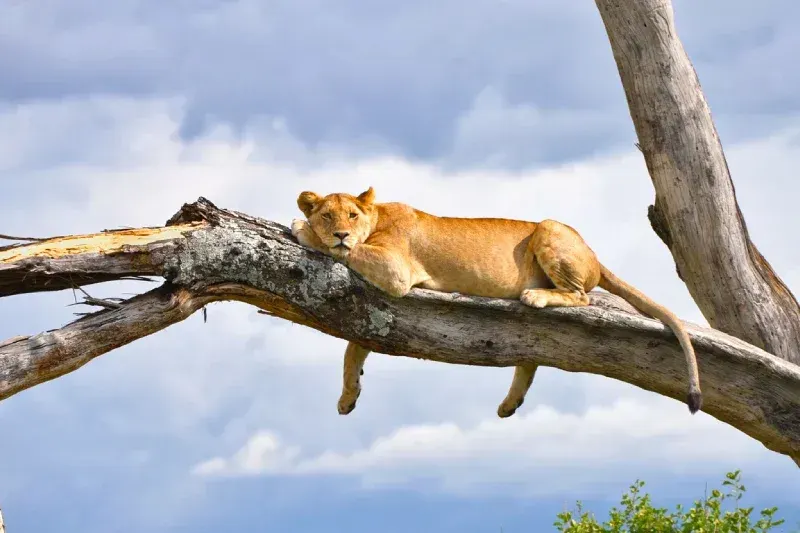
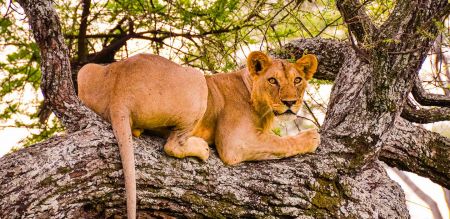
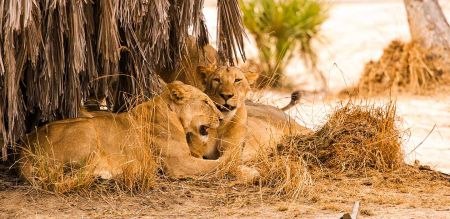
One of the park’s most famous highlights is its tree-climbing lions. While the exact reason for this behavior remains uncertain, seeing these majestic lions resting in acacia trees is a rare and unforgettable sight.
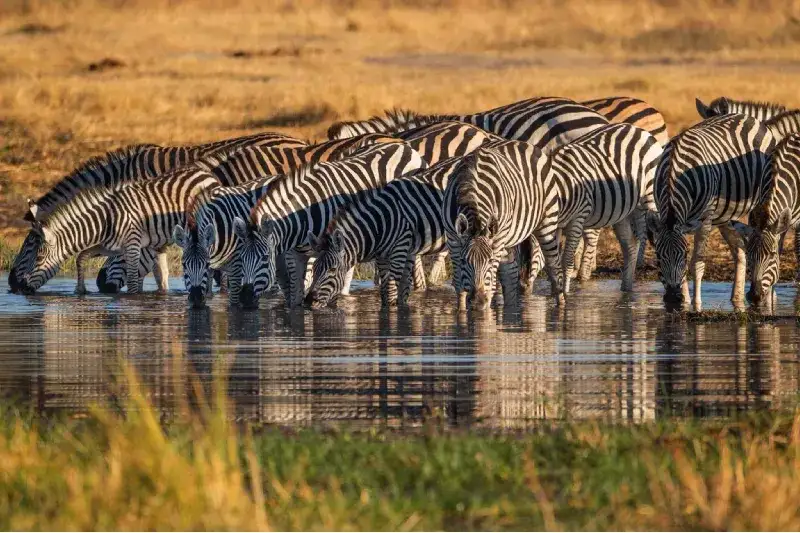
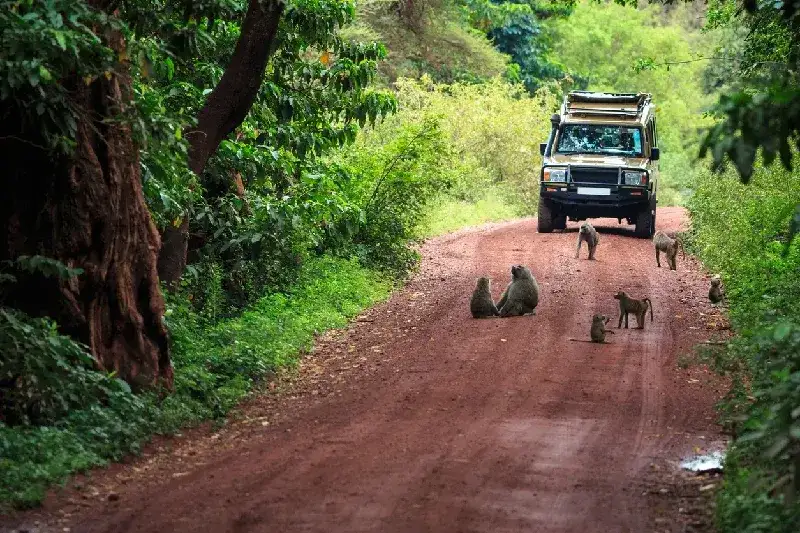
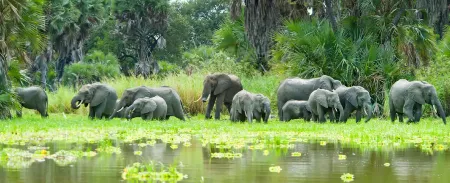
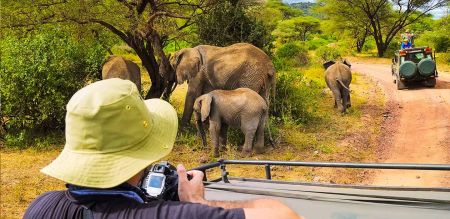
The park is also well known for its large herds of elephants and troops of baboons. Its diverse landscapes support a wide variety of wildlife, including wildebeest, buffalo, hippos, zebras, warthogs, waterbucks, giraffes, flamingos, and impalas. Birdlife is especially impressive, with numerous species recorded, particularly birds of prey.
One of Lake Manyara National Park’s most fascinating sights is its tree-climbing lions, a rare behavior seen in only a few places worldwide. Although the exact reason is still debated, experts believe lions climb trees to escape biting insects, cool off during hot afternoons, and gain better views of their surroundings.
Unlike leopards, lions are not natural climbers and must exert significant effort to rest on branches several meters above the ground. These lions are often seen lounging in acacia and fig trees, especially during the dry season from June to October, when sightings are easier and more frequent.
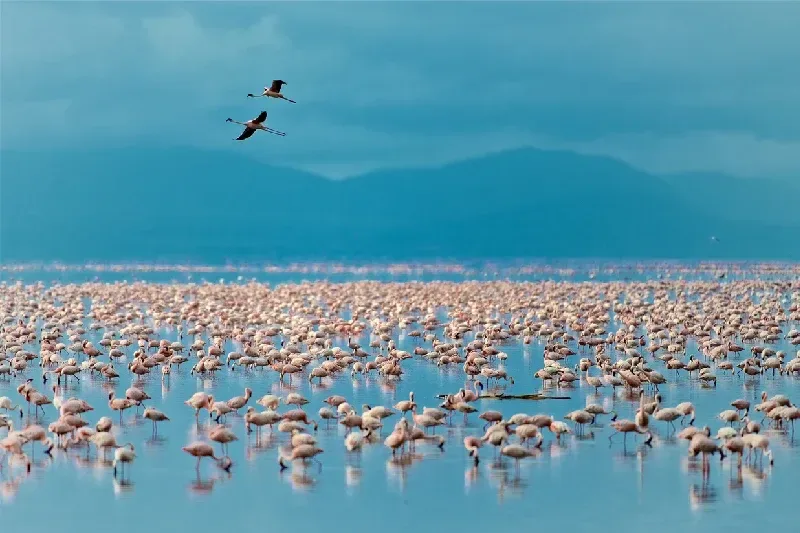
Lake Manyara becomes a spectacular birdwatching destination when thousands of flamingos gather along its alkaline shores, turning the lake pink. Flamingos are most commonly seen from November to April, with peak numbers often in January.
The lake’s shallow waters provide rich algae and brine shrimp, making it an ideal feeding area during the wet season. Flamingos migrate between Lake Manyara and Lake Natron, their main breeding site, resulting in seasonal fluctuations. For the best views, visit during the wet months, when flamingos and over 400 other bird species fill the park.
This is the only park in northern Tanzania that allows night drives. It is worth staying overnight in the park and enjoying the wildlife viewing at night.
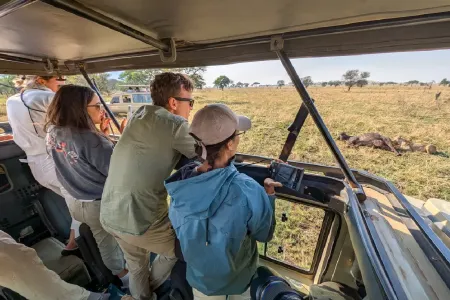
Game drive in Lake Manyara National Park is an essential activity to experience your Tanzania safari. There are a number of different areas to explore in the park, although it might be the smallest park in Tanzania.
Usually nature walks are not offered to guests in national parks, but specific areas like Manyara national park have the permission to show the guests the area on foot.
Bike rides to a local village is part of visiting another country where you can meet and interact with the people and know about their culture.
Lake Manyara National Park remains one of Tanzania’s most diverse and distinctive protected areas, known for its varied landscapes, rich biodiversity, and unique wildlife behavior. From groundwater forests and open savannas to the alkaline lake that supports abundant birdlife, the park offers a compact yet rewarding safari experience. Its accessibility and year-round wildlife viewing make it an important component of Tanzania’s northern safari circuit and a valuable site for conservation, research, and sustainable tourism.
Definitely! The park is famous for its unique tree-climbing lions, large elephant herds, and incredible birdlife, making it a must-see stop on any northern Tanzania safari.
Lake Manyara National Park is in northern Tanzania, about 126 km west of Arusha, nestled at the base of the Great Rift Valley.
You can reach it by car from Arusha in about 1.5–2 hours, or take a small domestic flight to Lake Manyara Airport, followed by a short drive to the park.
The park is home to several prides of lions, including the famous tree-climbing lions. Exact numbers change seasonally, but sightings are frequent, especially in the dry season.
The park generally opens at 6:30 AM and closes around 6:30 PM, giving plenty of time for morning and afternoon safaris.
Tumbatu Island is one of the most beautiful places in Tanzania where visitors enjoy snorkeling, seeing the lighthouse and having a lovely walk on the beach. Know more!
Discover Udzungwa Mountains National Park in Tanzania, home to rainforests, mountain forests, and diverse wildlife. Read more!
Discover the adventure of Mount Kilimanjaro, featuring stunning views, epic trekking trails, and unforgettable experiences.
Tanzania's Wildlife is not only abundant but is packed with different walks of exotic animals. Serengeti National Park is without a doubt one of those hubs. Read more!
Explore paradise with this Zanzibar Beaches Guide, featuring top beaches, activities, travel tips, and the best time to visit Zanzibar.
Being a UNESCO World Heritage Site since 1979, the Ngorongoro Conservation Area is a safe haven and defense body for many of the endangered species. Read more!
Know all about Lake Manyara National Park: how to get there, best time to visit, wildlife and what to do there. Read more!
Explore Mafia Island in Tanzania: facts, climate, biodiversity, and local life. Learn about its coral reefs, marine park, and cultural heritage.
Explore Tarangire National Park: fees, wildlife, best time to visit, and safari tips for an unforgettable Tanzania adventure.
Dominated by the fourth highest mountain in Africa, Arusha National Park is one of the remarkable national parks in Tanzania. Read more!
All what you need to know about Pemba Island: culture, location, best time to visit, things to do and more.
Visit Stone Town Zanzibar and walk through centuries of history. From spice markets to carved doors, experience where four world cultures beautifully come alive.
Gombe National Park is one of the smallest parks in Tanzania with a lot to offer everyone from wildlife to forest vegetation. Read more!
Covering an area of 54,600 square kilometers, Selous Game Reserve is the largest protected game reserve in the African continent. Read more!
Prison Island Zanzibar has become a must-see jewel of Tanzania with the highlight attraction of being a large home for the tortoises. Read more!
Katavi National Park is known for its huge herds mostly consisting of Zebras, Giraffes, Buffaloes and so much more to discover. Read more!
Explore Dar es Salaam in Tanzania, with our guide to the best sights, activities, and insider travel tips.
Cheetah’s Rock does not identify itself as a zoo or a sanctuary, it could be described as a wildlife school as there are no signs of animal cruelty. Know more!
Darajani Market or Bazaar is considered one of the main markets in Stone Town. Know more about what to buy from there.
This is your ultimate guide about Saanane Island National Park: wildlife, things to do, location and how to get there.