Lake Nakuru Guide
One of the Rift valley soda lakes towering at an elevation of 1,745 m (5,755 feet) above sea level, Lake Nakuru and its aptly named national park is one of the many wonders of Kenya.
One of the Rift valley soda lakes towering at an elevation of 1,745 m (5,755 feet) above sea level, Lake Nakuru and its aptly named national park is one of the many wonders of Kenya.
If you think Kenya is all about vast savannahs and the Maasai Mara National Reserve, Lake Nakuru National Park offers a completely different kind of safari, more compact, more scenic, and just as rewarding.
Located in the Great Rift Valley, this protected park surrounds a shallow alkaline lake that has, at times, attracted thousands of flamingos, turning the shoreline into a shifting pink horizon. But the real highlight goes beyond the birds: Lake Nakuru is one of Kenya’s best places to spot both white and black rhinos, along with giraffes, buffalo, and even elusive leopards.
Easily accessible and rich in wildlife, it’s often considered one of the most beginner-friendly safari destinations in East Africa, perfect if you want a high chance of sightings without spending days deep in the wilderness.
So, what makes Lake Nakuru stand out and when is the best time to visit?
The word Nakuru comes from the local Masai language meaning "dust" or "dusty place." Not just a hub for diverse wildlife, the lake also feeds into the prestigious Lake Nakuru National Park.
The park was established in 1963 and lies near Nakuru town, famous for the spectacle of millions of flamingos lining the shores of the lake. The numbers vary from time to time based on water and food conditions in the area.
Surrounded by wooded and bushy grasslands, Lake Nakuru National Park is situated in Kenya, approximately 170 km northwest of Nairobi, in the Nakuru district of the Rift Valley Province. It is close enough for a day trip.
Lake Nakuru National Park is open daily from 6:00 am to 7:00 pm. There is no entry after 6:15 pm.
Note: Entry on foot is not allowed and hiking is only allowed in the designed areas with a KWS ranger.
During the dry season, there are less crowds. It rarely rains, but there are occasional showers at any time. From June to December, conditions are sunny with the occasional showers. Temperatures climb to around 25°C/77°F in the afternoon, but during the end and the beginning of the day, the temperature hovers around 9°C/48°F.
January and February are the driest and warmest during the year. Temperatures climb to 28°C/82°F and higher. (Note: it is recommended to wear warm clothing on early morning game drives.)
From March to May is the wet season and it rarely rains all day. Temperatures in the afternoon are around 27°C/81°F. April is the wettest month.
Lake Nakuru National Park is perfect to visit any time of the year, since it has a moderate climate. However, the best time to visit is during the dry season from July to December.
Daytime has a pleasant temperature, while at night it is much cooler. The wettest months are April and May. The rest of the year is dry with some rain.
Get in touch with our local experts for an unforgettable journey.
Plan Your Trip
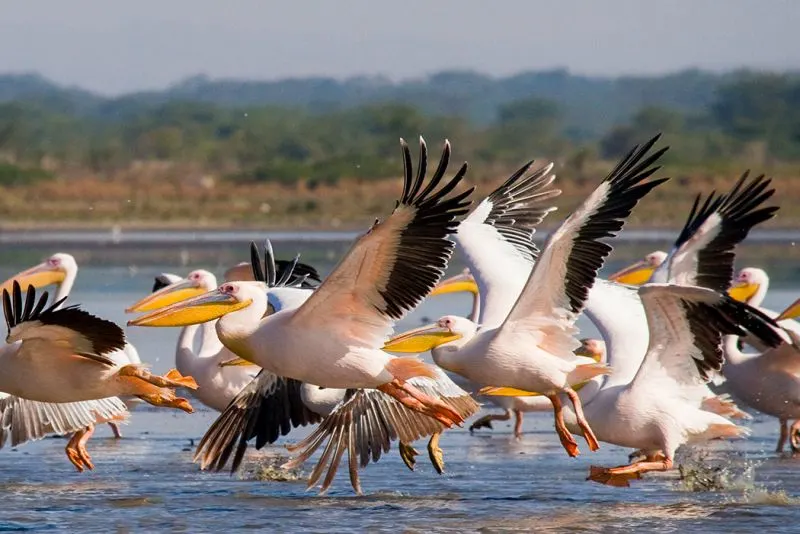
The park has been expanded lately to compensate black rhinos under its protection with setting up a fence not to limit the animals freedom of movement and activity but the poachers. Housing millions of flamingos and over 25 black rhinos which is one of the largest concentrations in the country, 70 southern white rhinos the park is well on its way to being a Kenyan animal haven.
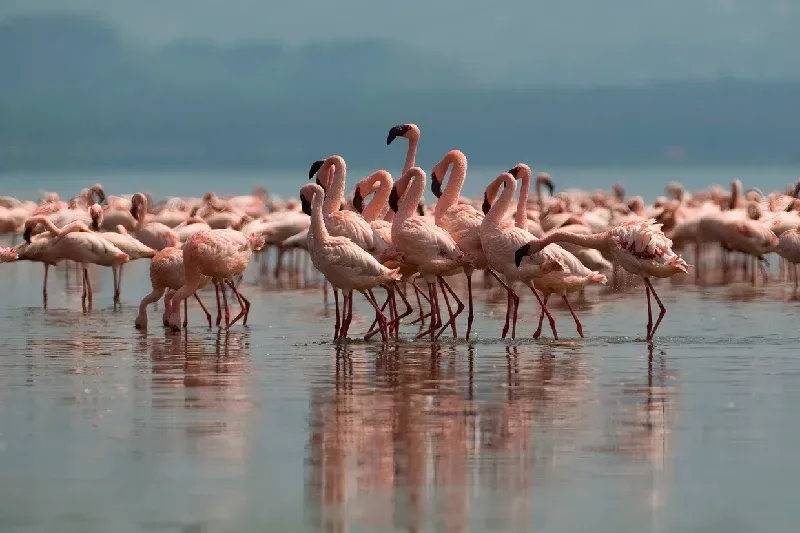
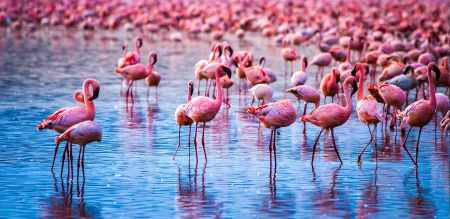
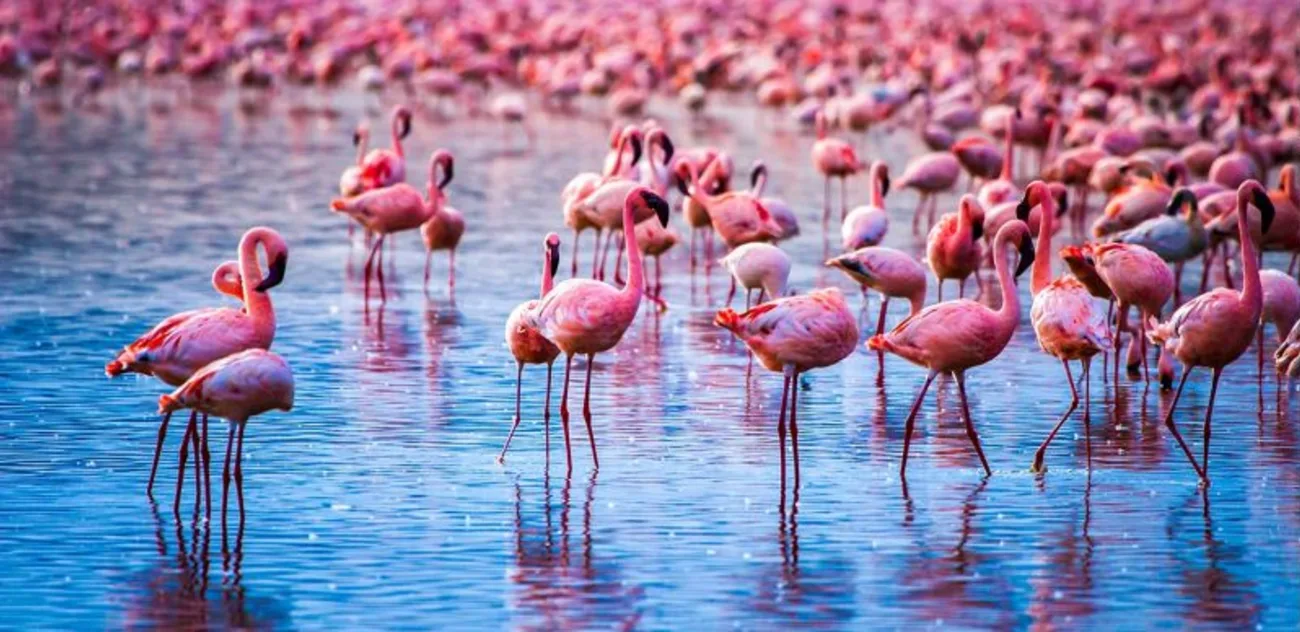
Undoubtedly, the park’s biggest attraction is the huge flamingo population, swelling to more than 1.5 million at times. Each year, the bright pink flamingos flock to Lake Nakuru in record numbers. The flamingos head to lake Bogoria in years of heavy rainfall.
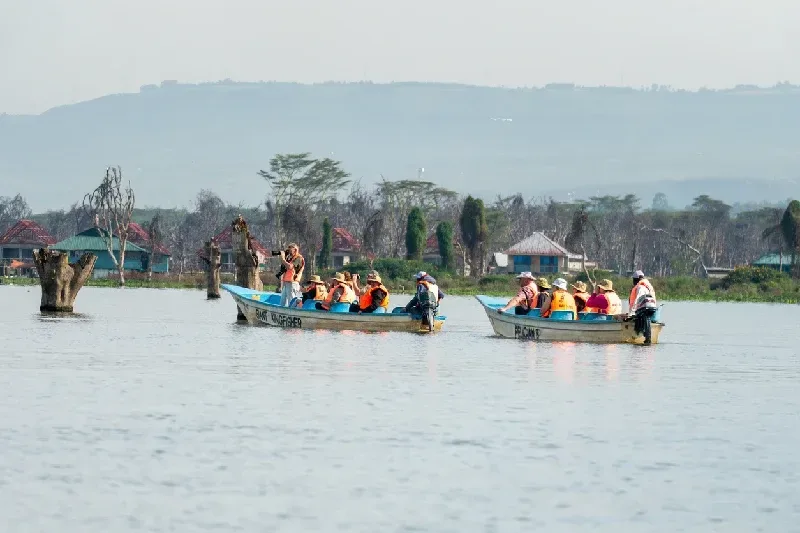
Lake Naivasha is a regular inclusion on itineraries due to the various activities that can be done. Boat cruises are a nice chance to break up a long safari car ride. The cruises offer the opportunity to witness wallowing hippos and a variety of birds.
When in Lake Nakuru, go to Crescent Island and have a chance to see giraffes, buffalo and more. The private sanctuary does not have any predators which make it a safe place to enjoy a quiet walk amid the animals.
It is a picturesque spa suitable for a break from the dusty kenyan roads. It is chilling with its hot springs, spouting geysers and sweeping views. In recent years, it has been a new popular place to witness flamings.
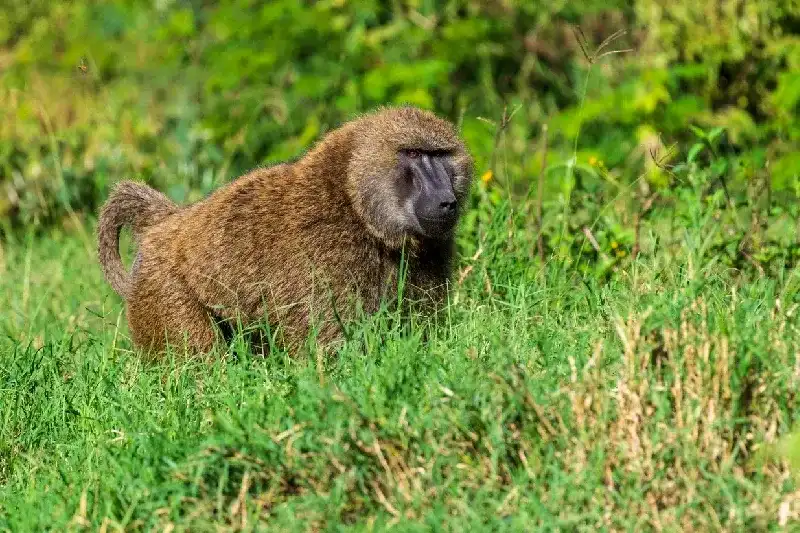
Baboon Cliff is a popular place with a stunning view of the entire park, taking its name from the large baboon family. Having several scenic viewpoints, it is a perfect spot for photographers and snapping a view of Lake Nakuru.
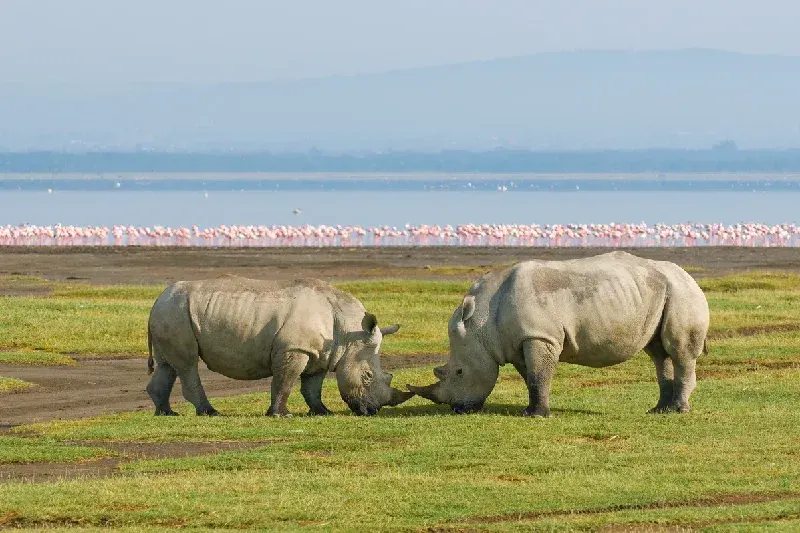
Thanks to the Rhino Sanctuary, Lake Nakuru is home to the densest rhino population in Kenya. Black and white rhinos highlight the sanctuary with 70 white rhinos and 25 black ones. It is a great chance to see these endangered giants in the wild.
Makalia Falls is a popular place for camping. It is a perfect place for hiking and witnessing a breathtaking view.
The day begins around 6 AM, as soft golden light spreads across the Rift Valley. The park is quiet, the air still cool, and wildlife is already on the move. As your safari vehicle rolls along the tracks, you might catch your first rhino grazing peacefully, one of the most iconic and rewarding moments in Lake Nakuru.
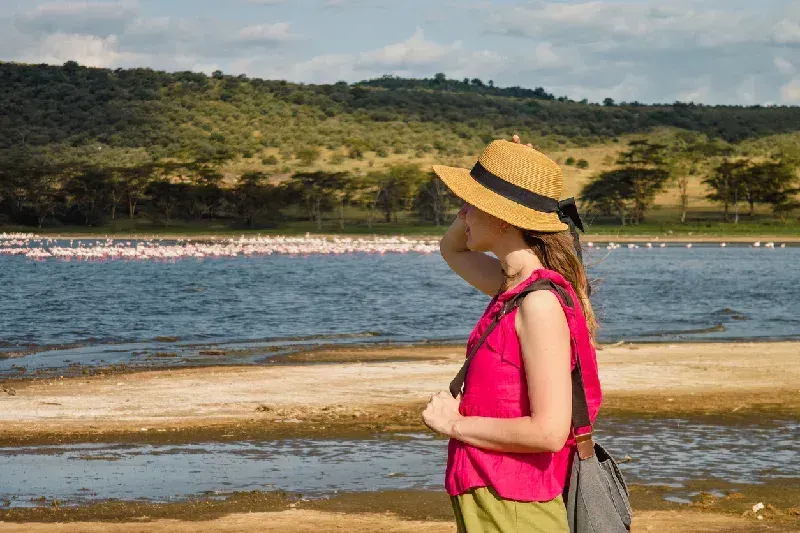
As the sun rises higher, the pace slows and attention turns to the lake. Along the shoreline, flocks of flamingos gather in shifting shades of pink, creating a striking contrast against the blue water. It’s a calm, almost surreal scene, perfect for photos and a quiet pause during the safari.
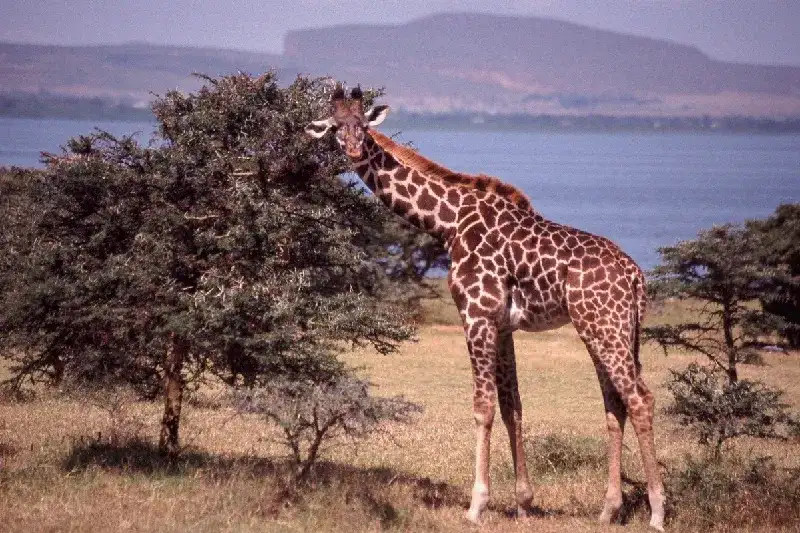
By the afternoon, you move into the acacia woodlands, where giraffes roam gracefully between the trees. The light softens again, the atmosphere becomes more relaxed, and the experience feels slower and more immersive, ideal for spotting wildlife and taking in the landscape.
As the day winds down, it’s clear that Lake Nakuru offers more than just sightings. It’s the rhythm of the day, changing light, shifting landscapes, and diverse wildlife, that makes it feel like a full safari experience in just a few hours.
One of the most iconic viewpoints in the park, Baboon Cliff offers sweeping panoramic views over Lake Nakuru and the surrounding landscapes. It’s the perfect spot to capture the scale of the park, especially early in the morning when the light is soft and the lake reflects the sky.
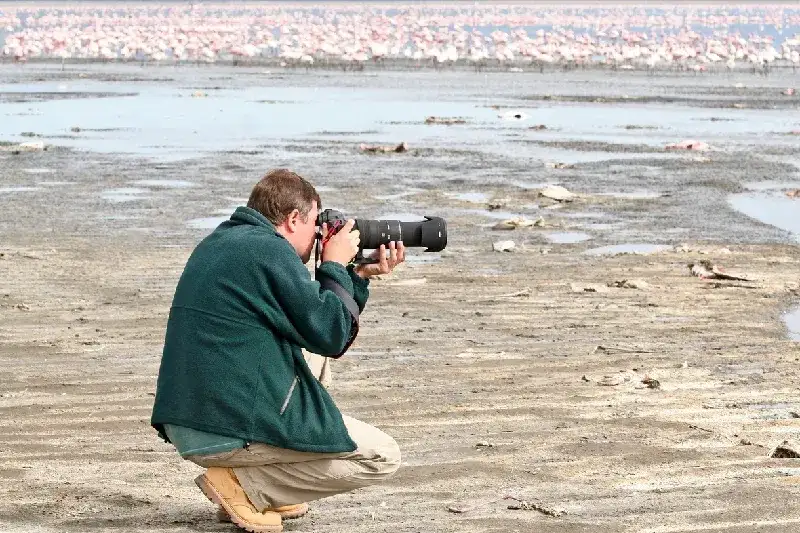
The shoreline of Lake Nakuru is where the park truly comes to life. When flamingos gather, the edge of the lake turns into a vivid pink band, creating one of the most photogenic scenes in Kenya. Even when flamingo numbers are lower, the reflections, birdlife, and open views make it a rewarding photography spot.
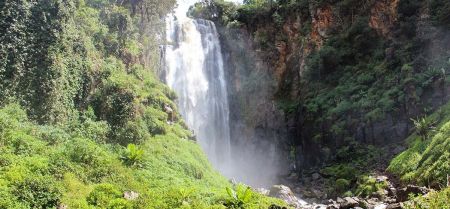
Tucked away in the southern part of the park, Makalia Falls offers a completely different perspective. Surrounded by rocky terrain and greenery, the waterfall is especially impressive during the wet season. It’s a great location for more dynamic shots and a peaceful break from game drives.
While Lake Nakuru National Park is famous for its flamingos, their numbers change depending on water levels and food availability. In some seasons, they move to nearby lakes like Lake Bogoria, so sightings can vary.
Unlike many other parks in Africa, Lake Nakuru offers one of the highest chances of spotting both black and white rhinos. Thanks to strong conservation efforts, sightings here are frequent and often happen within the first game drive.
The best wildlife moments happen just after sunrise. Animals are more active, the light is softer for photography, and the park is quieter, making early morning game drives the most rewarding time to explore.
Lake Nakuru National Park is located in Kenya, approximately 170 km northwest of Nairobi, in the Nakuru district of the Rift Valley Province.
The park is home to flamingos, white and black rhinos, giraffes, buffalo, leopards, baboons, and a wide variety of bird species.
No. Flamingo numbers vary depending on water levels and food availability. In years of heavy rainfall, they may migrate to nearby Lake Bogoria.
The drive takes approximately 2 hours, making it accessible as a day trip or an easy addition to a longer safari itinerary.
Entry on foot is not permitted. Hiking is only allowed in designated areas accompanied by a KWS ranger.
Yes, it is widely considered one of the most beginner-friendly safari destinations in East Africa, with a high chance of wildlife sightings in a compact area.
Absolutely. It pairs well with Maasai Mara, Naivasha, and Amboseli, and is commonly included in multi-day Kenya safari packages.
Know all what you need to know about how to get Kenya visa, the requirements, different types of visas and more. Read Now!
Nairobi National Park is the only protected area in all over the world that has a variety of animals and birds close to a capital city. Know more!
Everything you need to know about Amboseli National Park in Kenya, wildlife, landscapes, history, and visitor information. Africa's elephant capital explained.
If safari is mentioned, definitely Kenya is mentioned. There are plenty of things to do in Kenya, from exploring the various wildlife to relaxing and chilling on the beach. Know more!
Explore Masai Mara National Reserve for unforgettable safaris, Big Five wildlife, and breathtaking landscapes in one of Africa’s most iconic national reserves.
Kakamega Forest is a tropical rainforest based in the Kakamega and Nandi County of Kenya. The forest is elevated at predominantly between 1500 m and 1600 m above sea level.
The Elephant and Rhino Nursery is one of the most unique things to do in Nairobi. Get close and personal to baby elephants and even touch them. Know more!
Maasai Market is an open-air market with a large variety of products including African pots and pans, clothes, shoes, jewelry, shoes and bags. You name it, you will find it!
Sibilo National Park lies on the northeastern shore of Lake Turkana in North Kenya, the National Park was established in 1973 by the government of Kenya to protect the wildlife.
Nyali Beach is a residential area located in Mombasa County, connected to Mombasa Island by the New Nyali Bridge. Know more!
Constructed to protect its huge population of rare roan antelopes, Ruma National Park is the only park in the Nyanza Province. Read more!
Ol Donyo Sabuk is a mountain adjacent small town near Thika Kenya, the town is located in Kyanzavi Division, Machakos County, the height of the mountain is 2,145 meters.
Thomson's is one of the most recommended places to visit in Kenya as it’s view is one of the most beautiful views that can be seen in Kenya. Read more!
Malindi Marine National Park is endowed with magnificent resources such as fringing reefs, coral gardens in the lagoons, seagrass beds, mudflats, mangroves. Know more!
Manda island in Lamu town – with next to no fresh water – was only recently almost uninhabited but is now the site of several new luxury homes and a couple of boutique resorts. Read more!
In the northern part of Nairobi city, Karura Forest is the largest of three main gazette forests in Nairobi. Know more!
Covering an area of 100.000 kilometer square, the Chalbi Desert is one of the hottest and arid places in Kenya. Read more!
Featured by a blinding white-sand beach and a soft breeze, Watamu is a charming slice of coastline. Read more!
Mombasa Marine National Park and Reserve are one of the most beautiful marine parks characterized by coral reefs, sandy beaches, palm trees, azure ocean. Know more!
Plan your visit to Nairobi Animal Orphanage and see rescued animals up close while supporting wildlife conservation in Nairobi, Kenya.
Arabuko Sokoke National Park is located on the coast of Kenya, 110 kilometers north of Mombasa and it’s protected as it’s a National Forest Reserve. Know more!
Bomas of Kenya is a tourist village located in Langata, Nairobi, displaying traditional lifestyle and art of the different tribes. Know more!
An exotic coastal city situated at the edge of Kenya and also lying in the middle of the Indian ocean, Malindi is a city you can not help falling in love with. Read more!
The second-largest city in Kenya after the capital Nairobi Mombasa is just not a tourist attraction but the beating hard of the African country.
Lamu Island is one of Kenya's gold mines of Lovely scenery, captivating wildlife, mouthwatering cuisine and beautiful simplicity. Know more!
A complete Lake Naivasha travel guide covering boat rides, wildlife encounters, best time to visit, and must-see spots in Kenya.
Discover wildlife in Lake Nakuru National Park, from flamingos to rhinos, with safari tips, travel advice, and the best time for your visit.