Selous Game Reserve
Considered by the UNESCO as a world heritage site since 1982 Selous game reserve is a must-see Tanzanian attraction.
.webp "Selous Game Reserve")
Considered by the UNESCO as a world heritage site since 1982 Selous game reserve is a must-see Tanzanian attraction.
Selous Game Reserve is a UNESCO World Heritage wilderness in southern Tanzania, established in 1922. In 2019 its northern and western sections became Nyerere National Park, Tanzania’s largest national park and today’s main photographic safari area. It is known for boat safaris, walking safaris, and African wild dogs.
Unlike the busy northern circuit, the Selous has only a handful of small, low-impact camps. That gives visitors a sense of remoteness that few Tanzanian parks still offer. This mix of scale, water, and solitude is the reason the area is often described as Tanzania’s most authentic wilderness safari.
Nyerere National Park is the former northern part of Selous Game Reserve, upgraded to national park status in 2019 and named after Julius Nyerere, Tanzania’s first president. Hunting is banned inside the park. The smaller remaining Selous Game Reserve lies mainly east and south of the Rufiji River and still contains hunting concessions.
Most safari lodges, airstrips, and the Rufiji River boat routes that travellers know as “the Selous” are now inside Nyerere National Park. Tour operators still use both names.
The area was first protected in 1896 under the German colonial governor Hermann von Wissmann, and it became a hunting reserve in 1905. In 1922 the British administration formally established Selous Game Reserve. They named it after Frederick Courteney Selous, a British hunter, explorer and naturalist who was killed nearby in 1917 while fighting in the First World War. His grave still lies inside the reserve near Beho Beho.
The reserve grew through the mid-20th century and reached more than 50,000 km² by the 1940s. UNESCO listed it as a World Heritage Site in 1982 for its size, its largely undisturbed ecological processes, and its large wildlife populations.
Heavy elephant poaching led UNESCO to add the site to its “List of World Heritage in Danger” in 2014. Since 2019, the Julius Nyerere Hydropower Station on the Rufiji River at Stiegler’s Gorge has become a further conservation concern, because it changes how the river floods downstream.
Get in touch with our local experts for an unforgettable journey.
Plan Your Trip
The Selous lies in southern Tanzania, about 210–230 km south-west of Dar es Salaam, on the southern safari circuit alongside Ruaha, Mikumi and Udzungwa. It borders Mikumi National Park to the north-west, which forms a corridor towards the wider Ruaha ecosystem.
The best time for game viewing is the dry season, from late June to October. Grass dies back and water becomes scarce, so animals gather along the Rufiji River and around the lakes, followed by predators. Days are sunny and warm, and early mornings are pleasantly cool.
The wet season runs from November to May. It turns the landscape lush and green and brings migratory birds, though heat and humidity rise. The heaviest rain falls from late March to May. During those months many camps close, roads flood, and road transfers can stretch to 7–8 hours.
| Season | Months | Wildlife | Conditions | Best for |
|---|---|---|---|---|
| Dry (peak) | Late June–October | Excellent | Sunny, dry, cool mornings | Game drives, walking safaris |
| Short rains | November–December | Good | Hot, humid, short showers | Fewer visitors, lower rates |
| Green season | January–February | Moderate | Hot, lush, some rain | Birdwatching, photography |
| Long rains | March–May | Difficult | Heavy rain; many camps close | Not recommended |
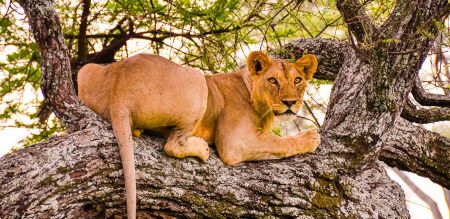
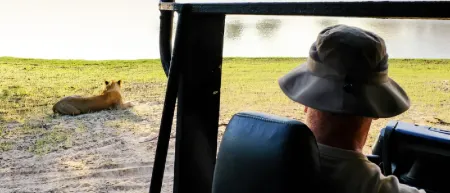
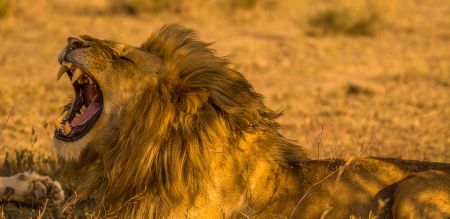
The Selous ecosystem holds some of Africa’s largest populations of buffalo, hippo and Nile crocodile. Lions are common, and leopards and spotted hyenas are regularly seen. The area is also one of the continent’s strongholds for the endangered African wild dog, which is a major draw for repeat safari-goers.
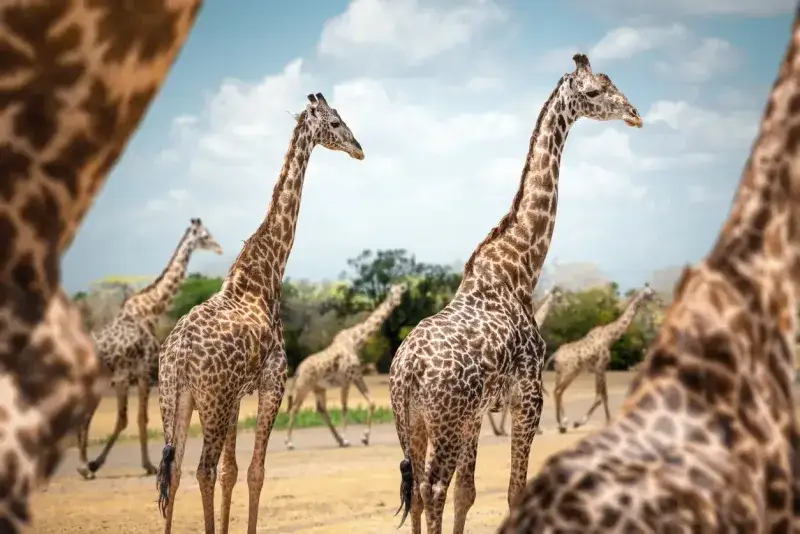
Grazers and browsers include:
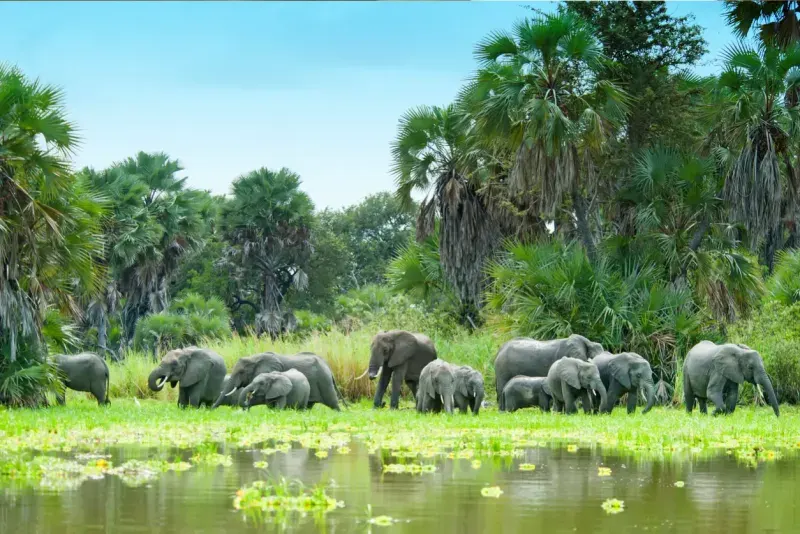
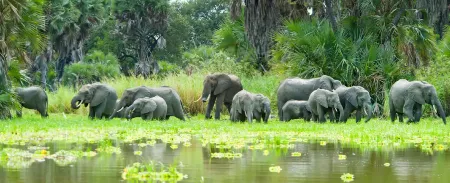
A small number of black rhinos survive, but sightings are extremely rare. Elephant numbers fell sharply during the poaching crisis between 2009 and 2014. They have been recovering since then, and herds are again a common sight along the river.
More than 440 bird species have been recorded in the Selous, which makes it one of East Africa’s top birding destinations. Waterbirds are especially rich along the river and lakes. Look for the African skimmer, pink-backed pelican, yellow-billed stork, African fish eagle, giant kingfisher and malachite kingfisher.
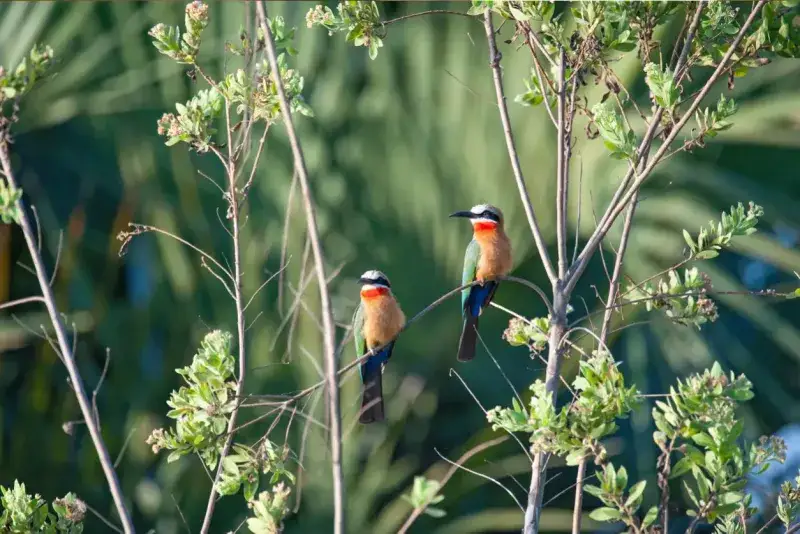
Sandbanks host breeding colonies of white-fronted and carmine bee-eaters. The riverine forest is home to the purple-crested turaco, trumpeter hornbill and palm-nut vulture. Birding is at its best from November to April, when migrants arrive from Europe and Asia.
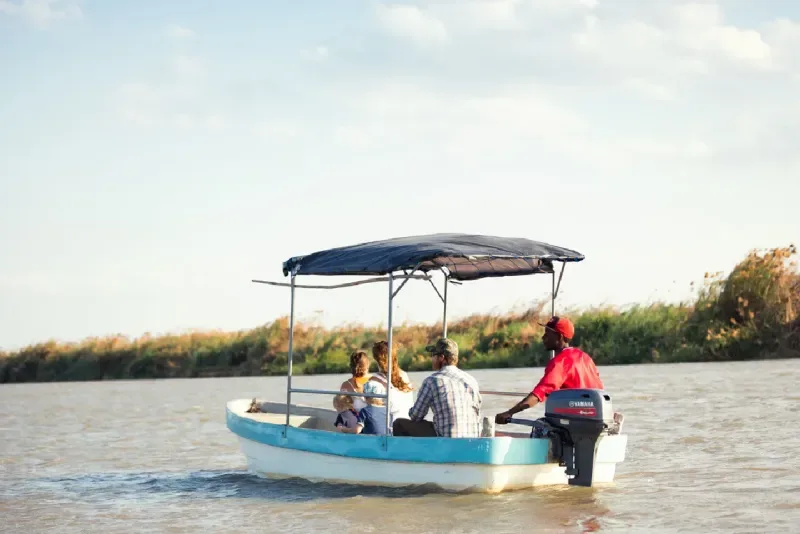
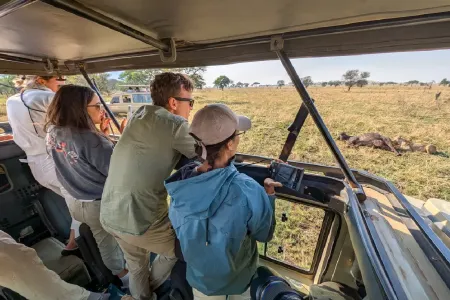
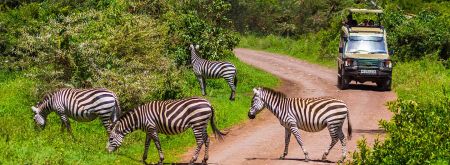
The Selous is one of the few places in Tanzania where you can combine game drives, boat safaris and walking safaris in a single stay. This variety is its main advantage over the northern parks.
The Selous has only a small number of camps, which keeps it uncrowded even in peak season. Most camps sit on the lakes or the Rufiji River inside Nyerere National Park. Well-known options include Lake Manze Camp, Siwandu, Selous Impala Camp, Rufiji River Camp and Serena Mivumo River Lodge.
Budget lodges just outside the park near Mtemere Gate lower costs, though they mean more driving each day.
| Selous / Nyerere | Serengeti | |
|---|---|---|
| Crowds | Very low | High in peak areas |
| Activities | Drives, boats, walks | Mainly drives; balloons |
| Highlight | Wild dogs, Rufiji River | Great Migration |
| Access | 45–90 min flight from Dar | Flight from Arusha |
| Combines well with | Zanzibar, Ruaha | Ngorongoro, Tarangire |
Yes. Most photographic safaris now take place in Nyerere National Park, the former northern section of Selous.
Three to four nights is enough to combine game drives, a boat safari and a walking safari.
Yes, especially for travellers who prefer fewer crowds. It also pairs easily with a Zanzibar beach stay.
Yes, by flying in for the day, but an overnight stay is far more rewarding.
Pack neutral-coloured clothing, a hat, sunscreen, insect repellent, binoculars, and closed shoes for walking safaris.
Tumbatu Island is one of the most beautiful places in Tanzania where visitors enjoy snorkeling, seeing the lighthouse and having a lovely walk on the beach. Know more!
Discover Udzungwa Mountains National Park in Tanzania, home to rainforests, mountain forests, and diverse wildlife. Read more!
Discover the adventure of Mount Kilimanjaro, featuring stunning views, epic trekking trails, and unforgettable experiences.
Tanzania's Wildlife is not only abundant but is packed with different walks of exotic animals. Serengeti National Park is without a doubt one of those hubs. Read more!
Explore paradise with this Zanzibar Beaches Guide, featuring top beaches, activities, travel tips, and the best time to visit Zanzibar.
Being a UNESCO World Heritage Site since 1979, the Ngorongoro Conservation Area is a safe haven and defense body for many of the endangered species. Read more!
Know all about Lake Manyara National Park: how to get there, best time to visit, wildlife and what to do there. Read more!
Explore Mafia Island in Tanzania: facts, climate, biodiversity, and local life. Learn about its coral reefs, marine park, and cultural heritage.
Explore Tarangire National Park: fees, wildlife, best time to visit, and safari tips for an unforgettable Tanzania adventure.
Dominated by the fourth highest mountain in Africa, Arusha National Park is one of the remarkable national parks in Tanzania. Read more!
All what you need to know about Pemba Island: culture, location, best time to visit, things to do and more.
Visit Stone Town Zanzibar and walk through centuries of history. From spice markets to carved doors, experience where four world cultures beautifully come alive.
Gombe National Park is one of the smallest parks in Tanzania with a lot to offer everyone from wildlife to forest vegetation. Read more!
Covering an area of 54,600 square kilometers, Selous Game Reserve is the largest protected game reserve in the African continent. Read more!
Prison Island Zanzibar has become a must-see jewel of Tanzania with the highlight attraction of being a large home for the tortoises. Read more!
Katavi National Park is known for its huge herds mostly consisting of Zebras, Giraffes, Buffaloes and so much more to discover. Read more!
Explore Dar es Salaam in Tanzania, with our guide to the best sights, activities, and insider travel tips.
Cheetah’s Rock does not identify itself as a zoo or a sanctuary, it could be described as a wildlife school as there are no signs of animal cruelty. Know more!
Darajani Market or Bazaar is considered one of the main markets in Stone Town. Know more about what to buy from there.
This is your ultimate guide about Saanane Island National Park: wildlife, things to do, location and how to get there.