Elephantine Island
.jpg "Elephantine Island")
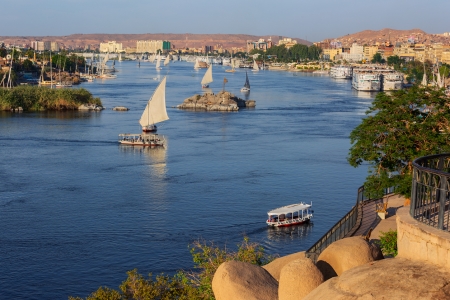
Elephantine Island, the largest island in the Aswan archipelago, blends rich archaeological heritage with vibrant Nubian culture. Located in the Nile opposite Aswan, it was historically a frontier town, trading hub, and religious center. Visitors can explore ancient sites like the Temple of Khnum, residential ruins, a 3,000-year-old Nilometer, and the Aswan Museum, while also experiencing the traditional Nubian villages of Siou and Koti. Easily accessible by ferry, motorboat, or felucca, the island offers a unique combination of history, culture, and scenic Nile views.
Throughout pharaonic history, Elephantine marked Egypt's traditional southern boundary with Nubia. This strategic location made the island crucial for controlling trade routes, defending against southern threats, and administering Egypt's Nubian territories. The island functioned as:
Military Garrison: Egyptian troops stationed on Elephantine defended the southern frontier, monitored Nubian activity, and launched military expeditions when necessary.
Trade Hub: Goods flowing between Egypt and Nubia—including gold, ivory, ebony, incense, exotic animals, and mercenary soldiers—passed through Elephantine's markets and warehouses. Customs officials recorded trade, collected duties, and regulated commerce.
Administrative Center: The Governor of the South (later called Viceroy of Kush during the New Kingdom) often resided on Elephantine, overseeing Egyptian control of Nubia and managing the region's complex political relationships.
Religious Center: Temples to major gods, particularly Khnum (ram-headed god associated with the Nile's annual flood and creation), Satet (goddess of the Nile cataracts), and Anuket (goddess of the Nile), made Elephantine an important pilgrimage destination.
Archaeological excavations on Elephantine, particularly those conducted by German and Swiss teams since the late 19th century, have revealed extraordinary finds spanning from prehistoric times through the Islamic period. Important discoveries include:
Aramaic papyri from a Jewish community living on Elephantine during the Persian Period (5th century BC), providing unique insights into Jewish religious practices and daily life in ancient Egypt.
Residential remains showing how ordinary Egyptians lived, with house plans, household objects, and urban layouts rarely preserved elsewhere.
Temple complexes dedicated to Khnum, Satet, and Anuket, with foundations dating to the Old Kingdom (circa 2600 BC) and continuous rebuilding through the Ptolemaic Period.
The Elephantine Papyri: administrative documents, legal contracts, personal letters, and religious texts revealing details of ancient Egyptian bureaucracy, law, and society.
Pottery and artifacts from various periods documenting trade relationships, technological development, and cultural exchange with Nubia and Mediterranean civilizations.
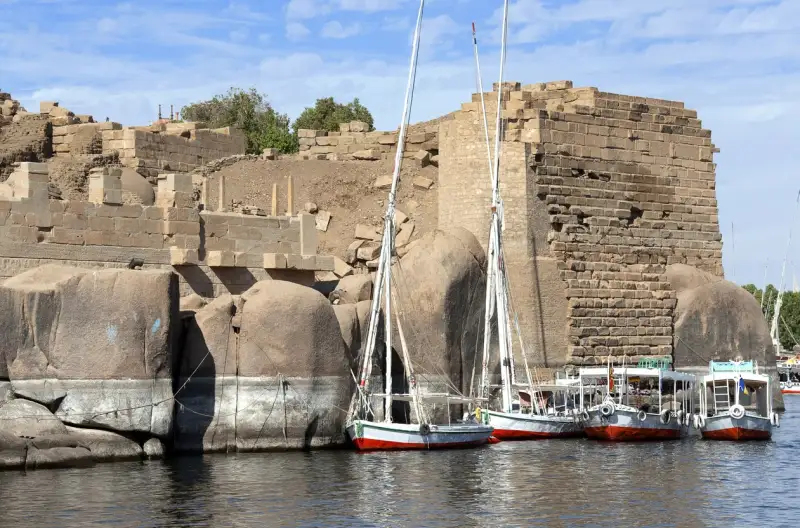
Elephantine Island is located in the Nile River directly opposite downtown Aswan in southern Egypt. It's the largest island in the Aswan archipelago, stretching approximately 1,200 meters in length. The island is easily accessible from the Aswan Corniche via public ferry (5-10 minutes), private motorboat taxi, or traditional felucca sailboat. Ferry landings are located near the Aswan Museum on the Corniche.
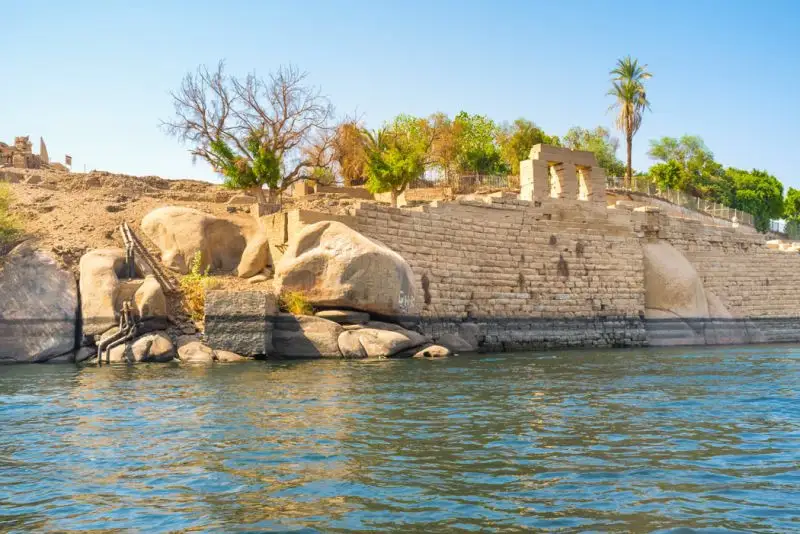
Among Elephantine's most historically significant features is the ancient Nilometer—a sophisticated system for measuring the Nile's annual flood levels. This engineering marvel, with origins possibly dating to the 3rd millennium BC and rebuilt multiple times, consists of a stairway descending into the river with calibrated markings on the walls.
Ancient Egyptians used Nilometer readings for several crucial purposes:
Agricultural Prediction: Flood height directly correlated with agricultural productivity—priests and administrators used Nilometer readings to predict crop yields and plan food distribution.
Taxation Assessment: The government adjusted tax rates based on flood levels. Higher floods meant better harvests and higher taxes; lower floods meant reduced harvests and tax relief. This system ensured taxation matched actual agricultural capacity.
Early Warning: Nilometer readings provided advance warning of dangerously high floods (which could devastate settlements) or worryingly low floods (which meant famine). This allowed preparation and emergency measures.
Religious Significance: The flood's arrival and height had religious meaning connected to Khnum, believed to control the flood from his cavern under Elephantine Island. Priests performed rituals at the Nilometer during the flood season.
The Elephantine Nilometer remains one of the best-preserved examples of this crucial ancient technology, demonstrating Egyptian engineering sophistication and the practical knowledge required to manage agricultural civilization dependent on the Nile's annual cycle.
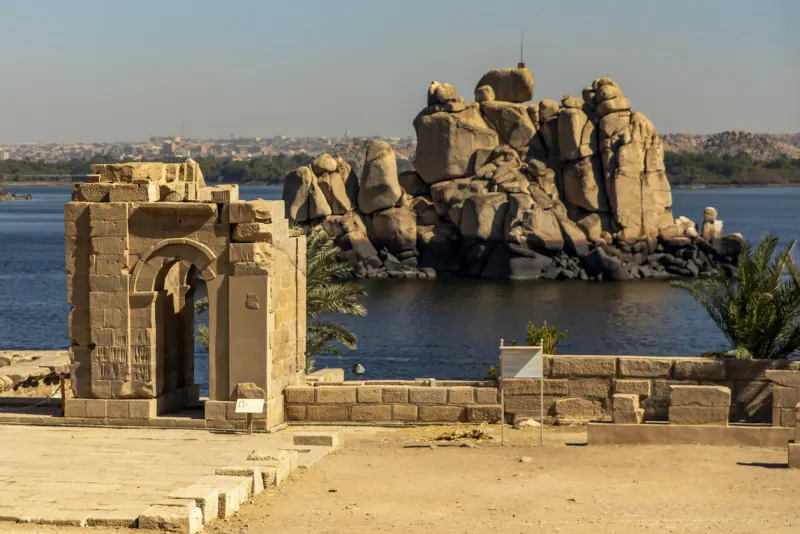
The Temple of Khnum, dedicated to the ram-headed creator god who controlled the Nile's flood, served as Elephantine's primary religious center. While largely ruined today, the temple's remaining foundations, column bases, and scattered architectural elements reveal its original grandeur. The temple underwent multiple building phases from the Old Kingdom through the Ptolemaic Period, with each dynasty adding or modifying structures.
Archaeological excavations have uncovered beautiful reliefs, hieroglyphic inscriptions, and architectural elements now displayed in the Aswan Museum. The temple's location at the island's southern tip suggests religious significance related to the Nile's source (believed by ancient Egyptians to originate in caverns under Elephantine) and the boundary between Egypt and Nubia.
Unlike royal tombs and temples which receive most archaeological attention, Elephantine preserves extensive remains of residential areas where ordinary Egyptians lived. These ruins provide rare insights into daily life, urban planning, domestic architecture, and social organization.
Visitors can see foundations of mud-brick houses arranged along narrow streets, with layouts showing rooms for various functions—living areas, storage, cooking, and sleeping quarters. The preservation of these residential areas allows archaeologists to study how ancient Egyptian towns functioned beyond the monumental architecture that dominates most sites.
The Aswan Museum, located on Elephantine Island in a building originally constructed for British architect Sir William Willcocks (designer of the Old Aswan Dam), displays artifacts discovered on the island and throughout the Aswan region. The museum's collection includes pottery, statues, stelae, mummies, jewelry, tools, weapons, and everyday objects spanning from prehistoric times through the Islamic period.
Particularly notable exhibits include artifacts from the Temple of Khnum, the Aramaic papyri from the Jewish community, objects from Nubian cultures, and displays explaining Elephantine's role as Egypt's southern frontier. The museum provides essential context for understanding the archaeological sites visitors explore around the island.
Elephantine's northern portion contains two traditional Nubian villages—Siou and Koti—where Nubian families displaced by the Aswan High Dam's construction found new homes. These communities maintain strong Nubian cultural identity, language, traditions, and architectural styles, creating vibrant living heritage contrasting with the ancient ruins elsewhere on the island.
Nubian houses on Elephantine feature distinctive architectural and decorative elements:
Bright Colors: Houses are painted in vibrant blues, yellows, pinks, greens, and other brilliant hues creating a kaleidoscope of color visible from across the Nile. These colors aren't merely decorative—they carry cultural meaning and reflect Nubian aesthetic preferences.
Decorative Patterns: Walls feature geometric patterns, nature motifs (particularly palm trees), and sometimes Arabic calligraphy or Nubian symbols. Many houses display decorative plates embedded in walls or arranged in patterns.
Architectural Style: Traditional Nubian houses feature domed roofs (for cooling), thick walls (for insulation), small windows (limiting heat entry), and courtyards (for ventilation and family activities). Modern houses sometimes blend traditional elements with contemporary construction.
Entrance Decorations: Doorways receive special attention with elaborate decorations, protective symbols, and welcoming inscriptions reflecting Nubian hospitality traditions.
Wandering through Elephantine's Nubian villages offers cultural experiences increasingly rare in modern Egypt:
Warm Hospitality: Nubians are renowned for friendliness and hospitality. Villagers often greet visitors warmly, and many families invite travelers to share tea, see their homes, or learn about Nubian culture. This genuine hospitality creates memorable personal connections.
Traditional Crafts: Many families practice traditional crafts including basket weaving, pottery, textile arts, and jewelry making. Visitors can watch artisans at work and purchase authentic handmade items directly from makers.
Nubian Language: While most Nubians speak Arabic, the Nubian language (actually several related languages) remains actively spoken, particularly among older generations. Hearing Nubian spoken provides connection to this ancient linguistic tradition.
Music and Dance: Nubian musical traditions featuring distinctive rhythms, instruments (particularly drums and tambourines), and dance styles occasionally can be experienced during festivals or arranged performances.
Culinary Traditions: Some families offer traditional Nubian meals featuring dishes unique to this culture. Flavors, ingredients, and cooking methods differ from standard Egyptian cuisine, providing culinary exploration opportunity.
When visiting Elephantine's Nubian villages, respectful behavior is essential:
The two Nubian villages—Siou and Koti—feature brightly painted houses in vibrant blues, yellows, pinks, and greens, narrow winding streets, decorative wall patterns, and traditional domed architecture. Residents are famously friendly and hospitable, often inviting visitors for tea or to view their homes. You can watch traditional crafts being made, hear Nubian language spoken, and experience authentic cultural traditions. The villages represent living Nubian culture relocated after Aswan High Dam construction.
Get in touch with our local experts for an unforgettable journey.
Plan Your Trip
Elephantine is easily accessible from Aswan's Corniche:
Public Ferry: Regular ferry service operates throughout the day (approximately every 30 minutes) from the Corniche ferry landing near the Aswan Museum. The brief crossing costs minimal fees (a few Egyptian pounds). This is how most local residents travel to and from the island.
Private Motorboat: Motorboat taxis can be hired from various Corniche points for negotiated fees. This provides more flexible timing and direct transport to specific island locations.
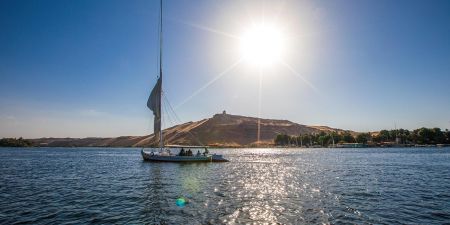
Felucca Sailboat: Traditional sailing boats can be chartered for leisurely crossings, often combined with longer Nile cruises around Aswan's islands. The experience of sailing in a traditional boat adds romantic dimension to the visit.
The crossing takes approximately 5-10 minutes regardless of transportation method chosen, providing pleasant Nile River views and refreshing breezes.
Allow 2-4 hours to explore Elephantine Island depending on interests:
Archaeological Sites (1-2 hours): Visit the Temple of Khnum ruins, Nilometer, ancient residential remains, and Aswan Museum.
Nubian Villages (1-2 hours): Wander through Siou and Koti villages, admire colorful houses, interact with friendly locals, visit craft workshops, and perhaps accept an invitation for tea.
Relaxation: Find quiet spots along the river to rest, enjoy views of Aswan's skyline across the water, and watch traditional boat traffic passing by.
Photography: The colorful Nubian houses, ancient ruins, Nile views, and village life provide endless photography opportunities.
Elephantine Island combines well with other Aswan attractions:
Kitchener's Island (adjacent): Botanical garden on a neighboring island accessible by short boat ride.
Tombs of the Nobles (West Bank, 15 minutes): Rock-cut tombs of Aswan's ancient governors and officials with beautiful views across the Nile.
Nubian Museum (East Bank, 10 minutes): Comprehensive museum of Nubian culture and history.
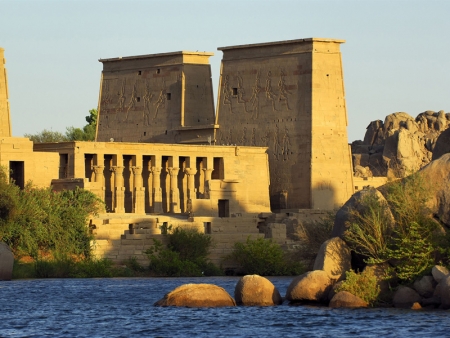
Philae Temple (20 minutes south): Beautiful Ptolemaic temple on Agilkia Island.
Many visitors combine Elephantine with Kitchener's Island in a morning or afternoon excursion, then visit other Aswan sites on separate days.
You can reach Elephantine Island by: (1) public ferry from the Corniche ferry landing (most economical, runs every 30 minutes throughout the day), (2) private motorboat taxi hired from various Corniche points (more flexible timing), or (3) traditional felucca sailboat chartered for leisurely crossings. All crossings take approximately 5-10 minutes. The ferry is how most local residents travel to and from the island.
Elephantine Island offers: (1) Temple of Khnum ruins (ancient religious center), (2) 3,000-year-old Nilometer (device for measuring Nile flood levels), (3) ancient residential ruins showing daily life, (4) Aswan Museum displaying local artifacts, (5) two traditional Nubian villages (Siou and Koti) with brightly painted houses, (6) traditional crafts and workshops, (7) opportunities to experience authentic Nubian culture and hospitality.
Yes, absolutely! Elephantine Island offers a unique combination of ancient archaeological sites (including the Temple of Khnum, Nilometer, and residential ruins) and living Nubian culture (colorful villages, friendly locals, traditional crafts). This blend of history and authentic cultural experience sets it apart from typical tourist sites. The easy accessibility, relatively few crowds, and genuine interactions with Nubian communities make it one of Aswan's most rewarding attractions.
Allow 2-4 hours to explore Elephantine Island thoroughly: 1-2 hours for archaeological sites (Temple of Khnum, Nilometer, ancient ruins, Aswan Museum) and 1-2 hours for walking through Nubian villages, interacting with locals, viewing crafts, and perhaps accepting hospitality invitations for tea. The crossing by ferry or boat takes 5-10 minutes each way. Half-day visits work well combined with Kitchener's Island or other nearby Aswan attractions.
Yes, several small guesthouses and homestays operate in the Nubian villages on Elephantine Island, offering authentic cultural experiences including traditional meals, family interactions, and evening activities. Staying overnight allows experiencing village life beyond typical day-visit hours, hearing evening music, seeing the sunset from the island, and enjoying the slower pace after day-tourists depart. These accommodations are simple but charming and provide genuine cultural immersion.
The Elephantine Nilometer is a 3,000-year-old device for measuring the Nile's annual flood levels. Ancient Egyptians used Nilometer readings to predict agricultural productivity, assess appropriate tax rates (higher floods meant better harvests and higher taxes), provide early warning of dangerous floods or droughts, and perform religious rituals related to Khnum (god who controlled the flood). The Nilometer represents sophisticated ancient engineering and the practical knowledge required to manage a civilization dependent on the Nile's annual cycle.
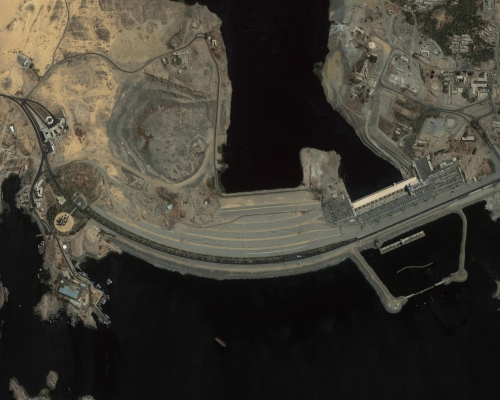
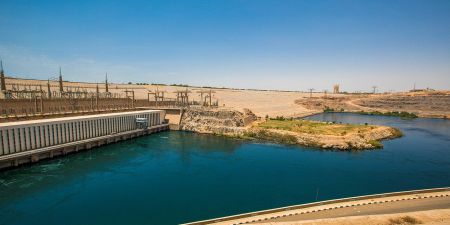
Aswan High Dam Located in the middle of the Egyptian Desert is one of the largest embankment dams of the world, Aswan High Dam. Known as Saad el Aali in Arabic Aswan High Dam is one of the greatest engineering miracles of this world.
Aswan City is a tranquil Nile-side destination known for its ancient temples, Nubian heritage, and stunning river scenery.
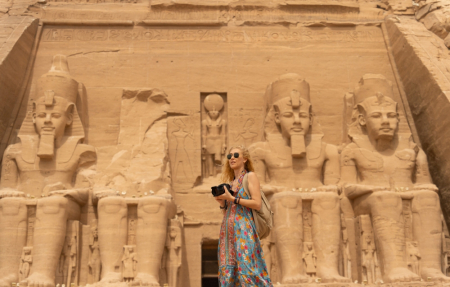
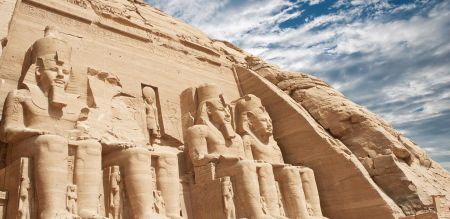
Visit Abu Simbel Temples Egypt to marvel at Ramesses II's spectacular monuments. Uncover ancient history and breathtaking architecture.
Discover the Aswan High Dam Egypt—an engineering marvel shaping the Nile and Lake Nasser. Explore its history, impact, and legacy.
Explore Aswan High Dam Egypt, a groundbreaking structure behind Lake Nasser. Learn about its construction, benefits, and lasting significance.
Uncover the wonders of Philae Temple Aswan—an ancient island temple dedicated to Isis. Experience the mesmerizing sound and light show.
Discover Elephantine Island Aswan—wander ancient ruins and experience the charm of an authentic Nubian village on the Nile's enchanting shores.
Uncover Nubian heritage at the Nubian Museum Aswan. Explore ancient art, history, and culture in this UNESCO-recognized treasure.
Read our travel wiki about Aswan Botanical Garden and explore its plants, history, and educational importance in Aswan.
Learn about the monastery of st simeon and the tombs of the nobles in Aswan, their history, architecture, and significance. Start exploring now.