St. Catherine City

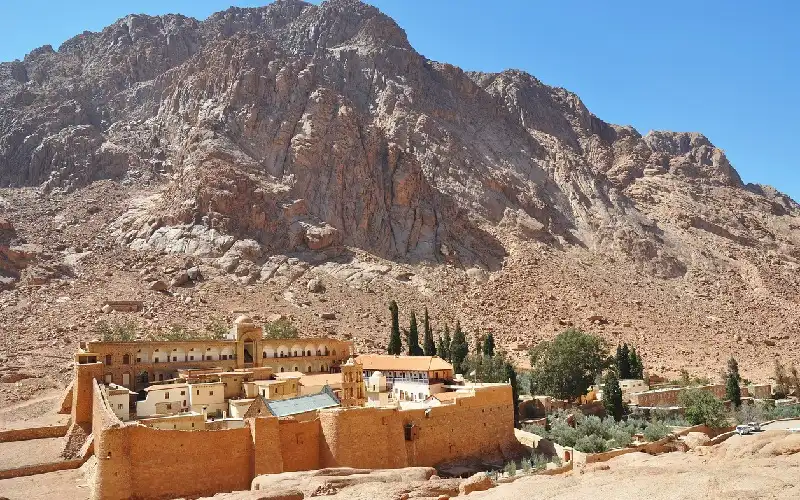
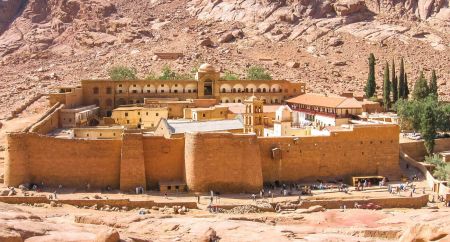
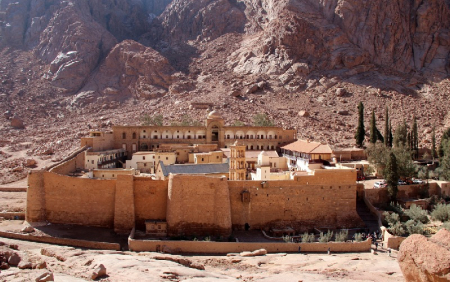
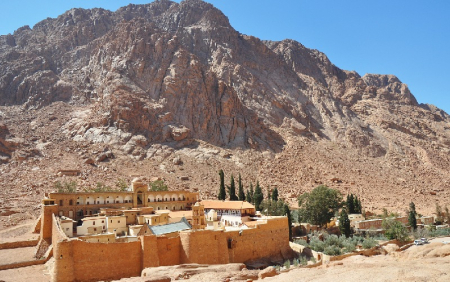
St Catherine Egypt represents one of history's most extraordinary treasures. This remarkable site features a monastery that monks have inhabited continuously for 1,500 years. The ancient complex sits 1,586 meters (5,203 ft) above sea level, just 120 kilometers from Nuweiba.
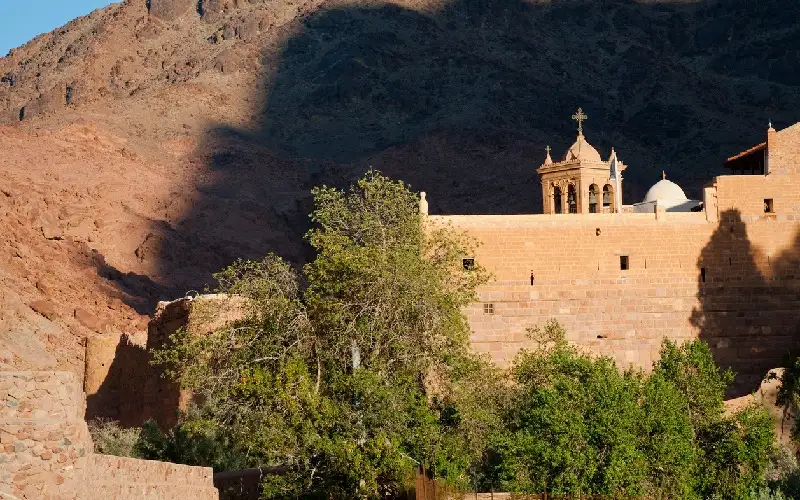
Byzantine emperor Justinian the Great built St Catherine's monastery in the 6th century, making it the city's spiritual center. The timeless structure served as both a fortress and shrine, built on Moses's Burning Bush's traditional site that remains the monastery's most sacred treasure. The church's structure has remained largely unchanged since its construction, even as the surrounding area evolved over centuries.
UNESCO recognized St Catherine's historical and spiritual importance by declaring it a World Heritage Site in 2002. The area's population reached 4,792 in 2021. This small yet significant destination draws visitors from around the world who come to experience its rich 17-century heritage.
St Catherine is located in the Sinai Peninsula, sitting 1,586 meters (5,203 feet) above sea level, just 120 kilometers from Nuweiba. This remarkable site features a monastery that monks have inhabited continuously for 1,500 years in a mountainous region of Egypt.
Byzantine emperor Justinian the Great built St Catherine's monastery in the 6th century, specifically between 548-565 CE. The period saw construction of impressive fortifications with 200 soldiers stationed to protect the community, making it the world's oldest functioning Orthodox Christian monastery.
St Catherine's monastery is famous as the world's oldest continuously inhabited Christian monastery (1,500 years), built on the traditional site of Moses's Burning Bush. It houses one of the world's oldest working libraries with over 3,000 manuscripts, including the renowned 4th-century Codex Sinaiticus containing the oldest complete New Testament.
Yes, UNESCO recognized St Catherine's historical and spiritual importance by declaring it a World Heritage Site in 2002. This designation helps protect this living museum for future generations, preserving 17 centuries of heritage.
St Catherine Egypt's history extends way beyond the famous monastery. The area belonged to Egypt's "Deshret Reithu" province during the Pharaonic Era (3200-323 BCE). Egyptian rulers constructed the way of Shur across Sinai to Jerusalem in the 16th century BCE. They extracted valuable turquoise, gold, and copper from the region. The nearby Serabit el-Khadim still houses well-preserved ruins, including temples from the 12th Dynasty dedicated to Hathor.
The 3rd century CE saw Christians settling in the area. They sought proximity to biblical sites and refuge from Roman persecution. Around 330 CE, Emperor Constantine's mother, Saint Helena, commissioned a small church and tower near the Burning Bush site.
Emperor Justinian I's building projects between 548-565 CE shaped the monastery's current form. The period saw construction of impressive fortifications with 200 soldiers stationed to protect the community. These defensive walls have protected both the monks and the church's original structures. This preservation makes it the oldest functioning Orthodox Christian monastery in the world.
The monastery has thrived in remarkable isolation for 17 centuries. Its internal layout remains similar to its original design. Local materials have helped preserve authentic components through various restorations.
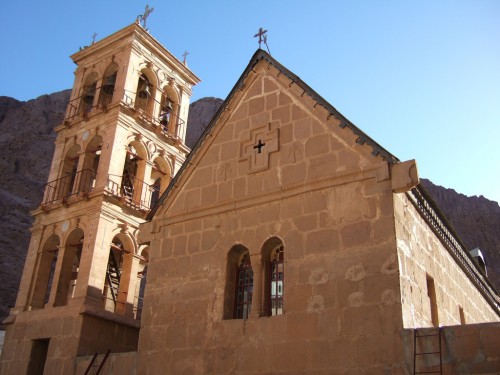
The Chapel of the Holy Bush stands at the monastery's center as its oldest shrine where early Sinai anchorites gathered. This sacred space commemorates the spot where God spoke to Moses through the burning bush, first documented by pilgrim Egeria in 383-384 CE. Visitors must remove their shoes before stepping into this holy place, a practice that honors biblical tradition.
The chapel features a unique design without a traditional iconostasion. This allows pilgrims to kneel and pray directly at the holy table, which rests on four columns. A silver star beneath the altar marks the exact location of the miraculous bush. The bush itself grows nearby and runs on strong today.
The Well of Moses sits north of the catholicon, marking the place where Moses met Jethro's seven daughters according to Exodus. This ancient well serves the monastery community even now, equipped with a modern pump.
The monastery holds a wealth of spiritual treasures and houses one of the world's oldest working libraries. Its collection includes more than 3,000 manuscripts, with the renowned Codex Sinaiticus from the 4th century that contains the oldest complete New Testament.
This sacred complex holds deep meaning for all but one of these monotheistic faiths: Christianity, Islam, and Judaism. The monastery's monks built a mosque in the 11th century to protect the site during times when others destroyed Christian places of worship.
The Chapel of the Holy Bush stands at the monastery's center as its oldest shrine, commemorating the spot where God spoke to Moses through the burning bush. First documented by pilgrim Egeria in 383-384 CE, visitors must remove their shoes before entering this sacred space, honoring biblical tradition.
Yes, the Burning Bush itself grows nearby the chapel and remains strong today. A silver star beneath the altar marks the exact location of the miraculous bush, and the chapel features a unique design without a traditional iconostasion, allowing pilgrims to pray directly at the holy table.
The Well of Moses sits north of the catholicon, marking the place where Moses met Jethro's seven daughters according to Exodus. This ancient well still serves the monastery community today, equipped with a modern pump for continued functionality.
Get in touch with our local experts for an unforgettable journey.
Plan Your Trip
The Jebeliya Bedouin tribe has guarded St Catherine Egypt for more than 1,400 years. Emperor Justinian brought them as Roman soldiers to protect the newly built monastery. They later married local tribespeople and created the peaceful Jebeliya tribe we see today. Their conversion to Islam didn't stop them from maintaining a unique bond with the Christian monastery.
These resilient people have faced and overcome many challenges across centuries. Wars, forced relocations, drought, and pandemics tested their resolve. They endured being labeled as "traitors" during the Israeli occupation (1967-1982), while they secretly helped Egyptian Army forces navigate through the mountains.
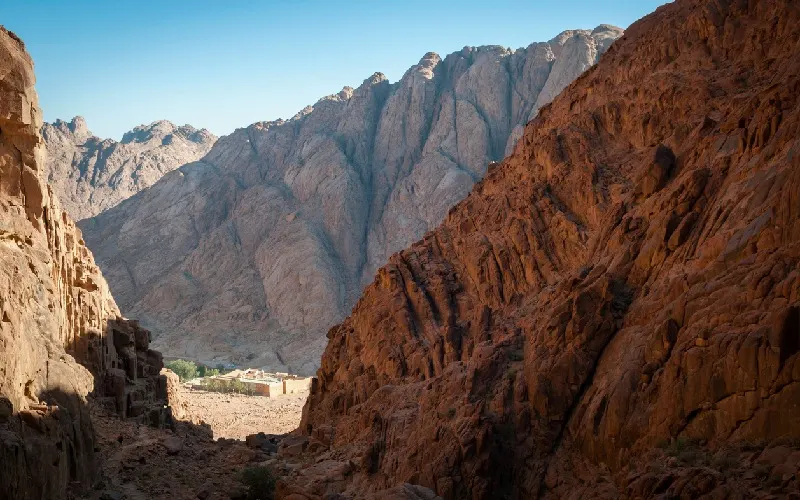
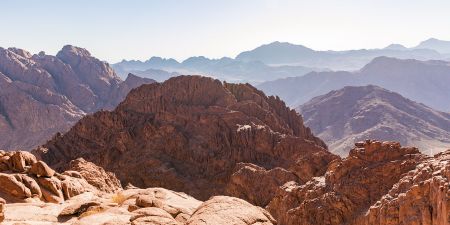
The Saint Katherine Protectorate, 34 years old, houses a remarkable ecosystem. The world's smallest butterfly (Sinai baton blue), Nubian ibex, and over 1,262 plant species call this place home. Egypt's tallest peak, Mount Catherine, dominates this high-altitude landscape. Many surrounding peaks rise above 2,000 meters.
The area sees Egypt's coldest nights and snow falls between December and February. This snow plays a crucial role as a water source and slowly melts to fill underground catchments.
St Catherine city stands as one of Egypt's most spiritual places. The ancient mountains and timeless traditions create a space where three major religions find common ground, building an extraordinary connection between people, nature, and spirituality.
The Jebeliya Bedouin tribe has guarded St Catherine for more than 1,400 years. Emperor Justinian brought them as Roman soldiers to protect the newly built monastery. They later married local tribespeople and, despite converting to Islam, maintained a unique bond with the Christian monastery.
The monastery's monks built a mosque in the 11th century to protect the site during times when others destroyed Christian places of worship. This demonstrates the monastery's unique interfaith significance and the harmonious relationship between religions at this sacred location.
St Catherine Egypt stands as remarkable proof of human faith, resilience, and harmony with nature. This ancient site brings together countless threads of history, spirituality, and natural beauty in an array of features found nowhere else on Earth. The monastery has managed to keep its original form since its 6th-century construction. Visitors can step back in time as they learn about its sacred spaces.
St Catherine's significance reaches way beyond its ancient walls. The site serves as a rare place where Christianity, Islam, and Judaism find common ground. It showcases the extraordinary bond between the Jebeliya Bedouins and Christian monks that spans over 14 centuries. The monastery's treasures include the world's oldest continuously operating library and natural wonders like Egypt's highest peak.
Time flows differently in this mountain sanctuary. Empires rose and fell, wars raged, and civilizations changed, yet St Catherine has managed to keep its quiet traditions. The UNESCO World Heritage status definitely helps protect this living museum for future generations. The sort of thing I love about St Catherine is how it connects heaven and earth through its high mountains and deep spiritual roots.
Modern-day visitors walk the same paths as ancient pilgrims. They breathe the same desert air and gaze upon the same sacred bush where Moses reportedly encountered God. This unbroken link across 17 centuries makes St Catherine Egypt more than just a destination - it's a trip through time itself. Without doubt, few places on Earth are a great way to get such a powerful mix of historical significance, spiritual depth, cultural heritage, and natural splendor all preserved in one extraordinary location.
St Catherine holds deep meaning for three monotheistic faiths: Christianity, Islam, and Judaism. The site serves as a rare place where all three religions find common ground, showcasing extraordinary interfaith harmony spanning centuries.
The monastery holds one of the world's oldest working libraries with a collection including more than 3,000 manuscripts. The most renowned is the Codex Sinaiticus from the 4th century, which contains the oldest complete New Testament in existence.
The Saint Katherine Protectorate, 34 years old, houses a remarkable ecosystem including the world's smallest butterfly (Sinai baton blue), Nubian ibex, and over 1,262 plant species. Egypt's tallest peak, Mount Catherine, dominates this high-altitude landscape with many surrounding peaks rising above 2,000 meters.
St Catherine experiences Egypt's coldest nights, and snow falls between December and February. This snow plays a crucial role as a water source, slowly melting to fill underground catchments. The high-altitude location creates unique weather conditions for Egypt.
The area's population reached 4,792 in 2021. This small yet significant destination draws visitors from around the world who come to experience its rich 17-century heritage while maintaining its spiritual and cultural authenticity.
During the Pharaonic Era (3200-323 BCE), the area belonged to Egypt's "Deshret Reithu" province. Egyptian rulers extracted valuable turquoise, gold, and copper from the region. The nearby Serabit el-Khadim still houses well-preserved ruins, including temples from the 12th Dynasty dedicated to Hathor.
Discover Marsa Alam, Egypt—your ultimate guide to Red Sea diving, pristine beaches, and unforgettable adventures. Plan your paradise escape now!
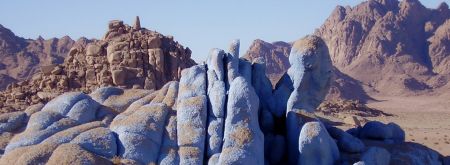
The Blue Desert is not a natural creation like the Black Desert or the White Desert. Also known as Blue Valley, it took its color in 1980 when Belgian artist Jean Verame colored the rocks its rocks.
Experience the magic of Hurghada Egypt. Explore pristine beaches, thrilling water sports, and vibrant nightlife in stunning Hurghada.
Explore the Sinai Peninsula with our travel guide! Discover top beaches, stunning mountains, and must-see attractions in Egypt's hidden gem.
Once a small fishing village and now one of the biggest names in tourism, Sharm El Sheikh is Sinai's major tourism center and one of the world's top diving destinations.
Mount Sinai, also known as Mount Moses and as Jabal Mousa in Arabic, is a mountain in the Sinai Peninsula of Egypt that’s said to be in the same location of the biblical Mount Sinai.
Explore the wonders of Dahab in Egypt on the Red Sea coast. Unwind, dive, and experience the vibrant lifestyle of enchanting Dahab.
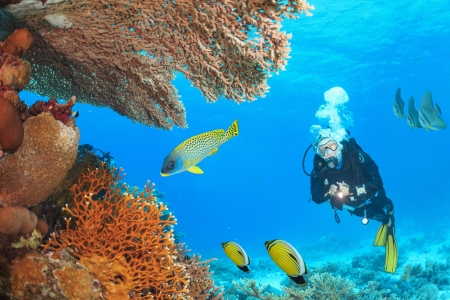
Experience divers, in search of one of the best diving experiences of their lives, come to Dahab for Egypt’s most famous diving site, the Blue Hole.
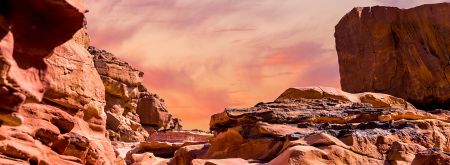
The Colored Canyon is a rock formation on the Sinai peninsula. It is a labyrinth of rocks, some about 40 meters. The colorful rocky canyon is one of those best-kept secrets of Sinai.
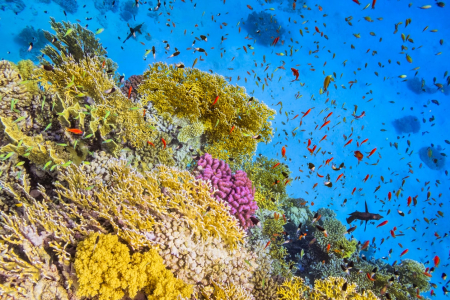
Experience paradise in Marsa Alam Egypt. Enjoy breathtaking beaches, world-class diving, and the tranquility of the Red Sea. Start your journey.
St. Catherine Egypt is a 1,500-year monastery built 548-565 CE on Moses's Burning Bush site. UNESCO Heritage with 3,000+ manuscripts & Codex Sinaiticus.
Saint Catherine's at Mount Sinai has housed monks for 1,500 years. Built 548 CE with Burning Bush & world's oldest library including Codex Sinaiticus.