St. Catherine Monastery
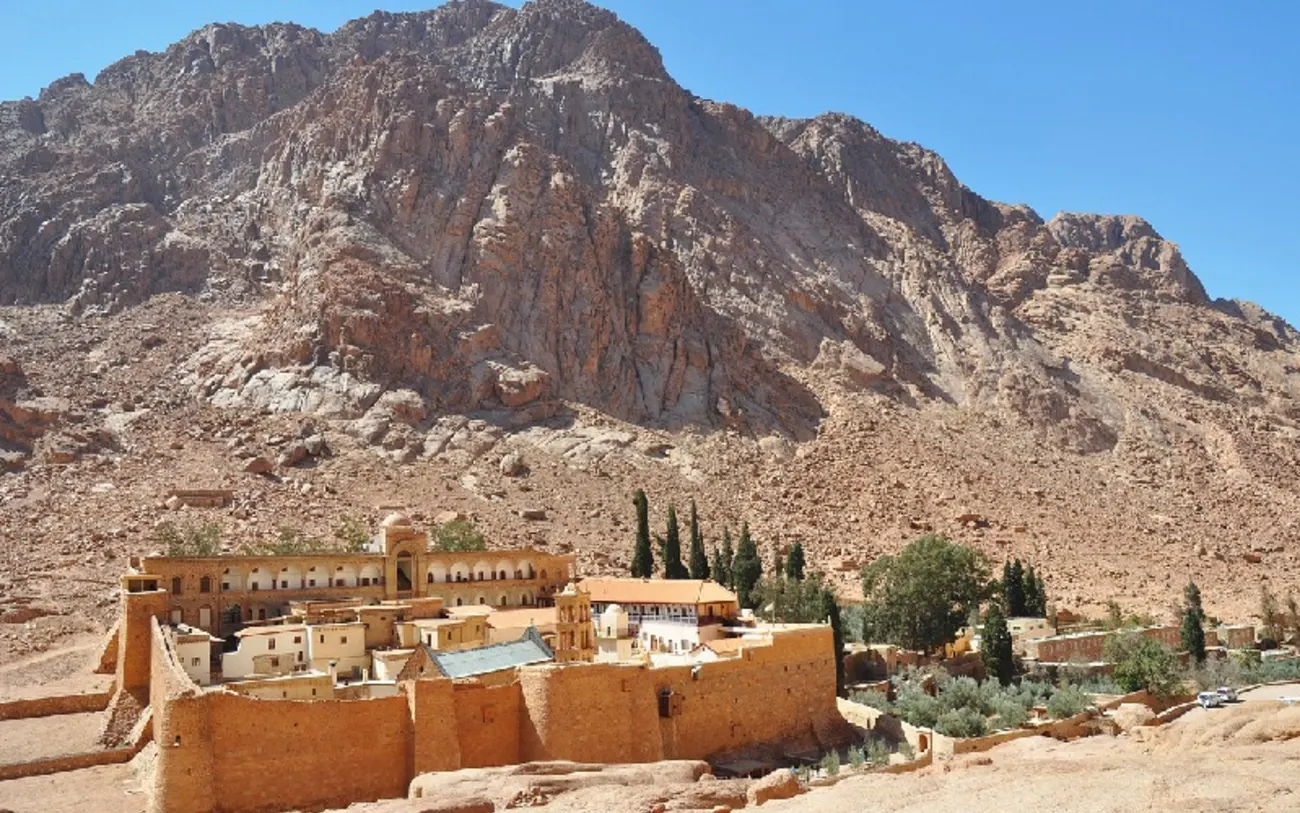
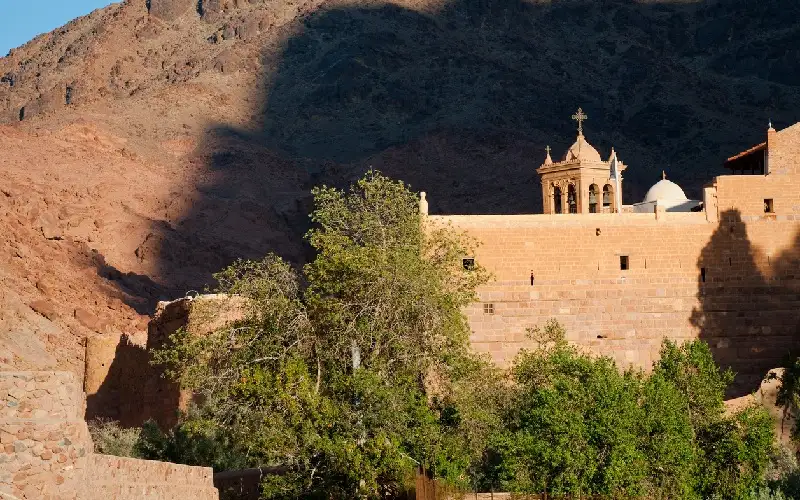
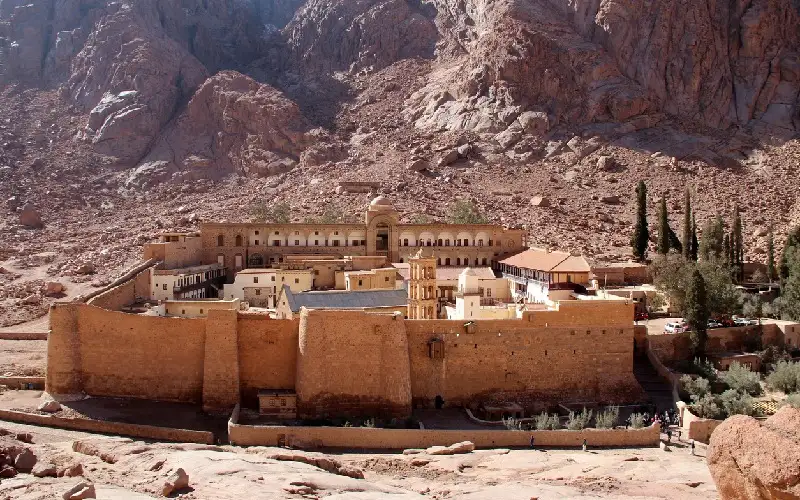
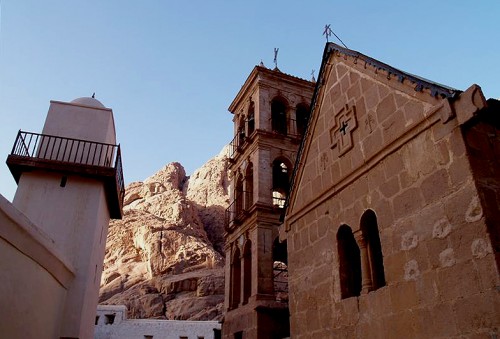
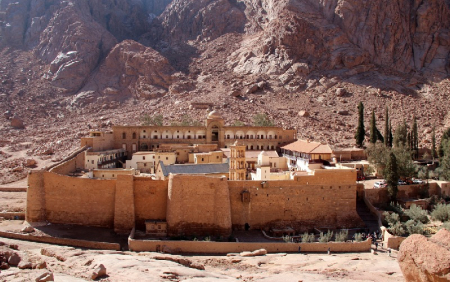
Saint Catherine's Monastery stands as the world's oldest Christian monastery that never stopped housing monks, giving visitors a glimpse of religious tradition spanning over 1,500 years. This remarkable sanctuary sits at Mount Horeb's foot in Egypt's Sinai Peninsula. The monastery's construction took place between 548 and 565 CE, right where Moses received the Tablets of the Law according to the Old Testament.
The monastery's significance reaches way beyond the reach and influence of its age alone. UNESCO recognized Saint Catherine's Monastery as a World Heritage Site in 2002, acknowledging its special meaning to all but one of these Abrahamic faiths: Judaism, Christianity, and Islam. The site's future remains uncertain after a recent court decision transferred ownership to the state while letting the Church maintain usage rights.
The sanctuary's treasures make it truly special. Its library holds rare works that match the Vatican's collection, including the Codex Sinaiticus and the Syriac Sinaiticus. The monastery also houses an outstanding collection of early Christian icons, with the oldest known image of Christ Pantocrator. This remarkable institution has been a beacon of worship, refuge, and scholarship for more than fifteen centuries.
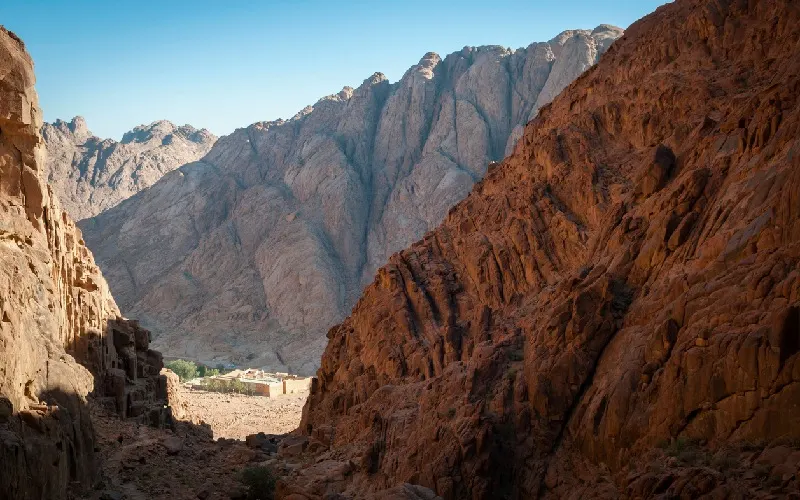
Saint Catherine's Monastery sits at Mount Horeb's (Mount Sinai's) foot in Egypt's Sinai Peninsula. This remarkable sanctuary stands at the exact spot where Moses received the Tablets of the Law according to the Old Testament and saw the miraculous Burning Bush.
Byzantine Emperor Justinian I ordered the monastery's construction between 548 and 565 CE. The monastery has been continuously inhabited for over 1,500 years, making it the world's oldest Christian monastery that never stopped housing monks.
People first called it the Monastery of the Holy Virgin. The name changed after monks discovered Saint Catherine of Alexandria's body in a nearby cave. However, its official title remains the Sacred Autonomous Royal Monastery of Saint Catherine of the Holy and God-Trodden Mount Sinai.
Yes, UNESCO recognized Saint Catherine's Monastery as a World Heritage Site in 2002, acknowledging its special meaning to Judaism, Christianity, and Islam. This designation helps protect this unique site of interfaith significance.
Saint Catherine's Monastery stands at Mount Sinai's base in Egypt's Sinai Peninsula, a site three major world religions consider holy. Byzantine Emperor Justinian I ordered its construction between 548 and 565 CE.
The monastery's location holds deep biblical significance. It marks the exact spot where Moses saw the miraculous Burning Bush. The bush still grows inside the monastery's walls today. Scientists have identified it as Rubus sanctus, a rose family bramble that produces no flowers or fruit. The monastery's monks take special care of this ancient plant. They built a protective wall around it after visitors started taking its leaves and branches to receive blessings.
The monastery's grounds feature the historic Well of Moses. This is where Moses first met Jethro's daughter Zipporah, who later became his wife. The well serves as one of the monastery's primary water sources to this day.
The monastery's name has an interesting history. People first called it the Monastery of the Holy Virgin. Its name changed after monks discovered Saint Catherine of Alexandria's body in a nearby cave. All the same, its official title remains the Sacred Autonomous Royal Monastery of Saint Catherine of the Holy and God-Trodden Mount Sinai.
The site has managed to keep its importance as a pilgrimage destination that draws Christians, Muslims, and Jews.
Yes, the Burning Bush still grows inside the monastery's walls today. Scientists have identified it as Rubus sanctus, a rose family bramble that produces no flowers or fruit. The monastery's monks take special care of this ancient plant and built a protective wall around it after visitors started taking its leaves and branches.
The historic Well of Moses is located on the monastery's grounds and marks the spot where Moses first met Jethro's daughter Zipporah, who later became his wife according to biblical tradition. The well serves as one of the monastery's primary water sources to this day.
Monks first arrived at the sacred site of Saint Catherine's Monastery in the late 3rd century. A Christian pilgrim named Egeria documented the earliest record of monastic life at Mount Sinai in her travel journal from 381-386 CE.
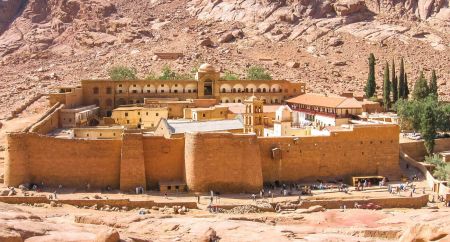
The monastery has stood strong through seventeen centuries since Emperor Justinian I built it, despite facing many historical challenges. Its impressive fortification walls served as a vital defense system during turbulent times, standing 10-20 meters high and 2-3 meters thick.
The monastery received a special charter after the Arab conquests brought the region under Islamic rule in the 7th century. Prophet Muhammad visited the site and gave the monastery a letter of protection in 623 CE. This protection document, called the Ahdname, freed the monks from paying taxes and military service.
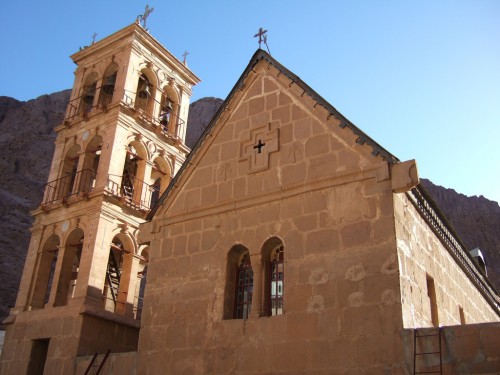
The Fatimid Caliphate (909-1171) saw the transformation of a small chapel into a mosque, which still hosts special occasions. European interest in the monastery grew significantly during the First Crusade, bringing a wave of pilgrims between 1096 and 1270.
The monastery managed to keep its privileged status under Ottoman rulers like Selim I and Suleiman the Magnificent during their reign (1517-1917). The monastery faced legal challenges in 2025 when an Egyptian court determined that the surrounding lands belonged to the state.
Monks first arrived at the sacred site in the late 3rd century. A Christian pilgrim named Egeria documented the earliest record of monastic life at Mount Sinai in her travel journal from 381-386 CE, before Emperor Justinian built the current monastery.
Get in touch with our local experts for an unforgettable journey.
Plan Your Trip
Saint Catherine's Monastery's extraordinary treasures lie beyond its ancient walls, surviving through centuries. The monastery houses the world's oldest operating library, 1,500 years old. Guinness World Records ranks this remarkable collection second only to the Vatican in size.
Rare manuscripts in ten languages fill the library's shelves, including Greek, Christian Palestinian Aramaic, Syriac, Georgian, and Hebrew texts. Constantin von Tischendorf found the Codex Sinaiticus at the monastery in 1844 and 1859, bringing worldwide recognition. This biblical manuscript from the 4th century stands as one of the oldest nearly complete texts.
The Sinai Palimpsests Project has employed advanced imaging technology since 2011 to reveal hidden texts beneath newer writings. Researchers have found over 160 palimpsests with 6,800 pages of recovered texts. These findings include unknown Greek poems and the oldest known recipe attributed to Hippocrates.
The Saint Catherine Foundation joined forces with London's University of the Arts to protect these irreplaceable artifacts. Together they created special stainless steel boxes for 2,187 parchment manuscripts. These boxes employ oxygen starvation systems that shield the documents from fire and the harsh desert climate.
The Codex Sinaiticus is a biblical manuscript from the 4th century, standing as one of the oldest nearly complete texts of the Bible. Constantin von Tischendorf discovered it at the monastery in 1844 and 1859, bringing worldwide recognition to Saint Catherine's library collection.
Saint Catherine's Monastery houses the world's oldest operating library, 1,500 years old. Guinness World Records ranks this remarkable collection second only to the Vatican in size and importance for rare manuscripts and historical documents.
Rare manuscripts in ten languages fill the library's shelves, including Greek, Christian Palestinian Aramaic, Syriac, Georgian, and Hebrew texts. This linguistic diversity reflects the monastery's role as a crossroads of ancient Christian cultures.
Saint Catherine's Monastery stands without doubt as proof of human faith and preservation through fifteen centuries. This ancient sanctuary rests at Mount Sinai's foot and serves as an active place of worship while protecting priceless historical treasures. The monastery creates a unique spiritual intersection between three major world religions—Judaism, Christianity, and Islam.
The monastery's walls protect extraordinary artifacts that scholars call irreplaceable. The library's collection matches the Vatican's historical significance, with treasures like the Codex Sinaiticus and many palimpsests that reveal hidden ancient texts. Modern technology now helps safeguard these delicate documents. Specialized storage systems shield them from fire and harsh desert conditions.
Saint Catherine's has watched empires rise and fall through time. It stayed strong because of its remarkable diplomatic ties with rulers of all types. The protection charter, believed to be from Prophet Muhammad himself, shows how this Christian sanctuary earned respect beyond religious boundaries.
Recent legal battles over land ownership show that the monastery's future needs careful protection. Notwithstanding that, Saint Catherine's Monastery gives visitors a rare view into an unbroken religious tradition older than most existing institutions. This sacred place connects our present world to the distant past through its ancient walls, biblical burning bush, and scholarly treasures.
The Ahdname is a letter of protection that Prophet Muhammad gave the monastery in 623 CE after visiting the site. This protection document freed the monks from paying taxes and military service, demonstrating respect across religious boundaries and helping the monastery survive under Islamic rule.
The monastery's impressive fortification walls stand 10-20 meters high and 2-3 meters thick. These walls served as a vital defense system during turbulent times throughout the monastery's seventeen-century history, protecting both the monks and sacred treasures.
Yes, during the Fatimid Caliphate (909-1171), a small chapel was transformed into a mosque, which still hosts special occasions. This demonstrates the monastery's unique interfaith character and its respect for Islamic tradition.
The Sinai Palimpsests Project has employed advanced imaging technology since 2011 to reveal hidden texts beneath newer writings in the monastery's manuscripts. Researchers have discovered over 160 palimpsests with 6,800 pages of recovered texts, including unknown Greek poems and the oldest known recipe attributed to Hippocrates.
The Saint Catherine Foundation partnered with London's University of the Arts to create special stainless steel boxes for 2,187 parchment manuscripts. These boxes employ oxygen starvation systems that shield the documents from fire and the harsh desert climate, ensuring their preservation for future generations.
Discover Marsa Alam, Egypt—your ultimate guide to Red Sea diving, pristine beaches, and unforgettable adventures. Plan your paradise escape now!
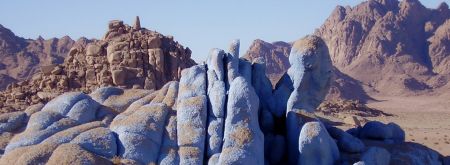
The Blue Desert is not a natural creation like the Black Desert or the White Desert. Also known as Blue Valley, it took its color in 1980 when Belgian artist Jean Verame colored the rocks its rocks.
Experience the magic of Hurghada Egypt. Explore pristine beaches, thrilling water sports, and vibrant nightlife in stunning Hurghada.
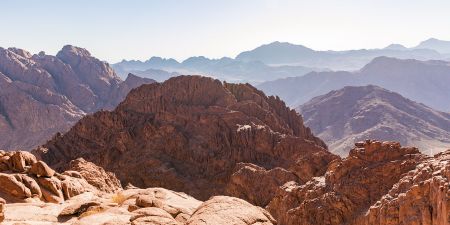
Explore the Sinai Peninsula with our travel guide! Discover top beaches, stunning mountains, and must-see attractions in Egypt's hidden gem.
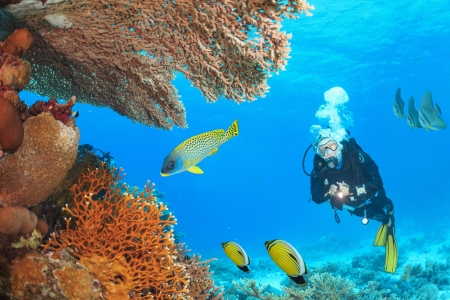
Once a small fishing village and now one of the biggest names in tourism, Sharm El Sheikh is Sinai's major tourism center and one of the world's top diving destinations.
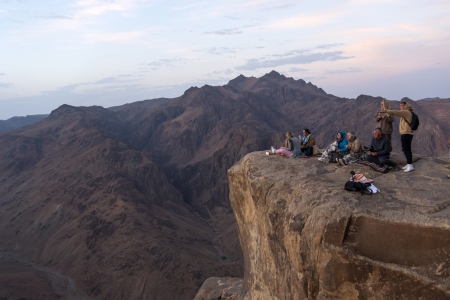
Mount Sinai, also known as Mount Moses and as Jabal Mousa in Arabic, is a mountain in the Sinai Peninsula of Egypt that’s said to be in the same location of the biblical Mount Sinai.
Explore the wonders of Dahab in Egypt on the Red Sea coast. Unwind, dive, and experience the vibrant lifestyle of enchanting Dahab.
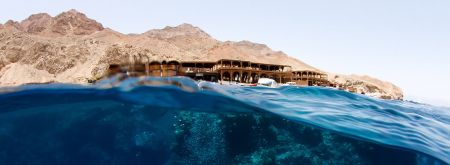
Experience divers, in search of one of the best diving experiences of their lives, come to Dahab for Egypt’s most famous diving site, the Blue Hole.
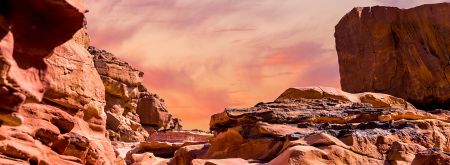
The Colored Canyon is a rock formation on the Sinai peninsula. It is a labyrinth of rocks, some about 40 meters. The colorful rocky canyon is one of those best-kept secrets of Sinai.
Experience paradise in Marsa Alam Egypt. Enjoy breathtaking beaches, world-class diving, and the tranquility of the Red Sea. Start your journey.
St. Catherine Egypt is a 1,500-year monastery built 548-565 CE on Moses's Burning Bush site. UNESCO Heritage with 3,000+ manuscripts & Codex Sinaiticus.
Saint Catherine's at Mount Sinai has housed monks for 1,500 years. Built 548 CE with Burning Bush & world's oldest library including Codex Sinaiticus.