How Were the Pyramids Built?
.jpg "How Were the Pyramids Built?")
The Egyptian pyramids are iconic ancient monuments built mainly during the Old and Middle Kingdoms as royal tombs reflecting deep religious beliefs and extraordinary engineering skill. About 138 pyramids stretch along the Nile’s western desert, ranging from the massive Giza pyramids to small, ruined structures. Distinguished by their scale, precision, and lasting durability, Egyptian pyramids remain powerful symbols of ancient Egypt and offer key insight into its civilization, beliefs, and technological achievements.
Before pyramids, Egyptian nobles and pharaohs were buried in rectangular mud-brick structures called mastabas (Arabic for "bench" describing their shape). These flat-roofed tombs featured underground burial chambers accessed by vertical shafts, with chapels above for offerings and rituals.
Features: Mud-brick construction, flat roofs, rectangular plan, underground burial chambers
Period: Early Dynastic through Old Kingdom (continued alongside pyramids)
Examples: Saqqara mastaba fields, Giza mastabas of nobles
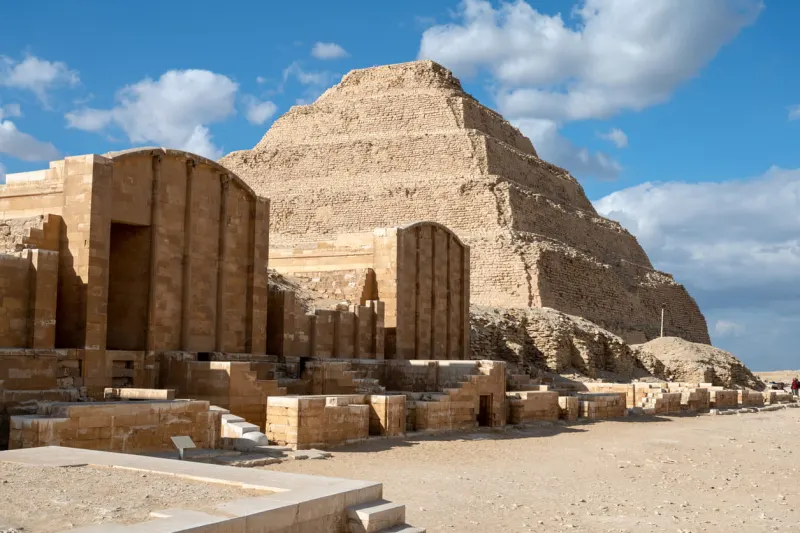
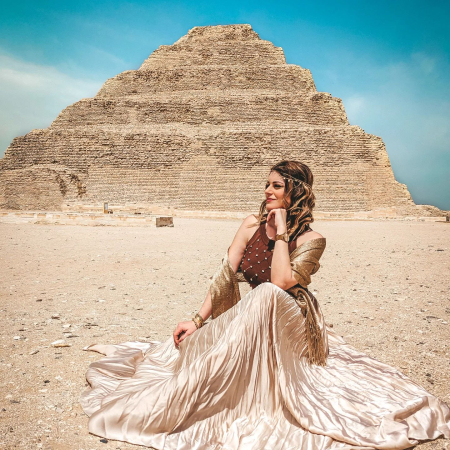
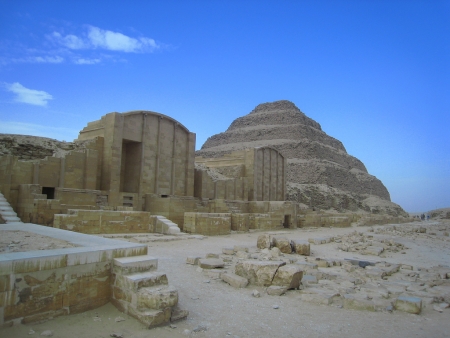
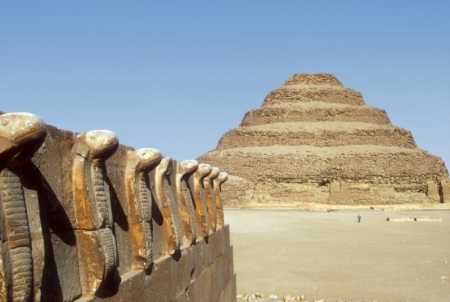
The Step Pyramid of Djoser at Saqqara represents the revolutionary transition from mastabas to monumental stone pyramids. Architect Imhotep designed this structure by stacking six progressively smaller mastabas atop each other, creating 62-meter-tall stepped pyramid—Egypt's first major stone building.
Innovation: Stone construction at monumental scale, stacked mastaba design, elaborate complex
Significance: Established pyramid form and stone architecture tradition
Pharaoh Sneferu's Bent Pyramid at Dahshur demonstrates the transition from stepped pyramids to true smooth-sided pyramids. Uniquely, this pyramid changes angle midway up (from 54° to 43°), likely due to structural concerns during construction, creating its distinctive "bent" appearance.
Innovation: First attempt at smooth-sided pyramid (though angle changed)
Significance: Shows experimentation toward true pyramid form
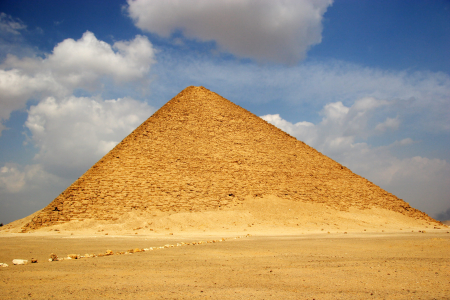
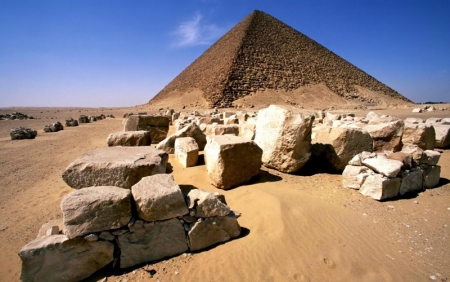
Sneferu's Red Pyramid at Dahshur represents Egypt's first successful true smooth-sided pyramid with consistent 43° angle. Named for reddish limestone core (exposed after casing stones removed), this pyramid established the true pyramid form perfected at Giza.
Innovation: First successful true pyramid with consistent angle
Significance: Prototype for Giza pyramids
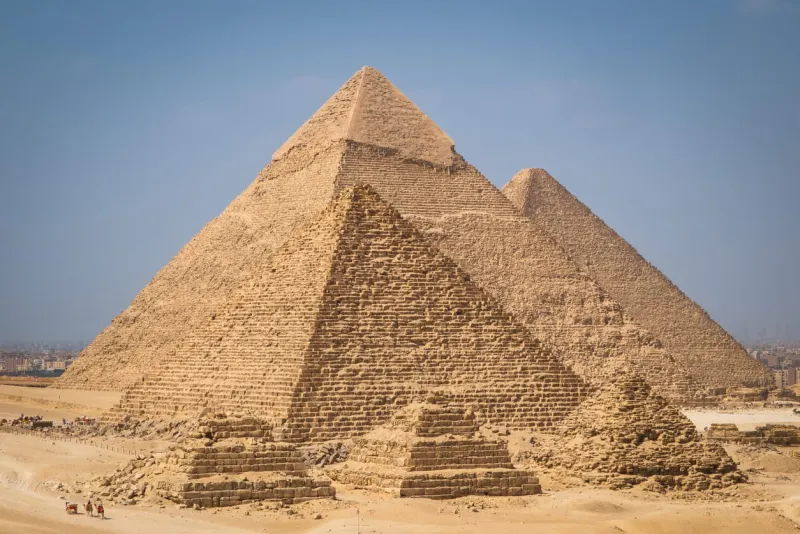
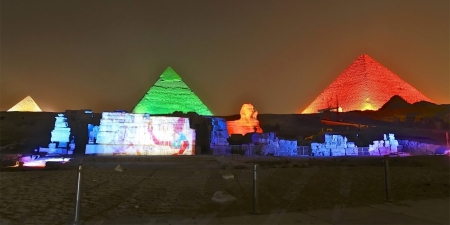
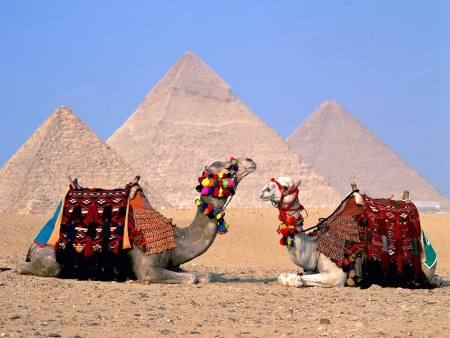
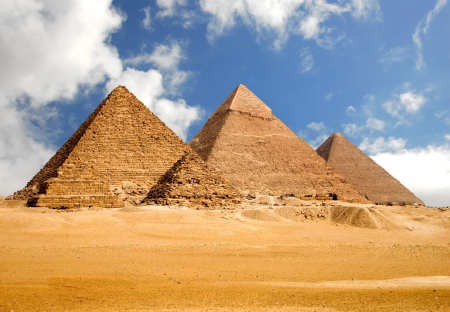
The Giza pyramids (Khufu, Khafre, Menkaure) represent the pinnacle of pyramid building, combining massive scale, precise engineering, sophisticated internal chambers, and associated temple complexes. The Great Pyramid of Khufu, originally 146.5 meters tall, remained the world's tallest structure for over 3,800 years.
Innovation: Massive scale, complex internal passages, precise astronomy alignment
Significance: Peak of pyramid achievement, only surviving Ancient Wonder
After the 4th Dynasty Giza pyramids, subsequent pyramids were generally smaller and less precisely built, though some featured important
innovations:
You'll find approximately 138 identified pyramids in Egypt scattered across a 100-km stretch west of the Nile from Abu Rawash north of Cairo to Hawara in Fayoum. Major sites include Giza (3 main pyramids plus smaller ones), Saqqara (multiple pyramids), Dahshur (2 main pyramids), and others.
Workers: Contrary to popular myth, pyramids were NOT built by slaves but by organized workforce of paid laborers, conscripted farmers (during Nile flood season when agricultural work impossible), and skilled craftsmen.
Workforce Size: Estimates for Great Pyramid suggest 20,000-30,000 workers including quarrymen, haulers, masons, engineers, and support personnel.
Worker Villages: Archaeological evidence at Giza reveals worker settlements with bakeries, breweries, medical facilities, and organized housing.
Organization: Highly organized crews with team names, supervisors, and specific responsibilities (quarrying, hauling, placement, finishing).
Limestone: Primary construction material quarried locally near pyramid sites using copper tools and wooden wedges driven into natural cracks.
Granite: Harder stone for burial chambers and special features, quarried at Aswan (800+ km south) and transported by boat during Nile flood season.
Casing Stones: Fine white limestone from Tura quarries (across Nile) for smooth outer casing creating brilliant white gleaming surface.
Methods: Workers used copper chisels, wooden wedges (expanding when wet), stone pounding tools, and sand abrasives.
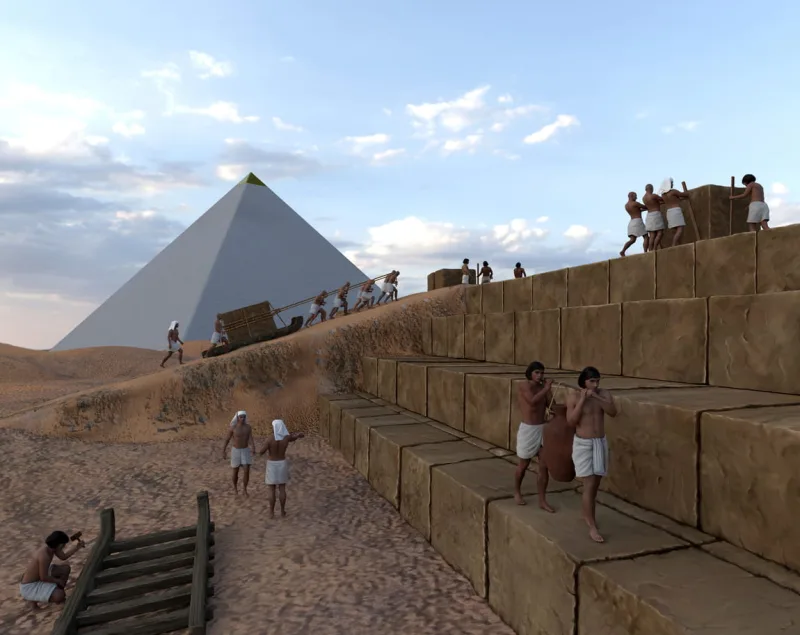
Theory 1 - Straight Ramps: Long straight ramps of mud-brick and rubble extended from quarries to pyramid, raised as pyramid grew (problem: would require enormous material volume).
Theory 2 - Spiral Ramps: Ramps spiraled around pyramid as it rose (better material efficiency but unclear how final pyramid peak completed).
Theory 3 - Internal Ramps: Ramps built within pyramid structure itself (explains some internal features but limited archaeological evidence).
Theory 4 - Combined Methods: Different ramp types used at different construction stages (most likely scenario).
Transport on Land: Wooden sledges pulled by teams of workers over lubricated tracks.
Transport by Water: Stones from distant quarries floated on barges during Nile flood season.
Precision: Pyramids aligned precisely with cardinal directions (often within 0.05° accuracy) using astronomical observations.
Leveling: Foundations leveled to within centimeters using water-filled channels.
Placement: Exact methods for lifting and placing multi-ton blocks remain debated (levers, cranes, counterweights all proposed).
Finishing: After core completion, fine limestone casing stones applied from top down, then polished to smooth gleaming surface.
You'll learn pyramids were built using copper tools and stone hammers for quarrying, wooden sledges over lubricated tracks for transport, ramps (exact design debated) for lifting stones, and highly organized workforce of 20,000-30,000 workers. Astronomical observations ensured precise cardinal alignment. Construction took 20-30 years per pyramid.
Primary pyramid function was housing pharaoh's body and grave goods, protecting mummy for eternity while providing everything needed for afterlife.
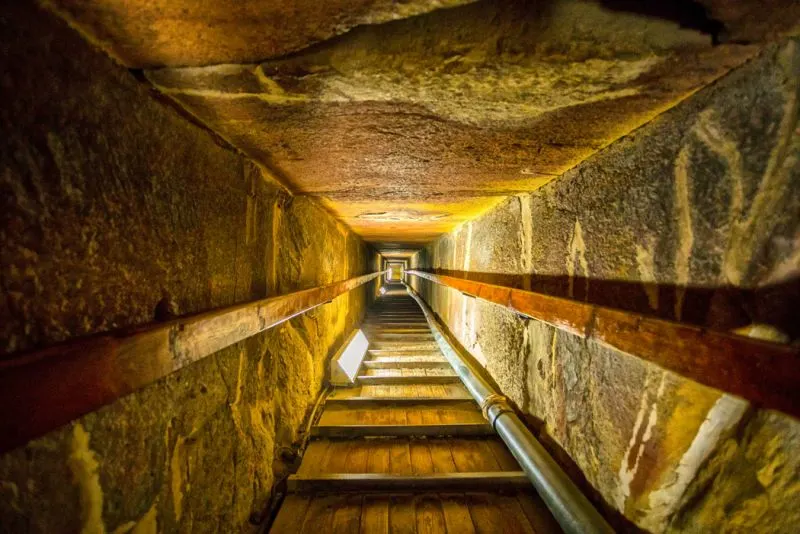
Burial Chambers: Deep within pyramid (some underground, some internal) contained sarcophagus with mummy and treasures.
False Passages: Complex internal passages, false chambers, and blocking systems attempted to deter tomb robbers (largely unsuccessfully—
most pyramids robbed in antiquity).
Pyramids symbolized primordial mound that emerged from chaos waters at creation, connecting to resurrection and rebirth themes.
Shape Symbolism: Pyramid shape represented sun's rays petrified in stone, providing pharaoh's spirit pathway to sky and sun god Ra.
Benben Stone: Pyramidion (capstone) represented sacred benben stone, symbol of sun and creation.
Pyramid construction demonstrated pharaoh's power to organize massive labor forces, command resources, and achieve immortality through monumental architecture.
Economic Impact: Pyramid projects employed thousands, stimulated economy, integrated nation through shared purpose.
Propaganda: Visible across landscape, pyramids proclaimed pharaoh's power and divine status.
Get in touch with our local experts for an unforgettable journey.
Plan Your Trip
Location: 13 km southwest of Cairo
Pyramids: Khufu (Great Pyramid), Khafre, Menkaure plus queens' pyramids, Great Sphinx
Period: 4th Dynasty (circa 2580-2510 BC)
Highlights: Most famous pyramids, best preserved, Great Sphinx, extensive complex
Location: 30 km south of Cairo (Saqqara guide)
Pyramids: Step Pyramid of Djoser, Pyramid of Unas, Pyramid of Teti, others
Period: 3rd-6th Dynasties (circa 2650-2150 BC)
Highlights: Oldest pyramid, Pyramid Texts, magnificent mastaba tombs
Location: 40 km south of Cairo (Dahshur guide)
Pyramids: Bent Pyramid, Red Pyramid (both Sneferu)
Period: 4th Dynasty (circa 2600-2590 BC)
Highlights: Fewer tourists, can enter both pyramids, shows pyramid evolution
Location: Between Giza and Saqqara (Abusir necropolis)
Pyramids: Pyramids of Sahure, Neferirkare, Niuserre (5th Dynasty)
Period: 5th Dynasty (circa 2500-2350 BC)
Highlights: Less crowded, sun temples, good preservation
Location: 100 km south of Cairo
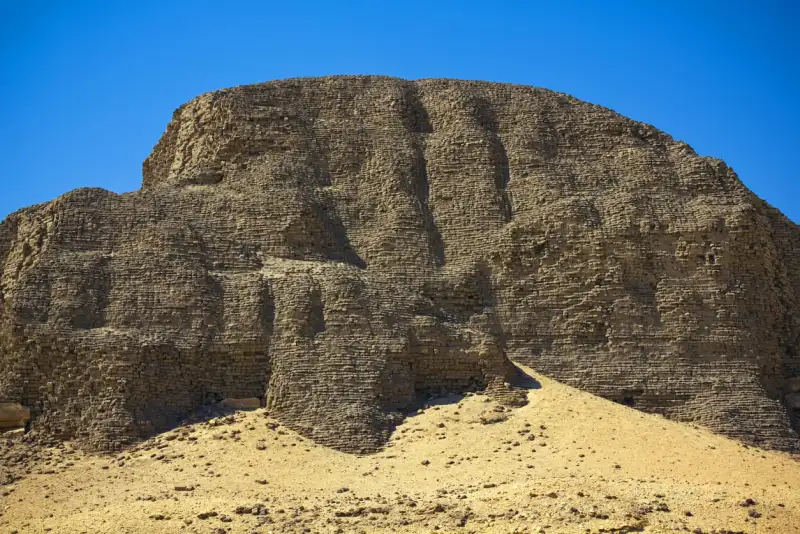
Pyramid: Pyramid of Sneferu (collapsed)
Period: 4th Dynasty (circa 2600 BC)
Highlights: Shows failed attempt, unique collapsed appearance
Location: Fayoum region
Pyramids: Pyramid of Senusret II (Lahun), Pyramid of Amenemhat III (Hawara)
Period: Middle Kingdom (circa 1850 BC)
Highlights: Mud-brick construction, famous Labyrinth (mortuary temple)
You'll see the Great Pyramid of Khufu at Giza—the largest Egyptian pyramid and originally the world's tallest structure at 146.5 meters (481 feet). Currently 138.8 meters (455 feet) after losing casing stones, it contains approximately 2.3 million stone blocks weighing 6 million tons total.
Reality: Built by organized paid workforce of Egyptian citizens, not slaves. Archaeological evidence shows worker settlements with medical care, good food rations, and respected burials.
Reality: No evidence whatsoever for extraterrestrial involvement. Pyramids entirely explicable through human ingenuity, organization, available technology, and immense effort over decades.
Reality: While pyramids show sophisticated mathematics and astronomy, claims about "pyramid power," hidden prophecies, or supernatural properties lack scientific evidence.
Reality: Modern technology could easily build pyramids (faster and cheaper). The achievement lies in accomplishing it with Bronze Age technology, not that it's "impossible."
Reality: No evidence for "lost technology." Pyramids built with tools we understand: copper chisels, wooden sledges, stone hammers, human labor, rope, and ingenuity.
Priority Sites:
Giza: Essential, most famous, best preserved
Saqqara: Oldest pyramid, exceptional tombs, active archaeology
Dahshur: Fewer crowds, can enter pyramids, shows evolution
Time Allocation:
Giza: Half-day minimum
Saqqara: Half-day
Dahshur: 2-3 hours
Combined tours: Full day for Giza + Saqqara + Memphis
Best Seasons: October-April (comfortable temperatures)
Sun Protection: Essential (no shade, extreme sun exposure)
Hydration: Bring 2+ liters water per person
Footwear: Comfortable closed-toe shoes for uneven surfaces
Tickets: Purchase at site or online (increasingly available)
Guides: Licensed guides provide valuable context
Crowds: Arrive early (opening time) for fewer crowds
No, you should know pyramids were built by organized paid workforce of Egyptian citizens—skilled craftsmen and conscripted farmers working during Nile flood season when agricultural work was impossible. Archaeological evidence shows worker villages with good food rations, medical care, and respected burials, proving they weren't slaves.
You'll discover most pyramids were built during Egypt's Old Kingdom (circa 2700-2150 BC) and Middle Kingdom (circa 1991-1650 BC). The Step Pyramid of Djoser (circa 2650 BC) was first, while the Great Pyramids of Giza were built circa 2580-2510 BC—over 4,500 years ago.
Yes, you can enter several pyramids including the Great Pyramid at Giza (additional ticket, 300 daily limit), Pyramids of Khafre and Menkaure at Giza, Red Pyramid and Bent Pyramid at Dahshur, and Pyramids of Unas and Teti at Saqqara (to see Pyramid Texts). Expect narrow passages and steep climbs.
You should prioritize Giza (most famous, Great Pyramid, Sphinx), Saqqara (oldest pyramid, exceptional tombs, Pyramid Texts), and Dahshur (fewer crowds, Red and Bent Pyramids both accessible). Allow half-day each for Giza and Saqqara, 2-3 hours for Dahshur. Combined tours visit Giza + Saqqara + Memphis in full day.
You'll understand pyramids served as eternal royal tombs housing pharaohs' bodies and grave goods for afterlife. The pyramid shape symbolized sun's rays and primordial mound from creation mythology, providing pharaoh's spirit pathway to heaven. Pyramids also demonstrated royal power, organized massive labor forces, and ensured cosmic order through proper burial rituals.
Explore the wonders of Giza Necropolis Egypt, including the Great Pyramid, Sphinx, and ancient tombs in this ultimate traveler's guide.
Explore Saqqara Pyramids Egypt, including the iconic Step Pyramid and ancient tombs. Dive into the mysteries of this legendary site now.
Discover the ultimate Egyptian Pyramids Guide with facts on history, construction, and locations to plan your unforgettable adventure.
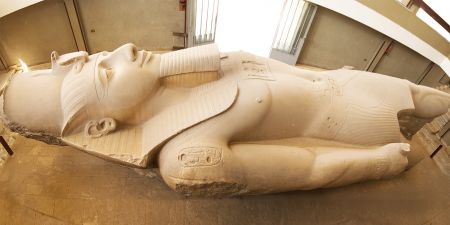
The City of Memphis was one of the oldest and most important cities in ancient Egypt. Located at the entrance to the Nile River Valley near the Giza plateau, it served as the capital of ancient Egypt.
The Dahshur pyramids, located southwest of Cairo, are among Egypt’s most important ancient monuments and home to the iconic Red Pyramid. As part of the historic Dahshur necropolis, they offer a quiet, uncrowded glimpse into early pyramid architecture.
The Pyramid of Khufu, also known as the Cheops Pyramid, is the oldest and largest pyramid in Egypt, located on the Giza Plateau. Built around 2600 BC, it is the only surviving wonder of the ancient world and a symbol of ancient Egyptian engineering.
The Pyramid of Khafre is a remarkable Giza monument with hidden chambers, secret passages, and fascinating facts beyond its exterior.
The Pyramid of Menkaure in Giza is small yet fascinating, revealing granite design, hidden chambers, and discoveries inside.
The Red Pyramid at Dahshur, Egypt, is Sneferu’s architectural masterpiece. Discover its history, design, chambers, and role in ancient Egyptian civilization.
The Bent Pyramid at Dahshur, built by Pharaoh Sneferu around 2600 BCE, features a unique slope change, dual entrances, and intact limestone casing. This architectural innovation influenced later pyramids like the Red Pyramid and the Great Pyramid of Giza.