Temple of Hatshepsut

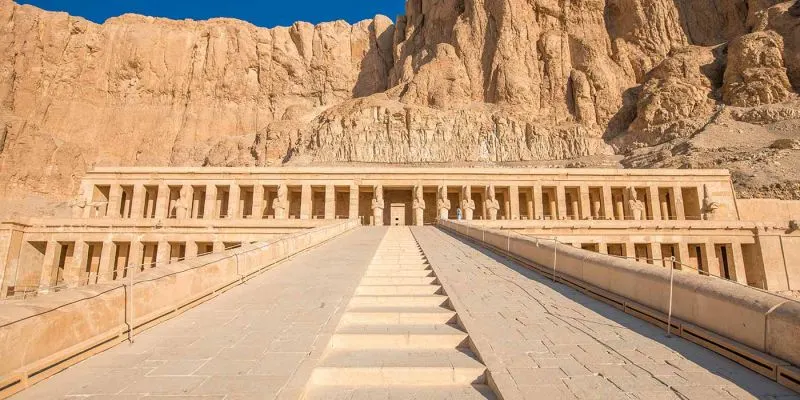
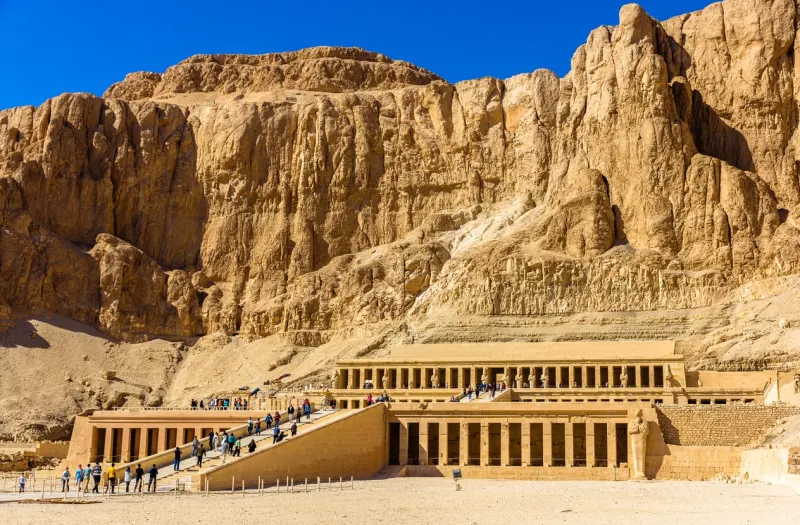
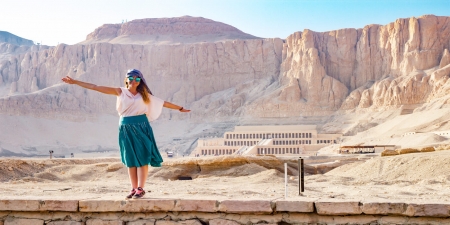
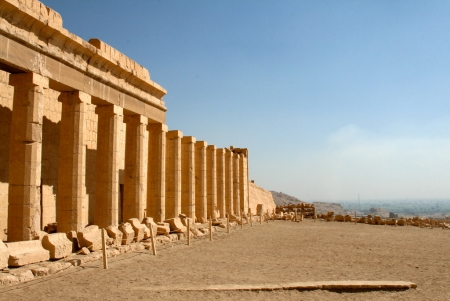
The Mortuary Temple of Hatshepsut at Deir el-Bahari is one of ancient Egypt’s most striking and important monuments, located against the limestone cliffs of Luxor’s West Bank. Built during the 18th Dynasty (c. 1473–1458 BC), it commemorates Queen Hatshepsut, Egypt’s most successful female pharaoh, and served as her mortuary temple for rituals and offerings in the afterlife. Its innovative three-tiered design with colonnaded terraces and ramps blends harmoniously with the natural landscape, setting it apart from traditional Egyptian temple styles and making it a masterpiece of ancient architecture that remains awe-inspiring today.
Hatshepsut's path to becoming pharaoh was unprecedented in Egyptian history. Born as the daughter of Pharaoh Thutmose I and his Great Royal Wife Ahmose, she initially married her half-brother Thutmose II, following royal custom designed to keep divine blood pure. When Thutmose II died after a relatively short reign, his son by a minor wife (Thutmose III) inherited the throne while still a young child.
Hatshepsut initially served as regent for her young stepson, which was not unusual in Egyptian history when pharaohs died leaving minor heirs. However, around year seven of Thutmose III's reign, Hatshepsut took the extraordinary step of declaring herself pharaoh, adopting full royal titulary and even depicting herself wearing the traditional false beard and men's kilt of a pharaoh in official inscriptions and statuary.
Rather than leading military campaigns like her predecessors and successors, Hatshepsut focused on domestic prosperity, monumental building projects, and expanding trade networks. Her reign witnessed:
After Hatshepsut's death, her stepson Thutmose III finally assumed sole power. Approximately 20 years into his independent reign, he ordered a systematic program to erase Hatshepsut's images and cartouches from monuments throughout Egypt, including her temple at Deir el-Bahari. Egyptologists debate his motivations—whether personal resentment, political necessity to establish his own legitimacy, or religious concerns about a female pharaoh.
Despite this ancient damnatio memoriae, enough remained for 19th-century archaeologists to reconstruct Hatshepsut's story. Modern excavation and restoration have revealed much of the temple's original splendor and provided fascinating insights into this remarkable woman's reign.
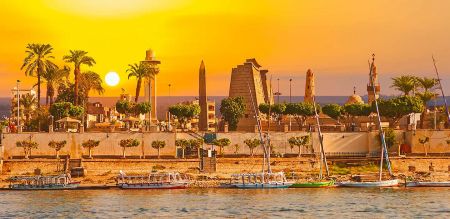
You'll find Luxor in southern Egypt, 670 km south of Cairo and 220 km north of Aswan on the Nile's east bank. Built on ancient Thebes, it's divided into East Bank (modern city, Karnak Temple, Luxor Temple) and West Bank (Valley of the Kings, royal necropolises). You can fly to Luxor International Airport (LXR).
The temple's innovative design is attributed to Senenmut, one of ancient Egypt's most brilliant architects and also Hatshepsut's most powerful official. Senenmut held numerous important titles including Chief Steward of Amun, Steward of the King's Daughter, and Overseer of All Works of the King. His close relationship with Hatshepsut, combined with his own tomb hidden beneath the temple's forecourt, has led many scholars to speculate that they were romantically involved, though definitive proof remains elusive.
Senenmut's genius lay in creating a design that drew inspiration from the nearby 11th Dynasty mortuary temple of Mentuhotep II while developing it into something entirely more sophisticated and harmonious. Where Mentuhotep's temple features irregular terraces, Senenmut created perfect symmetry and mathematical precision.
Lower Terrace: Visitors enter through a massive pylon (now largely ruined) that once featured two great obelisks and sphinx-lined processional ways. The lower terrace features a large forecourt originally planted with trees from Punt and garden beds. The terrace measures approximately 37 meters wide.
Middle Terrace: A central ramp leads to the second terrace, flanked by colonnades on either side. This level contains some of the temple's most important reliefs:
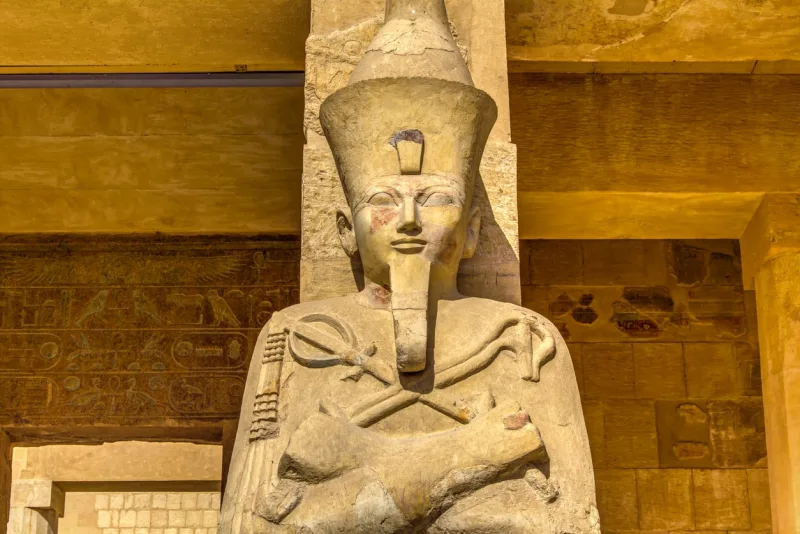
Upper Terrace: Another ramp ascends to the third and highest terrace, also flanked by colonnaded porticos. This level originally featured colossal Osiride statues of Hatshepsut (showing her as Osiris, god of the afterlife) standing against pillars. The sanctuary, carved directly into the cliff face, contains a series of chambers including chapels dedicated to Hatshepsut, her father Thutmose I, the god Amun-Re, and the sun god Re-Horakhty.
Several features make Hatshepsut's temple architecturally revolutionary:
The Punt colonnade represents one of ancient Egypt's most valuable historical documents. The detailed reliefs show:
These reliefs provide invaluable information about Egyptian seafaring, trade practices, and geographic knowledge, while the detailed depiction of Punt's landscape and people continues fueling scholarly debate about this land's exact location.
The birth colonnade employs artistic and theological conventions to legitimize Hatshepsut's rule. The scenes depict:
This narrative, while clearly propaganda, follows Egyptian artistic and theological traditions used by other pharaohs to emphasize divine sanction for their rule.
Other reliefs show:
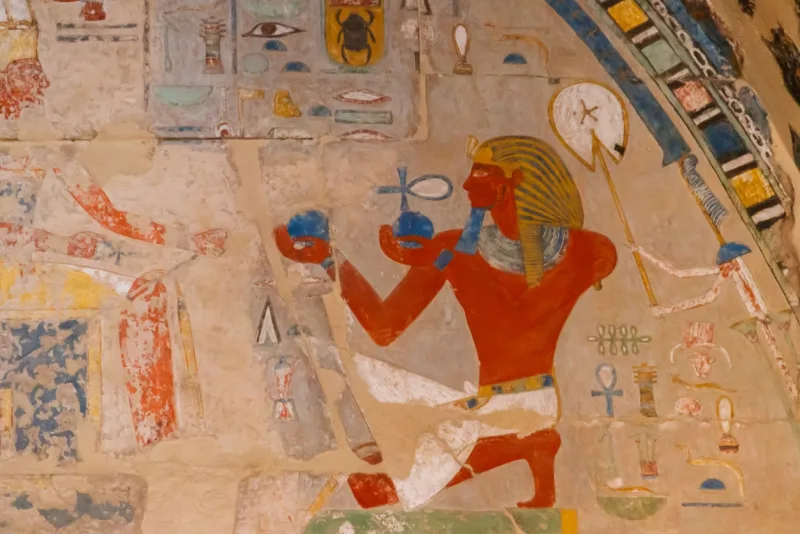
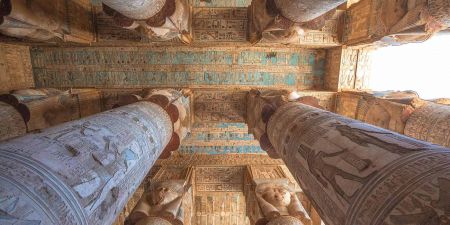
Originally, the temple blazed with color. Walls were covered in painted reliefs using bright blues, reds, yellows, greens, and blacks. Architectural elements featured gilding, particularly in the sanctuary areas. While most color has faded over millennia, protected areas still show traces of this original vibrancy, helping archaeologists create accurate reconstructions.
You'll pay (2025 prices): Karnak Temple 400 EGP, Luxor Temple 260 EGP, Valley of the Kings 400 EGP (3 tombs), Tutankhamun tomb +400 EGP, Seti I tomb +1,400 EGP, Hatshepsut Temple 140 EGP. Students get 50% discount with valid ID. Photography forbidden in Valley of the Kings.
Get in touch with our local experts for an unforgettable journey.
Plan Your Trip
The erasure campaign ordered by Thutmose III (or possibly his successors) systematically removed Hatshepsut's images and names from accessible areas. Ironically, this "damnatio memoriae" proves incomplete because many cartouches and images in hard-to-reach areas survived, allowing modern scholars to reconstruct her story. The erasure actually took considerable effort and resources, suggesting the importance ancient Egyptians placed on maintaining proper historical records even when politically inconvenient.
During Egypt's early Christian period (approximately 7th century AD), Coptic monks established a monastery within the ruined temple—hence its Arabic name "Deir el-Bahari" (Northern Monastery). The monks added mud-brick walls, painted Christian scenes over ancient reliefs, and converted some areas into living quarters and chapels. While this caused some damage, the monastery's presence actually helped protect certain sections from further deterioration.
European travelers noted the site in the 18th and 19th centuries, but serious archaeological work began in 1858 under Auguste Mariette. Polish archaeologist Édouard Naville conducted major excavations between 1893-1902, publishing detailed studies that attracted international attention.
The Polish-Egyptian Archaeological and Conservation Mission has worked at Deir el-Bahari since 1961, conducting one of Egypt's longest-running archaeological projects. Their meticulous work has:
Yes, you'll be very safe with heavy security and tourist police at all sites. The 1997 incident was isolated; security is now extensively enhanced. Follow standard precautions: use licensed guides, ignore persistent vendors, dress modestly at temples. Women should confidently ignore any street harassment.
The temple sits approximately 2 kilometers inland from the Nile's West Bank in the Theban Necropolis, directly across the river from Luxor city. Most visitors access it as part of West Bank tours that also include the Valley of the Kings, Valley of the Queens, and other mortuary temples.
Transportation Options:
Immediately adjacent sits the 11th Dynasty mortuary temple of Mentuhotep II, which inspired Hatshepsut's temple design. Though more ruined, it's worth exploring to see the architectural evolution and understand how Senenmut adapted earlier concepts.
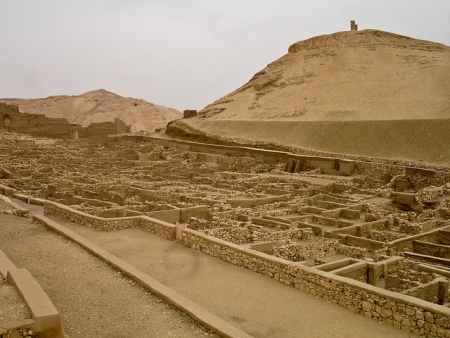
The nearby village where the artisans who constructed and decorated the Valley of the Kings' tombs lived. The site includes workers' houses, their personal tombs (often beautifully decorated), and provides fascinating insights into daily life in ancient Egypt.
This hill contains hundreds of nobles' tombs decorated with scenes of daily life. Many are easily accessible from Hatshepsut's temple and offer different perspectives on New Kingdom art and society.
Hatshepsut's temple influenced later Egyptian architecture, with subsequent pharaohs incorporating elements of its design into their own mortuary temples. Its innovative use of horizontal terraces and integration with the landscape set new standards for monumental architecture.
The temple stands as a monument to female power in the ancient world. Hatshepsut's successful reign and the magnificent structures she commissioned prove that women could rule as effectively as men, even in the patriarchal society of ancient Egypt. Her story continues inspiring discussions about gender, power, and leadership.
UNESCO designated the Theban Necropolis (including Hatshepsut's temple) as a World Heritage Site in 1979, recognizing its universal cultural significance. The temple represents humanity's shared heritage and attracts scholars and tourists from around the globe.
The temple's extensive reliefs documenting trade expeditions, religious practices, and royal ideology provide invaluable primary sources for understanding New Kingdom Egypt. Archaeological work here continues yielding new discoveries and insights.
You'll enjoy the best weather November-March (20-28°C) though it's crowded. Shoulder seasons (October-November, March-April) offer ideal conditions with fewer tourists. Summer (May-September) brings extreme heat (35-45°C+) but fewer crowds and lower prices. Visit West Bank sites early morning during hot months.
You'll pay (2025 prices): Karnak Temple 400 EGP, Luxor Temple 260 EGP, Valley of the Kings 400 EGP (3 tombs), Tutankhamun tomb +400 EGP, Seti I tomb +1,400 EGP, Hatshepsut Temple 140 EGP. Students get 50% discount with valid ID. Photography forbidden in Valley of the Kings.
You should spend minimum 2 days: Day 1 for East Bank (Karnak, Luxor Temple), Day 2 for West Bank (Valley of Kings, Hatshepsut Temple, Medinet Habu). Ideally allow 3 days for thorough exploration including lesser sites. For comprehensive visits with hot air balloon rides, plan 4-5 days.
Yes, you can visit daily 6 AM-5 PM (winter) or 6 PM (summer). Your 400 EGP ticket includes 3 tombs. Tutankhamun requires separate 400 EGP ticket, Seti I requires 1,400 EGP. No photography allowed inside tombs. Visit early morning (6-8 AM) for cooler temperatures and fewer crowds.
You can walk, take taxis, or use Uber on East Bank. For West Bank, you'll need taxis—negotiate full-day rates (300-500 EGP). Public ferry crosses the Nile cheaply from the Corniche. Organized tours include all transportation. Bicycle rental available but challenging due to heat and distances.
Explore the best temples and tombs with our Luxor Egypt Guide. Dive into ancient Thebes and start planning your trip today.
Located on the east bank of the Nile, Karnak Temple Complex consists of a number of temples. Its name was given as in Arabic Karnak means fortified village.
Your complete guide to Luxor Temple in Luxor, Egypt. Discover history, key attractions, and expert sightseeing tips for travelers.
Your guide to the Valley of the Kings—best tombs, history, and insider facts. Get the knowledge you need and start planning your trip today.
Step into history at the Valley of the Queens, Luxor. Explore royal tombs, ancient artifacts, and fascinating facts about this legendary site.
Uncover the history of the Temple of Hatshepsut Luxor. Learn about the remarkable Queen's mortuary temple and essential travel tips in our complete guide.
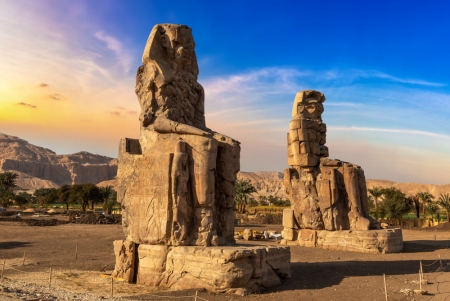
Stand before the Colossi of Memnon and witness Egypt’s engineering marvels. Discover their story and plan your West Bank sightseeing tour today.
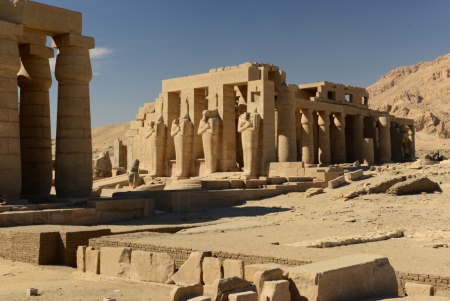
Learn about the Ramesseum in Luxor, Ramses II’s mortuary temple. Explore its history, statues, and hieroglyphs while planning your visit today.
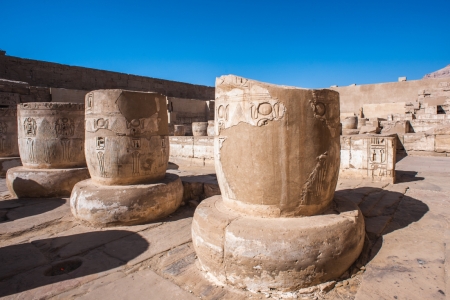
Learn why Medinet Habu is a must-see in Luxor, with its bright reliefs and rich history. Get key travel details and prepare your Egypt visit now!
Discover the village of Pharaoh’s workers, where the skilled artisans of Deir el Medina created royal tombs, lived in unique homes, and practiced their craft over 3,000 years ago.
Explore the Tombs of the Nobles Luxor and discover vivid art scenes depicting ancient Egyptian daily life on this fascinating journey.