Bent Pyramid: Ancient Egyptian Pyramid at Dahshur
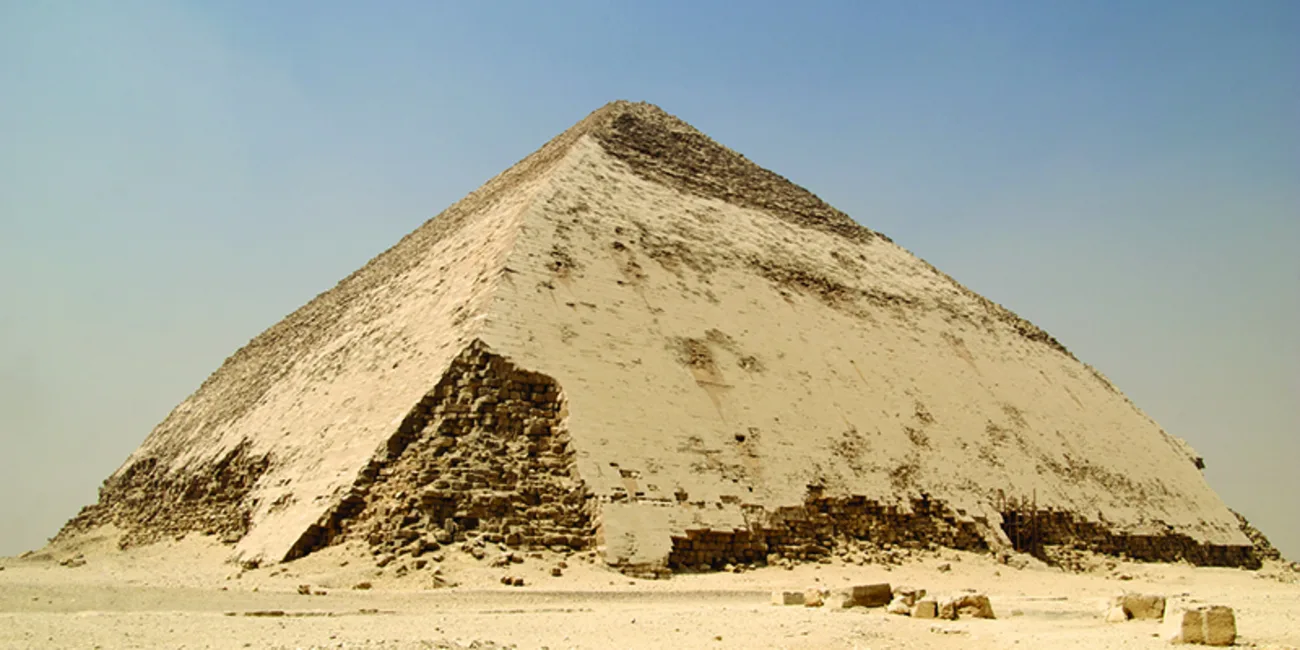
The Bent Pyramid remains one of Egypt's most intriguing architectural marvels. Its distinctive angle change gives this structure its name. Pharaoh Sneferu built it around 2600 BCE during the 4th dynasty. This remarkable structure rises from the desert at a steep 54-degree inclination. It then moves to a gentler 43-degree angle above the 47-meter mark. The pyramid's unusual form has fascinated visitors for thousands of years. Its original polished limestone casing stays largely intact, unlike most other ancient pyramids.
The Bent Pyramid at Dahshur represents a significant milestone in Egyptian architectural progress. This engineering marvel stands 104.71 meters (344 ft) tall with a base of 189.43 meters (621 ft). It marks the transition from step-sided pyramids to the smooth-sided structures that later defined Egyptian architecture. The pyramid features two separate entrances on two different faces, making it unique among Egypt's Old Kingdom structures. Egypt opened the Bent Pyramid to tourists in July 2019 for the first time since 1965.
Visitors can now experience the state-of-the-art design of Sneferu, father of Khufu who built the Great Pyramid.
The Bent Pyramid is located at Dahshur, about 40 km southwest of Cairo, Egypt.
Pharaoh Sneferu, who founded Egypt's Fourth Dynasty (2613-2589 BCE), changed pyramid construction forever when he commissioned the Bent Pyramid. His architectural vision would later inspire his son Khufu to build the Great Pyramid of Giza. Sneferu's experiments with pyramid design became the foundations of Egypt's most iconic monuments.
The Fourth Dynasty stands out as a time of remarkable architectural breakthroughs, with Sneferu leading the way. Most pharaohs built single tombs, but Sneferu constructed at least three major pyramids—the Meidum Pyramid, the Bent Pyramid, and the Red Pyramid. His ambitious building program showed his dedication to perfecting the pyramid form. Egyptian architecture moved from step-sided structures to true smooth-sided pyramids under his rule.
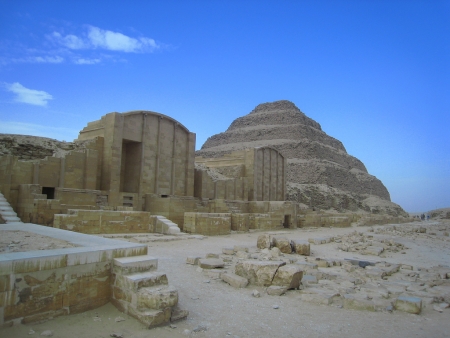
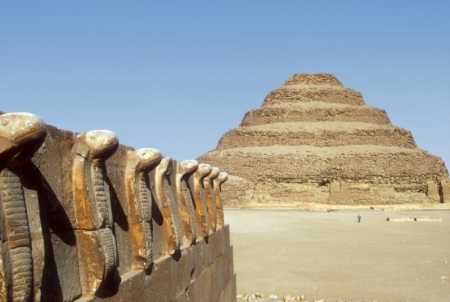
The Bent Pyramid marks a defining moment in royal tomb design. This structure captures the transition between King Djoser's step-pyramid design in Saqqara and the smooth-faced pyramids that became Egypt's signature monuments. The changes went beyond architecture. Religious concepts shaped these new designs. Scholars suggest the move from step-sided to smooth-sided pyramids reflected a new Egyptian view of royal tombs. The structure no longer served just as a staircase to the stars but also symbolized the solar cult and life's primeval origins.
Sneferu's other monuments help tell the complete story of the Bent Pyramid. The Meidum pyramid, his first project, started as a stepped pyramid before its conversion to a "true" smooth-sided structure. Its steep angle proved unstable. Learning from this experience, Sneferu built the Bent Pyramid—his first attempt at creating a smooth-sided pyramid from the ground up.
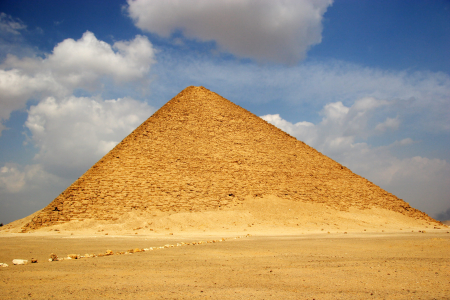
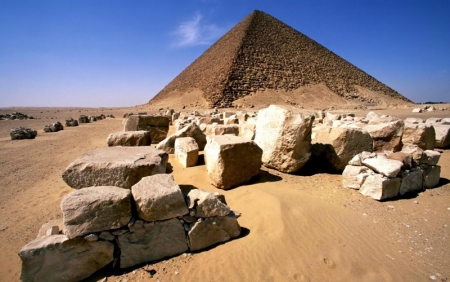
Structural challenges with the Bent Pyramid led Sneferu to commission the Red Pyramid just 2 kilometers away. This final project applied all the engineering lessons from previous attempts. The Red Pyramid became Egypt's first successfully completed smooth-sided pyramid. Its more modest 43-degree angle made it the perfect model that shaped the great pyramids of Giza.
The Bent Pyramid's most fascinating feature shows up in its clear change in slope—a unique characteristic that has left archeologists puzzled for generations. This unusual architecture has led to many debates about whether builders made an engineering correction or chose this design on purpose.
The pyramid's lower section started with an extremely steep angle of 54°31'13". The builders thought this ambitious gradient would work, but they soon ran into major challenges. The structure's foundation sat on soft ground with a layer of salty clay instead of solid bedrock. So this weak foundation threatened the structure's stability as it grew taller. The massive limestone blocks' weight made the structural integrity more unstable.
The angle changes dramatically about 47 meters above ground, dropping to a much gentler 43°21'. You can see this modification clearly from far away, and it creates the distinctive "bent" profile that gave the pyramid its current name. The change went beyond just looks and affected the entire building method. The builders laid the lower stones sloping inward but switched to horizontal courses for the upper section. This switch points to a complete rethinking of their construction technique.
Experts have come up with several theories to explain this architectural oddity. Most scholars believe structural problems forced the builders to make changes mid-construction. The builders likely saw cracks forming in the chambers and corridors as work continued, and they had to reduce the angle to stop it from collapsing. There's another reason that makes sense—the original steep angle made building ramps much harder as the structure got taller. Some scholars call it a planned design that symbolizes duality, noting the pyramid's two entrances and two internal layouts. The evidence of structural changes inside the pyramid makes practical engineering reasons more likely than symbolic ones.
It is called the Bent Pyramid because its slope changes from a steep 54° angle to a gentler 43° above 47 meters, giving it a distinctive “bent” shape.
Get in touch with our local experts for an unforgettable journey.
Plan Your TripArcheological evidence shows the Bent Pyramid went through three distinct construction phases that marked key developments in ancient Egyptian engineering.
Sneferu's architects created a very ambitious structure with a base length of 157 meters and an inclination angle of approximately 58° to 60°. Their original plan would have resulted in a towering 125-meter pyramid. The steep angle proved unstable with the ancient building techniques available then.
The builders changed their approach by reducing the angle to 54° and making the base larger at 188 meters. The masons continued to use inclined wall layers—a technique they inherited from step pyramids—because they could not yet produce trapezoid stones. The masonry from this phase featured fine Tura limestone brought from the other side of the Nile.
The final phase brought a remarkable change: the angle dropped to 43° and the builders laid masonry in horizontal layers instead of inward-leaning ones for the first time. This breakthrough became the standard method for all future pyramids. The pyramid's reduced angle resulted in a final height of 105 meters with a total volume of 1.44 million cubic meters.
The builders used local limestone for the pyramid's core. They transported higher-quality Tura limestone from across the Nile for the exterior casing. This outer layer has stayed remarkably intact, making the Bent Pyramid one of few ancient pyramids that still shows its original smooth surface.
The construction team likely used sophisticated ramp systems that became harder to manage near the pyramid's top. Recent findings suggest they used water or wet clay to help pull massive stones upward on sledges. In stark comparison to this common belief, evidence shows that about 2,000 skilled workers—not slaves—worked on site at any time.
The Bent Pyramid is unique for having two separate entrances on different faces, dual chamber systems, and its original polished limestone casing still largely intact.
The pyramid’s steep lower angle and weak foundation on soft clay threatened its stability, forcing builders to change the slope mid-construction to prevent collapse.
Lessons from the Bent Pyramid’s structural challenges helped Sneferu design the Red Pyramid, Egypt’s first successfully completed smooth-sided pyramid, influencing the Great Pyramid of Giza.
Explore the wonders of Giza Necropolis Egypt, including the Great Pyramid, Sphinx, and ancient tombs in this ultimate traveler's guide.
Explore Saqqara Pyramids Egypt, including the iconic Step Pyramid and ancient tombs. Dive into the mysteries of this legendary site now.
Discover the ultimate Egyptian Pyramids Guide with facts on history, construction, and locations to plan your unforgettable adventure.
The City of Memphis was one of the oldest and most important cities in ancient Egypt. Located at the entrance to the Nile River Valley near the Giza plateau, it served as the capital of ancient Egypt.
The Dahshur pyramids, located southwest of Cairo, are among Egypt’s most important ancient monuments and home to the iconic Red Pyramid. As part of the historic Dahshur necropolis, they offer a quiet, uncrowded glimpse into early pyramid architecture.
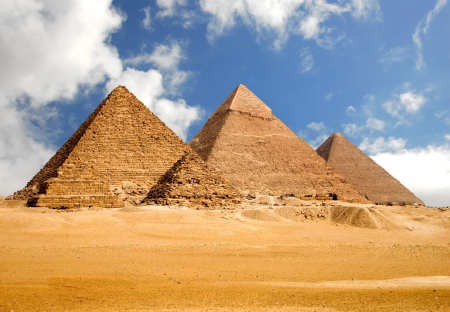
The Pyramid of Khufu, also known as the Cheops Pyramid, is the oldest and largest pyramid in Egypt, located on the Giza Plateau. Built around 2600 BC, it is the only surviving wonder of the ancient world and a symbol of ancient Egyptian engineering.
The Pyramid of Khafre is a remarkable Giza monument with hidden chambers, secret passages, and fascinating facts beyond its exterior.
The Pyramid of Menkaure in Giza is small yet fascinating, revealing granite design, hidden chambers, and discoveries inside.
The Red Pyramid at Dahshur, Egypt, is Sneferu’s architectural masterpiece. Discover its history, design, chambers, and role in ancient Egyptian civilization.
The Bent Pyramid at Dahshur, built by Pharaoh Sneferu around 2600 BCE, features a unique slope change, dual entrances, and intact limestone casing. This architectural innovation influenced later pyramids like the Red Pyramid and the Great Pyramid of Giza.