Dahshur Pyramids Guide
.jpg "Dahshur Pyramids Guide")
Forty kilometers southwest of Cairo lies one of Egypt's most extraordinary archaeological treasures—the Dahshur pyramid complex. These monumental structures rank among the oldest, largest, and most remarkably preserved pyramids ever constructed, their limestone faces bearing witness to over four millennia of desert winds. King Sneferu's ambitious reign (2613-2589 BC) birthed these architectural marvels, each stone block representing a pivotal moment when ancient Egyptian pyramid-building techniques evolved from experimental to masterful.
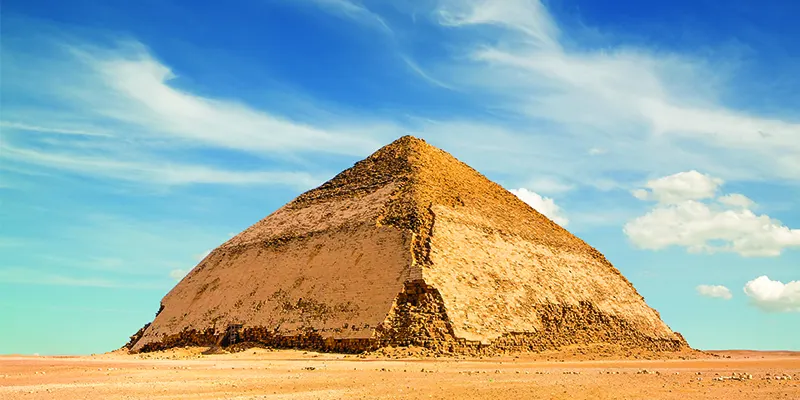
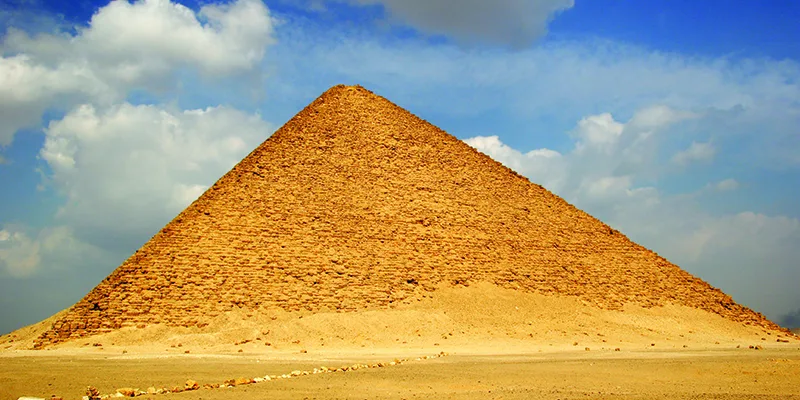
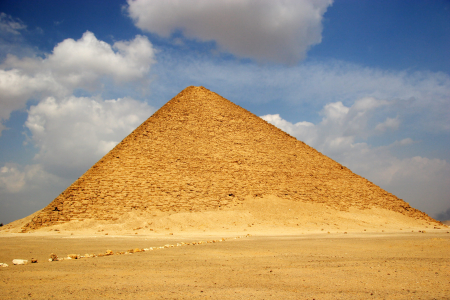
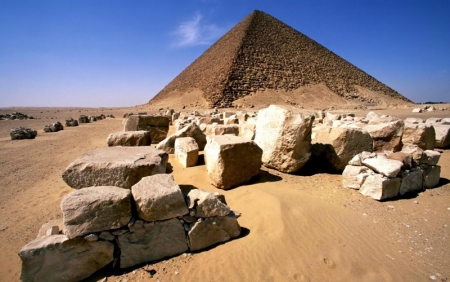
Two colossal monuments dominate this ancient necropolis: the enigmatic Bent Pyramid and the magnificent Red Pyramid. The Red Pyramid commands attention with its towering height of 341 feet (104 meters), claiming the distinction of being the third-largest pyramid ever erected—a feat surpassed only by Khufu's and Khafre's legendary monuments at Giza [-2]. More remarkably still, this same Red Pyramid holds the extraordinary honor of being the world's oldest true pyramid, its perfectly smooth sides representing humanity's first successful attempt at achieving the classic pyramidal form over 4,500 years ago.
Where Giza's famous monuments suffer beneath waves of tourists, Dahshur offers something far more precious—solitude among giants. Here, visitors wander ancient pathways unimpeded by crowds or commercial intrusions, experiencing the profound silence of the desert exactly as royal courtiers and ancient pilgrims once did. This UNESCO World Heritage Site delivers an unfiltered encounter with Egypt's monumental past, accessible for the modest sum of 60 EGP (approximately $2.50)—a price that seems almost absurd considering the archaeological treasures awaiting discovery.
The Dahshur pyramids are located about 40 kilometers southwest of Cairo, within the historic Memphis necropolis region.
Unlike Giza, the Dahshur pyramids are less crowded and offer a quieter, more immersive archaeological experience.
From Mastabas to Perfection Dahshur necropolis occupies a distinguished position within ancient Egypt's architectural chronicle. As an essential component of the vast Memphis necropolis, it anchors a landscape of sovereignty that sweeps majestically from the Giza plateau through Saqqara and culminates at this southern gateway. This spectacular archaeological terrain harbors Egypt's earliest complex monumental stone constructions, documenting the remarkable metamorphosis of royal sepulchers from primitive "mastaba" foundations to the sublime, smooth-sided pyramid configuration.
Engineering the "True" Pyramid Pharaoh Sneferu, the founder of the 4th Dynasty, elevated this rocky plateau to royal prominence when he designated it as his eternal resting place. His visionary construction endeavors between 2613 BCE and 2589 BCE represented a watershed moment in human engineering.
A Return to Tradition Dahshur’s historical resonance extends far beyond the Old Kingdom. The necropolis witnessed a spectacular renaissance during the 12th Dynasty (circa 21st–17th centuries BCE). Pharaohs such as Amenemhat II, Senusret III, and Amenemhat III returned to this hallowed ground to build their eternal monuments.
Unlike the solid stone giants of their predecessors, these Middle Kingdom edifices were constructed predominantly from mudbrick and adorned with fine limestone casings. While they appear as eroded mounds today, they illuminate the evolving mortuary customs and shifting resource management of the Egyptian state.
Innovation in Design Senusret III, one of Egypt's most formidable warrior-kings, erected an imposing pyramid complex that showcased radical architectural shifts. Though his monument originally soared 62 meters skyward, millennia of quarrying and erosion have reduced it to a 21-meter hillock.
The complex's brilliance lies in its dual-phase construction:
Private Burials Archaeological investigations have unveiled that Dahshur is more than just a royal playground; it is a sprawling city of the dead encompassing over thirty-eight pyramids and nine thousand rock-hewn sepulchers.
Excavations by Jacques de Morgan in 1894 revealed that the private burial chambers encircling royal monuments offer the most profound historical revelations. These tombs belonged to the high-ranking officials who kept the wheels of the empire turning.
The chronological narrative of Dahshur is marked by both glory and ruin. Following its Middle Kingdom peak, the site suffered during the Hyksos period (circa 1600 BCE). However, the most catastrophic destruction occurred during the Ramesside Period, when the pyramids were treated as stone quarries for New Kingdom building projects. By the Late Period, the once-regal landscape was repurposed for modest, lower-class interments, as the local population sought to be buried near the "sacred ancestors."
In 1979, Dahshur was granted UNESCO World Heritage status as part of the Memphis necropolis. This recognition ensures the preservation of a site that is indispensable to our understanding of human architectural innovation.
Contemporary excavations continue to yield "gold." As recently as 2024, teams discovered a mudbrick mastaba belonging to Seneb-Neb-Af and his wife Idet (late 5th/early 6th Dynasty). The tomb is embellished with sophisticated frescoes depicting:
These findings reinforce that Dahshur was not just a graveyard, but a vibrant archive of Egyptian life, status, and the eternal quest for immortality.
The Dahshur necropolis is a royal burial ground used from the Old Kingdom through later periods of ancient Egypt.
The Dahshur pyramids represent a key stage in pyramid development and include the world’s oldest true smooth-sided pyramid.
Most major Dahshur pyramids were built by Pharaoh Sneferu and later Middle Kingdom rulers.
The Dahshur Red Pyramid is Egypt’s first successful true pyramid, built by Pharaoh Sneferu during the 4th Dynasty.
The Dahshur pyramids date mainly to the Old Kingdom, with additional monuments from the Middle Kingdom.
Explore the wonders of Giza Necropolis Egypt, including the Great Pyramid, Sphinx, and ancient tombs in this ultimate traveler's guide.
Explore Saqqara Pyramids Egypt, including the iconic Step Pyramid and ancient tombs. Dive into the mysteries of this legendary site now.
Discover the ultimate Egyptian Pyramids Guide with facts on history, construction, and locations to plan your unforgettable adventure.
The City of Memphis was one of the oldest and most important cities in ancient Egypt. Located at the entrance to the Nile River Valley near the Giza plateau, it served as the capital of ancient Egypt.
The Dahshur pyramids, located southwest of Cairo, are among Egypt’s most important ancient monuments and home to the iconic Red Pyramid. As part of the historic Dahshur necropolis, they offer a quiet, uncrowded glimpse into early pyramid architecture.
The Pyramid of Khufu, also known as the Cheops Pyramid, is the oldest and largest pyramid in Egypt, located on the Giza Plateau. Built around 2600 BC, it is the only surviving wonder of the ancient world and a symbol of ancient Egyptian engineering.
The Pyramid of Khafre is a remarkable Giza monument with hidden chambers, secret passages, and fascinating facts beyond its exterior.
The Pyramid of Menkaure in Giza is small yet fascinating, revealing granite design, hidden chambers, and discoveries inside.
The Red Pyramid at Dahshur, Egypt, is Sneferu’s architectural masterpiece. Discover its history, design, chambers, and role in ancient Egyptian civilization.
The Bent Pyramid at Dahshur, built by Pharaoh Sneferu around 2600 BCE, features a unique slope change, dual entrances, and intact limestone casing. This architectural innovation influenced later pyramids like the Red Pyramid and the Great Pyramid of Giza.