Karnak Temple

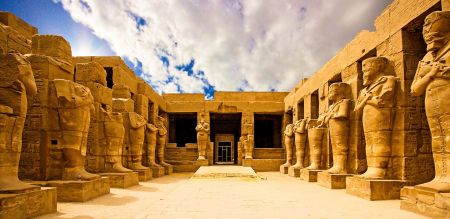
Luxor is home to some of the most extraordinary remains of ancient temples, and among them stands the monumental Karnak Temple, the largest religious complex ever built by humans. This open-air museum is not just a single temple, but a vast spiritual city that evolved for over two millennia.
Situated on the east bank of the Nile in modern Luxor, the Karnak Temple Complex represents the heart of religious life in ancient Egypt. It was dedicated primarily to the Theban Triad: Amun, Mut, and Khonsu, and served as the religious backbone of the powerful Amun Ra temple complex during the New Kingdom.
What makes Karnak truly unique is not only its massive size, but also the way it reflects the political, religious, and artistic evolution of ancient Egypt across different dynasties. Every pillar, wall, and sanctuary tells a story of power, devotion, and divine connection.
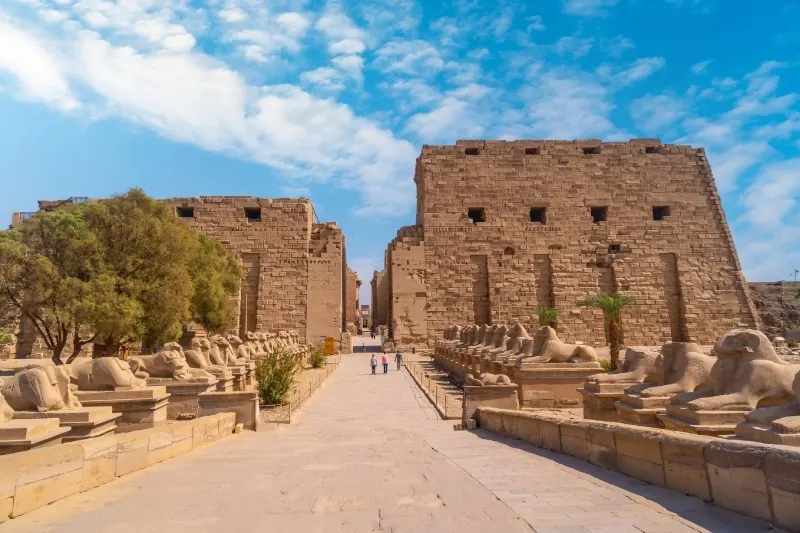
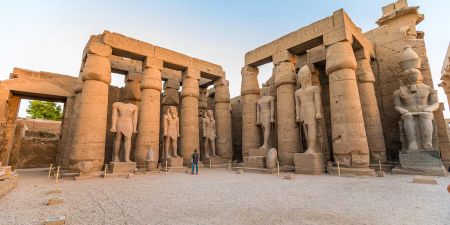
The Karnak Temple Complex is not a single structure, but a massive collection of interconnected temples, sanctuaries, courts, pylons, and ceremonial spaces spread over more than 200 acres.
Its design resembles a religious city rather than an ordinary temple, which is why the ancient Arabic name “Karnak” means fortified village. Over centuries, almost every major pharaoh left his mark here, turning it into a living historical record carved in stone.
The complex reflects multiple construction phases, architectural styles, and religious ideas. Unlike other ancient sites that were built and abandoned, Karnak kept growing, layer upon layer, generation after generation — a rare example of continuous sacred development.
Construction at Karnak began around 2055 BC, during the early Middle Kingdom, and continued until approximately 100 AD, during the Roman period.
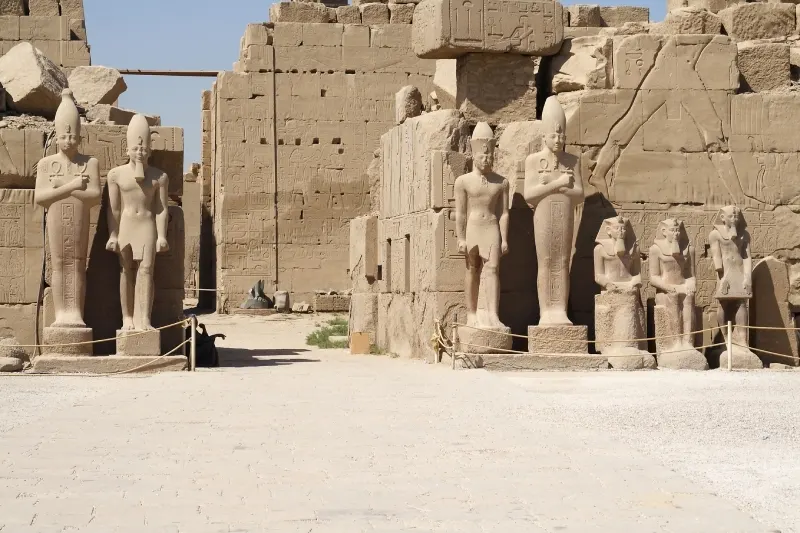
For more than 2,000 years, different rulers added new pylons, courtyards, halls, chapels, and statues. The most significant expansions happened during the New Kingdom, when Thebes became Egypt’s capital and religious center.
Originally built as a cult center for Amun-Ra, the temple evolved into the spiritual heart of Egypt. Ancient Egyptians called it “The Most Select of Places” because they believed it was where the gods connected with the earth.
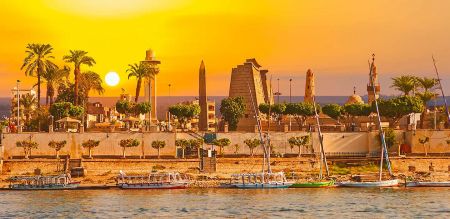
The Karnak Temple is located in Karnak, Luxor Governorate, on the east bank of the Nile River in southern Egypt.
It lies about 3 kilometers north of Luxor Temple and is connected to it by the famous Avenue of Sphinxes, a ceremonial road recently restored and reopened.
Karnak’s location makes it a central point for visitors exploring Luxor's ancient temples, especially those interested in ancient worship, architecture, and royal history.
Amun
Amun (also written Amon, Ammon, or Amen) was the ancient Egyptian god of air and sky. During the New Kingdom, he merged with the sun god Ra, forming Amun-Ra, the supreme solar deity. His main cult center was Karnak, which became the heart of his worship throughout Egypt.
Mut
Mut was the divine consort of Amun and the mother goddess of ancient Egypt. Her name literally means “mother.” She symbolized fertility, protection, and royal motherhood. A separate precinct inside Karnak was dedicated specifically to her worship.
Khonsu
Khonsu was the moon god and the divine son of Amun and Mut. His role was associated with healing, time, and lunar cycles. His temple stands within the Karnak complex and remains one of its most beautiful later structures.
Get in touch with our local experts for an unforgettable journey.
Plan Your Trip
During the New Kingdom, Karnak was more than just a temple — it was the religious, political, and economic heart of Egypt.
It functioned as:
The priests of Amun became so powerful that they rivaled the authority of the pharaohs themselves at certain points in history.
Beyond its spiritual role, the temple also symbolized Egypt’s stability and continuity. Each ruler expanded Karnak to legitimize his reign and show devotion to the gods.
Today, it stands as the world’s largest surviving religious complex and one of the most invaluable legacies of Luxor ancient temples.
Wadjet Hall
Thutmose constructed Wadjet Hall I near the main sanctuary, between the fourth and fifth pylons.
It was mainly used for important royal rituals, such as the Heb-Sed Festival, a ceremonial rejuvenation of the king’s power after 30 years of rule, held every few years thereafter.
During this festival, the pharaoh demonstrated his strength and fitness to continue ruling, symbolically renewing his divine connection with the gods of Karnak.
The Great Hypostyle Hall
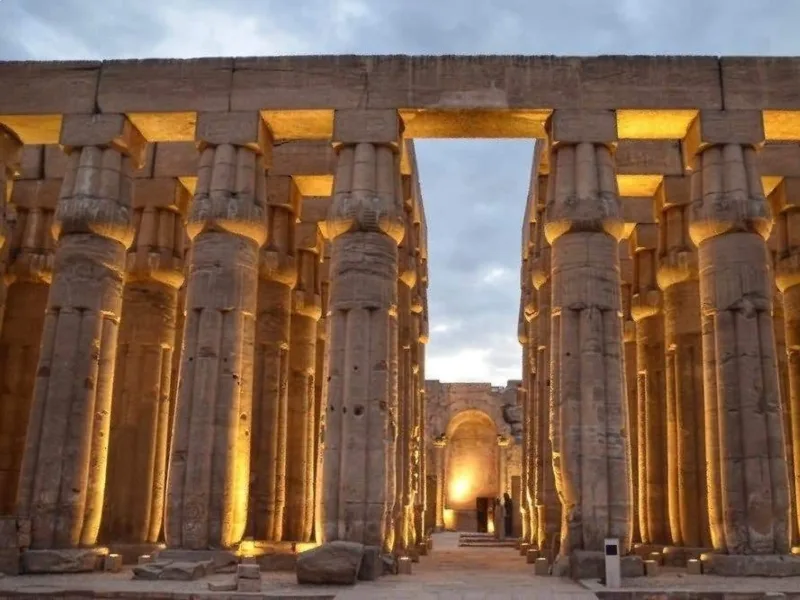
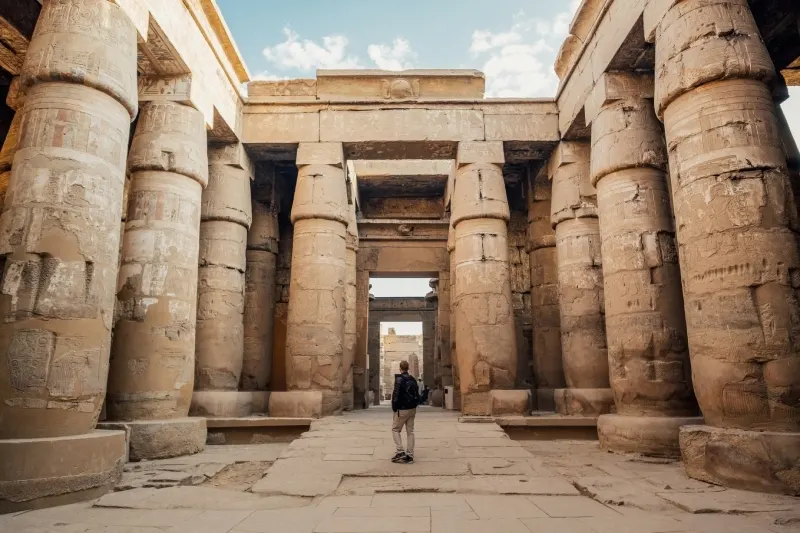
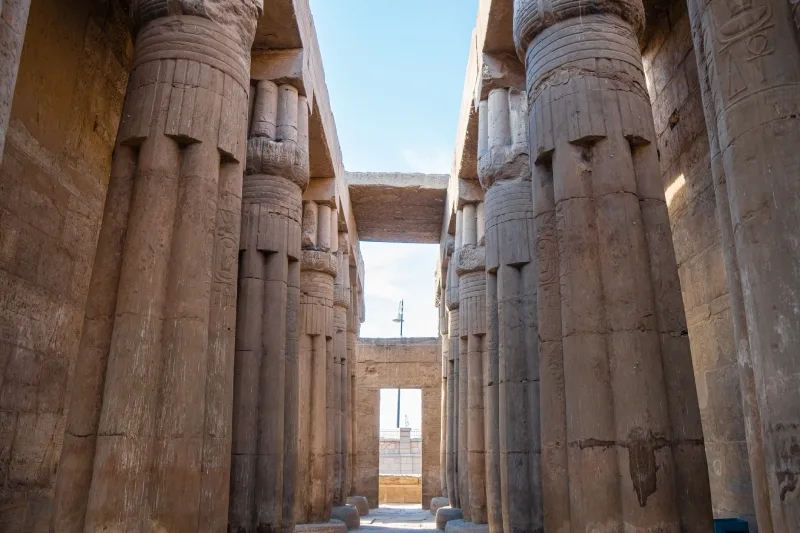
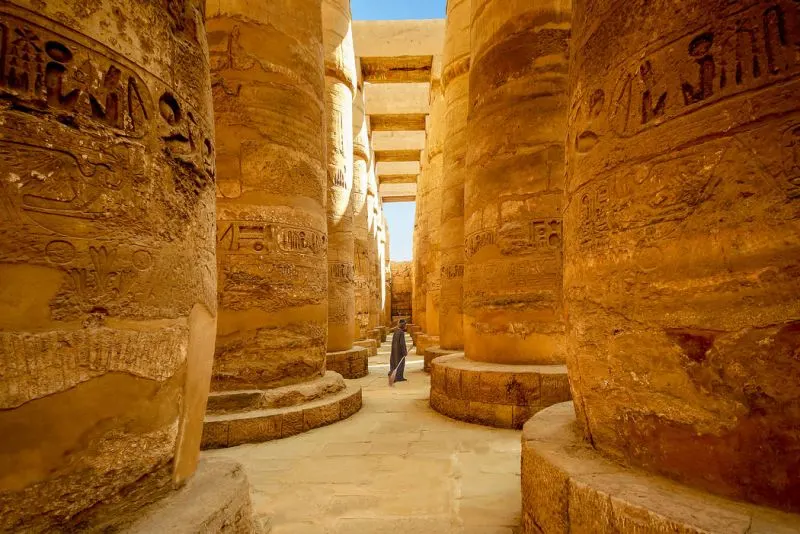
The Great Hypostyle Hall in Egypt is one of the most extraordinary architectural achievements of the ancient world.
Built primarily by Seti I and completed by Ramesses II, this massive hall measures about 103 meters by 52 meters and contains:
The walls and columns are decorated with scenes of religious rituals and military victories, offering valuable insight into ancient royal ideology.
It was designed as a transition space between the outer public areas and the inner sacred sanctuary, enhancing the spiritual journey from chaos to divine order.
Karnak’s Pylons
The complex includes 10 colossal pylons, each built by different pharaohs to mark their contribution to the temple.
These pylons:
At Karnak, six pylons lead towards the Nile, while four extend south along the processional route used during major religious festivals.
The Karnak complex is divided into three main precincts:
For most visitors, the Precinct of Amun-Ra is the highlight, as it contains the most famous monuments and the core of the Amun Ra temple complex.
Walking through this area feels like traveling through centuries of ancient Egyptian history. The scale is overwhelming — from towering columns to open courtyards and sacred lakes, it requires several hours to explore properly.
Many guided tours also connect Karnak with other major Luxor ancient temples, creating a complete experience of East Bank antiquities.
The official Karnak Temple visiting hours usually operate as follows:
Hours may adjust depending on the season, public holidays, or special events. The Sound and Light Show takes place in the evening with different language options.
If travelers want the best possible experience at Karnak, these high-intent travel tips are essential:
The best time to visit the Karnak Temple is early in the morning, right after opening. This allows visitors to avoid heat and large tour groups. Late afternoon is also a good option for softer light and photography.
Visit the open city museum of Luxor, Temple of Karnak, through one of our Egypt tours.
The Karnak Temple is famous for being the largest religious complex ever built in the world. It is also known for the Great Hypostyle Hall Egypt, which contains 134 massive columns, and for being the main center of worship for the Amun Ra Temple Complex during ancient Egyptian times.
The Karnak Temple in Luxor is over 4,000 years old. Its construction began around 2055 BC and continued for more than 2,000 years during different Egyptian dynasties, including the New Kingdom and the Greco-Roman period.
The Karnak Temple is located in the city of Luxor, on the east bank of the Nile River, in southern Egypt. It is one of the most important monuments among the famous Luxor ancient temples.
Some of the main highlights of the Karnak Temple include:
A typical visit to the Karnak Temple takes around 2 to 3 hours. However, for travelers who want to explore in detail and enjoy photography, history, and guided explanations, the visit can take up to 4 hours or more.
No, Karnak Temple and Luxor Temple are not the same.
Karnak Temple is a massive religious complex dedicated mainly to Amun-Ra, while Luxor Temple was built to celebrate the divine aspect of kingship. They are connected by the Avenue of Sphinxes but serve different historical and religious purposes.
Explore the best temples and tombs with our Luxor Egypt Guide. Dive into ancient Thebes and start planning your trip today.
Located on the east bank of the Nile, Karnak Temple Complex consists of a number of temples. Its name was given as in Arabic Karnak means fortified village.
Your complete guide to Luxor Temple in Luxor, Egypt. Discover history, key attractions, and expert sightseeing tips for travelers.
Your guide to the Valley of the Kings—best tombs, history, and insider facts. Get the knowledge you need and start planning your trip today.
Step into history at the Valley of the Queens, Luxor. Explore royal tombs, ancient artifacts, and fascinating facts about this legendary site.
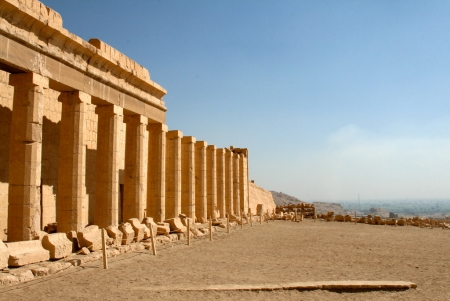
Uncover the history of the Temple of Hatshepsut Luxor. Learn about the remarkable Queen's mortuary temple and essential travel tips in our complete guide.
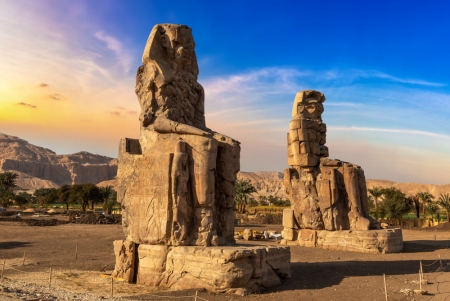
Stand before the Colossi of Memnon and witness Egypt’s engineering marvels. Discover their story and plan your West Bank sightseeing tour today.
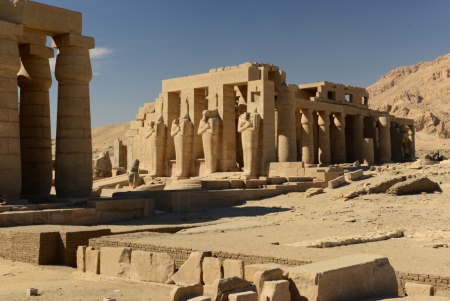
Learn about the Ramesseum in Luxor, Ramses II’s mortuary temple. Explore its history, statues, and hieroglyphs while planning your visit today.
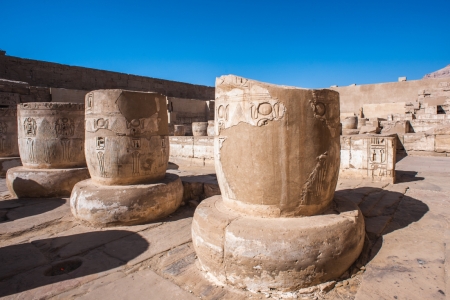
Learn why Medinet Habu is a must-see in Luxor, with its bright reliefs and rich history. Get key travel details and prepare your Egypt visit now!
Discover the village of Pharaoh’s workers, where the skilled artisans of Deir el Medina created royal tombs, lived in unique homes, and practiced their craft over 3,000 years ago.
Explore the Tombs of the Nobles Luxor and discover vivid art scenes depicting ancient Egyptian daily life on this fascinating journey.