Tombs of the Nobles, Luxor

The Tombs of the Nobles on Luxor’s West Bank offer an intimate and detailed look into everyday life in ancient Egypt. Spread across areas of the Theban Necropolis, these tombs belonged to high officials and wealthy individuals and differ from royal tombs by focusing on earthly life rather than the afterlife. Their vivid paintings and reliefs depict daily activities such as farming, crafts, banquets, family life, administration, and religious rituals, preserving invaluable details about social customs, work, and culture. Together, they serve as essential time capsules for understanding how ancient Egyptians actually lived beyond royal monuments.
Quick answer: The Tombs of the Nobles in Luxor are hundreds of rock-cut tombs on the West Bank, built for the officials, priests and scribes who served the pharaohs. Unlike royal tombs, their walls show everyday life: farming, feasts, music, crafts and family moments, often in bright original colour. The best-known tombs belong to Ramose, Rekhmire, Nakht, Menna and Sennefer. Tickets are sold in small groups of tombs at the West Bank ticket office.
| Fact | Details |
|---|---|
| Location | Luxor West Bank, part of the Theban Necropolis |
| Other names | Valley of the Nobles, private Theban tombs |
| Number of tombs | More than 415 catalogued Theban Tombs (TT) |
| Main period | New Kingdom, mainly the 18th Dynasty |
| Main areas | Sheikh Abd el-Qurna, el-Khokha, el-Asasif, Dra Abu el-Naga, Qurnet Murai, Deir el-Medina |
| Famous tombs | Ramose (TT55), Rekhmire (TT100), Nakht (TT52), Menna (TT69), Sennefer (TT96), Neferhotep (TT49) |
| Opening hours | Usually about 6:00 am to 5:00 pm (may close earlier in winter) |
| Tickets | Sold by tomb group; reported 2026 prices from 120 to 200 EGP per group for foreign adults |
Ancient Thebes, today's Luxor, was Egypt's religious capital during the New Kingdom. Kings were buried in hidden valleys behind the cliffs, while their officials were buried in the low hills facing the farmland. Experts now count more than 415 numbered Theban tombs, and the numbers follow the order of discovery, not their position on the map (Wikipedia).
A typical noble's tomb has a chapel cut into the hillside, where families brought offerings, and a shaft down to the burial chamber. Visitors mainly see the painted chapels.
Ancient Egyptian society operated as a highly stratified hierarchy with the pharaoh at the apex, followed by the royal family, then a powerful class of nobles and high officials who managed the kingdom's day-to-day operations. These nobles held crucial positions including:
These positions brought substantial wealth, social prestige, and the resources to commission elaborate tombs that would preserve their memory and provide for their afterlife needs. The tombs' quality and size directly reflected the owner's status, wealth, and importance to the pharaoh.
The nobles selected the hillsides on Luxor's West Bank for several practical and religious reasons. The West Bank symbolized the realm of the dead in Egyptian cosmology—the sun set (died) in the west each evening, making it the appropriate location for necropolises. The limestone hills provided excellent rock for cutting tombs while being close to Thebes (Luxor), the New Kingdom capital where these officials worked and lived.
The elevated positions offered views across the Nile Valley toward the temples on the East Bank where the deceased hoped their cult would be maintained. Being near royal necropolises like the Valley of the Kings associated the nobles with pharaonic power and prestige. Different hillside areas became associated with specific periods or official ranks, creating districts within the larger necropolis.
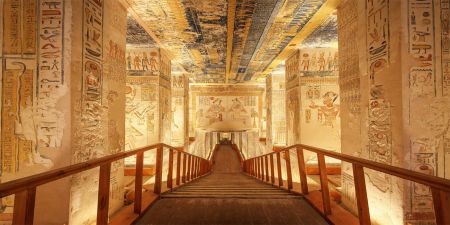
Royal tombs in the Valley of the Kings are long corridors covered with religious texts. They guide the king through the underworld to rebirth with the sun god. Ordinary life almost never appears.
The nobles' chapels are very different. Their owners wanted to enjoy earthly life forever, so they painted it. You see ploughing, harvesting, wine making, fishing in the marshes, banquets with musicians and dancers, and craftsmen at work. These scenes are a key source for daily life in ancient Egypt. The tombs are also smaller and far less crowded than the royal valley.
Together, the two give a balanced picture of ancient Egypt: royal tombs stress the pharaoh's god-like status, while the nobles' celebration of earthly achievements reveals the human side of Egypt's elite.
While Valley of the Kings royal tombs focus on religious texts and pharaohs' afterlife journeys, the Tombs of the Nobles depict daily life in ancient Egypt—agriculture, banquets, hunting, fishing, craftsmen at work, family life, and administrative duties. These scenes provide invaluable insights into how ancient Egyptians actually lived, worked, and celebrated, making them essential for understanding Egyptian society beyond royal propaganda.
The private tombs spread across several hills, each with its own ticket groups.
Sheikh Abd el-Qurna represents the largest and most important necropolis area for nobles' tombs, containing over 150 decorated tombs spanning the 18th-20th Dynasties (approximately 1550-1070 BC). The hillside rises dramatically above the cultivated valley, honeycombed with tomb entrances at various elevations.
The tombs here belonged to particularly high-ranking officials including viziers, high priests of Amun, royal stewards, and important administrators. The most famous and frequently visited tombs in this area include Sennefer (TT96), Ramose (TT55), Rekhmire (TT100), Nakht (TT52), Menna (TT69), and Userhat (TT56). The concentration of important tombs makes Sheikh Abd el-Qurna the primary stop for most tourists visiting nobles' tombs.
El-Khokha is a small hill next door to Sheikh Abd el-Qurna, featuring tombs mainly from the 18th Dynasty. It is home to the restored tomb of Neferhotep (TT49) and other painted chapels.
El-Asasif is the plain in front of Hatshepsut's temple, with New Kingdom and later tombs. It includes some of the largest and most elaborate tombs from the Late Period (26th Dynasty, around 600 BC). The Asasif tombs are architecturally distinct with massive courtyards, elaborate pillared halls, and complex layouts that differ markedly from the simpler New Kingdom tomb designs seen elsewhere.
Located on the northern hillside, north of Sheikh Abd el-Qurna, Dra Abu el-Naga contains tombs primarily from the 17th and early 18th Dynasties, making it one of the oldest areas of the Theban Necropolis. This district includes some royal tombs from the 17th Dynasty alongside nobles' tombs.
The area's tombs often feature saff-style architecture (row of pillars across the facade) characteristic of earlier periods. While not as frequently visited as Sheikh Abd el-Qurna, several important tombs here reward interested visitors, including those of military commanders and administrators from the early New Kingdom.
Qurnet Murai is a small hill near Medinet Habu, at the southern end of the nobles' necropolis, with a few late 18th Dynasty tombs. This area sees fewer tourists than Sheikh Abd el-Qurna but includes several beautifully decorated tombs worth visiting for those with extra time or special interest in seeing less-crowded sites.
Deir el-Medina is the village of the workmen who built the royal tombs, with their own beautiful family tombs (see section 4.8 below).
The Tombs of the Nobles are scattered across the West Bank hills of Luxor in several necropolis areas including Sheikh Abd el-Qurna (the largest, with over 150 tombs), Dra Abu el-Naga, Qurnet Murrai, Khokha, and Assasif. They're located near other major West Bank attractions like the Valley of the Kings (10-15 minutes drive) and Temple of Hatshepsut (5 minutes).
Ramose served as Vizier, the highest official after the king, and Governor of Thebes under both Amenhotep III and the young Akhenaten (late 18th Dynasty), making his tomb historically fascinating for straddling the religious revolution of the Amarna Period.
The tomb showcases two distinct artistic styles side-by-side: traditional Theban art with raised relief carvings showing incredible detail in faces, jewelry, wigs and clothing textures; and Amarna Period art with its characteristic naturalistic style and focus on the sun disk Aten. On the back wall, the king appears first in the traditional style and then in the new Amarna style, perfectly illustrating the dramatic artistic and religious changes during Akhenaten's reign.
The entrance hall contains some of ancient Egypt's finest relief carving, with rows of elegant guests. The faces of Ramose and his wife show remarkable individuality and naturalism, with subtle modeling suggesting bone structure beneath the skin—a level of portraiture rare in Egyptian art which typically idealized subjects. A painted wall shows women mourning at his funeral.
Despite its significance, the tomb was never completed. Ramose apparently followed Akhenaten to the new capital at Amarna, abandoning this Theban tomb unfinished. The artists' sketches that remain provide valuable insights into ancient Egyptian artistic processes and workshop practices.
Rekhmire served as Vizier under Thutmose III and Amenhotep II, holding the highest administrative position in Egypt aside from the pharaoh himself. His chapel contains a long text about the duties of a vizier, along with extensive scenes documenting his official responsibilities, such as tax collection.
The famous "craftsmen scenes" show workshops with brick makers, sculptors, metal workers and other artisans creating furniture, statues, jewelry, pottery, and other luxury goods, alongside farmers at work. These detailed depictions provide our best evidence for ancient Egyptian manufacturing techniques and workshop organization.
One wall shows foreign delegations bringing gifts and tribute, including Nubians, Syrians, Cretans (Keftiu), and others, each depicted with their characteristic features, clothing, and goods. These scenes are invaluable for understanding Egypt's international relations and trade during the height of New Kingdom power.
The tomb architecture is notable for its unusual design—instead of a flat ceiling, the corridor slopes dramatically upward, creating a soaring space that reaches over 8 meters at its highest point. Rekhmire later seems to have lost royal favour, and his images were attacked in ancient times (Wikipedia).
Nakht served as a scribe and astronomer of Amun, probably during the reign of Thutmose IV (18th Dynasty). Though small, his tomb contains some of the most famous and beautiful paintings in the Theban Necropolis, with colours that remain bright and fresh.
The tomb's most celebrated scenes depict a lively banquet with female musicians playing harp, lute, and double oboe while dancers perform. The painting's grace, delicacy, and attention to detail in the musicians' dresses, jewelry, and expressions make it one of ancient Egypt's artistic masterpieces, appearing in countless books, documentaries, and museum exhibits.
Other scenes show harvesting grain, treading grapes for wine-making, tending livestock, and Nakht hunting birds in the marshes with his wife, Tawy. While conservation concerns have led to restricted access at times, when open, Nakht's tomb absolutely deserves inclusion in any nobles' tombs itinerary.
Menna worked as Scribe of the Fields and overseer of the fields of Amun during the reign of Thutmose IV (18th Dynasty). His tomb is celebrated for exceptional agricultural scenes showing the annual cycle of farming in extraordinary detail.
The paintings depict plowing fields with oxen, sowing seeds, surveyors measuring wheat fields, harvesting grain with sickles, winnowing, transporting crops, recording yields for tax purposes, and storing grain. The scenes provide invaluable documentation of ancient Egyptian agricultural practices and tools. The tomb also has one of the earliest known scenes of the weighing of the heart.
Beyond agriculture, the tomb includes marsh hunting scenes with Menna spearing fish and birds from a papyrus boat, a classic Egyptian artistic motif. The faces and eyes of Menna and his wife were damaged on purpose in ancient times, possibly by an enemy or during the Amarna period (Wikipedia). This ancient vandalism itself adds historical intrigue.
The colors throughout remain vibrant, particularly the yellows and golds representing grain fields, making the tomb essential viewing.
Sennefer served as Mayor of Thebes and Overseer of the Gardens of Amun during the reign of Amenhotep II (18th Dynasty). Visitors walk down a steep staircase to his underground burial chamber, and the descent through narrow passages adds to the sense of discovery.
The tomb earns its nickname from the spectacular ceiling decoration—an entirely painted surface covered with grape vines, leaves, and clusters, creating the illusion of sitting under a pergola in a vineyard. The irregular rock surface of the ceiling was skillfully incorporated into the design, with the natural bumps painted as individual grapes.
The walls and pillars feature beautifully preserved paintings showing Sennefer and his wife Meryt, who offers him gifts, in scenes including receiving offerings, purification rituals, and the journey to the afterlife. The colors remain remarkably vivid—bright yellows, reds, blues, and greens that look freshly applied despite being 3,400 years old. The tomb of Sennefer and the tomb of Rekhmire are usually sold on the same ticket.
Neferhotep was Chief Scribe of Amun at the end of the 18th Dynasty, around the reign of King Ay. The tomb of Neferhotep in el-Khokha opened to visitors on 11 February 2024, after restoration work that began in 2000. A mission from the University of Buenos Aires led the project, and a German team cleaned the paintings with lasers (Ahram Online). The walls show the great Temple of Amun at Karnak and a royal palace. A niche holds statues of Neferhotep and his wife.
Userhat served as a royal scribe during the reign of Amenhotep II (18th Dynasty). His tomb features beautifully executed paintings showing both official and personal aspects of his life.
The most striking scenes depict hunting in the desert and marshes, with remarkable detail in the flora and fauna. Desert hunting scenes show various animals including gazelles, hyenas, and hares fleeing before hunters, while marsh scenes present papyrus thickets teeming with birds and fish.
A particularly touching scene shows Userhat and his wife seated before an offering table piled high with food, flowers, and other goods. The couple's affectionate pose, with the wife's arm around her husband, adds a personal warmth often absent in more formal Egyptian art.
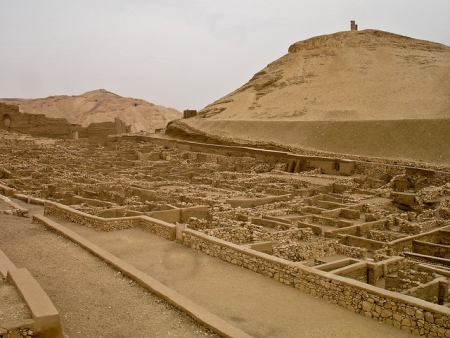
Deir el-Medina was the village of the craftsmen who cut and painted the royal tombs. At its peak, it had about 68 houses (Wikipedia). The workers built small tombs for themselves, topped with little pyramids. Their burial chambers, such as those of Sennedjem and Inherkhau, are among the most colourful on the West Bank. The site also has a Ptolemaic temple to the goddess Hathor.
The most impressive tombs include: Sennofer (TT96) with its famous grape vine ceiling, Ramose (TT55) showcasing transition between traditional and Amarna art styles, Nakht (TT52) featuring beautiful musician and dancer paintings, Menna (TT69) with exceptional agricultural scenes, Userhat (TT56) showing hunting scenes, and Rekhmire (TT100) documenting craftsmen and administration with unmatched detail.
Get in touch with our local experts for an unforgettable journey.
Plan Your Trip
The nobles' tombs demonstrate sophisticated ancient Egyptian painting techniques developed over centuries. The process began with preparing the tomb walls—smoothing rough limestone surfaces with plaster made from gypsum and then applying a thin layer of fine white plaster that would receive the paintings.
Artists worked from preliminary sketches, often still visible beneath finished paintings. Master artists drew outlines and key figures while apprentices filled in backgrounds and secondary elements. The distinctive Egyptian artistic convention of showing figures in composite view (head in profile, eye frontal, torso frontal, legs in profile) created instantly recognizable representations.
Painters used mineral and organic pigments mixed with water and binding agents: black from charcoal or manganese, white from chalk or gypsum, red from ochre (iron oxide), yellow from ochre or orpiment, blue from azurite or Egyptian blue (the first synthetic pigment), and green from malachite or mixtures. These natural pigments explain why tomb paintings often remain remarkably vivid after thousands of years when protected from moisture and light.
Artists applied paint with brushes made from palm fiber or reeds. The layering technique involved painting background colors first, then progressively adding details and outlines. The final outlines, typically in black or red, defined figures and created visual separation between elements.
Artistic styles evolved throughout the New Kingdom, with distinct characteristics marking different periods and workshops. Early 18th Dynasty tombs often show stiffer, more formal figures with less naturalism. Mid-18th Dynasty art (Thutmose III to Amenhotep III) represents the classic period with graceful figures, elegant proportions, and sophisticated compositions.
The Amarna Period (Akhenaten's reign) introduced dramatic stylistic changes including more naturalistic anatomy, informal poses, emphasis on royal family intimacy, and exclusive focus on the Aten sun disk. While most nobles' tombs predate or postdate Amarna, Ramose's tomb (TT55) perfectly illustrates this transitional moment.
Post-Amarna and 19th Dynasty tombs generally returned to traditional styles but often with more elaborate detail and busier compositions reflecting increased wealth and artistic ambition during Ramesses II's long reign.
Egyptian artists employed colors symbolically as well as naturalistically. Black represented fertility, death, and the underworld; white signified purity and sacred objects; red symbolized life, vitality, and sometimes danger; yellow represented gold, sun, and eternity; blue indicated the heavens, water, and divinity; and green symbolized regeneration, vegetation, and new life.
Understanding this symbolic color language enriches interpretation of tomb scenes. For example, green skin on Osiris (god of the afterlife) represents resurrection and eternal life, while black skin on the same deity emphasizes his death and underworld aspects.
Agricultural scenes dominate many nobles' tombs because Egypt's entire economy and civilization depended on Nile Valley farming. These paintings document the annual agricultural cycle in remarkable detail.
Plowing scenes show farmers guiding wooden plows pulled by oxen or occasionally cows, breaking up soil after the Nile's annual flood receded. Sowing depicts farmers broadcasting seeds by hand while others use mattocks to cover them. Harvesting scenes show workers cutting grain with curved sickles, binding it into sheaves, and transporting it to threshing floors.
Threshing involved driving cattle or donkeys over grain to separate kernels from stalks. Winnowing scenes show workers tossing grain in the air with wooden scoops, allowing wind to blow away chaff while heavier grain fell to the ground. Measuring and recording the harvest documented yields for taxation purposes.
Viticulture receives special attention with scenes showing grape cultivation, harvest, pressing grapes by foot in large vats, and storing wine in clay amphorae. Wine was a luxury product, and tomb owners prominently displayed their wine production to demonstrate wealth and sophisticated lifestyle.
Banquet scenes provide fascinating glimpses into elite social life and celebrations. Typical banquet paintings show rows of elaborately dressed guests (usually segregated by gender) sitting on chairs or floor cushions before tables laden with food and drink.
Musicians and dancers provided entertainment. Female musicians playing harps, lutes, lyres, double oboes, and tambourines are common, often shown with remarkable grace and delicacy. Professional dancers performed acrobatic movements wearing minimal clothing and elaborate jewelry.
Servants circulate offering food, pouring wine, and presenting flowers and perfume. The guests themselves wear elaborate wigs, jewelry, and perfumed cones of scented fat on their heads (though scholars debate whether these cones were real or symbolic representations of fragrance).
The abundant food depicted includes bread, beef, poultry, fish, vegetables, fruits (especially grapes, figs, and dates), cakes, beer, and wine—demonstrating the varied diet available to wealthy Egyptians. These banquet scenes probably depicted both actual celebrations and idealized afterlife feasting the deceased hoped to enjoy eternally.
Hunting scenes served multiple purposes: demonstrating the tomb owner's mastery over chaos (represented by wild nature), showing physical prowess and courage, and providing symbolic connection to mythology (Horus hunting Set, for example).
Desert hunting scenes depict the tomb owner in a chariot with bow and arrow, pursuing desert game including gazelles, ibexes, wild bulls, lions, and hyenas. Dogs assist the hunt, shown with remarkable naturalism and individual character. The artistic challenge of rendering rapid motion and complex spatial relationships made hunting scenes opportunities for artistic virtuosity.
Marsh hunting typically shows the deceased standing in a papyrus skiff, either spearing fish or throwing sticks at birds. The marsh teems with life—fish, birds, crocodiles, hippopotami, butterflies, and lush papyrus plants. These scenes connected to religious symbolism (the marsh representing primordial creation) while also depicting actual leisure activities of the wealthy.
Fishing scenes sometimes show professional fishermen using nets, fish traps, and hooks—documenting actual fishing methods that provided protein for ancient Egyptians. The variety of fish species painted demonstrates close observation of Nile ecology.
Workshop scenes in tombs like Rekhmire's provide invaluable documentation of ancient Egyptian manufacturing and technology. These paintings show:
These workshop scenes celebrate both the tomb owner's wealth (affording such luxury goods) and the skilled craftsmen whose products enhanced elite lifestyle. They also provide our most detailed evidence for ancient Egyptian technology and manufacturing processes.
While much Egyptian art focuses on public and official life, nobles' tombs include more intimate family scenes than royal monuments. The tomb owner appears with his wife, often shown in affectionate poses—the wife embracing her husband, couples holding hands, or sitting close together—that reveal emotional bonds.
Children appear in some tombs, though less frequently than might be expected. When present, they're shown playing games, helping with activities, or standing respectfully near parents. The Egyptian artistic convention of showing children as miniature adults (rather than with child-like proportions) can make them difficult to identify without hieroglyphic labels.
These family scenes served religious purposes (invoking family members in afterlife provisions) and social purposes (demonstrating the tomb owner's proper fulfillment of social roles as spouse and parent). They humanize the ancient Egyptians, showing that family relationships formed central aspects of their lives just as today.
Most accessible Tombs of the Nobles date from Egypt's New Kingdom period, primarily the 18th-20th Dynasties (approximately 1550-1070 BC). Some earlier Middle Kingdom tombs and later period tombs (including elaborate Late Period tombs in Assasif from around 600 BC) also exist in the Theban Necropolis. The 18th Dynasty tombs (especially mid-dynasty during reigns of Thutmose III, Amenhotep II, and Thutmose IV) generally feature the finest artistic quality.
Nobles' tombs provide irreplaceable primary source material for understanding New Kingdom society. They document:
This information often isn't preserved in royal monuments or official texts, making nobles' tombs uniquely valuable for reconstructing ancient Egyptian life beyond royal propaganda.
Archaeological and conservation projects continue studying nobles' tombs, regularly producing new discoveries and insights. Recent work includes:
New technologies enable archaeologists to study tombs in ways impossible for earlier generations, continually expanding our knowledge.
Tickets are not sold at the tomb doors. You buy them at the main West Bank ticket office before you arrive. Each ticket covers one group of tombs. Reported 2026 prices for foreign adults are below (Explore Luxor). Students usually pay half. Prices change often, so check before travelling.
| Ticket group | Reported price (foreign adult) |
|---|---|
| Rekhmire and Sennefer | 120 EGP |
| Nakht and Menna | 200 EGP |
| Ramose | 200 EGP |
| El-Khokha | 120 EGP |
| El-Asasif | 200 EGP |
| Deir el-Medina | 220 EGP |
Ask at the office which ticket covers Neferhotep, since arrangements for newer tombs can change. Many Luxor ticket offices accept card payment only (Egypt Independent), so bring a bank card.
The sites are generally open from about 6:00 am to 5:00 pm, and some may close an hour earlier in winter. Morning is best, because midday gets very hot, especially in summer. Allow 20 to 30 minutes per tomb.
The private tombs fit easily into a day on the West Bank. A simple plan looks like this:
A guided Valley of the Kings, Queens and Hatshepsut day trip can be extended to include the nobles. Keep the East Bank and Karnak Temple for another day. Our Luxor travel guide and the overview page on the Tombs of the Nobles help with more planning.
Photo rules change, so ask at the ticket office whether phone photos are allowed and whether a camera ticket is needed. Flash is never allowed. Wear good shoes and bring water, sun cream and a hat.
The Tombs of the Nobles in Luxor show the people behind the pharaohs: the viziers, scribes, mayors and farm managers who kept Egypt running. Through their paintings, we see what they ate, wore, grew and celebrated more than 3,300 years ago. For many visitors, they are the most human stop on the West Bank.
Ready to explore further? Browse our Luxor day tours or our day trip to Luxor from Cairo to see the nobles' tombs with an expert Egyptologist. Fill in the inquiry form to plan a tailor-made West Bank tour that matches your pace and interests.
The Tombs of the Nobles are scattered across the West Bank hills of Luxor in several necropolis areas including Sheikh Abd el-Qurna (the largest, with over 150 tombs), Dra Abu el-Naga, Qurnet Murrai, Khokha, and Assasif. They're located near other major West Bank attractions like the Valley of the Kings (10-15 minutes drive) and Temple of Hatshepsut (5 minutes).
While Valley of the Kings royal tombs focus on religious texts and pharaohs' afterlife journeys, the Tombs of the Nobles depict daily life in ancient Egypt—agriculture, banquets, hunting, fishing, craftsmen at work, family life, and administrative duties. These scenes provide invaluable insights into how ancient Egyptians actually lived, worked, and celebrated, making them essential for understanding Egyptian society beyond royal propaganda.
The most impressive tombs include: Sennofer (TT96) with its famous grape vine ceiling, Ramose (TT55) showcasing transition between traditional and Amarna art styles, Nakht (TT52) featuring beautiful musician and dancer paintings, Menna (TT69) with exceptional agricultural scenes, Userhat (TT56) showing hunting scenes, and Rekhmire (TT100) documenting craftsmen and administration with unmatched detail.
Allow 1.5-2 hours minimum to visit 3-4 tombs, which provides good overview of different periods and artistic styles. The sites are spread across hillsides requiring walking between locations. Most West Bank tours allocate 1-2 hours for nobles' tombs as part of full-day itineraries including Valley of the Kings, Temple of Hatshepsut, and other attractions. Archaeology enthusiasts might spend 3-4 hours visiting 6-8 tombs.
No, the Tombs of the Nobles require separate admission tickets from Valley of the Kings tickets. Different tomb areas have separate ticketing—Sheikh Abd el-Qurna tombs typically require one ticket for 2-3 specific tombs, while exceptional tombs like Sennofer or Ramose may require separate, slightly higher-priced tickets due to their outstanding quality. Check current ticket combinations before visiting as they occasionally change.
Photography rules vary by tomb. Some allow personal photography without flash (to protect delicate paintings from light damage), while others prohibit all photography for conservation reasons. Camera fees may apply where photography is permitted. Flash photography is universally prohibited. Professional photography equipment typically requires special permissions. Always check current rules with tomb guards before photographing.
Most accessible Tombs of the Nobles date from Egypt's New Kingdom period, primarily the 18th-20th Dynasties (approximately 1550-1070 BC). Some earlier Middle Kingdom tombs and later period tombs (including elaborate Late Period tombs in Assasif from around 600 BC) also exist in the Theban Necropolis. The 18th Dynasty tombs (especially mid-dynasty during reigns of Thutmose III, Amenhotep II, and Thutmose IV) generally feature the finest artistic quality.
The tombs are accessible via organized West Bank tours (most common and convenient), private taxi or driver hire for the day, bicycle rental on West Bank (for adventurous visitors comfortable with hills and heat), or by taking public ferry from East Bank to West Bank followed by taxi or bicycle. Most organized Luxor West Bank tours include 2-3 nobles' tombs in itineraries that also visit Valley of the Kings, Temple of Hatshepsut, and other major sites.
Explore the best temples and tombs with our Luxor Egypt Guide. Dive into ancient Thebes and start planning your trip today.
Located on the east bank of the Nile, Karnak Temple Complex consists of a number of temples. Its name was given as in Arabic Karnak means fortified village.
Your complete guide to Luxor Temple in Luxor, Egypt. Discover history, key attractions, and expert sightseeing tips for travelers.
Your guide to the Valley of the Kings—best tombs, history, and insider facts. Get the knowledge you need and start planning your trip today.
Step into history at the Valley of the Queens, Luxor. Explore royal tombs, ancient artifacts, and fascinating facts about this legendary site.
Uncover the history of the Temple of Hatshepsut Luxor. Learn about the remarkable Queen's mortuary temple and essential travel tips in our complete guide.
Stand before the Colossi of Memnon and witness Egypt’s engineering marvels. Discover their story and plan your West Bank sightseeing tour today.
Learn about the Ramesseum in Luxor, Ramses II’s mortuary temple. Explore its history, statues, and hieroglyphs while planning your visit today.
Learn why Medinet Habu is a must-see in Luxor, with its bright reliefs and rich history. Get key travel details and prepare your Egypt visit now!
Discover the village of Pharaoh’s workers, where the skilled artisans of Deir el Medina created royal tombs, lived in unique homes, and practiced their craft over 3,000 years ago.
Learn about the Tombs of the Nobles, Luxor, covering the main Theban tombs, their daily-life paintings, tickets, opening hours.