Luxor Museum

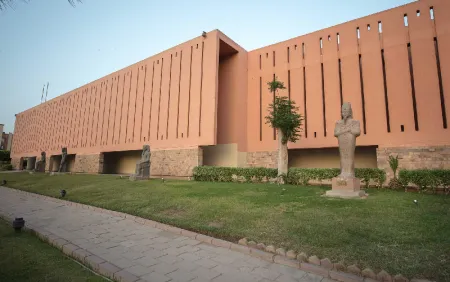
Luxor Museum ranks among Egypt's best cultural treasures. Visitors have given it an impressive 4.6 out of 5 rating based on more than 1,600 reviews. The museum sits beautifully along the Nile Corniche road that links the ancient Luxor and Karnak temples. This remarkable institution first welcomed visitors on December 12, 1975.
Egyptian architect Dr. Mahmud El Hakim created this masterpiece that engages history lovers with its extraordinary artifacts. The museum's remarkable collection includes grave goods from Tutankhamun's tomb. Visitors can see 26 New Kingdom statues that were found in the Luxor Temple cache in 1989. The museum expanded its collection in 2004 by adding royal mummies of two pharaohs – Ahmose I and Ramesses I.
This cultural landmark has earned its place as one of the country's most important historical sites. Each carefully curated exhibit gives visitors a genuine glimpse into Egypt's magnificent past.
Luxor Museum sits beautifully along the Nile Corniche road that links the ancient Luxor and Karnak temples. This remarkable institution on the Department of Antiquities' land offers convenient access between two of Egypt's most important archaeological sites.
Luxor Museum officially opened on December 12, 1975, by President Anwar Sadat and French President Valéry Giscard d'Estaing. Though construction started in 1964 and the building was completed in 1969, meticulous artifact installation from 1972 delayed the opening.
Egyptian architect Dr. Mahmud El Hakim designed Luxor Museum. The Egyptian Ministry of Culture commissioned him in 1962 to create this specialized institution dedicated to housing Theban antiquities with a modern, focused approach.
The Egyptian Ministry of Culture realized the importance of a dedicated space for Theban antiquities and conceived the idea of Luxor Museum in 1962. Dr. Mahmud El Hakim, a renowned Egyptian architect, received the commission that same year to design this specialized institution.
The modern building's construction started in 1964 on the Department of Antiquities' land along Luxor's Corniche. The building completion happened in 1969, but the meticulous artifact installation didn't begin until 1972. Several years passed before the museum could welcome visitors due to various delays.
President Anwar Sadat and his guest, French President Valéry Giscard d'Estaing, officially opened the museum on December 12, 1975. The institution expanded twice over the last several years to house its growing collections.
The museum's design differed from the larger Egyptian Museum in Cairo with its focused approach. The Supreme Council of Antiquities selected only the finest artifacts from local excavations and emphasized quality rather than quantity. This careful curation created an uncluttered display with clear multilingual labels that helps visitors understand each piece's importance in Theban history.
The collection primarily features items from the New Kingdom period, which represents the region's most spectacular era of development.
Luxor Museum takes a quality-over-quantity approach, displaying carefully selected artifacts rather than overwhelming visitors with thousands of pieces. The Supreme Council of Antiquities chose only the finest artifacts from local excavations, emphasizing thoughtful curation over volume.
The Luxor Museum takes a different approach from other museums that overwhelm visitors with thousands of artifacts. Quality matters more than quantity here. The museum's thoughtful design creates a peaceful environment where each artifact tells its own story of ancient Egyptian civilization.
The museum's greatest treasure is the "Luxor Temple Cachette" - an exceptional collection of 26 well-preserved statues that workers found in 1989 during routine maintenance at Luxor Temple. These hidden masterpieces include beautiful statues of gods, goddesses, and pharaohs carefully buried during the Roman period.
A life-sized purple-red quartzite statue of Amenhotep III stands as one of the most striking exhibits. Visitors can see Tutankhamun's alabaster sphinx, which still shows traces of its original paint. The collection also features a remarkable calcite double statue that shows Amenhotep III with the crocodile god Sobek.
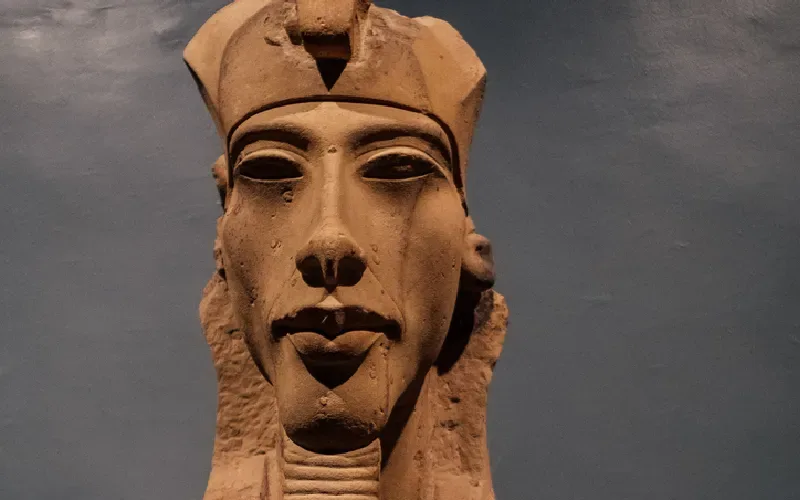
Clean lighting and detailed bilingual labels in Arabic and English showcase the museum's modern display techniques. The reconstructed Wall of Akhenaten, built from sandstone talatat blocks, helps visitors learn about ancient Egyptian art during the revolutionary Amarna Period.
The museum's 2004 expansion added specially designed dark rooms that house royal mummies of Ahmose I and Ramesses I. This careful arrangement creates a personal connection that enhances visits to Luxor's nearby archeological sites.
Get in touch with our local experts for an unforgettable journey.
Plan Your Trip
Luxor Museum goes beyond being a tourist attraction by promoting deep connections with local communities through educational initiatives. The museum team has created a complete project that builds meaningful exchanges between Luxor residents and their ancestral heritage.
Monthly seminars form the foundation of this community involvement. Local people gather to learn about new archeological findings from leading Egyptian and foreign scholars.
These sessions help residents understand the excavations happening around them and strengthen their connection to their historical roots.
The museum's innovative "Museum Education" program targets younger generations. The core team visits local schools throughout the academic year. They deliver educational talks and guide students through museum tours. This collaboration with the town's educational department has led to a soaring win. Students now ask thoughtful questions during their visits, showing their increased interest.
The museum expands its educational impact through:
These community-focused activities show Luxor Museum's steadfast dedication to both preserving antiquities and involving the people whose ancestors created these remarkable treasures.
Luxor Museum stands out as a must-visit destination for anyone learning about Egypt's rich historical mixture. This carefully curated museum offers a quality-focused experience that works perfectly with trips to nearby temples and archeological sites, unlike larger museums that might overwhelm visitors.
The museum's smart design lets each artifact tell its own compelling story. Every piece connects visitors to ancient Theban civilization's glory, from the magnificent statues of the Luxor Temple Cachette to the royal mummies added in 2004. The clear bilingual labels and strategic lighting make the experience available to history enthusiasts of all backgrounds.
Luxor Museum does much more than attract tourists. The institution connects local residents with their ancestral heritage through educational seminars, school programs, and creative workshops. This community focus will give visitors a deeper understanding of these treasures as living links to the past rather than mere relics.
Visitors planning their 2025 schedule should definitely make time to see this cultural gem. Though smaller than other Egyptian museums, Luxor Museum provides an intimate, high-quality experience that strikes a chord with visitors. The mix of extraordinary artifacts, thoughtful presentation, and local connections makes this museum a true highlight of any experience through Egypt's ancient wonders.
Luxor Museum has earned an impressive 4.6 out of 5 rating based on more than 1,600 reviews, ranking it among Egypt's best cultural treasures and making it a highly recommended destination for history enthusiasts.
The Luxor Temple Cachette is the museum's greatest treasure—an exceptional collection of 26 well-preserved statues discovered in 1989 during routine maintenance at Luxor Temple. These hidden masterpieces include beautiful statues of gods, goddesses, and pharaohs carefully buried during the Roman period.
The museum's collection includes grave goods from Tutankhamun's tomb, most notably Tutankhamun's alabaster sphinx, which still shows traces of its original paint. These artifacts provide insight into the boy pharaoh's burial treasures.
Yes, the museum's 2004 expansion added specially designed dark rooms that house royal mummies of two pharaohs—Ahmose I and Ramesses I. This careful arrangement creates a personal connection and enhances visits to Luxor's nearby archaeological sites.
A life-sized purple-red quartzite statue of Amenhotep III stands as one of the most striking exhibits. The collection also features a remarkable calcite double statue showing Amenhotep III with the crocodile god Sobek, demonstrating exceptional ancient Egyptian craftsmanship.
The reconstructed Wall of Akhenaten, built from sandstone talatat blocks, helps visitors learn about ancient Egyptian art during the revolutionary Amarna Period. This exhibit showcases the unique artistic style that emerged during Pharaoh Akhenaten's reign.
Luxor Museum, opened 1975 on Nile Corniche, features Tutankhamun treasures, 26 Temple Cachette statues & royal mummies. Rated 4.6/5 by 1,600+ visitors.
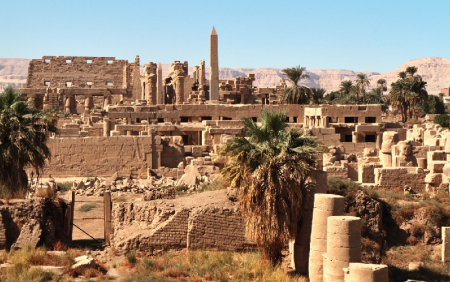
Temple of Amun at Karnak, Luxor, covers 200 acres with Great Hypostyle Hall (134 columns), Sacred Lake & 10 pylons. Built 2055 BCE-Ptolemaic era.