Al-Hakim Mosque: Historical and Architectural Marvel in Cairo

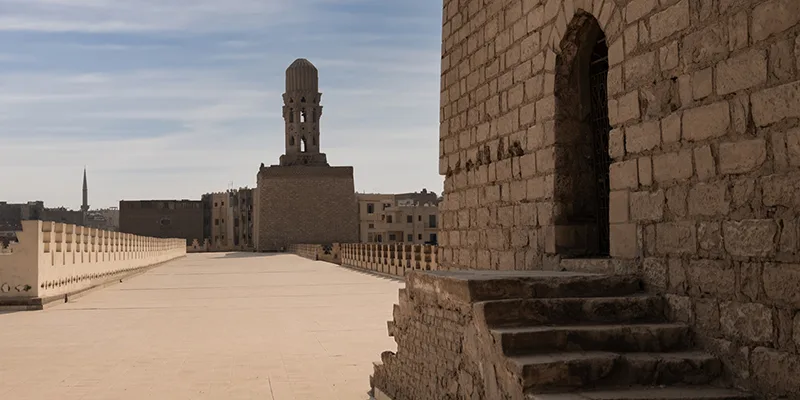
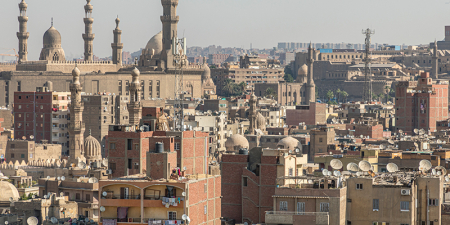
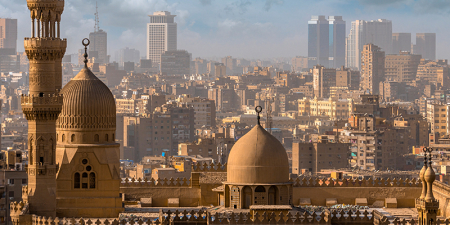
The Al-Hakim Mosque stands as one of Cairo’s most significant Islamic monuments and a remarkable example of Fatimid architecture. Completed in 1013 CE, the mosque reflects the political ambition, religious vision, and architectural sophistication of the Fatimid dynasty. Located beside Bab al-Futuh, one of the main gates of historic Cairo, al hakim mosque cairo remains a powerful symbol of the city’s medieval Islamic heritage.
With its massive size—approximately 120 by 113 meters—the mosque is the second largest in Cairo after the Mosque of Ibn Tulun and one of the oldest surviving mosques in Egypt. More than a place of worship, the Al-Hakim Mosque represents a thousand years of transformation, from its Fatimid origins to Mamluk modifications and modern restorations, making it a living record of Cairo’s layered history.
Al-Hakim Mosque is a historic Islamic mosque in Cairo built during the Fatimid period and completed in 1013 CE.
The mosque is located in Islamic Cairo, adjacent to Bab al-Futuh, one of the northern gates of the old city.
The Fatimid dynasty originated in North Africa and successfully conquered Egypt in 969 CE under the leadership of General Jawhar al-Siqilli. Following this conquest, Cairo (al-Qahira) was founded as the new capital of the Fatimid Caliphate. Designed as a royal and religious city, Cairo rapidly expanded in size and importance.
During the late 11th century, the city walls were extended under the authority of the powerful vizier Badr al-Din al-Jamali. These expansions incorporated areas that had previously lain outside the city, including the site of the Al-Hakim Mosque, officially bringing it within Cairo’s fortified boundaries.
Construction of the Al-Hakim Mosque began in 990 CE under the Fatimid Caliph al-ʿAziz Billah. The prayer hall was completed early, allowing worshippers to use the mosque even while construction continued. However, al-Aziz died in 996 CE before the project was finished.
His son, al-Hakim bi-Amr Allah, assumed responsibility for completing the mosque. Between 1002 and 1003 CE, he oversaw major construction phases and introduced important architectural modifications. These included increasing the height of the interior supports and later enclosing the minarets within massive square bastions. The mosque officially opened in Ramadan 1013 CE, following an elaborate procession from al-Azhar Mosque.
The mosque’s layout closely follows earlier Fatimid architectural models, particularly al-Azhar Mosque. It features a large open courtyard surrounded by arcaded porticoes and a hypostyle prayer hall. During the Fatimid period, al hakim mosque cairo served as an important center for Shiʿi religious teaching and public worship, reinforcing Cairo’s role as a major Islamic capital.
Construction began under the Fatimid Caliph al-Aziz Billah and was completed by his son, al-Hakim bi-Amr Allah.
It is one of the oldest surviving Fatimid mosques in Egypt and a key example of early Islamic architecture in Cairo.
At the heart of the mosque lies a spacious rectangular courtyard surrounded by four riwaqs (arcades). Unlike many earlier mosques that relied on marble columns, the Al-Hakim Mosque uses massive brick piers with engaged corner columns. This choice provided greater structural strength and gave the interior a distinctive visual rhythm.
The mosque originally had thirteen entrances, allowing easy access from different parts of the city. Its architectural scale and clarity of design emphasize monumentality, a defining feature of Fatimid religious architecture.
One of the most striking elements of the Al-Hakim Mosque is its monumental entrance portal on the northwestern façade. Projecting outward from the main wall, the entrance is framed by two squat towers and richly decorated recessed panels. Kufic inscriptions and geometric motifs adorn the stonework, highlighting the aesthetic sophistication of Fatimid artisans.
This type of projecting entrance is among the earliest examples in Egypt and reflects architectural influences from North Africa, particularly the Great Mosque of Mahdiya in present-day Tunisia. The portal serves both a functional and symbolic role, marking the mosque as a major religious institution.
The prayer hall consists of five aisles running parallel to the qibla wall, intersected by a wider transverse aisle that leads directly to the mihrab. This design emphasizes the direction of prayer and creates a strong visual axis toward the sanctuary.
Originally, three domes crowned the mosque: one above the mihrab and two at the corners of the qibla wall. Although only the central dome survives today, it remains a focal point within the interior, supported by squinches that demonstrate advanced medieval engineering techniques.
The mosque represents Fatimid Islamic architecture, featuring a hypostyle prayer hall, large courtyard, and monumental entrance.
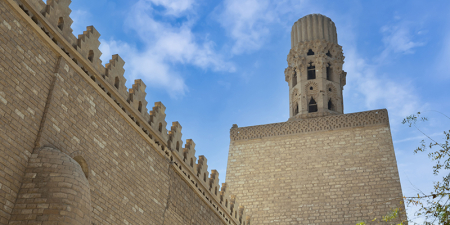
The minarets were originally multi-tiered and later enclosed within massive bastions, a rare architectural feature in Cairo.
The mosque covers approximately 120 by 113 meters, making it the second largest mosque in Cairo after Ibn Tulun Mosque.
Get in touch with our local experts for an unforgettable journey.
Plan Your Trip
The twin minarets of the Al-Hakim Mosque are among its most distinctive features. Built between 1002 and 1003 CE, they represent an innovative departure from earlier Egyptian minaret designs. Each minaret began with a square base but developed into different upper forms—one cylindrical and the other octagonal.
Both minarets were originally decorated with carved stone panels, including geometric patterns and Kufic inscriptions that recorded the name of Caliph al-Hakim and the date of construction.
Around 1010 CE, al-Hakim ordered the minarets to be enclosed within massive square bastions. These brick structures gave the minarets a fortress-like appearance while preserving the original towers inside. Scholars have long debated the reasons behind this unusual decision.
Some interpretations suggest political symbolism, possibly related to shifting Fatimid control over the holy cities of Mecca and Medina. Others argue that the encasement reflects al-Hakim’s evolving religious views and desire to redefine Fatimid identity.
In 1303 CE, a powerful earthquake severely damaged the mosque, particularly the upper sections of the minarets. The Mamluk Sultan Baybars II ordered their reconstruction in 1304 CE. The rebuilt upper portions feature octagonal shafts, muqarnas decoration, and mabkhara-style crowns, reflecting the architectural tastes of the Mamluk period rather than the original Fatimid design.
By the mid-20th century, the Al-Hakim Mosque had fallen into severe neglect. In 1980, the Dawoodi Bohra community launched a comprehensive restoration project under the leadership of Syedna Mohammed Burhanuddin. The work, completed in just over two years, transformed the ruined structure into a functioning mosque once again.
White marble floors, gold accents, and restored architectural elements were introduced, allowing the mosque to reopen officially in November 1980 in the presence of Egyptian President Anwar Sadat.
While the restoration was widely praised for saving the mosque, it also sparked debate among conservation experts. Some criticized the use of modern materials and questioned the project’s adherence to international preservation standards. Nevertheless, many scholars acknowledged that the restoration revived a monument that might otherwise have been lost entirely.
A second major restoration campaign began in 2017 in cooperation with Egypt’s Ministry of Tourism and Antiquities. Completed between 2017 and 2023, the project addressed structural damage, water infiltration, and the conservation of inscriptions and wooden elements.
In June 2023, Indian Prime Minister Narendra Modi visited al hakim mosque cairo, highlighting its international cultural significance and its strong connection to the Dawoodi Bohra community worldwide.
The Al-Hakim Mosque is far more than an architectural monument; it is a living narrative of Cairo’s Islamic history. From its Fatimid foundations under al-Aziz and al-Hakim to Mamluk alterations and modern restorations, the mosque reflects centuries of religious, political, and cultural change.
Its monumental scale, innovative minarets, grand entrance, and harmonious spatial design make it one of the most important examples of Fatimid architecture in Egypt. Today, al hakim mosque cairo continues to serve both as an active place of worship and a major historical landmark.
For visitors to Cairo, the Al-Hakim Mosque offers a quieter yet equally enriching alternative to more crowded sites. Whether admired for its architectural mastery, explored for its historical depth, or experienced as a peaceful spiritual space, the mosque remains a timeless testament to Cairo’s enduring Islamic heritage.
El Sayeda Zeinab is a historic Cairo district known for the Sayeda Zeinab Mosque, Islamic heritage, vibrant markets, and authentic local culture.
Al-Hakim Mosque is a historic Fatimid mosque in Cairo near Bab al-Futuh, completed in 1013 CE and known for its large scale, unique minarets, and importance in Islamic architecture.
Al Rifai Mosque Cairo is a historic neo-Mamluk mosque in Egypt, serving as a royal mausoleum and spiritual center with Sufi shrines and architectural grandeur.