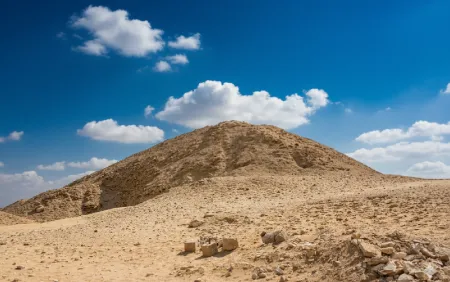
The Pyramid of Pepi I

Pepi I's pyramid stands as one of the most important ancient Egyptian structures from the 24th or 23rd century BC. Time has reduced this once-mighty structure to ruins, but it originally stretched 52.5 meters high with a base spanning 78.75 meters. The pyramid's original name "Men-nefer Pepi" which means "Pepi's splendor is enduring," became the foundation for the name "Memphis" - the prominent capital of the Old Kingdom.
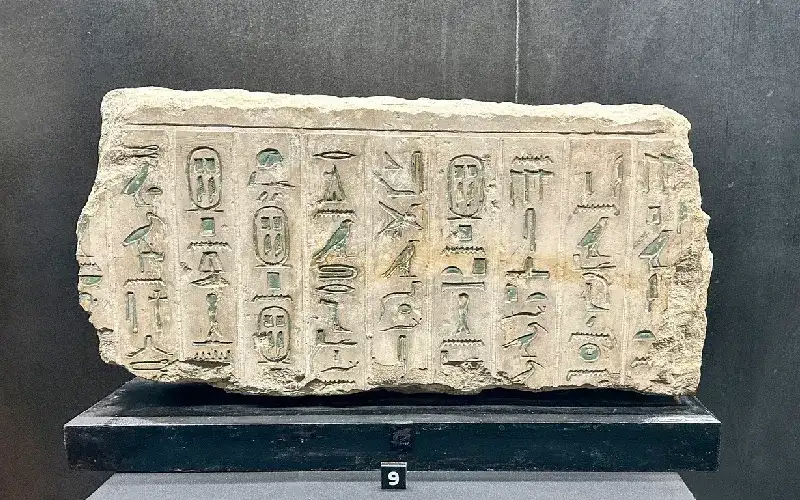
You'll find this pyramid complex in South Saqqara, about 2.4 km north of Djedkare Isesi's pyramid. The sort of thing I love about this structure is its walls contain the largest collection of Pyramid Texts from the Old Kingdom - an impressive 2,263 columns and lines of hieroglyphs. Gaston Maspero first found these hieroglyphic inscriptions covering the walls in 1880. The site continues to yield new discoveries. By 2018, archeologists found nine pyramids belonging to queens in the area southwest of Pepi I's pyramid. The pyramid's current state might be deteriorated, but it remains a crucial example of architectural breakthroughs from the Old Kingdom period.
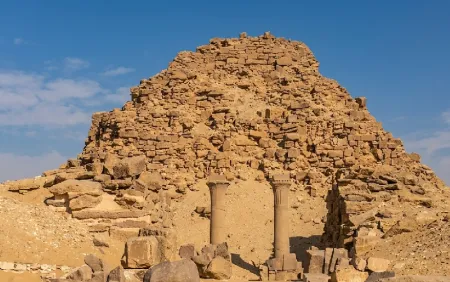
The pyramid originally stood 52.5 meters (172 feet) high with a base spanning 78.75 meters. While time has reduced it to ruins and it has lost most of its fine white limestone casing, the structure remains an important archaeological site.
The pyramid of Pepi I stands in the high desert of South Saqqara, marking a transformation in royal burial locations. Pharaoh Pepi I chose this site 2.4 km north of Djedkare's pyramid. This made it South Saqqara's northernmost royal monument.
The location choice has some compelling explanations from scholars. Mark Lehner points out that suitable space became scarce in North Saqqara after Teti built his pyramid. Jaromír Malek's theory suggests that Djedkare Isesi and Pepi I moved their monuments south to avoid "the squalor, smell and noise" from Djed-Isut's crowded city near Teti's pyramid.
The complex's ancient name "Men-nefer-Pepi" means "Pepi's Enduring Splendor" and later evolved into the Greek name "Memphis" for the nearby capital.
John Shae Perring got into the site at the time of 1830s. The site became prominent in 1880 when Gaston Maspero conducted his first archeological dig. His work led to a breakthrough - the first Pyramid Texts ever found in an Egyptian pyramid.
The French Archeological Mission at Saqqara has led the site's extensive work over the last several years. Jean Leclant supervised the project from 1963, and researchers found that workers engraved and painted the texts in a green shade (wadj) that symbolized "renewal and germination".
The March-April 1996 excavations revealed limestone blocks that indicate Pepi's family members, including his wife Inenek-Inti, helped build the monument.
The Pyramid of Pepi I is located in South Saqqara, approximately 2.4 km north of Djedkare Isesi's pyramid. It stands as the northernmost royal monument in South Saqqara and is situated in the high desert region near ancient Memphis.
"Men-nefer-Pepi" was the pyramid complex's ancient name, meaning "Pepi's Enduring Splendor" or "Pepi's splendor is enduring." This name later evolved into the Greek name "Memphis," which became the name of the prominent Old Kingdom capital.
The pyramid was built during Pharaoh Pepi I's reign in the 24th or 23rd century BC, during Egypt's Old Kingdom period (specifically the Sixth Dynasty). It represents a crucial example of architectural achievements from this era.
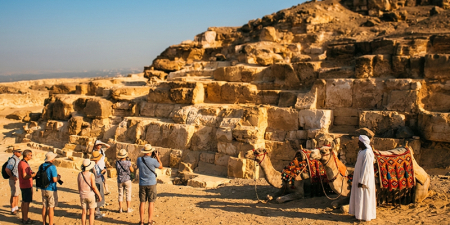
The pyramid of Pepi I showcases meticulous precision in its construction and mirrors the pattern that King Djedkare Isesi created. A six-step core of small limestone blocks bound with clay mortar forms its heart, wrapped in fine white limestone. Time has taken its toll on this pristine exterior. The lowest levels still retain their limestone casing, but centuries of lime production stripped away most of this protective layer.
The pyramid's substructure matches the classic Old Kingdom design. A north chapel once crowned the entrance corridor on the north face. A limestone passage slopes downward to a vestibule and continues into a horizontal corridor. The corridor's most striking feature includes three massive pink granite portcullis slabs that create a formidable barrier halfway through its length.
The journey leads to an antechamber that sits right under the pyramid's vertical axis. The burial chamber lies west of this space, while a serdab with three niches stretches eastward. Both chambers boast impressive gabled ceilings. These architectural marvels use three layers of limestone blocks, with sixteen blocks per layer that weigh about five thousand tons combined.
Stars painted white against black adorn the ceiling, creating a nighttime sky effect. The walls feature vertical columns of hieroglyphs in green - symbolizing new life. The archeological team found several treasures inside: a substitute sarcophagus, a rare pink granite canopic chest, and burial items including yellowish alabaster vessels, a wooden sandal, and linen fragments.
According to Egyptologist Mark Lehner, suitable space became scarce in North Saqqara after Teti built his pyramid. Jaromír Malek suggests that pharaohs moved south to avoid the crowding, noise, and unpleasant conditions near the capital city that had developed around Teti's pyramid.
Get in touch with our local experts for an unforgettable journey.
Plan Your Trip
The oldest known religious literature from ancient Egypt lies within Pepi I's pyramid in the form of green hieroglyphic inscriptions. Archeologists found these Pyramid Texts in 1880. Pepi I's monument houses the most extensive texts from the Old Kingdom, with 2,263 lines and columns. These texts helped transform the dead king into an "akh" (effective being) who could join the gods in eternal life.
The inscriptions spread across all chambers but the serdab, each wall telling its own story. Ritual texts on the burial chamber's north wall provide the king with offerings needed for resurrection. The south wall features theological texts that start with utterance 213 and guide the king's path to afterlife. The antechamber's east wall contains protective spells that shield against enemies.
The king's path to afterlife takes many forms in these texts. He boards Re's sun-boat, soars as a falcon, or climbs the sky ladder. Each path leads to one goal - the king rises to join the sun god Re in the celestial realm.
These texts show how ancient Egyptians saw death and rebirth. The dead king unites with Osiris daily in a cosmic cycle of regeneration. This gives us a complete view of how ancient Egyptians made sense of their universe.
The Pyramid Texts are the oldest known religious literature from ancient Egypt, discovered in 1880 by Gaston Maspero. Pepi I's pyramid contains the most extensive collection from the Old Kingdom—2,263 lines and columns of green hieroglyphic inscriptions that served as magical guides to help the king achieve eternal life.
French Egyptologist Gaston Maspero discovered the Pyramid Texts during his first archaeological excavation in 1880. This was a groundbreaking discovery as these were the first Pyramid Texts ever found in an Egyptian pyramid.
The pyramid of Pepi I stands as one of ancient Egypt's 4000-year old archeological treasures, even in its ruined state. This monument has taught us much about Old Kingdom beliefs and building methods over centuries. The discovery of 2,263 lines of Pyramid Texts inside its chambers gives scholars the most complete collection of ancient Egyptian religious writings from this era. These green-painted hieroglyphs served as magical guides that helped the king in his afterlife experience.
The pyramid's location in South Saqqara came from practical needs, as leading Egyptologists explain. Space limits in North Saqqara and overcrowding near the capital led to this choice. This decision then created a new royal burial ground where nine queens' pyramids would later surround Pepi's monument.
The structure kept to Old Kingdom building patterns but added unique features like gabled ceilings and strategically placed chambers. The pyramid once rose majestically 52 meters above the desert, though it has lost its fine limestone outer layer now. The internal chambers created a cosmic setting for the king's rebirth with their star-decorated ceilings and green hieroglyphs.
The French Archeological Mission keeps finding new details about this remarkable monument since 1950. The pyramid complex "Men-nefer-Pepi" made history when its name evolved into "Memphis" - the famous ancient Egyptian capital. Time may have worn down Pepi I's pyramid, but it remains the life-blood to understanding ancient Egyptian religious beliefs, architectural innovations, and royal burial customs during this vital period of pharaonic civilization.
The pyramid's substructure includes an entrance corridor with three massive granite portcullis slabs, an antechamber located under the pyramid's vertical axis, a burial chamber to the west, and a serdab (chamber) with three niches to the east. The chambers feature impressive gabled ceilings.
Archaeological teams discovered several treasures including a substitute sarcophagus, a rare pink granite canopic chest, yellowish alabaster vessels, a wooden sandal, and linen fragments. The burial chamber also contained items necessary for the king's resurrection.
The texts are distributed across all chambers except the serdab. The burial chamber's north wall contains ritual texts providing offerings for resurrection, the south wall features theological texts guiding the king to the afterlife, and the antechamber's east wall contains protective spells against enemies.
The hieroglyphs were engraved and painted in a green shade called "wadj," which symbolized "renewal and germination" in ancient Egyptian culture. This color choice emphasized the texts' purpose of facilitating the king's rebirth and eternal life.
The pyramid has a six-step core made of small limestone blocks bound with clay mortar, originally wrapped in fine white limestone casing. The interior chambers feature pink granite portcullis slabs and gabled ceilings constructed from three layers of limestone blocks weighing approximately five thousand tons combined.
While the pyramid was originally covered in fine white limestone, centuries of lime production stripped away most of this protective layer. Only the lowest levels still retain some of their original limestone casing stones.
Explore the lost Pyramid of Djedefre at Abu Rawash, Egypt, near Giza. Discover Fourth Dynasty architecture, royal history, and ancient artifacts at this historic site.
Abu Sir Pyramids in Egypt are Fifth Dynasty royal tombs located between Giza and Saqqara near Cairo.
The Pyramid of Pepi I in South Saqqara houses Egypt's largest collection of Pyramid Texts—2,263 lines of sacred hieroglyphs from the Old Kingdom era.
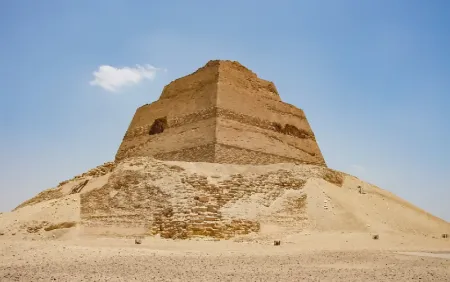
The Meidum Pyramid, built by Sneferu around 2630 BC, was Egypt's first attempt at a true pyramid. Now partially collapsed, it taught vital lessons for later pyramids.
The Pyramid of Sahure, built around 2458 BC at Abusir, recently revealed 8 hidden storage chambers. This Fifth Dynasty monument features advanced architecture.
The Pyramid of Senusret III at Dahshur stands 78m tall with unusual western entrance. Its empty sarcophagus suggests the king may have been buried elsewhere.
Teti's pyramid at Saqqara contains Egypt's oldest religious texts & gold star ceiling. Built 2345 BCE, its well-preserved chambers offer intimate exploration.