Khufu Pyramid: Architecture and Historical Significance

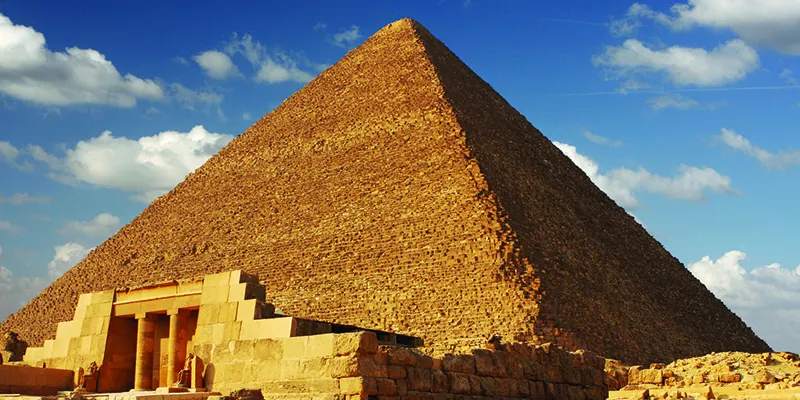
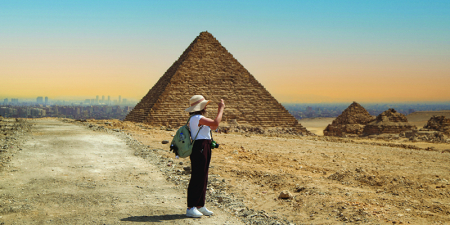
The Khufu Pyramid, also known as the Great Pyramid of Giza, is one of the most extraordinary architectural achievements in human history. Built around 2600 BC during Egypt’s Old Kingdom, it remained the tallest man-made structure in the world for over 3,800 years. Originally standing at 146.6 meters (481 feet), the pyramid now reaches about 138 meters due to the loss of its outer casing stones, yet it continues to inspire awe through its scale, precision, and durability.
Each side of the pyramid’s base measures approximately 230.3 meters, enclosing a massive volume of nearly 2.6 million cubic meters. The structure consists of an estimated 2.3 million limestone blocks with a total weight exceeding 6 million tons. Some of the base stones weigh up to 15 tons, highlighting the advanced engineering and logistical capabilities of ancient Egypt.
What sets the Khufu Pyramid apart from earlier pyramids is its sophisticated internal design. It contains three main chambers arranged along a complex system of passages, reflecting both architectural innovation and deep religious meaning. Even after more than 4,500 years, the pyramid remains a central focus for historians, archaeologists, and engineers worldwide.
The Khufu Pyramid, also known as the Great Pyramid of Giza, is a monumental royal tomb built for Pharaoh Khufu during Egypt’s Fourth Dynasty in the Old Kingdom. It is the largest pyramid ever constructed and the only surviving Wonder of the Ancient World.
Originally, the Khufu Pyramid stood 146.6 meters (481 feet) tall. Today, it measures about 138 meters after losing its outer limestone casing stones.
The Khufu Pyramid was far more than a monumental tomb. It functioned as a carefully designed structure meant to ensure the pharaoh’s rebirth and eternal existence in the afterlife.
For the ancient Egyptians, royal tombs were known as “houses of eternity.” The pyramid served as the final resting place of Pharaoh Khufu and as the core of an extensive funerary complex. This complex included a mortuary temple, a valley temple, causeways, queen’s pyramids, and boat pits.
Rituals performed by priests were essential to sustaining the king’s spiritual life after death. Offerings, prayers, and ceremonies activated the king’s soul and ensured his continued existence in the eternal realm. The Valley Temple played a key role in preparing Khufu’s mummified body before its placement within the pyramid.
In ancient Egyptian belief, the pharaoh was both a political ruler and a divine figure. During life, Khufu embodied Horus, the god of kingship. After death, he became Osiris, god of the afterlife, and joined the sun god Ra in his eternal journey across the sky and through the underworld.
The Khufu Pyramid symbolized this divine transformation. Its sheer scale expressed the pharaoh’s supreme authority and reinforced the unity of Upper and Lower Egypt under centralized rule. The monument stood as a permanent statement of Khufu’s power and his cosmic role in maintaining order and balance.
The pyramid shape held profound symbolic meaning. It represented the Benben, the primeval mound from which creation emerged in Egyptian mythology. By building the Khufu Pyramid, the Egyptians recreated the moment of creation itself, linking the pharaoh’s rebirth to the origins of the universe.
The sloping sides symbolized the rays of the sun god Ra, providing a pathway for the king’s soul to ascend to the heavens. Astronomical precision further strengthened this cosmic connection, as each side of the pyramid aligns almost perfectly with the cardinal directions, with an error of less than 0.05 degrees.
The Khufu Pyramid was built as a royal tomb and a spiritual structure designed to ensure Pharaoh Khufu’s resurrection and eternal life according to ancient Egyptian beliefs.
Despite various alternative theories, overwhelming archaeological evidence firmly attributes the Great Pyramid to Pharaoh Khufu.
Khufu was the second ruler of Egypt’s Fourth Dynasty, reigning during the 26th century BCE. He was the son of King Snefru and Queen Hetepheres I. His reign likely lasted between 23 and 29 years, although later sources exaggerated this period.
Khufu continued his father’s ambitious building projects and strengthened royal authority. While Greek historian Herodotus portrayed him as a harsh ruler, Egyptian evidence suggests he was respected and remembered as a powerful and capable king. His legacy continued through his sons, including Redjedef and Khafre.
Direct evidence linking the Khufu Pyramid to Khufu was discovered in 1837 within the relieving chambers above the King’s Chamber. Red ochre inscriptions left by work gangs include Khufu’s name and titles, such as “Khnum-Khufu.”
Further confirmation came in 2013 with the discovery of the Diary of Merer at Wadi al-Jarf. These papyri document the transport of limestone blocks from Tura to “Akhet-Khufu,” meaning “Horizon of Khufu,” the ancient name of the pyramid. This find provided invaluable insight into the construction process and firmly connected the monument to Khufu.
The chief architect of the Khufu Pyramid was likely Hemiunu, Khufu’s vizier and nephew. Holding the title “Overseer of All Construction Projects of the King,” Hemiunu was responsible for managing one of the largest building projects in history. His tomb near the pyramid and surviving statues confirm his high status and close association with the monument.
The Khufu Pyramid was constructed around 2600 BC during the Old Kingdom, under the reign of Pharaoh Khufu.
Get in touch with our local experts for an unforgettable journey.
Plan Your TripConstructing the Khufu Pyramid required remarkable organization, resources, and engineering skill.
The pyramid was built using approximately 5.5 million tons of limestone, 8,000 tons of granite, and around 500,000 tons of mortar. Most limestone blocks were quarried locally on the Giza plateau, while fine white casing stones came from Tura. Granite used in the King’s Chamber was transported from Aswan, nearly 1,000 kilometers away.
The Nile River played a crucial role in transporting materials. Limestone blocks from Tura were shipped by boat, as documented in the Diary of Merer. On land, workers used wooden sledges pulled over prepared tracks, often lubricated with water to reduce friction.
Archaeological evidence shows that the Khufu Pyramid was built by skilled, organized laborers rather than slaves. Around 4,000 core workers were supported by up to 20,000 additional laborers. They were divided into crews, gangs, and smaller teams, each with specific tasks and identities.
Although the exact ramp system remains debated, evidence suggests a combination of straight, zigzagging, and internal ramps. Discoveries at Hatnub quarry demonstrate how steep ramps with wooden posts allowed workers to haul heavy blocks efficiently using ropes and levers.
The internal design of the Khufu Pyramid reveals extraordinary engineering knowledge.
The Grand Gallery is one of the most impressive architectural features of the pyramid. Measuring over 46 meters long and nearly 9 meters high, it uses a corbelled design to distribute weight. Scholars believe it may have functioned as part of a counterweight or block-lifting system.
Constructed entirely of red granite, the King’s Chamber contains Khufu’s empty sarcophagus. Above it, five relieving chambers redistribute the immense weight of the pyramid, preventing collapse. Graffiti found here further confirms the pyramid’s association with Khufu.
The Queen’s Chamber includes narrow shafts that do not reach the exterior. Robotic exploration revealed blocking stones and small hidden spaces, possibly linked to symbolic or ritual purposes. These shafts align with important stars, reinforcing the pyramid’s cosmic symbolism.
The Well Shaft connects the Grand Gallery to lower passages and likely served as an escape route for workers after sealing the burial chamber with granite plugs.
The unfinished subterranean chamber beneath the pyramid may represent an earlier design phase. Its rough state and mysterious pit continue to intrigue archaeologists and fuel debate about its intended purpose.
The Khufu Pyramid stands as a timeless symbol of ancient Egyptian brilliance. More than a monumental tomb, it was a carefully designed resurrection machine reflecting profound spiritual beliefs, advanced engineering, and exceptional organization.
Through its precise construction, symbolic shape, and complex interior, the pyramid illustrates how religion, astronomy, and state power were deeply interconnected in ancient Egypt. The legacy of Khufu and his pyramid endures as a testament to what human vision and determination can achieve, ensuring that the Khufu Pyramid remains one of the greatest wonders the world has ever known.
When visiting the Khufu Pyramid on the Giza Plateau, you can explore the exterior monument, enter the interior chambers such as the Grand Gallery and King’s Chamber, visit nearby pyramids and temples, and experience panoramic views of the Giza pyramid complex.
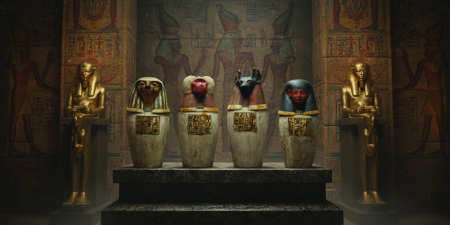
Canopic jars were vital in ancient Egypt, preserving organs and symbolizing rebirth. Explore their history, the Four Sons of Horus, and modern discoveries.
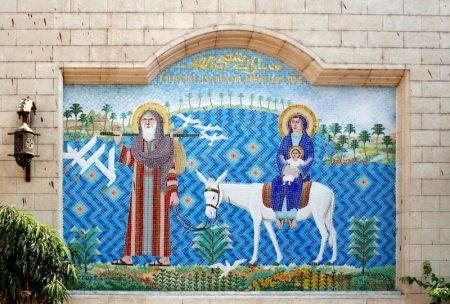
Journey along the Holy Family in Egypt's path. Learn about the historical route, significant sites, and the enduring legacy they left behind.
The Khufu Pyramid, located on the Giza Plateau in Egypt, is the largest and most famous pyramid ever built. Constructed around 2600 BC, it reflects ancient Egyptian engineering excellence, deep religious beliefs, and the divine power of Pharaoh Khufu.
Ramesses IV, a New Kingdom pharaoh, left a lasting legacy through ambitious building projects and a uniquely preserved mummy. His tomb KV2 reveals key insights into ancient Egyptian beliefs about death and eternity.
Explore the Khafre Pyramid, Egypt’s second largest Giza pyramid. Discover its unique architecture, the Great Sphinx, Mortuary & Valley Temples, and King Khafre statue in this iconic ancient Egyptian complex.
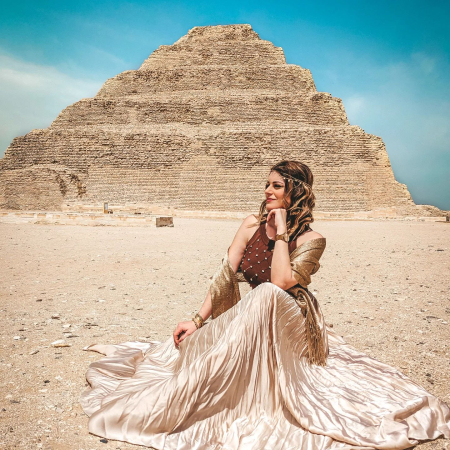
The Djoser Pyramid in Saqqara, Egypt, is the world’s first Step Pyramid, built for Pharaoh Djoser during the Third Dynasty. Designed by Imhotep, it revolutionized stone construction and ancient Egyptian burial practices, combining ceremonial, symbolic, and functional elements in a single monumental complex.
Menkaure Pyramid in Giza, Egypt, is the smallest of the three main pyramids, featuring unique dual-material casing, complex chambers, mortuary temple, and iconic King Menkaure statues
Discover how the Hathor Temple at Dendara connects ancient Egyptian religion with the stars and cosmos.