Roman Amphitheatre in Alexandria

Archeologists stumbled upon the Alexandria Roman Amphitheater in 1960. They were looking for Alexander the Great's tomb. Instead of the legendary ruler's grave, they found this remarkable ancient structure—the only Roman amphitheater of its kind in Egypt.
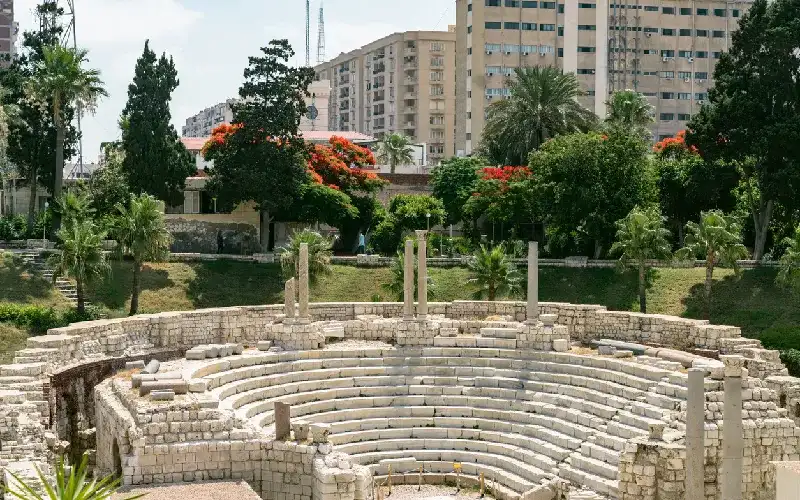
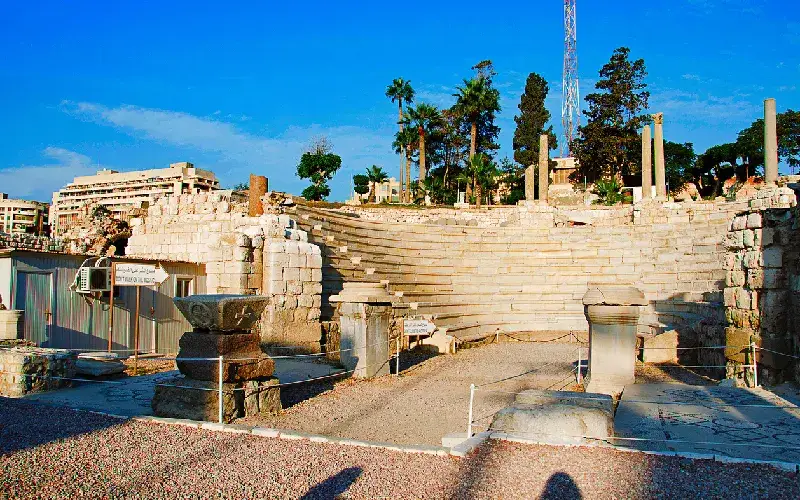
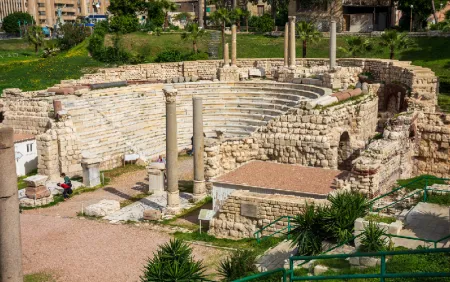
The amphitheater, built in the 4th century AD during the Greco-Roman period, stands as evidence of Egypt's rich historical heritage. Its well-preserved structure showcases 13 semicircular rows of elegant white and gray marble seating that could hold between 600-700 spectators.
The audience area measures approximately 33 meters in diameter and gives visitors a glimpse into ancient entertainment venues. The structure served its purpose through the Roman, Byzantine, and Islamic eras until the 7th century. This grand Roman ruin now stands as the largest and most complete above-ground archeological site in Alexandria, making it a must-visit spot for anyone interested in Egypt's historical legacy.
The Alexandria Roman Amphitheater is located at Kom El-Dikka in Alexandria, Egypt. It stands as Alexandria's largest and most complete above-ground archaeological site, making it a must-visit spot for anyone interested in Egypt's historical legacy.
The amphitheater was built in the 4th century AD during the Greco-Roman period, though research shows its origins may date back to the 1st-2nd century BC. The venue remained active through the 7th century, spanning Roman, Byzantine, and early Islamic periods.
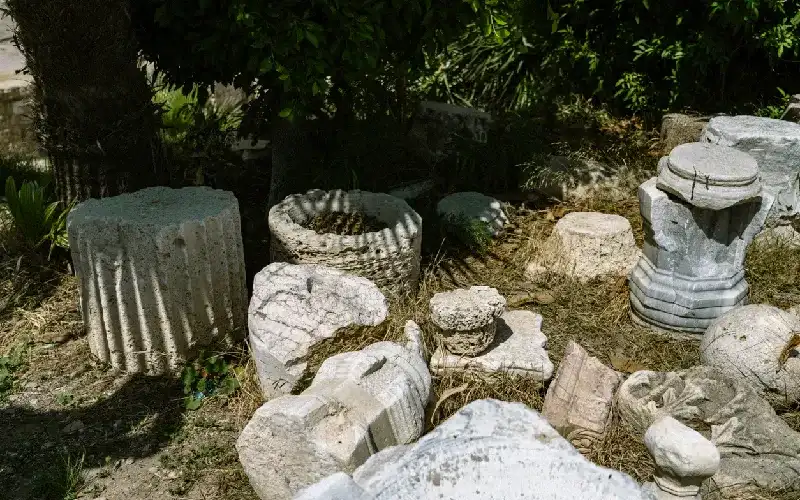
Workers made a remarkable discovery in 1960 at the time they unexpectedly found solid iron columns during a government building project's land clearing. This most important finding prompted the Graeco-Roman Museum and the Polish Excavation Mission from the University of Warsaw to start excavation work right away.
The ancient roman amphitheater alexandria lay forgotten since the early Islamic period until this chance discovery. Research showed the theater's origins dated back to the 1st-2nd century BC, though some researchers placed it in the 4th century AD. The venue stayed active through the 7th century, spanning Roman, Byzantine, and early Islamic periods according to archeological evidence.
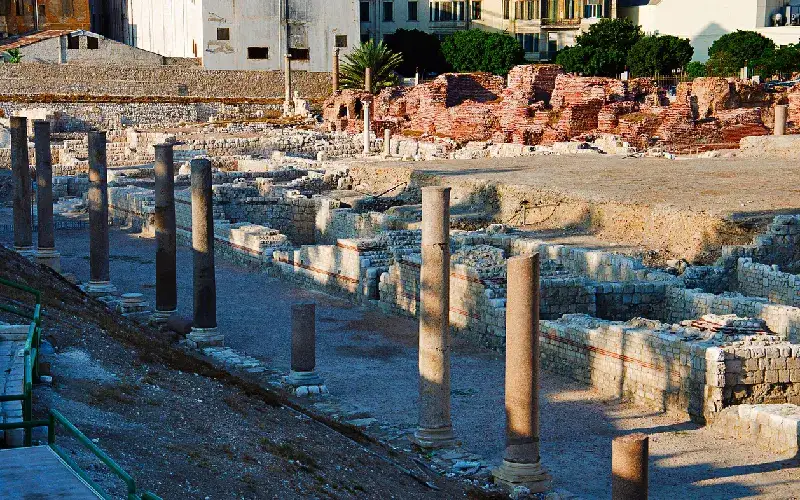
The site revealed amazing treasures - original Roman marble seating, courtyard mosaics, and even graffiti that showed local chariot team rivalries. The team also found remains of a baths complex and several other chambers.
Excavation work has continued at Kom El-Dikka over the last several years, establishing it as one of alexandria ancient egypt's most important archeological sites. The sort of thing I love comes from recent studies that compare this structure with those in Italy, Greece, and Tunisia.
The site now stands as Alexandria's largest and most complete above-ground archeological site. Visitors can experience a rare glimpse into the city's ancient past.
Archaeologists discovered the Alexandria Roman Amphitheater in 1960 while searching for Alexander the Great's tomb. Workers unexpectedly found solid iron columns during a government building project's land clearing, prompting immediate excavation work by the Graeco-Roman Museum and the Polish Excavation Mission from the University of Warsaw.
The alexandria roman amphitheater features a unique horseshoe-shaped design that follows typical Roman architectural principles adapted to Egyptian conditions. The structure faces north-northwest toward the Mediterranean Sea to catch cooling breezes—a vital factor in Alexandria's hot climate.
This theater differs from typical Roman designs. Rather than being carved into hillsides, builders constructed it fully on an artificial platform.
They used sturdy red Aswan granite for the first row of seats to ensure structural strength.
White and gray imported marble made up the remaining 12 rows. On top of that, Greek numerals mark several seats to show seating arrangements.
Two concentric limestone walls connected by supporting arches form the foundation system—a standard feature in Roman architecture from the 2nd to 4th century. The orchestra area sits at the theater's center and showcases elegant marble mosaic floors with geometric patterns perfect for musical performances.
The top section once had five special compartments for dignitaries and wealthy merchants.
Protective domes supported by granite columns from Aswan covered these areas. These domes did more than block weather—they helped increase sound quality, which shows the Romans' careful engineering approach to achieve optimal acoustics.
The Romans' practical approach to construction becomes clear in this structure. They reused architectural elements from earlier buildings to create some of the seats.
The Alexandria Roman Amphitheater is the only Roman amphitheater of its kind in Egypt. Its unique horseshoe-shaped design, well-preserved marble seating, and sophisticated acoustics make it stand out as a remarkable ancient structure showcasing advanced Roman engineering adapted to Egyptian conditions.
Get in touch with our local experts for an unforgettable journey.
Plan Your Trip
The alexandria roman amphitheater served many purposes in its rich history. Musicians performed in this venue, which featured unique acoustics thanks to a dome above the stage. Many seats still display Greek graffiti celebrating chariot race winners, suggesting the structure hosted various public events beyond artistic performances.
Time brought major changes to the amphitheater's role. Byzantine officials turned it into a conference hall where they held important meetings and public assemblies. Archeologists found more than 20 lecture halls next to the theater and now believe this complex was part of what some experts call the "University of Alexandria".
A 2009 excavation strengthened this academic connection. The dig revealed a complete complex of twenty-two lecture halls that could hold 500-600 students. Students sat on benches while their instructors used raised seats, which matched typical educational settings from that era.
The amphitheater remained busy through Roman, Byzantine, and early Islamic periods until the 7th century brought its decline. This once-bustling center of alexandria ancient egypt lay forgotten under layers of soil and debris until archeologists found it again in the mid-20th century.
The amphitheater could hold between 600-700 spectators. Its well-preserved structure showcases 13 semicircular rows of elegant white and gray marble seating, with the audience area measuring approximately 33 meters in diameter.
The Alexandria Roman Amphitheater stands as proof of Egypt's rich multilayered history.
Workers found this ancient structure by accident in 1960, giving visitors a rare glimpse into the architectural brilliance of the Greco-Roman period. The theater's unique design shows the advanced engineering capabilities of ancient Romans. They adapted their traditional designs cleverly to suit Egypt's climate through marble seating, sophisticated acoustics, and strategic orientation toward the Mediterranean.
The sort of thing I love about this magnificent structure is how it evolved through the centuries. The amphitheater changed from an entertainment venue for musical performances and public gatherings during Roman times into a major educational center in the Byzantine era.
This evolution explains how ancient structures adapted to meet society's changing needs.
Modern visitors can walk among the same marble seats where ancient Alexandrians once watched performances, held meetings, and studied at what scholars now call the "University of Alexandria." This archeological treasure represents Alexandria's largest above-ground ancient site and provides an unmatched window into the city's past.
The amphitheater's story reminds us how history sometimes hides in plain sight until someone finds it again. This magnificent structure remained buried beneath soil layers for centuries until its accidental discovery revealed one of Egypt's most important archeological finds. The ongoing excavations at Kom El-Dikka will without doubt continue to improve our understanding of Alexandria's ancient splendor in the years ahead.
Builders used sturdy red Aswan granite for the first row of seats to ensure structural strength. White and gray imported marble made up the remaining 12 rows. The foundation system features two concentric limestone walls connected by supporting arches—a standard Roman architectural feature from the 2nd to 4th century.
The amphitheater features a unique horseshoe-shaped design facing north-northwest toward the Mediterranean Sea to catch cooling breezes—a vital adaptation to Alexandria's hot climate. Unlike typical Roman designs carved into hillsides, this theater was constructed fully on an artificial platform.
Several seats display Greek numerals marking seating arrangements. Many seats also feature Greek graffiti celebrating chariot race winners, suggesting the structure hosted various public events beyond artistic performances.
The orchestra area sits at the theater's center and showcases elegant marble mosaic floors with geometric patterns, perfect for musical performances. Musicians performed in this venue, which featured unique acoustics thanks to a dome above the stage.
The top section once had five special compartments for dignitaries and wealthy merchants. Protective domes supported by granite columns from Aswan covered these areas, blocking weather while improving sound quality—demonstrating the Romans' careful engineering for optimal acoustics.
Alexandria, Egypt's "Bride of the Mediterranean" founded 331 BC, is the second-largest city with 5.4 million people and main seaport handling 40% of trade.
Alexandria National Museum displays 1,800 artifacts in a 1926 palace. Three floors showcase prehistoric to Islamic treasures including Abu Qir Bay finds.
Alexandria Roman Amphitheater at Kom El-Dikka, discovered 1960, is Egypt's only Roman theater. Built 4th century AD with 13 marble rows for 600 spectators.