Ramesses IV: The Surprising Story Behind His Perfectly Preserved Mummy

Ramesses IV ruled Egypt for a relatively short period, from 1155 to 1149 BCE, yet his legacy remains striking due to the exceptional condition of his mummy and the ambitious projects he launched during his reign. Although he ruled for only six and a half years, Ramesses IV left behind important archaeological, religious, and historical evidence that continues to fascinate researchers today.
His perfectly preserved mummy, discovered in the royal cache of KV35, reveals unique embalming techniques not seen in other royal mummies. At the same time, his reign reflects a determined ruler who sought justice, stability, and immortality through massive construction projects and religious devotion.
Ramesses IV was born around 1176 BCE as the fifth son of Pharaoh Ramesses III. At birth, his chances of ascending the throne seemed minimal. However, fate altered his destiny when his four elder brothers died during their father’s reign. By around Year 22 of Ramesses III’s rule, Ramesses IV was officially named crown prince, as depicted in festival scenes at Karnak.
The exact age at which Ramesses IV became pharaoh remains debated. Some sources suggest he ascended the throne at about 21 years old, while others propose that he was already middle-aged. Regardless of his age, his accession in 1155 BCE marked the beginning of a reign shaped by urgency and ambition.
The transition of power was marked by one of the most dramatic events in New Kingdom history: the Harem Conspiracy. This plot was orchestrated by Tiye, a secondary wife of Ramesses III, who aimed to place her son Pentawer on the throne instead of Ramesses IV.
Court officials and conspirators succeeded in assassinating Ramesses III by cutting his throat, severing vital structures. Despite this, the plot ultimately failed. Ramesses IV secured the throne and initiated a series of trials against those involved. Historical records show that 28 conspirators were executed, while others, including Pentawer, were allowed to take their own lives. This decisive response reinforced Ramesses IV’s authority at the very start of his reign.
Before becoming pharaoh, Ramesses IV held several prestigious titles, including “Hereditary Prince,” “Royal Scribe,” and “Generalissimo.” These titles appear on various monuments and inscriptions, such as a lintel now housed in Florence.
During his father’s reign, Ramesses IV was entrusted with important administrative duties. One notable action was his involvement in appointing Amenemope as Third Prophet of Amun, reflecting his early integration into Egypt’s religious and political leadership. These experiences prepared him to rule a kingdom facing internal unrest and economic strain.
Ramesses IV was a pharaoh of Egypt’s New Kingdom who ruled from 1155 to 1149 BCE and was the fifth son of Ramesses III.
Ramesses IV is famous for his exceptionally well-preserved mummy and the unusual use of onions in his mummification.
Despite the brevity of his reign, Ramesses IV demonstrated extraordinary ambition. One of his first actions was doubling the workforce at Deir el-Medina to around 120 artisans. This workforce supported an extensive building program centered mainly in Western Thebes.
Within his first three years, Ramesses IV initiated the construction of three, and possibly four, major temples. His urgency may have been driven by awareness of limited time, pushing him to establish a lasting legacy comparable to that of great rulers like Ramesses II.
Resource acquisition was a key priority for Ramesses IV. In his third year, he organized the largest recorded New Kingdom expedition to the Wadi Hammamat quarries. This expedition included 8,368 men—among them soldiers, priests, laborers, and stonemasons. Stones weighing more than 40 tons were transported over 60 miles to the Nile.
The expedition came at a heavy cost, with around 900 deaths, reflecting the harsh realities of royal ambition. In addition, Ramesses IV sent multiple expeditions to the Sinai Peninsula to mine turquoise. One expedition led by the army scribe Panufer resulted in the construction of a cult chapel dedicated to Ramesses IV at Serabit el-Khadim.
Temple of Khonsu and Mortuary Temple Plans
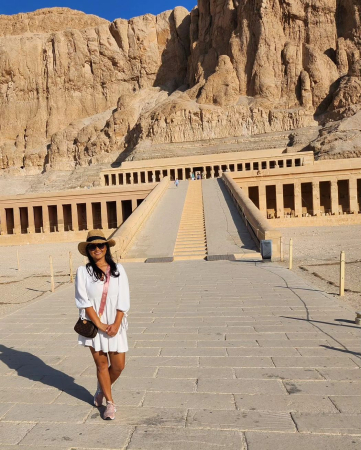
Ramesses IV also expanded the Temple of Khonsu at Karnak, completing decorative programs begun under his father. However, his most ambitious project was his planned mortuary temple near the temple of Hatshepsut.
This mortuary complex was designed on a massive scale, potentially the largest of its kind. Workers excavated a huge basin measuring 240 meters by 60 meters. Although later kings added limited decorations, the project remained unfinished, likely due to Ramesses IV’s sudden death.
He launched large building projects in Thebes and organized massive expeditions to Wadi Hammamat and Sinai to gather stone and turquoise for temples and cult chapels.
He ruled for approximately six and a half years during the late New Kingdom period.
Get in touch with our local experts for an unforgettable journey.
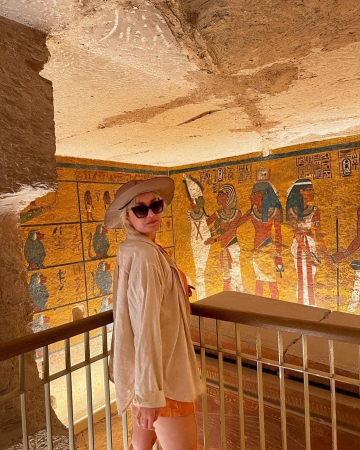
Plan Your TripThe tomb of Ramesses IV, known as KV2, is located near the entrance to the Valley of the Kings and has been accessible since antiquity. It follows a straight-axis plan and extends approximately 88.66 meters into the hillside.
Originally intended to be longer, construction stopped abruptly after the king’s death. The tomb includes three descending corridors, an antechamber, and a burial chamber adapted quickly from what was likely meant to be a pillared hall. One of the largest red granite sarcophagi in the valley still rests in its original position.
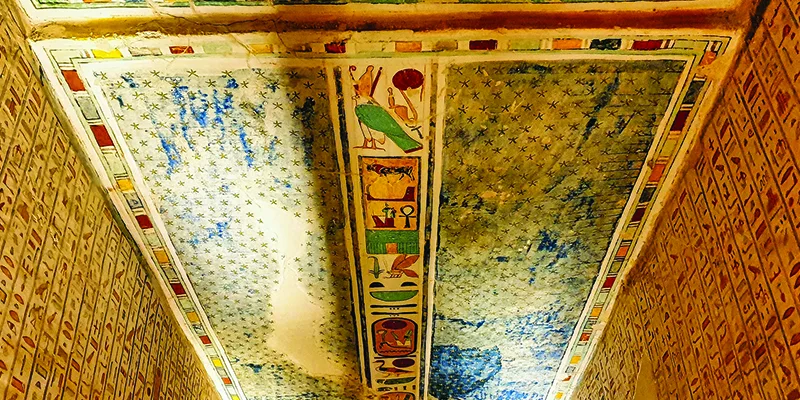
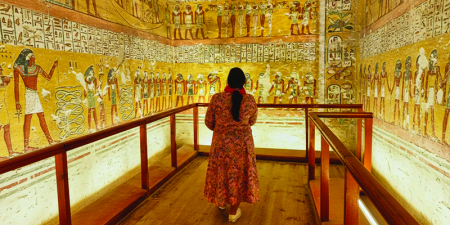
KV2 is richly decorated with funerary texts, including the Litany of Ra, the Book of Gates, the Book of Caverns, and the Book of the Dead. The burial chamber ceiling is painted deep blue and filled with stars, featuring the goddess Nut.
Notably, this tomb is the only one in the Valley of the Kings to include the Book of Nut, which describes the sun god’s daily journey across the sky and through the underworld.
The tomb of Ramesses IV contains 656 Greek and Roman graffiti inscriptions, making it one of the most heavily inscribed tombs in the valley. Additionally, around 50 Coptic inscriptions and Christian symbols suggest that Coptic monks once lived in or used the tomb. These marks provide valuable evidence of the tomb’s long history of reuse and visitation.
Tomb KV2 contains extensive religious texts, a star-filled ceiling featuring the goddess Nut, and the rare Book of Nut, offering insight into ancient Egyptian beliefs about the afterlife.
He was originally buried in tomb KV2 in the Valley of the Kings, near the entrance of the valley.
In 1898, archaeologist Victor Loret discovered the mummy of Ramesses IV in tomb KV35, originally belonging to Amenhotep II. During the Third Intermediate Period, priests moved many royal mummies to this cache to protect them from tomb robbers.
Ramesses IV’s mummy was identified through inscriptions on its wrappings. Although originally buried in KV2, his body was relocated to ensure its preservation.
What makes the mummy of Ramesses IV truly unique is the use of onions during mummification. Embalmers placed small onions in his eye sockets and covered his nostrils with onion skin—an unprecedented practice among royal mummies.
Onions symbolized eternity in ancient Egyptian belief due to their layered, circular structure. They also possessed antiseptic and deodorizing properties, contributing both symbolic and practical benefits to the embalming process.
Modern examinations, including CT scans, revealed advanced embalming techniques. In 1905, G.E. Smith documented the use of a resin plug sealing the body, another sign of sophisticated preservation.
The onion “eyes” were found to be remarkably lifelike. In 2021, the mummy of Ramesses IV was transferred to the National Museum of Egyptian Civilization during the Pharaohs’ Golden Parade.
Despite damage to the wrappings caused by tomb robbers and later repairs by priests, the body of Ramesses IV remains exceptionally well preserved. His mummy offers rare insight into the evolution of royal mummification techniques during the late New Kingdom.
His mummy was discovered in the royal cache of KV35, inside the tomb of Amenhotep II, and identified through inscriptions on his burial wrappings.
Although Ramesses IV ruled for only six and a half years, his legacy is remarkable. His reign combined swift justice, ambitious construction, and extensive resource expeditions. His unfinished tomb, monumental plans, and exceptionally preserved mummy all reflect a ruler deeply concerned with legacy and the afterlife.
Through the survival of his mummy and monuments, Ramesses IV continues to provide historians and archaeologists with invaluable knowledge about ancient Egyptian religion, politics, and funerary science—ensuring his name endures thousands of years after his death.
Canopic jars were vital in ancient Egypt, preserving organs and symbolizing rebirth. Explore their history, the Four Sons of Horus, and modern discoveries.
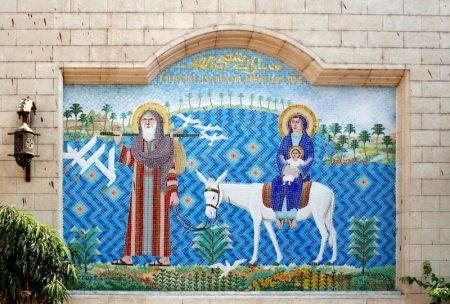
Journey along the Holy Family in Egypt's path. Learn about the historical route, significant sites, and the enduring legacy they left behind.
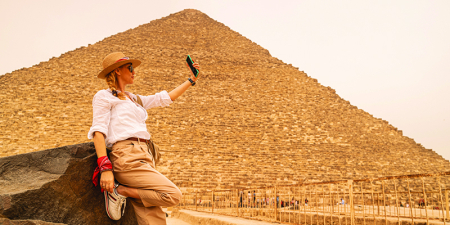
The Khufu Pyramid, located on the Giza Plateau in Egypt, is the largest and most famous pyramid ever built. Constructed around 2600 BC, it reflects ancient Egyptian engineering excellence, deep religious beliefs, and the divine power of Pharaoh Khufu.
Ramesses IV, a New Kingdom pharaoh, left a lasting legacy through ambitious building projects and a uniquely preserved mummy. His tomb KV2 reveals key insights into ancient Egyptian beliefs about death and eternity.
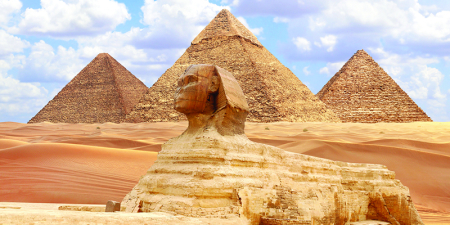
Explore the Khafre Pyramid, Egypt’s second largest Giza pyramid. Discover its unique architecture, the Great Sphinx, Mortuary & Valley Temples, and King Khafre statue in this iconic ancient Egyptian complex.
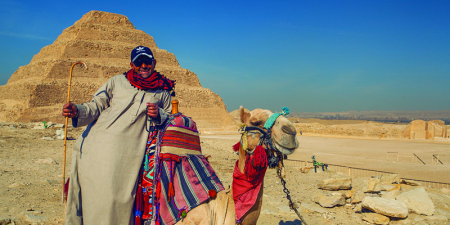
The Djoser Pyramid in Saqqara, Egypt, is the world’s first Step Pyramid, built for Pharaoh Djoser during the Third Dynasty. Designed by Imhotep, it revolutionized stone construction and ancient Egyptian burial practices, combining ceremonial, symbolic, and functional elements in a single monumental complex.
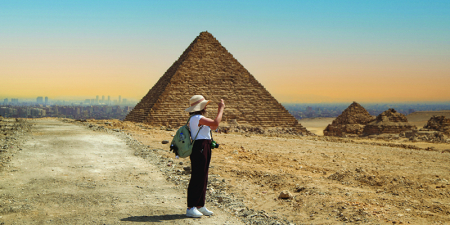
Menkaure Pyramid in Giza, Egypt, is the smallest of the three main pyramids, featuring unique dual-material casing, complex chambers, mortuary temple, and iconic King Menkaure statues
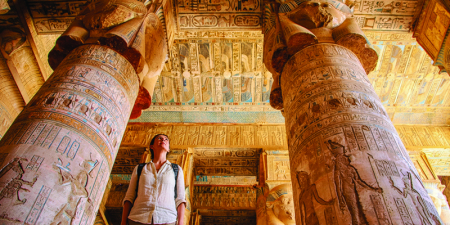
Discover how the Hathor Temple at Dendara connects ancient Egyptian religion with the stars and cosmos.