Pyramid of Sahure
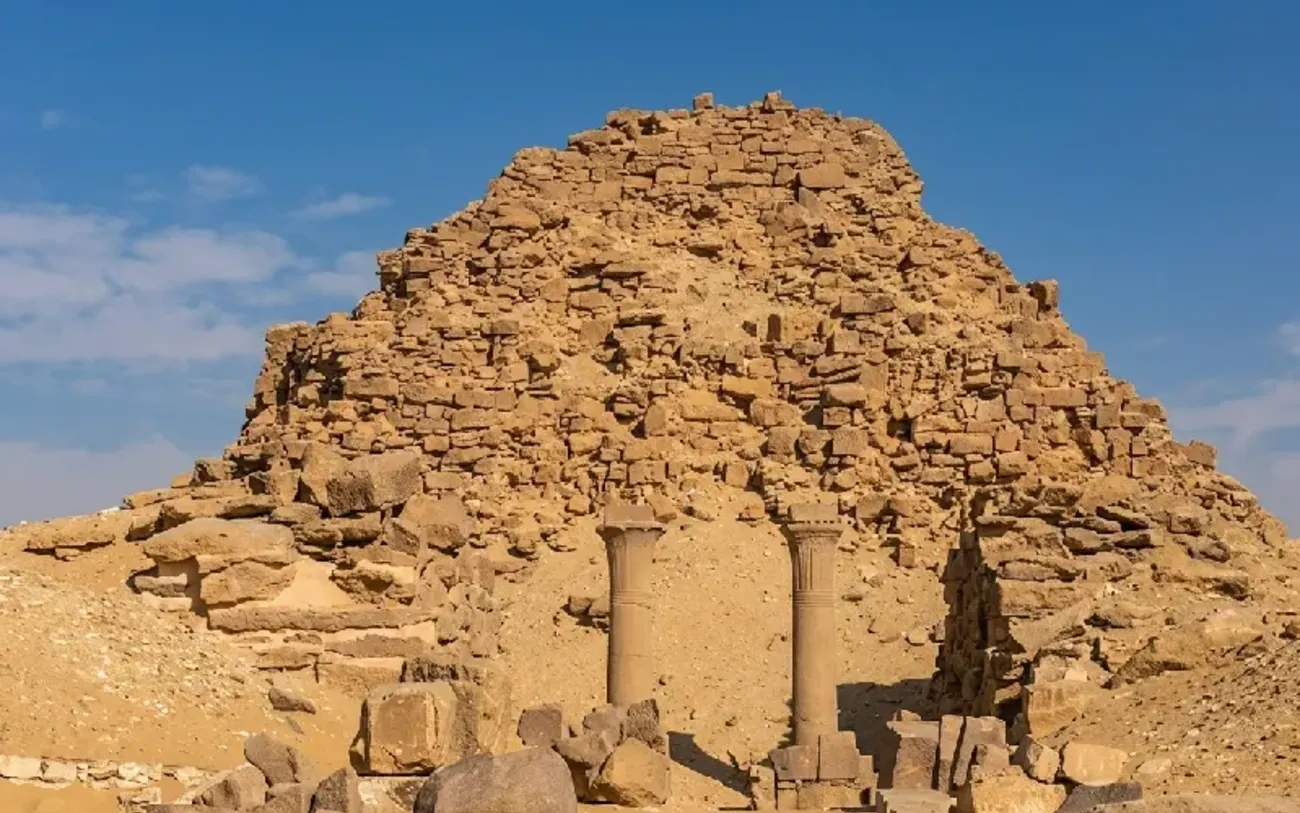
The pyramid of Sahure, built in the late 26th to 25th century BC, continues to reveal its secrets after thousands of years. Archeologists have found hidden chambers within this ancient structure, adding a new chapter to its remarkable history. The pyramid still holds mysteries waiting to be uncovered, despite extensive studies.
King Sahure of the Fifth Dynasty's pyramid complex stands as proof of ancient Egyptian craftsmanship. Builders used limestone blocks bound with mud mortar and encased the main structure beautifully with fine white Tura limestone. The complex's walls once showcased an estimated 10,000 square meters of finely carved reliefs, though only 150 square meters remain preserved today. These exquisite decorations covered 370 meters of the mortuary temple alone.
The pyramid's modest size features a base of approximately 78 meters and reaches 47 meters in height. Experts have found a wealth of archeological evidence during restoration work. Their efforts revealed the original dimensions and floor plan of a deteriorated antechamber. This work led them to eight previously unknown storerooms and a passageway in the northeastern part of the burial chamber's eastern wall.
The Pyramid of Sahure is located in Abusir, Egypt. It was the first pyramid built in the Abusir necropolis around 2458 BC during the Fifth Dynasty, positioned between the more famous pyramids of Giza and Saqqara.
The pyramid of Sahure still keeps many secrets, unlike other ancient monuments that have revealed most of their mysteries. This remarkable structure, the first pyramid built in Abusir around 2458 BC, showcases the Fifth Dynasty's architectural magnificence while concealing numerous mysteries under its weathered surface.
The sort of thing I love about King Sahure's pyramid is how it defies what archeologists thought they knew. Everyone believed they had really mapped out and understood this ancient structure. Recent digs tell a different story, as hidden chambers emerged from deep within the stone. These spaces stayed secret for over 4,500 years.
Sahure's pyramid stands as proof of ancient Egyptian engineering brilliance. It might be smaller than Giza's Great Pyramids, but its complex building techniques and state-of-the-art features show incredible planning and skill. The pyramid's clever drainage system runs copper pipes through temple walls - an amazingly advanced technology for that time period.
New findings inside this ancient structure hint that other Egyptian pyramids might hide undiscovered rooms and passages. Archeologists use better technology now and find that these monuments often challenge our previous knowledge of ancient Egyptian building methods and burial customs. Each new discovery adds valuable pieces to our historical understanding.
In recent years, archaeologists discovered eight previously unknown storage chambers (called "magazines") in the northeastern part of the burial chamber's eastern wall. These hidden rooms had remained concealed for over 4,500 years until modern restoration efforts revealed them.
Archeologists from Egypt and Germany have found eight hidden storage chambers inside Sahure's pyramid. The team located these chambers, called "magazines," after they cleared a passageway near the burial chamber's eastern wall. British explorer John Perring first spotted this passage in 1836, but debris and decay kept it out of reach until today.
The project, headed by Dr. Mohamed Ismail Khaled from the University of Würzburg, started restoration work in 2019. Their goal was to save the crumbling monument from collapse. The team used cutting-edge 3D laser scanning and portable LiDAR technology to create detailed maps of the pyramid's exterior and its narrow internal corridors.
The newly found chambers have extensive damage, particularly in their northern and southern parts. In spite of that, some original walls and flooring can still be seen. These storage areas likely held the king's burial goods and funeral equipment, according to experts.
This is a big deal as it means that our knowledge of Old Kingdom pyramid architecture needs updating. Sahure's pyramid has more and larger magazines than earlier pyramids, which suggests he might have pioneered this architectural breakthrough. So this discovery challenges what we thought we knew about how pyramids evolved, proving that these prominent monuments can still amaze us with new secrets after thousands of years.
A joint Egyptian-German archaeological team led by Dr. Mohamed Ismail Khaled from the University of Würzburg discovered the chambers during restoration work that began in 2019. British explorer John Perring first spotted a passageway leading to these chambers in 1836, but debris prevented access until recently.
Get in touch with our local experts for an unforgettable journey.
Plan Your Trip
Hidden chambers found within Sahure's pyramid have given Egyptologists a new perspective on Fifth Dynasty architecture. These findings are a great way to get knowledge about royal burial customs and architectural development in ancient Egypt.
Sahure's mortuary complex was nowhere near just a burial site—it became the foundation that shaped all Fifth and Sixth Dynasty pyramids that followed. This architectural breakthrough brought state-of-the-art temple designs and decorations that future pharaohs would adopt.
Sahure's mortuary temple dedicated 916 square meters (21.6% of the total area) to storerooms. This space was much larger than earlier pyramids and showed a radical change in priorities. The focus moved toward daily mortuary cult activities rather than just monumental displays.
The complex walls originally showcased about 10,000 square meters of finely carved relief. These carvings documented Fifth Dynasty's religious practices and royal activities in unprecedented detail. On top of that, research shows Sahure's mortuary temple later became Sekhmet's cult center, which stayed active from the Eighteenth Dynasty through the Ptolemaic period.
These findings show how royal monuments developed as Egyptian society changed. New power networks emerged among non-royal elites, and pyramid designs adapted to handle more complex religious rituals and administrative roles. This reshaped our understanding of ancient Egyptian civilization's development.
Archaeologists used cutting-edge 3D laser scanning and portable LiDAR (Light Detection and Ranging) technology to create detailed maps of the pyramid's exterior and narrow internal corridors. These advanced tools were crucial in revealing the hidden spaces.
The pyramid of Sahure stands as proof of ancient Egyptian ingenuity and craftsmanship. This Fifth Dynasty monument keeps revealing new secrets despite centuries of study. Without doubt, archeologists made a state-of-the-art breakthrough when they found eight hidden chambers. These storage areas, larger and more numerous than their predecessors, challenge our theories about Old Kingdom architectural development.
Sahure's pyramid complex evolved beyond its original purpose as a royal tomb. The structure became an active religious center dedicated to the goddess Sekhmet. This radical alteration lasted from the Eighteenth Dynasty through the Ptolemaic period and spanned thousands of years.
Sahure's pyramid complex's state-of-the-art features reshaped Egyptian monument design completely. Later pharaohs copied his blueprint for their mortuary temples, especially when you have his focus on storerooms and detailed relief decorations. These design changes mirrored the broader shifts in Egyptian society and religious practices.
3D laser scanning technology has become crucial to these new findings. Many chambers might have stayed hidden for another 4,500 years without these tools. Each discovery reshapes our understanding of ancient Egyptian civilization and shows that prominent monuments can still surprise us.
Sahure's pyramid reminds us that archeology never stops evolving. Ancient structures guard their secrets until the right moment and technology reveals them. It also shows how much we still don't know about ancient Egypt, and promises many more exciting discoveries over the last several years.
The pyramid was built in the late 26th to 25th century BC during the reign of King Sahure of the Fifth Dynasty. Construction began around 2458 BC, making it over 4,500 years old.
The pyramid has a base of approximately 78 meters and originally reached a height of 47 meters. While modest compared to the Great Pyramids of Giza, it features sophisticated architectural elements and extensive decorative reliefs.
The pyramid was constructed using limestone blocks bound with mud mortar. The main structure was beautifully encased with fine white Tura limestone. The complex also featured an advanced copper pipe drainage system running through temple walls.
The complex's walls originally showcased an estimated 10,000 square meters of finely carved relief decorations, with 370 meters covering the mortuary temple alone. Today, only about 150 square meters of these exquisite carvings remain preserved.
Sahure's pyramid complex became the architectural blueprint for all Fifth and Sixth Dynasty pyramids that followed. It introduced innovative temple designs, extensive storeroom space, and detailed relief decorations that future pharaohs would adopt and adapt.
Research shows that Sahure's mortuary temple was later repurposed as a cult center dedicated to the goddess Sekhmet. This religious center remained active from the Eighteenth Dynasty through the Ptolemaic period, spanning thousands of years.
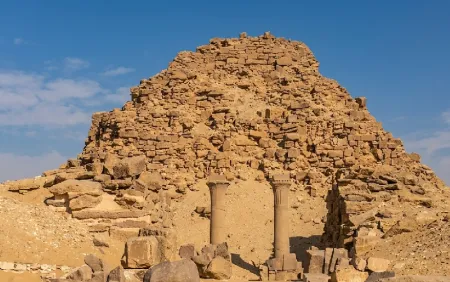
Explore the lost Pyramid of Djedefre at Abu Rawash, Egypt, near Giza. Discover Fourth Dynasty architecture, royal history, and ancient artifacts at this historic site.
Abu Sir Pyramids in Egypt are Fifth Dynasty royal tombs located between Giza and Saqqara near Cairo.
The Pyramid of Pepi I in South Saqqara houses Egypt's largest collection of Pyramid Texts—2,263 lines of sacred hieroglyphs from the Old Kingdom era.
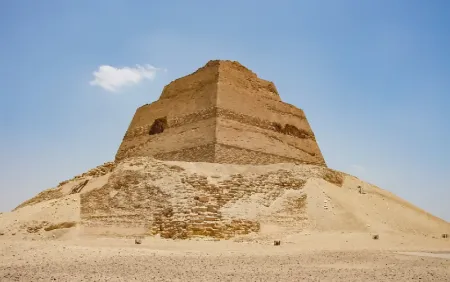
The Meidum Pyramid, built by Sneferu around 2630 BC, was Egypt's first attempt at a true pyramid. Now partially collapsed, it taught vital lessons for later pyramids.
The Pyramid of Sahure, built around 2458 BC at Abusir, recently revealed 8 hidden storage chambers. This Fifth Dynasty monument features advanced architecture.
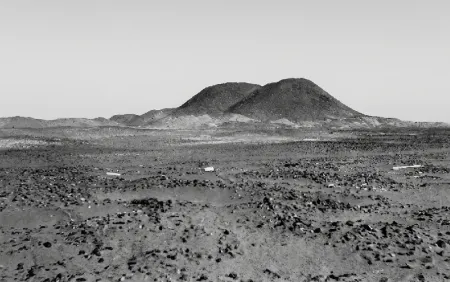
The Pyramid of Senusret III at Dahshur stands 78m tall with unusual western entrance. Its empty sarcophagus suggests the king may have been buried elsewhere.
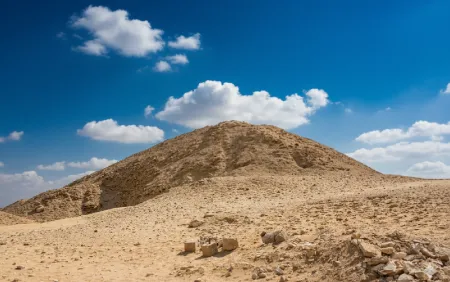
Teti's pyramid at Saqqara contains Egypt's oldest religious texts & gold star ceiling. Built 2345 BCE, its well-preserved chambers offer intimate exploration.