Fustat Egypt
Hidden beneath the archaeological layers of modern Cairo lies one of medieval Islam's most extraordinary achievements—a metropolis whose very existence challenges our understanding of early Islamic urban development. Fustat stands as Egypt's inaugural Muslim capital, a testament to the remarkable vision of General 'Amr ibn al-'As, who established this pioneering settlement in 641 CE as both administrative center and strategic launching point for Islamic expansion across North Africa and Byzantine territories.
The city's ascendancy reached spectacular heights during the 12th century, when its population swelled to an impressive 200,000 inhabitants—a demographic achievement that rivals many contemporary European capitals. Fustat's skyline bristled with towering residential structures, while its workshops hummed with textile production, oil refinement, and craftwork that supplied markets across three continents. The renowned 10th-century geographer Al-Muqaddasi captured the city's magnificence perfectly, proclaiming it "the glory of Islam and the commercial center of the universe". Archaeological excavations continue to validate this assessment, unearthing artifacts from distant Chinese kilns and Spanish workshops that bear witness to Fustat's extraordinary commercial reach. For nearly half a millennium, this remarkable urban achievement maintained its supremacy as Egypt's political and economic heart before succumbing to the forces that would ultimately erase it from history.
Fustat was Egypt's first Muslim capital, established in 641 CE by General 'Amr ibn al-'As. Located beneath modern-day Old Cairo, it served as Egypt's political and economic center for nearly 500 years before being deliberately destroyed in 1168 CE.
The genesis of Fustat represents a masterpiece of strategic calculation that would echo through centuries of Islamic statecraft. General 'Amr ibn al-'As faced a complex geopolitical challenge following his conquest of Egypt—establishing legitimate Muslim authority while avoiding the Byzantine precedent of simply occupying existing fortifications near ancient Babylon. His solution demonstrated remarkable foresight: the creation of an entirely new administrative center that would embody Islamic principles of governance.
The settlement's origins trace to a moment of military pragmatism that acquired legendary status. 'Amr's encampment materialized where his forces established temporary quarters following the Byzantine capitulation. Historical chronicles record that a dove constructed its nest upon the general's tent, an occurrence he interpreted as divine guidance. His proclamation—"Let this be your dwelling place"—gave birth to "Fustat," derived from the Arabic term for tent, though the city would far transcend its humble nomenclature.
Geographical advantages elevated Fustat beyond mere military convenience to inevitable imperial necessity. Positioned at the Nile Delta's convergence point, the location commanded both Mediterranean commercial arteries and Upper Egyptian agricultural wealth. The site's natural defensive characteristics, coupled with absolute control over the region's hydraulic lifelines, rendered it strategically unassailable.
Fustat's urban architecture embodied a sophisticated understanding of Islamic administrative theory. The settlement's organizational blueprint centered upon the mosque that would bear 'Amr's name—not merely a place of worship, but the nexus of judicial, educational, and governmental functions that defined Islamic urban civilization. This deliberate structural philosophy distinguished Fustat from its Byzantine predecessors and established the template for subsequent Islamic capitals across the expanding Muslim world.
Fustat was founded in 641 CE by General 'Amr ibn al-'As following the Muslim conquest of Egypt. According to legend, the city's name comes from the Arabic word for "tent," originating when a dove nested on the general's tent, which he interpreted as divine guidance to establish the settlement there.
Fustat's most extraordinary achievement lay not merely in its architectural grandeur or commercial reach, but in its creation of a sophisticated multicultural society that defied the sectarian tensions common to medieval urban centers. Muslims, Christians, and Jews coexisted within distinct yet interconnected neighborhoods, each community contributing specialized expertise that enriched the city's economic tapestry. Coptic artisans perfected the intricate art of ivory carving, while Jewish craftsmen established dominance over silk dyeing and metalworking industries.
The city's geographical advantages transformed it into an unparalleled nexus of international commerce, channeling exotic goods from Chinese workshops, Indian markets, Yemeni ports, and European trading houses. This commercial supremacy received further enhancement through the restoration of the ancient Trajan Canal, an engineering marvel that reconnected the Nile to the Red Sea and opened direct trade arteries to the Arabian Peninsula. Archaeological evidence reveals Fustat's remarkable position along the Silk Roads—excavations have uncovered more Chinese ceramics here than at any other documented site along these legendary trade networks.
Perhaps most fascinating was how this cosmopolitan environment permeated everyday existence. Household artifacts from different religious quarters demonstrate such striking similarities that archaeologists struggle to identify religious affiliations without specific inscriptional evidence.
Shared recreational activities, storytelling traditions, and festival celebrations created a unified urban culture that transcended religious boundaries. The sophistication of daily life became evident in details such as the elaborately crafted, multi-piece manicure sets used by Fustat's residents by 900 CE.
The city's intellectual legacy endures through the Ben Ezra Synagogue's Cairo Geniza, an extraordinary documentary archive containing approximately 400,000 Jewish manuscript fragments that illuminate Mediterranean social and economic networks with unprecedented detail.
At its height during the 12th century, Fustat's population reached approximately 200,000 inhabitants—a demographic achievement rivaling many contemporary European capitals. The city featured towering residential structures and bustling workshops that served markets across three continents.
Fustat's location at the Nile Delta's convergence point gave it control over both Mediterranean commercial routes and Upper Egyptian agricultural wealth. The site's natural defensive characteristics and control over regional water supplies made it strategically unassailable for centuries.
Get in touch with our local experts for an unforgettable journey.
Plan Your Trip
Fustat's catastrophic demise unfolded amid the labyrinthine political machinations that plagued 12th-century Egypt. The teenage Caliph Athid possessed merely ceremonial authority, while genuine power concentrated in the hands of Vizier Shawar—a master of political opportunism whose notorious habit of alternating allegiances between Christian Crusaders and Syrian forces had maintained Egypt's precarious independence.
This fragile equilibrium shattered decisively when King Amalric I of Jerusalem launched his Egyptian campaign in 1168. Following his brutal assault on Bilbeis, where his forces systematically massacred the population, Amalric's army advanced inexorably toward the magnificent capital. Confronted with imminent siege and lacking adequate defensive capabilities, Shawar conceived a decision of staggering magnitude—the deliberate annihilation of Egypt's greatest urban achievement.
The historian al-Maqrizi preserved the chilling details of this unprecedented act: "Shawar ordered that Fustat be evacuated. He forced the citizens to leave their money and property behind and flee for their lives with their children... Shawar sent 20,000 naphtha pots and 10,000 lighting bombs and distributed them throughout the city". The ensuing conflagration consumed the metropolis for an extraordinary fifty-four days, reducing centuries of architectural and cultural achievement to smoldering ruins.
Syrian intervention ultimately expelled Amalric's forces, though Shawar paid for his scorched-earth strategy with his life, executed as political tides shifted yet again. Saladin's ascension to power in 1169 marked the end of Fatimid authority. Despite his ambitious attempts to resurrect Fustat's grandeur through massive fortification projects that would unite it with Cairo, these efforts yielded minimal success.
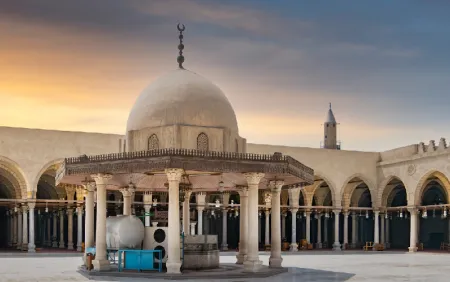
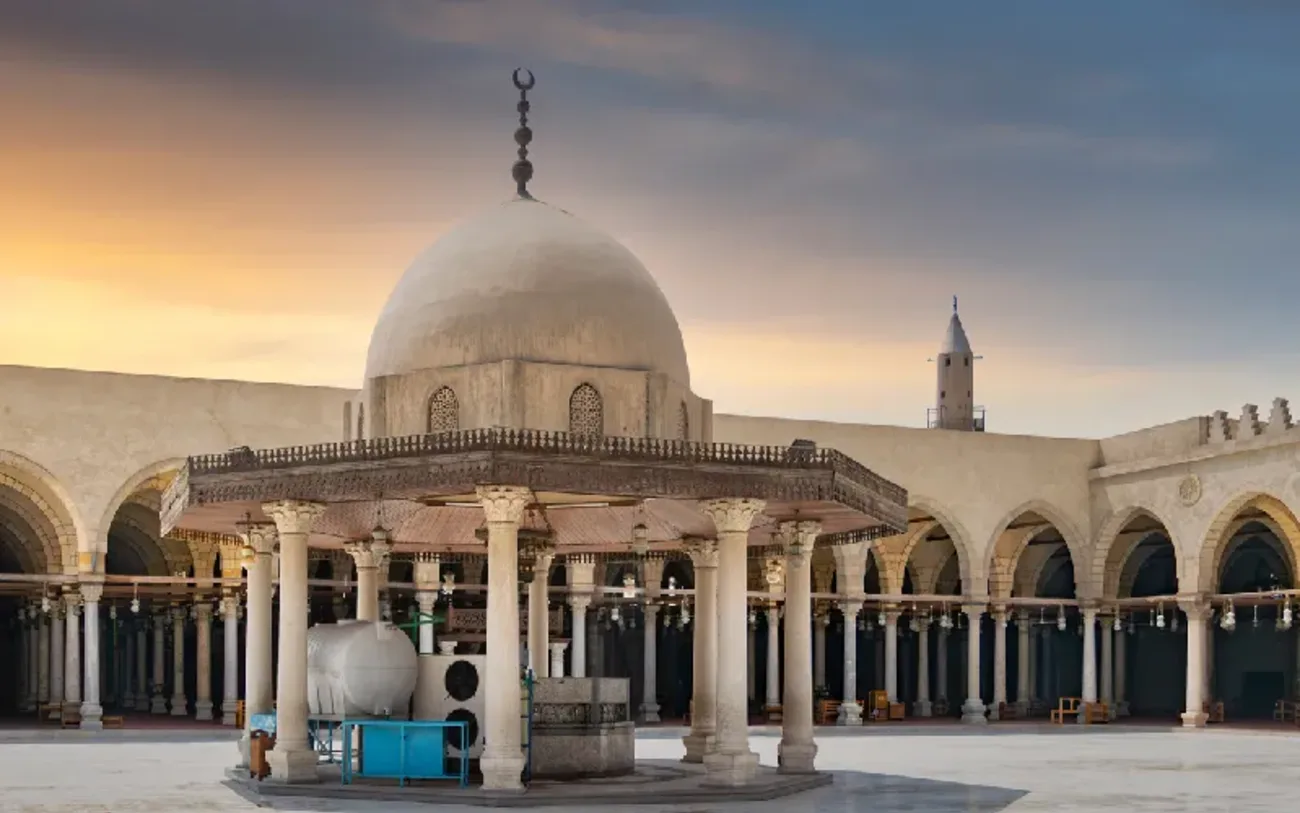
The once-proud capital's decline proved irreversible. Mamluk administrators relegated substantial portions of the former metropolis to refuse disposal, though isolated districts preserved pottery production traditions. Contemporary visitors encounter the remnants of this former wonder as "Old Cairo," where scattered archaeological fragments and solitary monuments like the Mosque of Amr ibn al-As provide the sole testimony to a civilization that once commanded the admiration of the medieval world.
In 1168, Vizier Shawar ordered Fustat's deliberate destruction to prevent its capture by King Amalric I of Jerusalem during the Crusades. Rather than let the city fall into Crusader hands, Shawar distributed 20,000 naphtha pots and 10,000 lighting bombs throughout the city, creating a conflagration that burned for 54 days.
Fustat emerges from historical obscurity as one of medieval civilization's most compelling archaeological mysteries—a urban masterpiece whose very existence redefines our understanding of early Islamic achievement. The transformation from General 'Amr ibn al-'As's modest military encampment into a magnificent capital that commanded respect across three continents represents an urbanization phenomenon virtually unparalleled in its era.
This metropolitan marvel embodies the cyclical nature of human civilization, where humble origins can yield extraordinary cultural synthesis.
The settlement evolved from a simple mosque-centered community into a sophisticated nexus where diverse faith communities forged unprecedented social cohesion. International merchants established commercial networks spanning continents while master craftsmen elevated their specialized trades to artistic pinnacles, collectively creating a cosmopolitan achievement that transcended religious boundaries.
Yet Fustat's destiny shifted irrevocably through a singular act of political desperation. Vizier Shawar's calculated decision to incinerate his own capital rather than surrender it intact demonstrates how swiftly human calculation can obliterate centuries of accumulated civilization. The 54-day conflagration represents one of history's most profound examples of deliberate cultural destruction.
The enduring fragments—including the venerable Mosque of Amr ibn al-As, archaeological treasures, and the priceless Cairo Geniza manuscript collection—provide invaluable glimpses into a medieval society whose sophistication challenges conventional historical narratives.
These remnants establish Fustat's rightful place among history's great capitals, warranting recognition for its pioneering contributions to Islamic urban development, intercontinental commerce, and interfaith coexistence.
Contemporary visitors to Old Cairo traverse ground where one of antiquity's most dynamic cities once flourished—a testament to human ingenuity and a sobering reminder of civilization's fragility. Fustat's trajectory from tent camp to metropolitan glory to archaeological ruin illuminates both humanity's capacity for remarkable achievement and the ephemeral nature of even our greatest urban accomplishments.
The Mosque of Amr ibn al-'As served as the city's organizational center—not merely a place of worship but the nexus of judicial, educational, and governmental functions that defined Islamic urban civilization. This architectural philosophy distinguished Fustat from Byzantine predecessors and established the template for subsequent Islamic capitals.
Fustat was an unparalleled international commerce hub, channeling exotic goods from Chinese workshops, Indian markets, Yemeni ports, and European trading houses. Archaeological excavations have uncovered more Chinese ceramics at Fustat than at any other documented Silk Road site, demonstrating its extraordinary commercial reach.
Fustat was remarkably multicultural, with Muslims, Christians, and Jews coexisting in distinct yet interconnected neighborhoods. Each community contributed specialized expertise: Coptic artisans perfected ivory carving, while Jewish craftsmen dominated silk dyeing and metalworking industries. This diversity created a sophisticated cosmopolitan society.
The Cairo Geniza, housed in the Ben Ezra Synagogue, is an extraordinary documentary archive containing approximately 400,000 Jewish manuscript fragments. These documents illuminate Mediterranean social and economic networks with unprecedented detail, providing invaluable insights into daily life in medieval Fustat.
The catastrophic fire that destroyed Fustat burned for an extraordinary 54 days, reducing centuries of architectural and cultural achievement to ruins. This act represents one of history's most profound examples of deliberate cultural destruction.
Contemporary visitors encounter Fustat's remnants in "Old Cairo," where scattered archaeological fragments and monuments like the Mosque of Amr ibn al-'As provide testimony to the former capital. Ongoing archaeological excavations continue to unearth artifacts revealing the city's extraordinary past.
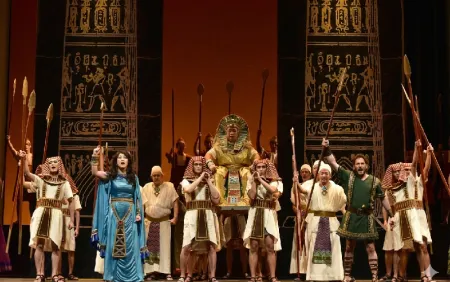
Opera Aida premiered in Cairo 1871, telling a timeless love story in ancient Egypt. Performed at Pyramids & temples, Verdi's masterpiece captivates audiences.
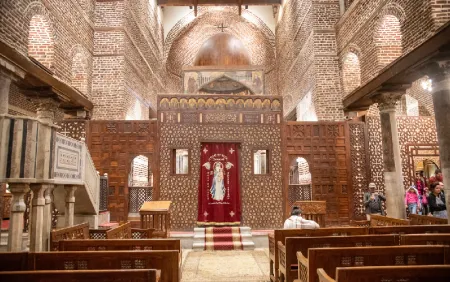
Saints Sergius and Bacchus Church were built to be dedicated to two Martyrs (Sergius and Bacchusand) traditionally believed to have been built on the spot where the Holy Family rested at the end of their journey into Egypt.
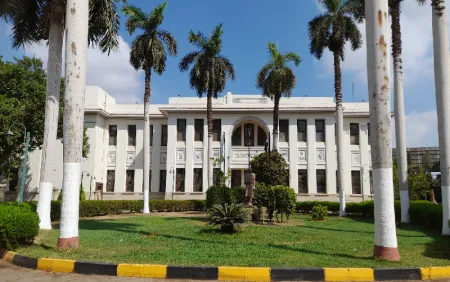
Cairo's Agricultural Museum, established 1938, features 7 halls showcasing 7,000 years of Egyptian farming history and ancient agricultural artifacts.
Fustat, founded 641 CE, was Egypt's first Islamic capital with 200,000 residents. This Silk Road trade hub beneath Old Cairo was deliberately destroyed in 1168.
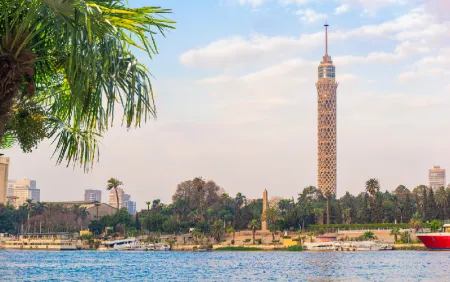
Cairo Tower's 187m lotus design offers 360° views & rotating restaurant. Discover hidden terrace & local secrets for Egypt's iconic landmark built 1956-1961.
Explore Birqash Camel Market in Cairo, where tradition and culture meet. Witness camel trading, local life, and a unique Egyptian market experience.
El Mosky is Cairo's authentic medieval marketplace from Ayyubid era. Serves locals with genuine prices, traditional crafts & spices. Metro accessible.
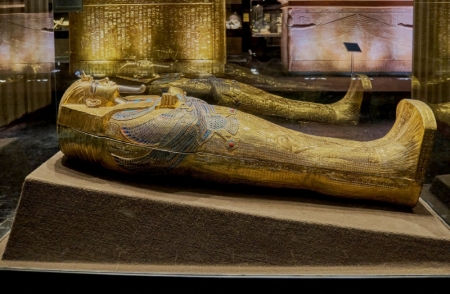
Learn about King Tutankhamun treasures and explore the secrets of his tomb, royal rituals, and preserved artifacts.
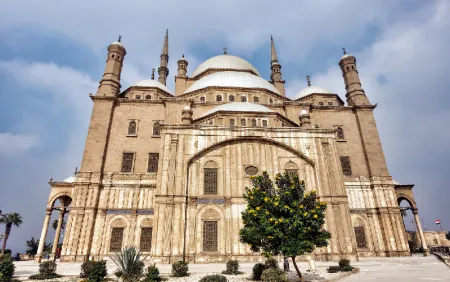
The Mohamed Ali Mosque is an Ottoman masterpiece built 1832-1857 inside Cairo Citadel. Called the Alabaster Mosque for its distinctive walls, it features a 52-meter central dome.
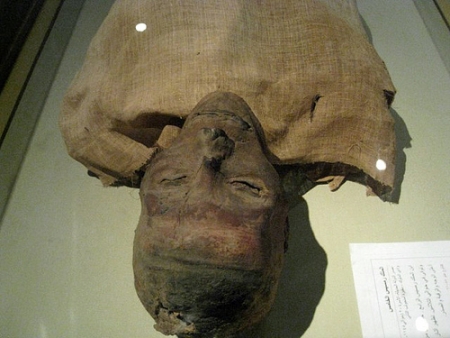
Egyptian mummies at Cairo's museums include 22 royal pharaohs moved in 2021 to NMEC. Features Tutankhamun, Hatshepsut, Seti I and 4,300-year-old preservation techniques.
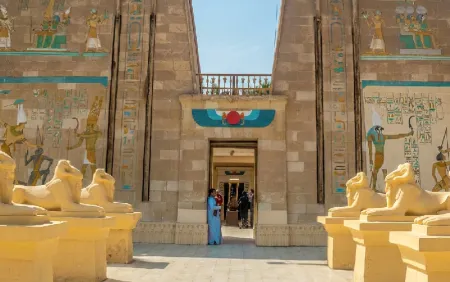
Pharaonic Village in Cairo, founded 1984, is a 30-acre living museum with 12 museums, King Tut's tomb replica & live ancient Egyptian demonstrations.
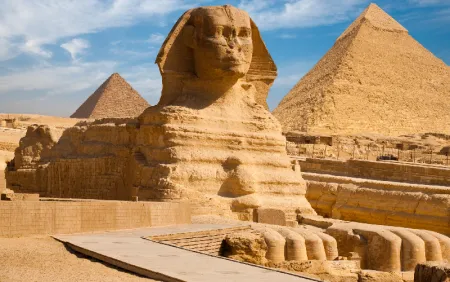
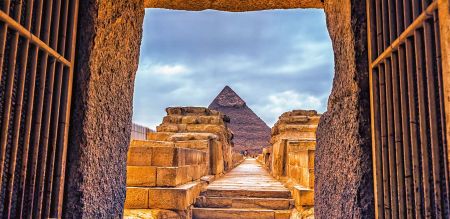
Great Sphinx of Giza, carved 2500 BCE, measures 73m long and 20m high. Contains three tunnels, hidden chambers & traces of red, blue & yellow paint.
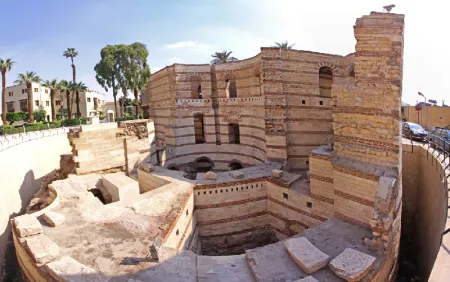
Babylon Fortress in Old Cairo, built 300 AD by Diocletian, features 10m Roman towers, Coptic churches, Ben Ezra Synagogue & museum with 16,000 artifacts.
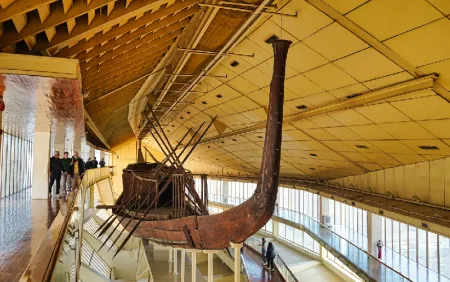
The Khufu Ship is a 4,600-year-old solar boat measuring 43.4 meters long. Built without nails using mortise-and-tenon joints, it's displayed at Grand Egyptian Museum.
Experience the Valley Temple of Khafre like never before. Explore its purpose, design, and must-see highlights—read the full guide now!