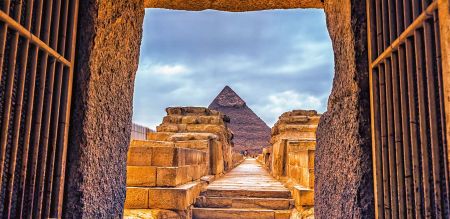
Opera Aida Egypt
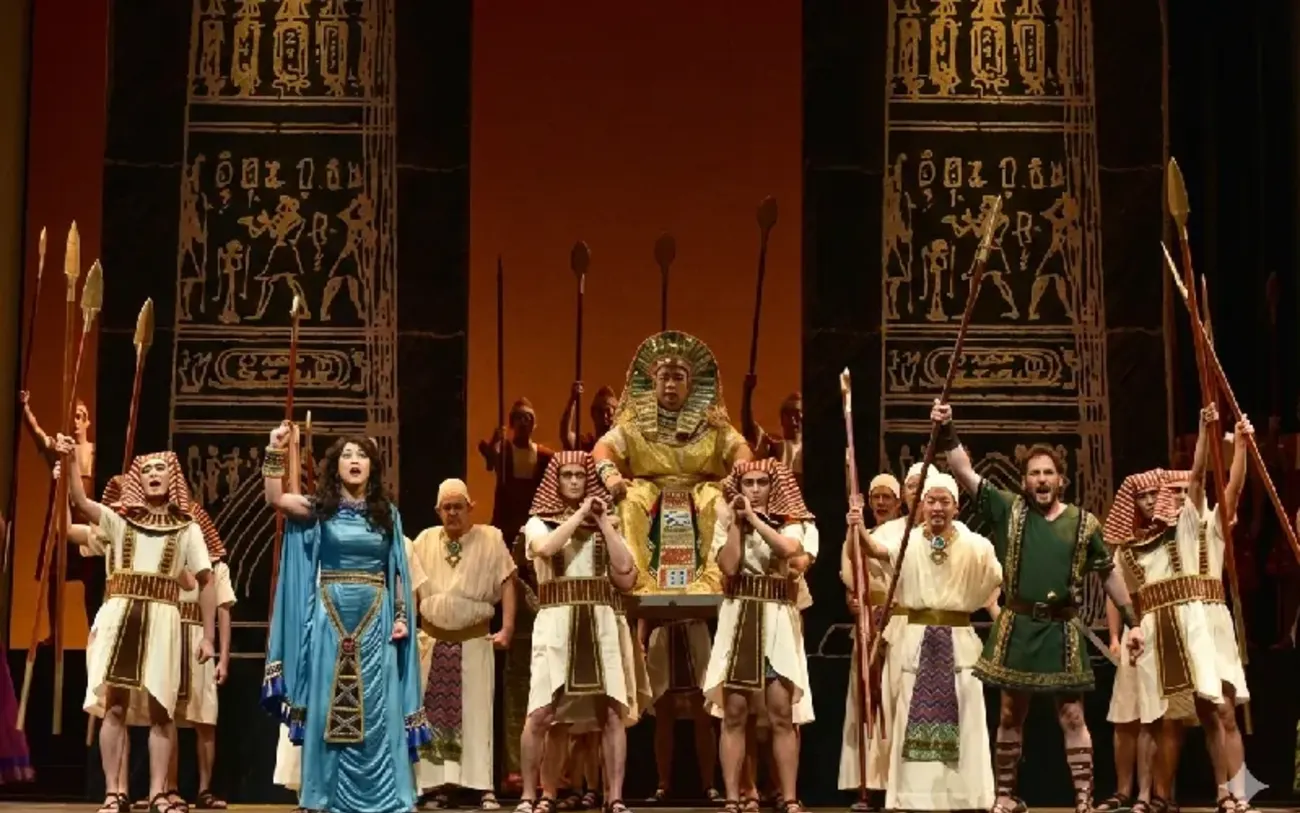
Opera Aida has become one of history's most enduring musical masterpieces. New York's Metropolitan Opera has staged it more than 1,100 times since 1886. The opera made its debut at Cairo's Khedivial Opera House on December 24, 1871, and became an instant hit.
Giuseppe Verdi composed this masterpiece after receiving $20,000 (worth about $380,000 today). His payment for the Egyptian performance reached 150,000 gold francs - the highest amount any composer had earned at that time. The opera's premiere at Milan's La Scala the next year engaged audiences so deeply that Verdi took 32 curtain calls. Art lovers worldwide still find themselves enchanted by this powerful opera.
Modern performances take place in stunning locations like Queen Hatshepsut's mortuary temple, where 1,500 people gather to enjoy this musical tribute to ancient Egypt.
Opera Aida premiered at Cairo's Khedivial Opera House on December 24, 1871. It was commissioned by Khedive Ismail Pasha specifically for Egypt and later premiered at Milan's La Scala in 1872, where Verdi received 32 curtain calls.
Italian composer Giuseppe Verdi composed Aida after being commissioned by Egyptian ruler Khedive Ismail Pasha. Verdi received 150,000 gold francs (equivalent to about $380,000 today)—the highest payment any composer had earned at that time.
Aida has managed to keep a special place in Egyptian cultural identity for 150 years. The opera's Egyptian experience started at the Khedivial Opera House, when Khedive Ismail Pasha commissioned it for 150,000 gold francs - a remarkable sum at that time.
The opera holds global acclaim but resonates uniquely with Egypt. University graduation ceremonies traditionally feature the opera's Triumphal March, showing how deeply it has become part of modern Egyptian society. Many Egyptians see the opera as a celebration of their military legacy.
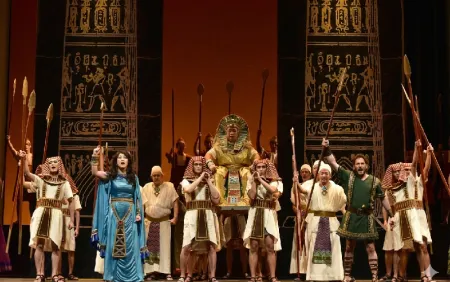
Some of Egypt's most spectacular venues have hosted Aida performances. A grand production at the Giza Pyramids in 1987 brought together 1,600 artists on a vast 4,300-square-meter stage, captivating 27,000 spectators over eight nights. The performances found a new home in 1994 at the stunning Deir Al-Bahari Temple (Hatshepsut Temple) in Luxor.
Luxor welcomed Aida back in 2019 after 22 years, with 4,000 people attending - 60% of them from abroad. The Red Sea resort town of El Gouna created a modern interpretation to mark the opera's 150th anniversary.
Egyptians cherish Aida as a powerful tribute to their ancient civilization's grandeur and lasting influence, even though an Italian composer wrote it.
Verdi's masterpiece weaves a touching love triangle into the landscape of ancient Egypt. Aida, an Ethiopian princess captured by Egyptians, falls in love with Radamès who commands the Egyptian army. Their secret romance faces a major challenge when Amneris, Egypt's princess, also sets her heart on Radamès.
A fierce war between Egypt and Ethiopia sets the stage for this emotional tale. The story builds tension as Radamès leads Egypt's army against Ethiopian invaders. His heart is split between serving his country and loving Aida, whose father leads the opposing forces.
The opera has spectacular moments like the famous Triumphal March, but it ended up focusing on deep human pain. Characters struggle with impossible decisions between love, duty and loyalty to their homeland. The story reaches its peak in one of opera's most touching endings - the lovers choose to die together, buried alive for what Egypt sees as Radamès' betrayal.
Verdi's brilliance shines in how he balances grand political themes with raw personal emotions. His music captures the characters' inner battles that exceed cultural and time boundaries.
Aida tells the story of an Ethiopian princess captured by Egyptians who falls in love with Radamès, commander of the Egyptian army. The story involves a love triangle with Egyptian Princess Amneris, set against the backdrop of war between Egypt and Ethiopia. It explores themes of love, duty, loyalty, and sacrifice.
Get in touch with our local experts for an unforgettable journey.
Plan Your Trip
Verdi's Aida ranks as the second most performed opera in Metropolitan Opera history with 1,122 performances. Modern audiences still find themselves captivated by this masterpiece. The opera's magic lies in how it perfectly balances spectacle with intimacy.
Modern productions keep this delicate balance alive through creative staging. Michael Mayer's recent Met production uses advanced technology with animated projections that bring hieroglyphs to life, while keeping the grandeur that audiences expect. Costume designers like Gianluca Falaschi create outfits that "give a contemporary lens to the designs of Ancient Egypt". These new interpretations refresh ancient esthetics for today's viewers.
The emotional heart of Aida remains its greatest strength. People deeply connect with its universal themes about impossible choices between love, patriotism, and duty. The opera shines when it shows "the conflict of private emotion and public duty", and stays "unanimously appreciated by audiences and critics alike".
The music itself is a mixture of "stirring and powerful arias" that Verdi crafted masterfully. Pieces like "Celeste Aida" and "O patria mia" stand out. All the same, many opera lovers call Amneris the most intriguing character. Her complex emotional experience builds up to the powerful Judgment Scene.
Aida lives on because it speaks to human experiences that never change. The sort of thing I love about it, as one critic noted, is how it contains "love, passion, sorrow, joy, courage, honor, power, celebration and mourning" - emotions that appeal to people across cultures and time.
Aida has been performed at spectacular Egyptian venues including the Khedivial Opera House (original premiere), the Giza Pyramids (1987 production with 1,600 artists), Deir Al-Bahari Temple (Hatshepsut Temple) in Luxor since 1994, and El Gouna Red Sea resort for the opera's 150th anniversary.
Opera Aida serves as a remarkable bridge between ancient Egyptian history and timeless musical artistry. Over the last 150 years, this masterpiece has engaged audiences worldwide and kept a special connection to Egypt. The magic of grand spectacle mixed with intimate emotion explains why people still love it across generations.
The opera means much more than just entertainment. It has become a vital part of Egyptian cultural identity, showing up everywhere from university graduations to spectacular shows against the backdrop of ancient temples and pyramids. Though an Italian composer wrote it, Egyptians see Aida as a celebration of their rich heritage and military tradition.
The story at Aida's core strikes a chord with people of all backgrounds - a tale of impossible love, painful choices, and sacrifice. Characters struggle between what their hearts want and what duty demands, a conflict that feels just as real today. Verdi's stirring music brings these struggles to life in ways that touch audiences from every culture.
Aida's lasting appeal makes sense. The famous Triumphal March and grand settings offer spectacular moments, yet the focus stays on raw human emotions. Modern shows carry on this tradition. They use new technology to improve the visual experience while keeping the emotional heart that makes Aida special.
The opera lives on because it speaks to something deep in human nature. The battle between love and duty, the agony of impossible choices, and the power of sacrifice - these themes hit home just as hard now as they did 150 years ago. This magnificent work shows us that our deepest feelings stay the same across centuries and cultures. Aida doesn't just show us ancient Egypt - it lets us see ourselves in its timeless story.
Despite being composed by an Italian, Aida has become deeply embedded in Egyptian cultural identity. The opera's Triumphal March is traditionally played at university graduation ceremonies, and Egyptians view it as a celebration of their ancient civilization's grandeur and military legacy.
The Triumphal March is one of Aida's most spectacular and recognizable musical pieces, performed during the victory celebration scene. It has become so iconic in Egypt that it's traditionally featured at university graduation ceremonies and is widely recognized as celebrating Egyptian military heritage.
Aida ranks as the second most performed opera in Metropolitan Opera history with 1,122 performances since 1886, demonstrating its enduring popularity and appeal to audiences worldwide.
The grand 1987 production at the Giza Pyramids featured 1,600 artists performing on a massive 4,300-square-meter stage. The spectacular show captivated 27,000 spectators over eight nights, combining ancient Egyptian monuments with operatic grandeur.
The main characters are Aida (an Ethiopian princess enslaved in Egypt), Radamès (commander of the Egyptian army), Amneris (Egyptian princess), and Amonasro (Aida's father, King of Ethiopia). The love triangle between Aida, Radamès, and Amneris drives the opera's emotional core.
The most celebrated arias include "Celeste Aida" (sung by Radamès), "O patria mia" (Aida's aria), and the powerful Judgment Scene featuring Amneris. These pieces showcase Verdi's masterful composition of "stirring and powerful" music.
Opera Aida premiered in Cairo 1871, telling a timeless love story in ancient Egypt. Performed at Pyramids & temples, Verdi's masterpiece captivates audiences.
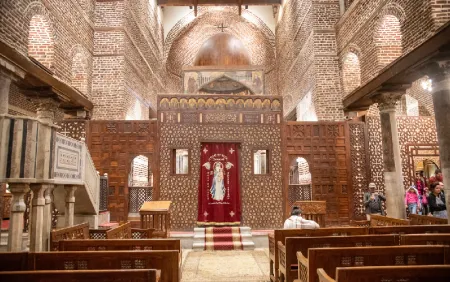
Saints Sergius and Bacchus Church were built to be dedicated to two Martyrs (Sergius and Bacchusand) traditionally believed to have been built on the spot where the Holy Family rested at the end of their journey into Egypt.
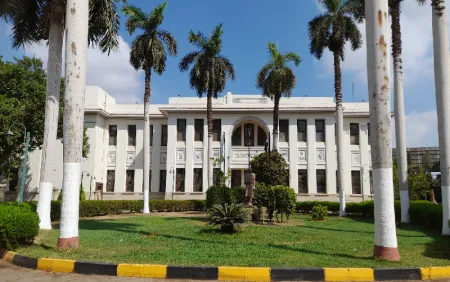
Cairo's Agricultural Museum, established 1938, features 7 halls showcasing 7,000 years of Egyptian farming history and ancient agricultural artifacts.
Fustat, founded 641 CE, was Egypt's first Islamic capital with 200,000 residents. This Silk Road trade hub beneath Old Cairo was deliberately destroyed in 1168.
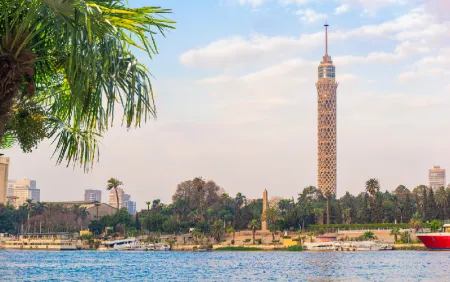
Cairo Tower's 187m lotus design offers 360° views & rotating restaurant. Discover hidden terrace & local secrets for Egypt's iconic landmark built 1956-1961.
Explore Birqash Camel Market in Cairo, where tradition and culture meet. Witness camel trading, local life, and a unique Egyptian market experience.
El Mosky is Cairo's authentic medieval marketplace from Ayyubid era. Serves locals with genuine prices, traditional crafts & spices. Metro accessible.
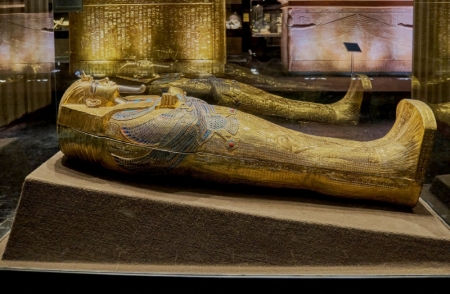
Learn about King Tutankhamun treasures and explore the secrets of his tomb, royal rituals, and preserved artifacts.
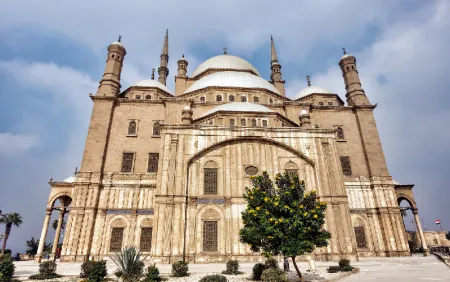
The Mohamed Ali Mosque is an Ottoman masterpiece built 1832-1857 inside Cairo Citadel. Called the Alabaster Mosque for its distinctive walls, it features a 52-meter central dome.
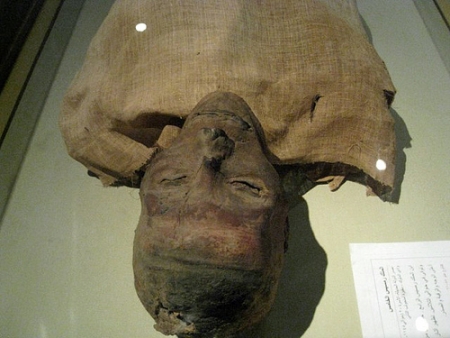
Egyptian mummies at Cairo's museums include 22 royal pharaohs moved in 2021 to NMEC. Features Tutankhamun, Hatshepsut, Seti I and 4,300-year-old preservation techniques.
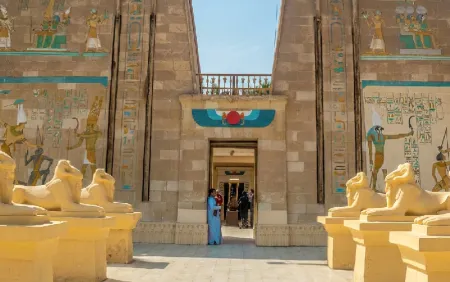
Pharaonic Village in Cairo, founded 1984, is a 30-acre living museum with 12 museums, King Tut's tomb replica & live ancient Egyptian demonstrations.
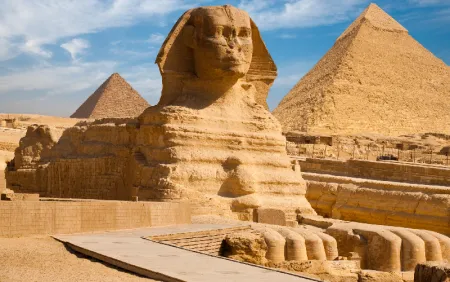
Great Sphinx of Giza, carved 2500 BCE, measures 73m long and 20m high. Contains three tunnels, hidden chambers & traces of red, blue & yellow paint.
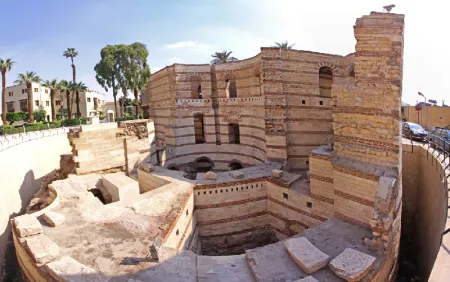
Babylon Fortress in Old Cairo, built 300 AD by Diocletian, features 10m Roman towers, Coptic churches, Ben Ezra Synagogue & museum with 16,000 artifacts.
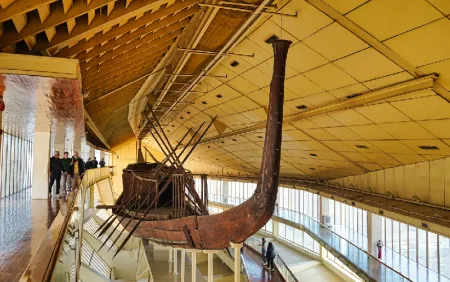
The Khufu Ship is a 4,600-year-old solar boat measuring 43.4 meters long. Built without nails using mortise-and-tenon joints, it's displayed at Grand Egyptian Museum.
Experience the Valley Temple of Khafre like never before. Explore its purpose, design, and must-see highlights—read the full guide now!