St. Pauls Monastery
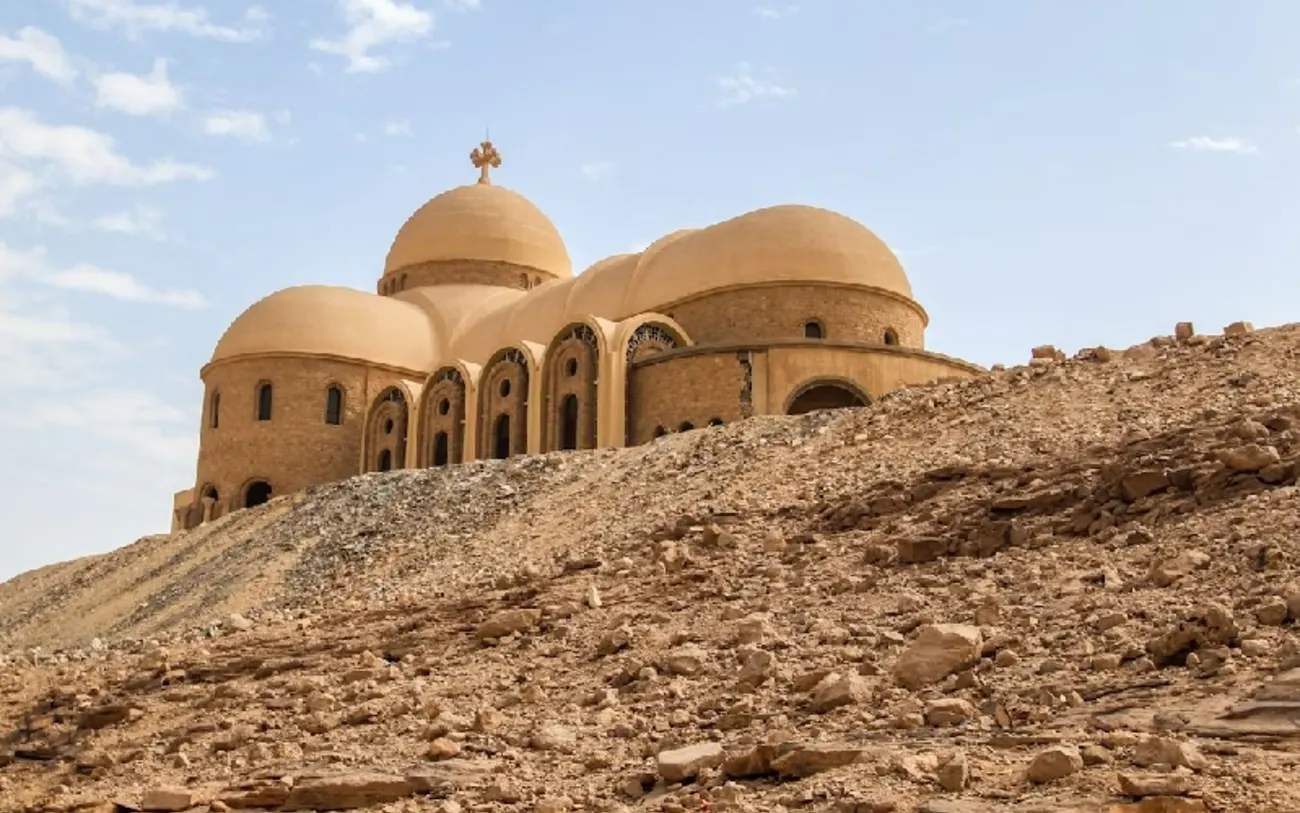
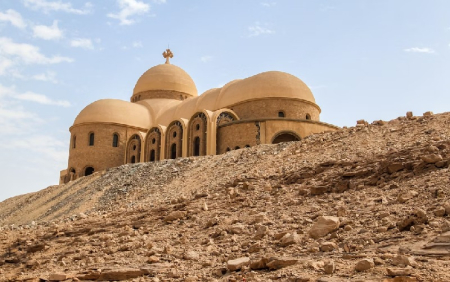
St Paul's Monastery stands as one of Egypt's most remarkable ancient treasures. The monastery was founded in the fourth century in the remote Eastern Wilderness. The historical sanctuary rests against the Red Sea region's backdrop and preserves centuries of religious tradition and architectural beauty.
The monastery's significance in Egypt's religious heritage stems from its ancient water spring. Saint Paul found this spring when he lived there in the third century. The spring has sustained desert monastic life for almost two millennia, which amazes visitors to this day.
The desert sanctuary's origins tell a fascinating story. Its unique features and historical importance continue to engage historians, pilgrims, and travelers in our modern world.
St Paul's Monastery rests in the remote Eastern Wilderness of Egypt against the Red Sea region's backdrop. This ancient desert sanctuary has preserved centuries of religious tradition and architectural beauty in one of Egypt's most remarkable locations.
St Paul's Monastery was founded in the fourth century, though its origins trace back to Paul of Thebes who escaped to the Egyptian desert around 250 AD. The monastery became official when St. Anthony's disciples built cells near Paul's cave and formed the first monastic community.
St Paul's Monastery started with Paul of Thebes, the first Christian hermit. Paul escaped to the Egyptian desert around 250 AD at age sixteen to avoid Roman persecution. A cave became his home for more than 80 years, where he survived on water from a spring and dates from a palm tree.
Christian tradition tells us that St. Anthony the Great discovered Paul through a vision. Anthony believed he was the first desert dweller until that moment. Their paths crossed when Paul turned 113 years old. St. Anthony wrapped Paul's body in Bishop Athanasius's cloak after his death. Two lions helped dig Paul's grave.
St. Anthony shared Paul's remarkable story with his disciples. These monks made their way to Paul's cave and built cells nearby. This group formed the first monastic community at the site. The monastery became official in the fourth century through this natural progression.
The monastery grew from a small chapel above Paul's cave into a complete monastic complex. The site faced numerous Bedouin raids throughout its history. The most destructive attack came in 1484 AD, which killed many monks and destroyed the library.
Paul of Thebes was the first Christian hermit who escaped to the Egyptian desert around 250 AD at age sixteen to avoid Roman persecution. He lived in a cave for more than 80 years, surviving on water from a spring and dates from a palm tree.
St. Anthony wrapped Paul's body in Bishop Athanasius's cloak after his death. According to tradition, two lions helped dig Paul's grave. St. Anthony then shared Paul's remarkable story with his disciples, who made their way to Paul's cave and built cells nearby.
St Paul's Monastery stands out from other religious sites with its three distinctive churches. The most remarkable is the underground Church of St. Paul, which was carved into the cave where the saint spent his hermetic life. Ostrich eggs, ancient symbols of resurrection, decorate the cave's ceiling beautifully.
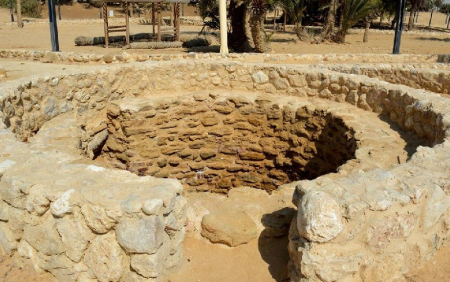
A natural spring flows through the monastery's north wing. The spring has produced four cubic meters of water daily for centuries. This life-giving water runs from a mountain crevice into cemented reservoir tanks that serve the monastery's drinking, cooking, washing, and irrigation needs.
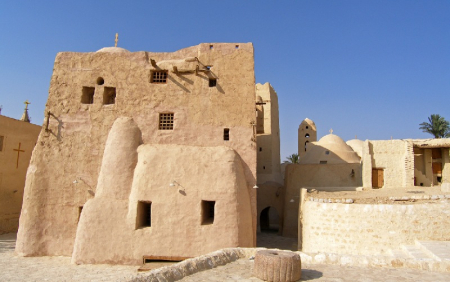
The monastery complex lies behind massive walls built in the 18th and 19th centuries. These walls and the fortress-like structure protected the monastery from Bedouin and Berber raids throughout its history.
An ancient tower sits at the monastery's center, accessible only by drawbridge. This final defensive stronghold housed different functions on each level. The ground floor served as a cemetery, while the second floor stored supplies. The third floor contained a chapel dedicated to the Holy Virgin.
The monastery holds a rich collection of nearly 900 manuscript volumes, with some texts dating to the 14th century. A rare Coptic version of the 'Divine Liturgy' stands among these precious documents.
The wilderness surrounding the monastery led people to nickname it the "Monastery of the Tigers".
A natural spring flows through the monastery's north wing, producing four cubic meters of water daily for centuries. This life-giving water runs from a mountain crevice into cemented reservoir tanks serving the monastery's drinking, cooking, washing, and irrigation needs.
An ancient tower sits at the monastery's center, accessible only by drawbridge. This final defensive stronghold housed different functions on each level: the ground floor served as a cemetery, the second floor stored supplies, and the third floor contained a chapel dedicated to the Holy Virgin.
Get in touch with our local experts for an unforgettable journey.
Plan Your Trip
St Paul's Monastery thrives as a vibrant spiritual center beyond its ancient walls. The Coptic monastic tradition has seen an amazing revival in recent decades. About 500 monks now dedicate their lives to this ancient practice, and many have university degrees. This new energy shows both a fresh religious passion and people's choice to move away from materialism.
The desert still sleeps when monks rise at 3 AM for private prayers before mass. Their simple daily life follows a basic pattern. "Some of us make holy bread, some build walls in the cells, some cook and some pray and write," says Father Serabamon.
The monastery's role as a living museum of Coptic Christianity makes it special. It houses precious artifacts, including ancient manuscripts, relics, and a rare Coptic language version of the 'Divine Liturgy'. Thousands of pilgrims visit each year to connect with Christianity's desert roots.
St Paul's Monastery has been a safe haven during times of persecution throughout history. Today's visitors find peace in its quiet desert setting. Bishop Samuel perfectly captures this experience when he says "you can hear the voice of silence"—so different from our noisy modern world.
This ancient sanctuary means more than just preserving history. It keeps alive a spiritual tradition that guides and inspires people in today's world.
About 500 monks now dedicate their lives to the ancient Coptic monastic tradition at St Paul's Monastery. Many have university degrees, showing both fresh religious passion and people's choice to move away from materialism.
The desert still sleeps when monks rise at 3 AM for private prayers before mass. Their simple daily life follows a basic pattern: "Some of us make holy bread, some build walls in the cells, some cook and some pray and write," according to Father Serabamon.
St Paul's Monastery is evidence of almost two thousand years of Christian desert tradition. This ancient sanctuary sits in Egypt's Eastern Wilderness and tells the story of Paul of Thebes and his extraordinary hermitic life. The monastery has faced many challenges through time, especially when Bedouin raids devastated it, yet it stands strong as a spiritual beacon today.
This monastery's special features make it different from other religious sites. The underground Church of St. Paul built right into the saint's cave creates a deep connection to its simple beginnings. On top of that, the ancient spring still flows after hundreds of years and gives life-sustaining water in the harsh desert. The monastery's impressive defensive walls and tower show how it stayed strong through rough times.
The monastery is nowhere near being just a historical relic. This desert sanctuary runs on an active spiritual community where monks keep ancient traditions alive while embracing modern education. Their daily life of prayer, work, and simplicity shows a different path from our materialistic world.
People who make the trip to this remote spot find more than just amazing architecture and historical items. They find a place where "the voice of silence" speaks in our noisy world. St Paul's Monastery serves two purposes - it keeps Christianity's desert roots alive and gives spiritual shelter to today's seekers. This ancient place bridges past and present powerfully, giving timeless wisdom to each new generation that steps through its doors.
Christian tradition tells us that St. Anthony the Great discovered Paul through a vision. Anthony believed he was the first desert dweller until that moment. Their paths crossed when Paul turned 113 years old, shortly before Paul's death.
St Paul's Monastery features three distinctive churches. The most remarkable is the underground Church of St. Paul, carved into the cave where the saint spent his hermetic life. Ostrich eggs, ancient symbols of resurrection, beautifully decorate the cave's ceiling.
The monastery holds a rich collection of nearly 900 manuscript volumes, with some texts dating to the 14th century. A rare Coptic version of the 'Divine Liturgy' stands among these precious documents.
The most destructive Bedouin attack came in 1484 AD, which killed many monks and destroyed the library. The monastery faced numerous Bedouin and Berber raids throughout its history, leading to construction of massive protective walls in the 18th and 19th centuries.
The wilderness surrounding the monastery led people to nickname it the "Monastery of the Tigers" due to its remote desert location and the wild nature of the surrounding Eastern Wilderness.
Yes, thousands of pilgrims visit each year to connect with Christianity's desert roots. Visitors find peace in its quiet desert setting where, as Bishop Samuel says, "you can hear the voice of silence"—a contrast to our noisy modern world.
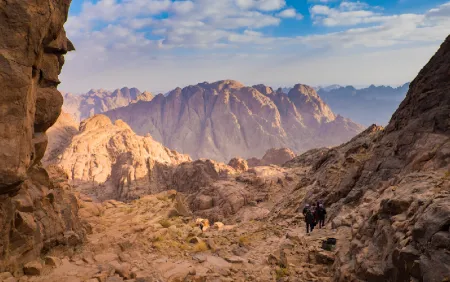
The Sinai Peninsula in northeastern Egypt spans 23,000 square miles bridging Africa and Asia. Home to Mount Sinai, 6th-century Saint Catherine's Monastery and Bedouin tribes.
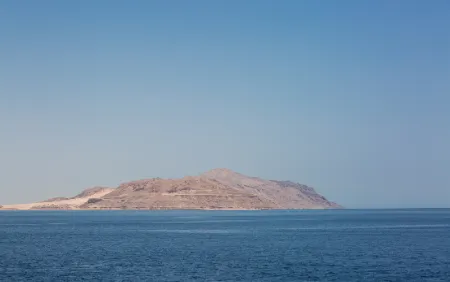
Tiran Island, 25km from Sharm El Sheik, spans 80 square kilometers with 4 legendary reef systems. Offers snorkeling tours, diving and encounters with dolphins, sharks and sea turtles.
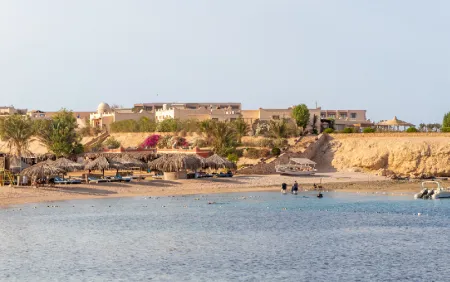
Sharm El Naga, 40km south of Hurghada, is a Red Sea paradise rated 4.3/5. Features shore-accessible reef, 200+ coral species, sea turtles & beach resort.
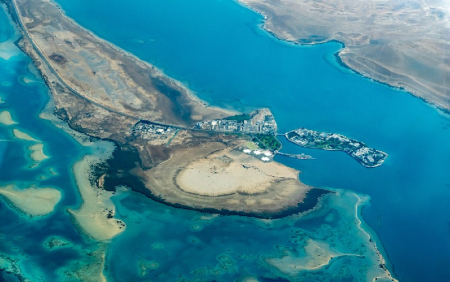
Ras Mohammed, 25km from Sharm El Sheik, features 220+ coral species, Magic Lake, rare mangroves & Earthquake Crack. Rated 4.6/5 stars.
Nuweiba features 15km coastline, 70km south of Taba. Offers Bedouin camps, pristine beaches, Colored Canyon & eco-friendly lodges.
Naama Bay Sharm El Sheik—vibrant nightlife with promenade sunset walks, Egyptian dining, belly dancing shows, shisha cafés, night diving & Casino Royale.
Moses Springs in Pinnacles National Park is a 2.4-mile trail with talus caves, California condors, Bear Gulch Reservoir & volcanic cliffs.
Giftun Island near Hurghada features 6 beaches including Orange Bay, 196 coral species & 1,000+ fish species. Egypt's first marine park since 1986.
Soma Bay is a gated peninsula 45km from Hurghada with 6 luxury hotels, 20 dive sites & 300-day kitesurfing. Hurghada offers vibrant city culture.
St Anthony Monastery in Egyptian desert is the world's oldest, inhabited 2,000 years. Built 356 AD with 4th-century cells beneath glass flooring.
St Paul's Monastery, founded 4th century, houses the cave where Paul of Thebes lived from 250 AD. Features natural spring flowing 4 cubic meters daily and 500 active monks.