Suez Egypt
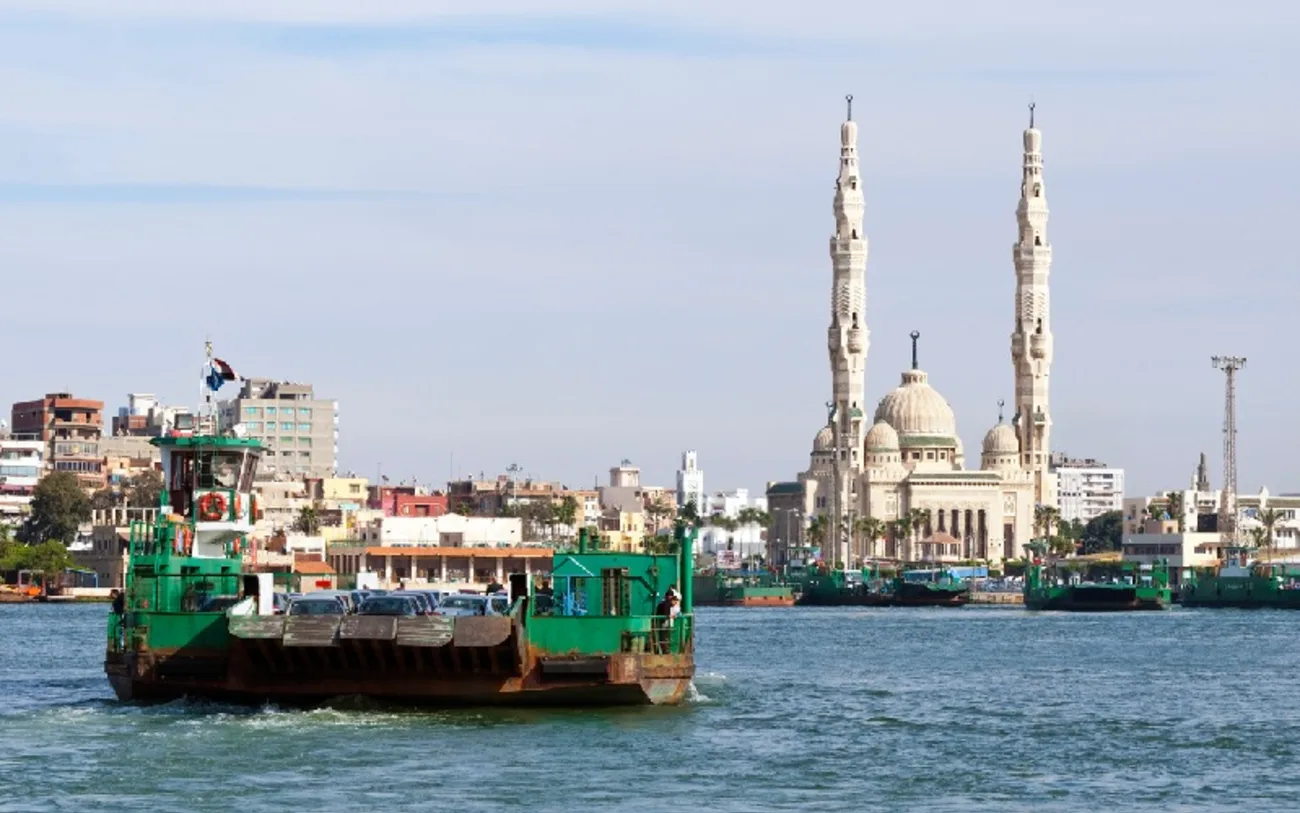
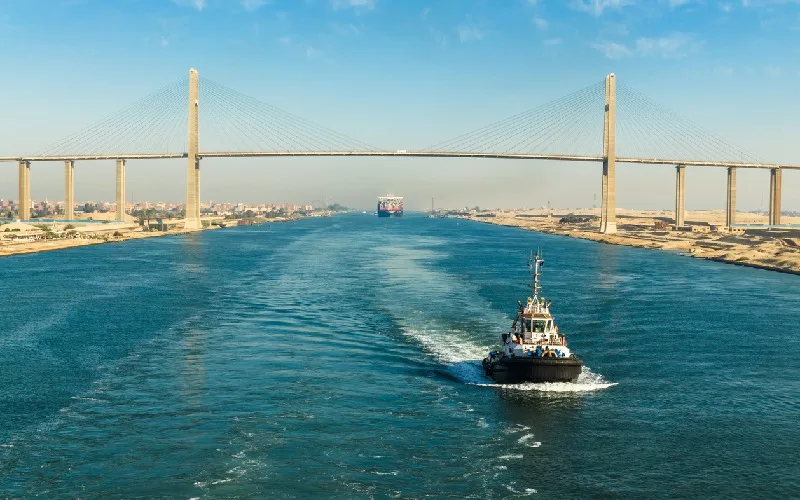
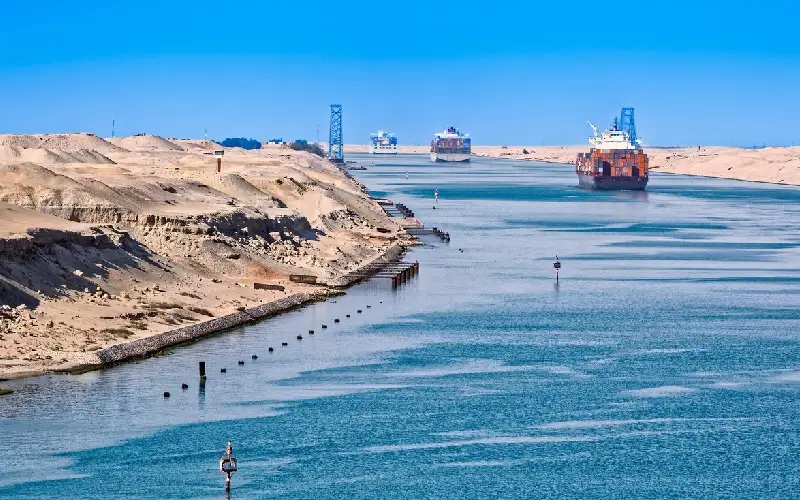
The Suez Canal is one of the world's most vital maritime passages. Ships save time by using this route instead of going around the Cape of Good Hope. This remarkable waterway spans 163 kilometers and reaches widths of up to 352 meters. The canal opened its gates on November 17, 1869, after 11 years of construction.
The story behind this engineering marvel really catches your attention. French diplomat and engineer Ferdinand de Lesseps came up with the idea to build the canal in 1854. He struck a deal with Said Pasha to build and run it for 99 years. The port of Suez transformed from a quiet town into a bustling naval and trade hub once the canal opened. It's connected to Cairo by road and rail, about 130 kilometers away. The port welcomes all kinds of vessels - from cargo ships and oil tankers to passenger boats. It's also a key stop for Muslim pilgrims heading to and from Mecca.
This waterway means much more than just moving ships around. The canal brought in 3.7% of Egypt's GDP by 2009. That's pretty impressive, even with bumps along the way like the 1956 Suez Crisis that shut everything down from October 1956 to March 1957. Through good times and bad, the Suez Canal keeps shaping global trade and Egypt's role in world affairs.
Suez city holds a special place among world cities. It's one of the few places where people live across two continents. The residents simply cross between African and Asian shores as part of their daily routine. The city spreads across five distinct districts at the Suez Canal's southern end.
El Arbaeen serves as the city's busiest district. It houses government offices and the main produce markets. The upscale Suez District shows off modern buildings and substantially higher property values. Port Tawfik's prime location gives direct views of the canal. The area's industrial strength comes from two major oil refineries and Suez Port, a crucial shipping hub.
El Ganayen covers all of Suez's Asian territory and rural regions. It works as the city's countryside. Faisal District's story began after the 1973 Yom Kippur war that left much of the city in ruins.
Ataqah District runs on industry. Its factories produce fertilizers, cement, steel and various other products. The district has Ain Sokhna, a top tourist spot 55 kilometers south of Suez. This resort draws crowds throughout the year. Visitors come for its warm weather, clear waters and activities like deep-sea fishing, windsurfing, and kitesurfing.
Suez Governorate stands out with 100% urbanization. This makes it one of Egypt's most urbanized areas, matching Cairo and Port Said.
The strategic value of connecting the Mediterranean and Red Seas was clear to ancient Egyptians long before our modern Suez Canal existed. Pharaoh Senusret III built one of the first canal systems around 1850 BCE. His creation linked the Nile River to the Red Sea. Many rulers tried to improve these waterways over the centuries, and Pharaoh Necho II and Persian King Darius I expanded the project further.
Emperor Trajan's rule saw the Romans give the ancient canal new life. They named it "Trajan's River." The waterway gradually deteriorated until Caliph Omar brought it back to life around 640 CE. He gave it a new name: "Canal of the Commander of the Faithful."
The sort of thing I love about Suez's history is its role as a crossing point for pilgrims. The region became a crucial stop for Muslims traveling to Mecca from North Africa and Mediterranean areas. Port facilities grew to welcome these religious travelers, and a cultural melting pot emerged where merchants, sailors, and pilgrims met and mingled.
This narrow strip of land saw ancient trade routes that carried more than just goods. Ideas, religions, and cultural practices flowed between continents. Archeologists have found artifacts from a variety of civilizations near the canal. These discoveries show how Suez was a crossroads of human history well before modern engineering reshaped the scene.
Get in touch with our local experts for an unforgettable journey.
Plan Your Trip
The Suez Canal remains Egypt's vital economic lifeline, generating record toll revenue of USD 9.40 billion in 2022-2023. This critical artery for global commerce handles approximately 12-15% of worldwide trade and roughly 30% of global container traffic. Goods worth more than USD 1.00 trillion transit through the canal annually.
The canal's strategic location enables it to accommodate 61.2% of the global oil tanker fleet and 92.3% of the global bulk cargo fleet at full load. The waterway can handle all of the world's container ships, car carriers, and general cargo vessels at 100% capacity.
Egypt has embraced digital transformation to boost canal operations. The European Bank for Reconstruction and Development started the second phase of its technical support program in 2022 to digitalize the Suez Canal Economic Zone. The program wants to make administrative procedures easier, and its first phase has already cut service delivery time by 52%.
Recent conflicts have temporarily reduced traffic by approximately 50%, though operations continue. The International Monetary Fund expects canal revenues to grow by 88.9% over the next five years, potentially reaching USD 11.90 billion by FY 2029/2030. The waterway has also made it easier for over 400 non-native species to enter the Mediterranean, raising ecological concerns.
The Suez Canal stands as evidence of human engineering and vision that has connected continents and shaped global trade for over 150 years. This waterway revolutionized Egypt's economy and redefined global shipping routes forever. Ferdinand de Lesseps turned his ambitious project into reality, building upon ancient attempts by pharaohs and emperors who knew the vital value of connecting the Mediterranean and Red Seas.
The canal's unique position between two continents shapes life around it. People cross between Africa and Asia as part of their daily lives, while different districts show Suez's diverse character. The region combines industrial power with rich culture, from El Arbaeen's busy markets to Ain Sokhna's tourist attractions.
Suez soil holds deep ancient history. Many tried to master these waters - pharaohs, Romans, and caliphs all attempted before modern engineering succeeded. The area became a meeting point for goods, pilgrims, ideas, and cultures through the centuries.
The canal thrives today despite its challenges. Its economic power shows in record revenues, as it handles much of global trade. Egypt looks to improve service through digital solutions, and technological advances have already cut delivery times.
Some challenges exist, of course. Recent conflicts slowed traffic temporarily, and non-native species invasions raise ecological concerns. All the same, financial forecasts point to strong growth for this vital maritime passage.
The Suez represents more than just a shipping channel. It shows human determination to connect worlds, break through geographical barriers, and create prosperity through trade. This narrow strip of water between continents shapes our global economy and carries the legacy of countless civilizations that saw its importance throughout history.
Suez Egypt is located at the southern entrance of the Suez Canal, about 130 kilometres east of Cairo, linking the Red Sea and the Mediterranean.
Suez Egypt is famous for the Suez Canal, one of the world’s most important shipping routes connecting Europe and Asia.
The Suez Canal is a man-made waterway that allows ships to avoid sailing around Africa, saving time, fuel, and costs.
The Suez Canal was completed in 1869 after 11 years of construction under the leadership of Ferdinand de Lesseps.
The Suez Canal is approximately 163 kilometres long, making it one of the longest artificial waterways in the world.
Around 12–15% of global trade and about 30% of the world’s container traffic pass through the Suez Canal annually.
Yes, ancient Egyptians built early canals linking the Nile to the Red Sea as early as 1850 BCE.