Black desert

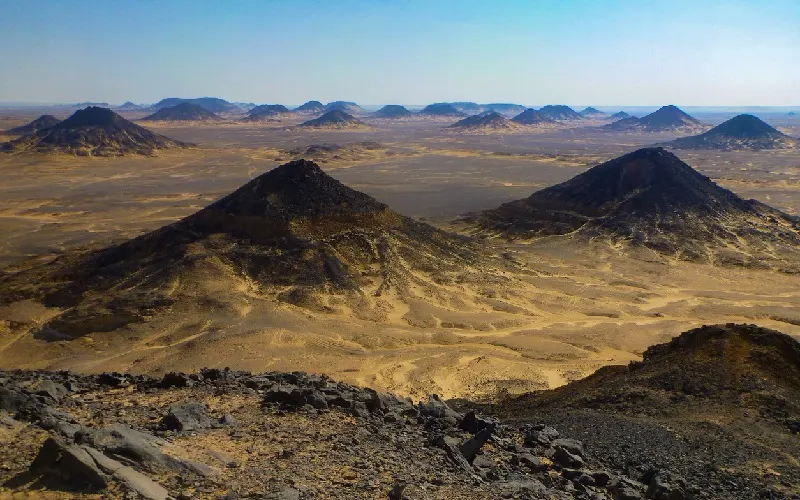
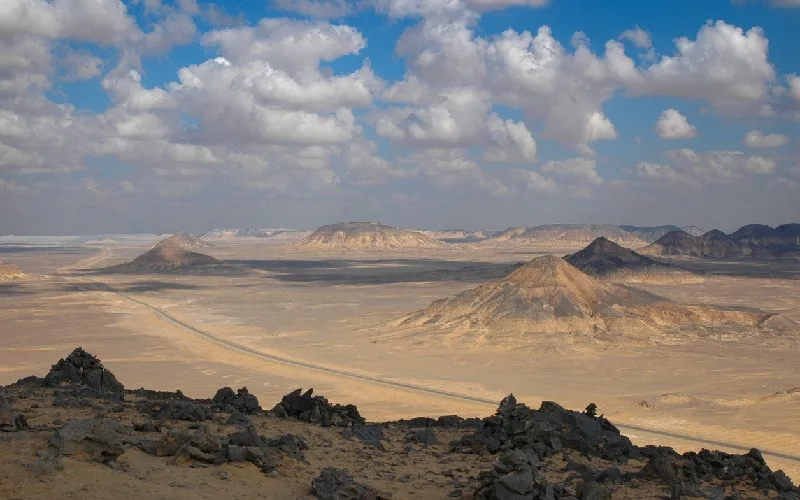
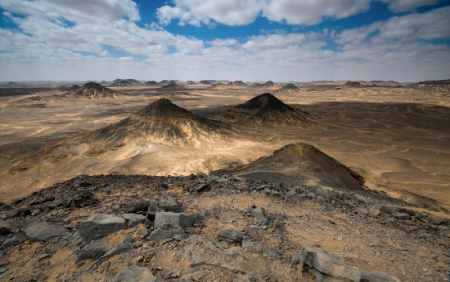
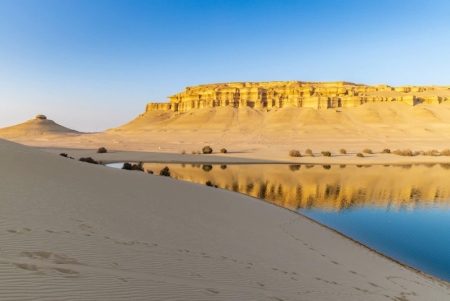
The Black Desert reshapes the scene about 50km south of Bawiti. The desert floor suddenly shifts from beige to black, creating a stunning contrast. Travelers rate this remarkable geological feature 4.5/5, and it reveals Earth's volcanic history that many tour guides barely touch upon.
The area's beauty comes from its dozens of extinct volcanoes. Their lava stones remain scattered across the landscape even today. This remarkable region stretches toward Farafra Oasis. Scientists discovered that this area lay underwater and buzzed with volcanic activity about 70 million years ago. The sort of thing I love about the Black Desert is spotting the rare desert fox. These creatures are among the few living beings that call this otherworldly terrain home.
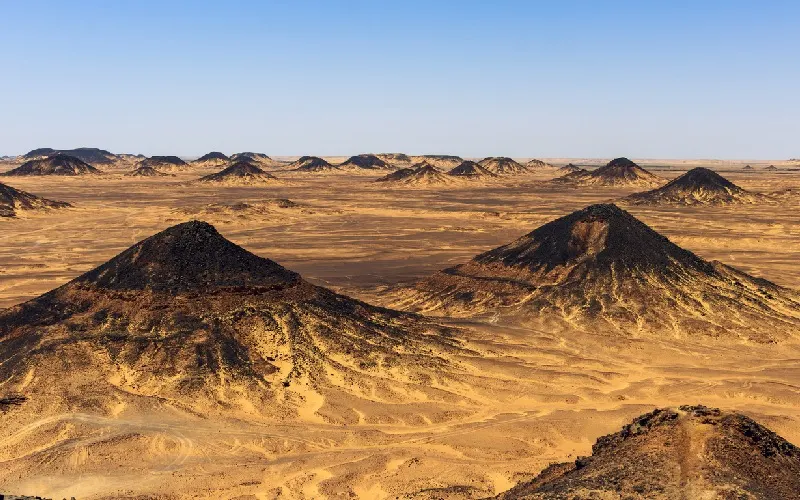
The Black Desert is located about 50km south of Bawiti in Egypt's Western Desert. Dark volcano-shaped mounds stretch across 30 km between Bahariya Oasis and the White Desert, creating a unique landscape that reshapes the desert floor from beige to black.
Travelers rate the Black Desert a remarkable 4.5 out of 5, making it one of Egypt's highest-rated natural geological features. This rating reflects its unique volcanic landscape and stunning contrast with surrounding golden desert sands.
The Black Desert traces its origins to ancient volcanic activity during the Jurassic period, roughly 180 million years ago. Scientists discovered that this area lay underwater and experienced intense volcanic activity about 70 million years ago, gradually rising from the ocean floor to create today's peaks and summits.
The Black Desert stands out as Egypt's most unique landscape. Dark volcano-shaped mounds stretch across 30 km between the Bahariya Oasis and the White Desert. This remarkable region traces its origins to ancient volcanic activity during the Jurassic period, roughly 180 million years ago.
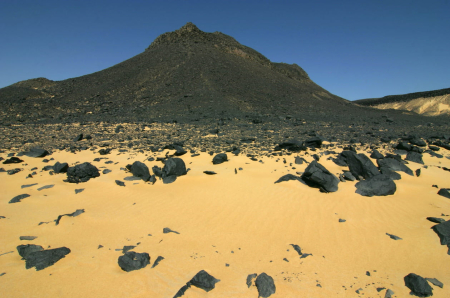
Black basalt rocks blanket the dark mountains and hills, creating a stark contrast against the ochre-colored sand. These volcanic formations tower up to 100 meters high, and many visitors say the scenery reminds them of Mars or the moon.
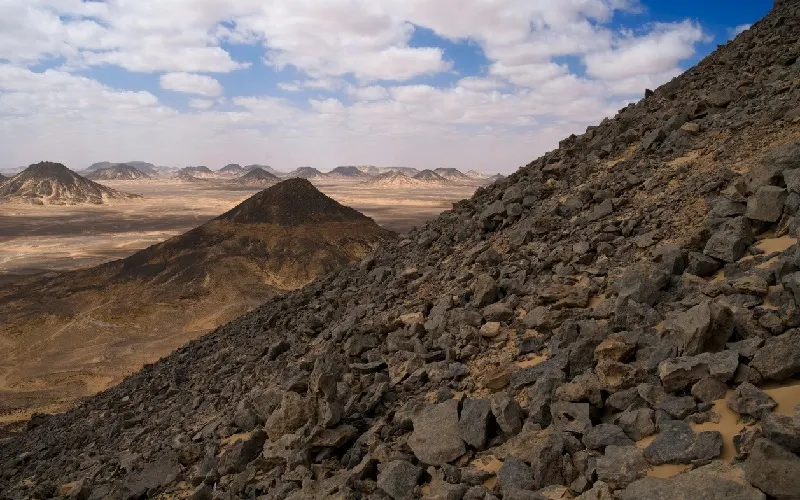
The hills' composition changes throughout the region. Most hills have a distinctive black color from their basalt sill caps, while others show reddish hues because of their iron sandstone surfaces. Ancient volcanic eruptions left the desert floor scattered with black basalt and iron quartzite fragments.
The area's geological story reveals an incredible transformation. The ocean floor rose gradually through intense volcanic activity, which created the peaks and summits we see today. This rugged terrain perfectly complements the nearby White Desert. Visitors can experience two completely different desert landscapes within a small area.
Black basalt rocks blanket the dark mountains and hills, creating a stark contrast against ochre-colored sand. Most hills have a distinctive black color from their basalt sill caps, while others show reddish hues because of their iron sandstone surfaces.
The volcanic formations tower up to 100 meters high. Ancient volcanic eruptions left the desert floor scattered with black basalt and iron quartzite fragments, creating distinctive peaks that many visitors say remind them of Mars or the moon.
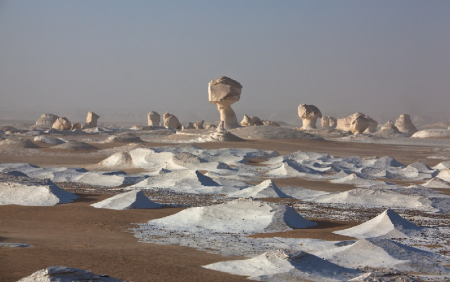
The black desert in Egypt leads to remarkable landscapes that most travelers never get to see. The Agabat Valley creates an incredible sight between the White Desert and Bahariya Oasis. Limestone formations tower from golden sands like waves frozen in time from an ancient sea. The Arabic word "Agabat" perfectly describes this place - it means "wonder."
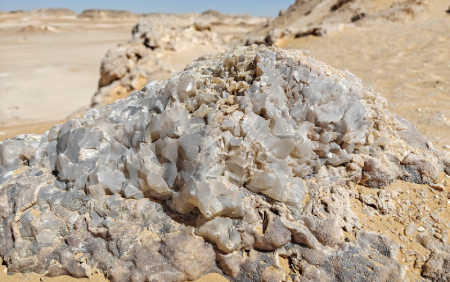
A glittering Crystal Mountain lies between Bahariya and Farafra Oases. This ridge contains barite and calcite crystals rather than being an actual mountain. Many guides mistake these crystals for quartz. Scientific studies show their hardness ranges from 3.0 to 3.5, matching barite and calcite properties. The crystals shine like diamonds in morning light and take on beautiful golden tints at sunset.
The area features several remarkable peaks. Gebel Dist rises from the desert floor just kilometers from Bahariya Oasis. Its symmetrical sides and pointed peak earned it nicknames like "Pyramid Mountain" and "Magic Mountain". Gebel Gala Siwa, shaped like a pyramid, once helped spot approaching caravans from Siwa. Gebel Az Zuqaq fascinates visitors with its limestone base that shows streaks of red, yellow, and orange.
These lesser-known marvels add to the black desert's striking landscape. They give travelers an amazing look at Egypt's rich geological variety beyond its volcanic features.
Agabat Valley creates an incredible sight between the White Desert and Bahariya Oasis. Limestone formations tower from golden sands like waves frozen in time from an ancient sea. The Arabic word "Agabat" means "wonder," perfectly describing this place.
Crystal Mountain lies between Bahariya and Farafra Oases and is a ridge containing barite and calcite crystals rather than being an actual mountain. The crystals shine like diamonds in morning light and take on beautiful golden tints at sunset, with hardness ranging from 3.0 to 3.5.
Gebel Gala Siwa, shaped like a pyramid, once helped spot approaching caravans from Siwa. This distinctive peak served as an important landmark for desert travelers navigating the harsh terrain.
Get in touch with our local experts for an unforgettable journey.
Plan Your Trip
The black desert in Egypt has much more to offer than what standard tours reveal. Smart timing makes a huge difference. Early morning or late afternoon visits reshape the scene with dramatic lighting effects. Sunset bathes the volcanic hills in purple hues. This creates a photographer's dream that most tourists never experience.
Tour operators pack too much into their schedules. They leave little room to explore this unique landscape. Seasoned travelers suggest dedicating a full day to the black desert instead of cramming it with White Desert tours.
Sharp basalt fragments make sturdy footwear essential in this terrain. Regular shoes won't cut it here. Temperature swings between day and night this is a big deal as it means that 30°C, so pack layers even for summer trips.
Local Bedouin guides are a great way to get insights that commercial tours miss. These native experts spot subtle geological features and tell rich stories about specific formations passed down through generations. They know where to find rare desert plants that survive against all odds - tiny signs of life in the volcanic landscape that regular tour groups just pass by.
Early morning or late afternoon visits offer dramatic lighting effects. Sunset bathes the volcanic hills in purple hues, creating a photographer's dream. These times showcase the landscape's true beauty with spectacular color transformations that most tourists miss.
The Black Desert ranks among Egypt's most extraordinary natural wonders, though few people know about it. This remarkable volcanic landscape packs quite a punch beyond its striking looks. The contrast between black basalt-covered mountains and golden desert sands creates a sight you won't find anywhere else in Egypt. A fascinating story unfolds here - one that started 70 million years ago when underwater volcanic activity shaped this otherworldly terrain.
The area around the main black desert holds some amazing surprises. Adventure seekers can find wave-like formations in Agabat Valley, marvel at the sparkling Crystal Mountain, and explore distinctive peaks like Gebel Dist and Gebel Gala Siwa. These sites sit close to the White Desert, showing off Egypt's incredible range of geological features in one compact area.
Regular tours don't do justice to this magical place. The real beauty shows up early in the morning or late afternoon when sunlight reshapes the scene completely. Most tourists miss these spectacular views because their schedules are too tight. Tour operators rarely mention practical stuff like proper shoes and clothes, even though you need them for the rough ground and big temperature swings.
Local Bedouin guides give you the best and most educational experience, but tour companies rarely use their expertise. These guides know all about the subtle rock formations, cultural stories, and desert plants that make any Black Desert trip special.
The Black Desert needs more than a quick visit. People who set aside time to explore this unique landscape will find a geological wonderland that goes beyond expectations. This hidden gem stands as one of Egypt's most fascinating natural treasures - a place where ancient volcanic history comes alive against stunning desert views.
The rare desert fox is among the few living beings that call this otherworldly terrain home. These creatures have adapted to survive in this harsh volcanic landscape with extreme temperature variations and limited vegetation.
Seasoned travelers suggest dedicating a full day to the Black Desert instead of cramming it with White Desert tours. Tour operators often pack too much into their schedules, leaving little room to properly explore this unique landscape.
Sharp basalt fragments make sturdy footwear essential in this terrain—regular shoes won't suffice. Pack layers for temperature swings of up to 30°C between day and night, even for summer trips, to handle the extreme variations.
Local Bedouin guides provide insights that commercial tours miss. These native experts spot subtle geological features, tell rich stories about specific formations passed down through generations, and know where to find rare desert plants that survive in the volcanic landscape.
Yes, the Black Desert complements the nearby White Desert perfectly. Visitors can experience two completely different desert landscapes within a small area, showcasing Egypt's incredible range of geological features in one compact region.
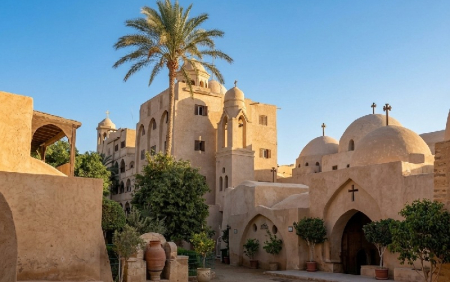
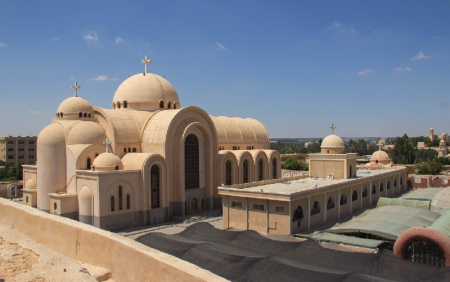
Monastery of Syrians in Wadi Natrun, founded 984 AD, houses oldest Syriac manuscript (411 AD) & Church of Virgin Mary (645 AD) with frescoes.
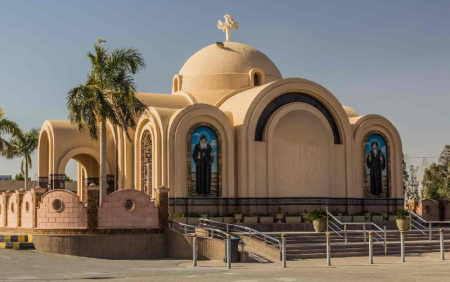
Wadi El Natrun is Egypt's sacred valley located 100km from Cairo, 23 meters below sea level. Features 4 ancient Coptic monasteries from 330 AD with Saint Pishoy's incorrupt body.
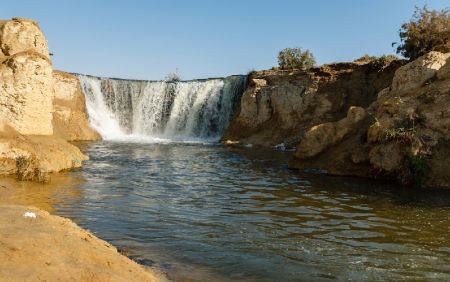
Wadi El Rayan is Egypt's premier desert sanctuary spanning 1,759 km² with two crystalline lakes, cascading waterfalls and 13 permanent bird species plus 26 migratory species.
White Desert Egypt spans 300 km² of chalk formations 45km from Farafra with Crystal Mountain, Black Desert & Valley of Agabat. Rated 5.0/5.
Discover Crystal Mountain Egypt—stunning barite & calcite arch between Bahariya & Farafra. Features hidden crystal caves, Bedouin secrets & sunrise views.
Mountain of the Dead in Siwa contains 3,000 tombs including Si-Amun, Mesu-Isis, Niperbathot & Crocodile with vivid wall paintings. 1km from town.
Great Sand Sea extends 650km with seif dunes up to 140m high between Egypt-Libya. Covers 10% of Egypt's Western Desert, gateway Siwa Oasis.
Black Desert, rated 4.5/5, features 100m basalt formations from ancient volcanic activity. Includes Agabat Valley, Crystal Mountain & desert fox.
Djara Cave stretches 1,000m with 188+ murals from 10,200 BC, "frozen waterfall" stalactites, Cathedral chamber & Neolithic gazelle rock art.
Cleopatra Bath in Siwa is a bubbling spring 752km from Cairo where Queen allegedly bathed. Mineral-rich healing waters, temperature-regulated.
El Bagawat is the world's oldest Christian cemetery with 263 chapels from 3rd-7th century. Features Chapel of Exodus & Peace with biblical art.
Qarun lake is considered the oldest natural lakes in the world, the third largest lake in Egypt and the rest of lake Old Maurice. Know more!
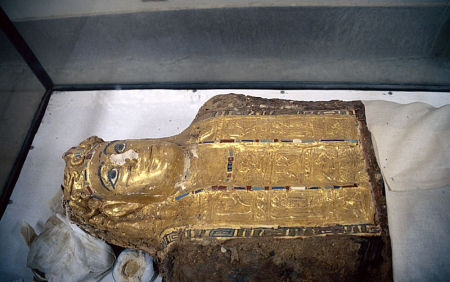
Valley of the Golden Mummies located in Bahariya Oasis, about 380 km west of the pyramids, It was built during the Greco - Roman period exhibits a variety of styles and a range of social status.
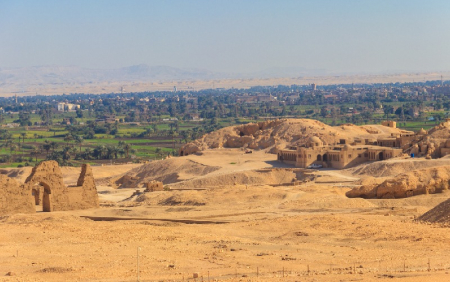
Find out what makes Deir el Bahari unique! Explore Hatshepsut's terraced temple, ancient Luxor monuments & Egyptian architectural genius. Learn more!
Learn the story of the Monastery of Saint Bishoy in Egypt: Saint Bishoy's incorrupt body, 5 churches & Coptic Orthodox history. Read the complete guide!
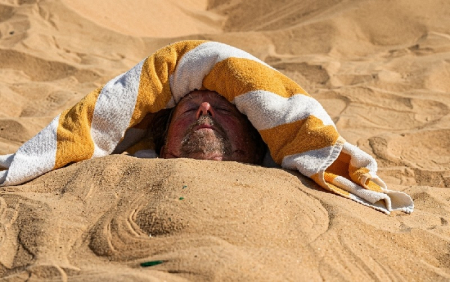
Siwa sand bathing: centuries-old Bedouin treatment using mineral-rich sand (40-50°C) for arthritis, chronic pain & stress. 7-10 daily sessions.
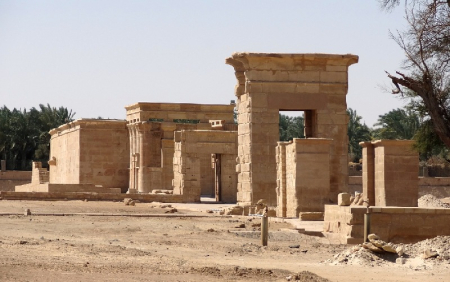
Uncover Temple of Hibis in Egypt's western desert. Explore the best-preserved Persian temple, Darius I's contributions & Amun-Ra shrine. Learn today!