Pyramid of Teti
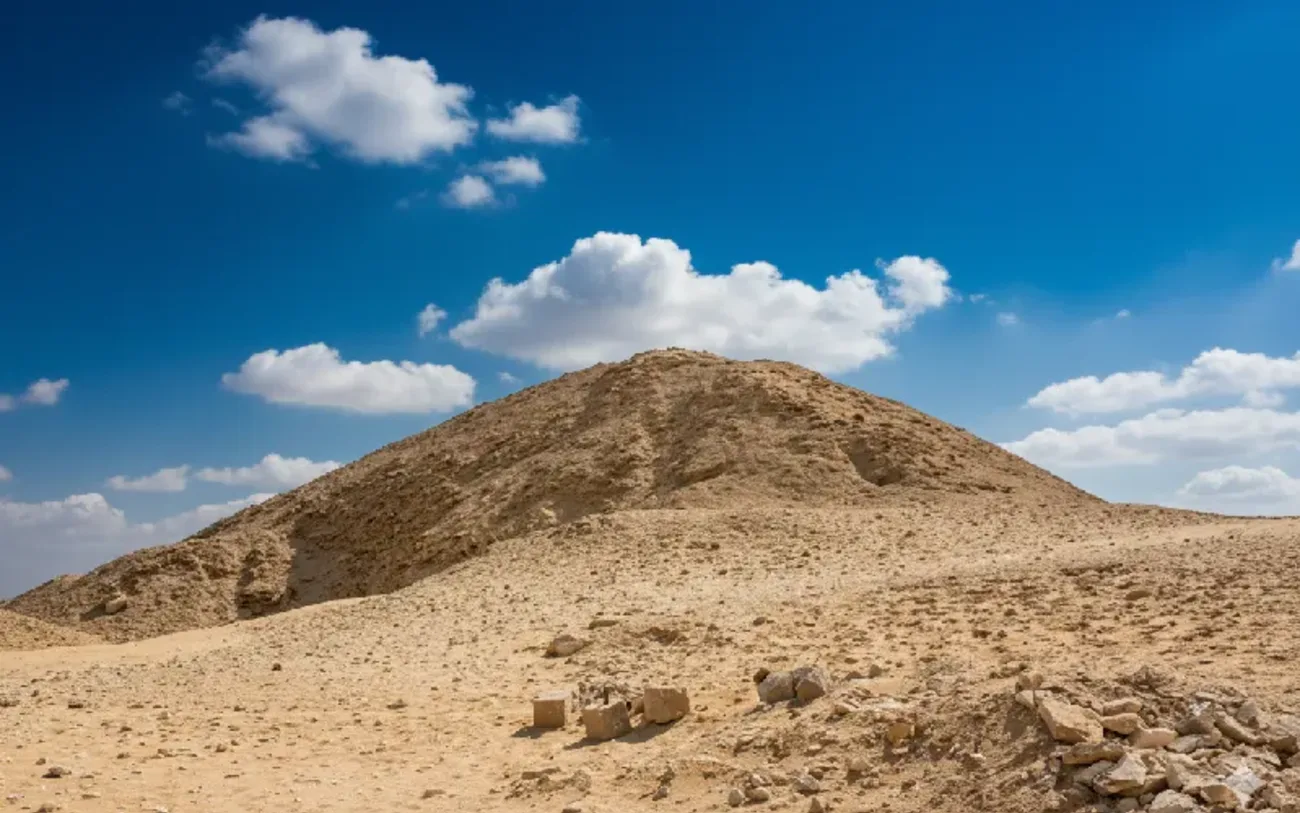
The Pyramid of Teti stands as one of Egypt's most important monuments, though it remains less known than other pyramids. French Egyptologist Gaston Maspero found this ancient structure in 1882, and it has the unique difference of being Egypt's second pyramid with texts inside its main burial chamber.
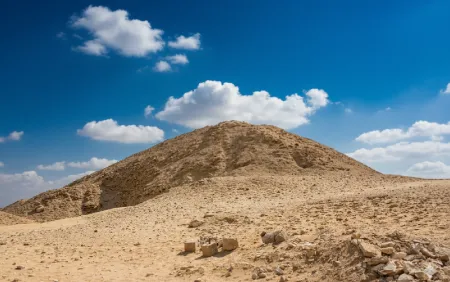
Pharaoh Teti, the first ruler of the Sixth Dynasty, built this pyramid during the Old Kingdom of Egypt (2686-2181 BCE) and ruled from 2345 to 2323 BCE. The pyramid's exterior looks like a small hill today due to severe damage, but its interior chambers have stayed in remarkable condition. Each side of the pyramid's base stretches 78.5 meters, reaching a height of 52.5 meters, with a volume of 107,835 cubic meters. On top of that, visitors can reach the burial chamber through a low passageway and sloping shaft. The chamber's vaulted roof features a beautiful star-patterned block that has shifted inward. Though not as famous as the Great Pyramids of Giza, Teti's pyramid gives visitors a complete view of ancient Egyptian civilization's architectural mastery.
The pyramid was built around 2345-2323 BCE during the Old Kingdom period (2686-2181 BCE). Pharaoh Teti, the first ruler of the Sixth Dynasty, commissioned this monument during his 22-year reign.
The Pyramid of Teti stands majestically in the ancient necropolis of Saqqara, about 30 kilometers south of Cairo. This smooth-sided pyramid rises from a desert plateau just south of modern-day Cairo, at coordinates 29.8751649794, 31.2217551626. Visitors will find the pyramid near the famous Step Pyramid of Djoser while learning about the so big Saqqara complex.
The journey from central Cairo to the Pyramid of Teti takes about 50 minutes. Many tourists choose travel agencies that provide both an experienced driver and a knowledgeable guide. Independent travelers have several options too. A private car or taxi offers the most convenient way to reach the site, with travel times ranging from 45-60 minutes based on traffic conditions. Budget travelers can use public transportation, though this requires several transfers and might need a tuk-tuk ride at the end.
Saqqara's necropolis spans across a massive area that needs transportation between key sites. Many visitors choose guided tours that combine Teti's Pyramid with nearby sites like Memphis and the Dahshur pyramids.
Early morning visits help you avoid the midday heat and crowds effectively. The site has minimal shade and few facilities, so remember to bring water, sunscreen, and comfortable walking shoes.
The Pyramid of Teti is located in the Saqqara necropolis, approximately 30 kilometers south of Cairo. It stands near the famous Step Pyramid of Djoser on the desert plateau, making it easily accessible as part of a Saqqara visit.
Teti, the Sixth Dynasty ruler, rose to power at a crucial time in ancient Egyptian history. His pyramid, built around 2345-2323 BCE, shows a key shift in Egyptian funerary architecture. The pyramid's construction coincided with Egypt's gradual loss of centralized power, unlike earlier pyramids built when royal authority was at its peak.
This pyramid stands out because it's one of the first to feature Pyramid Texts - religious spells carved into walls that helped pharaohs reach the afterlife. These hieroglyphic inscriptions are among the oldest religious writings that ever spread through human civilization and are a great way to get knowledge about ancient Egyptian views on death and rebirth.
Teti's pyramid complex was more than just the main structure. The site included a mortuary temple, a satellite pyramid, and mastabas (flat-roofed tombs) that belonged to his officials. His wives, Khuit and Iput, had their own small pyramids built nearby, which created a family burial ground.
The pyramid's interior chambers showcase exceptional craftsmanship. The burial chamber's gabled ceiling was specifically designed to distribute weight. Archeologists found Teti's basalt sarcophagus and canopic chest inside, but his mummy was missing - likely taken by ancient tomb robbers.
Historical records suggest that palace conspirators might have assassinated Teti. This could explain why his pyramid lacks some features found in other royal tombs. All the same, its preserved texts and architectural elements give us a fascinating glimpse into Egypt's Old Kingdom period.
The Pyramid of Teti is Egypt's second pyramid to contain Pyramid Texts in its burial chamber. It also houses the first royal sarcophagus with inscriptions carved on its interior walls, making it archaeologically and historically significant for understanding ancient Egyptian beliefs.
Get in touch with our local experts for an unforgettable journey.
Plan Your Trip
The Pyramid of Teti stands out among ancient Egyptian monuments with several unique features. This pyramid became only the second in Egypt to house the sacred Pyramid Texts. These hieroglyphic inscriptions are the oldest religious writings we know from ancient Egypt, dating back to around 2400–2300 BCE.
Visitors to the burial chamber can see a stunning ceiling adorned with gold stars against a dark blue background. This design reflects the Egyptian belief that tombs served as gateways to the cosmos. The celestial display creates an awe-inspiring atmosphere in the otherwise plain chamber.
The pyramid holds another significant feature - it contains the first royal sarcophagus with inscriptions carved on its interior walls. This unfinished greywacke sarcophagus is an impressive artifact that stretches 2.777 meters in external length.
The pyramid's texts introduced something new - the first use of the monogram for "recitation" (dd-mdw). This suggests a significant shift in Egyptian writing traditions.
Archeological discoveries over the last several years near Teti's pyramid have been remarkable. Teams have uncovered 52 burial shafts that contain New Kingdom coffins and artifacts. These findings show that people still revered King Teti more than 1,000 years after his death, and many wanted their final resting place close to his tomb.
The burial chamber features a vaulted gabled ceiling adorned with gold stars set against a dark blue background. This celestial design reflects ancient Egyptian beliefs that tombs served as gateways to the cosmos, creating an awe-inspiring atmosphere.
The Pyramid of Teti stands as proof of ancient Egypt's architectural and spiritual brilliance. This remarkable structure gives visitors something just as valuable as its more famous Giza counterparts - a genuine peek into Egypt's Old Kingdom period. Without doubt, the well-preserved Pyramid Texts on its walls help scholars and tourists learn about ancient Egyptian religious beliefs.
The pyramid's exterior has weathered away over time, making it look more like a small hill than its original grand form. Notwithstanding that, the interior chambers have stayed remarkably intact. Modern visitors can walk the same passageways that ancient Egyptians used over 4,000 years ago.
Recent archeological findings near Teti's pyramid showcase its lasting importance. Archeologists found 52 burial shafts with artifacts from later periods, showing how King Teti commanded respect long after his death. So his pyramid complex wasn't just a tomb - it became a sacred site for generations of ancient Egyptians.
Many first-time visitors to Egypt skip Saqqara to see more famous sites. But those who make their way to this ancient necropolis find that Teti's pyramid is a chance to experience something more intimate and less crowded than its bigger cousins. It also fits perfectly within the broader Saqqara complex, making it a must-see stop on any complete Egyptian archeological tour.
The Pyramid of Teti captivates visitors with its blend of historical significance and mystical atmosphere. You might love ancient religious texts, architectural breakthroughs, or Egypt's pharaohs' lasting legacy. This modest pyramid may not tower over the skyline like other Egyptian monuments, but it holds secrets and stories that await anyone willing to step off the beaten path.
French Egyptologist Gaston Maspero discovered the Pyramid of Teti in 1882. His excavation revealed the pyramid's well-preserved interior chambers and valuable Pyramid Texts inscriptions.
The pyramid has a base measuring 78.5 meters on each side and originally stood 52.5 meters tall, with a volume of 107,835 cubic meters. While the exterior is severely damaged, the interior chambers remain remarkably well-preserved.
The Pyramid Texts are the oldest known religious writings from ancient Egypt, dating to around 2400–2300 BCE. These hieroglyphic inscriptions carved into the pyramid's walls contain religious spells and incantations designed to help the pharaoh reach the afterlife.
No, while archaeologists found Teti's basalt sarcophagus and canopic chest inside the burial chamber, his mummy was missing. It was likely removed by ancient tomb robbers who plundered the pyramid long ago.
The pyramid's exterior has suffered severe damage over millennia, causing it to resemble a small hill rather than its original pyramidal shape. However, the interior chambers have remained remarkably well-preserved, allowing visitors to experience the ancient structure.
The complex includes a mortuary temple, a satellite pyramid, and mastabas (flat-roofed tombs) for officials. Teti's wives, Khuit and Iput, had their own small pyramids built nearby, creating a family burial ground.
Explore the lost Pyramid of Djedefre at Abu Rawash, Egypt, near Giza. Discover Fourth Dynasty architecture, royal history, and ancient artifacts at this historic site.
Abu Sir Pyramids in Egypt are Fifth Dynasty royal tombs located between Giza and Saqqara near Cairo.
The Pyramid of Pepi I in South Saqqara houses Egypt's largest collection of Pyramid Texts—2,263 lines of sacred hieroglyphs from the Old Kingdom era.
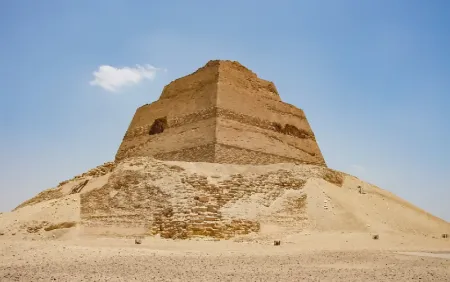
The Meidum Pyramid, built by Sneferu around 2630 BC, was Egypt's first attempt at a true pyramid. Now partially collapsed, it taught vital lessons for later pyramids.
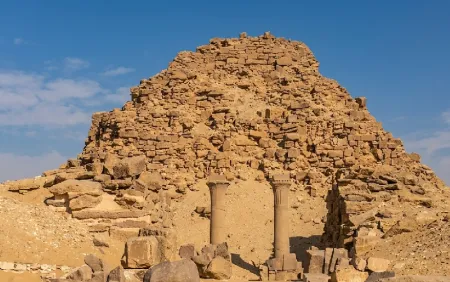
The Pyramid of Sahure, built around 2458 BC at Abusir, recently revealed 8 hidden storage chambers. This Fifth Dynasty monument features advanced architecture.
The Pyramid of Senusret III at Dahshur stands 78m tall with unusual western entrance. Its empty sarcophagus suggests the king may have been buried elsewhere.
Teti's pyramid at Saqqara contains Egypt's oldest religious texts & gold star ceiling. Built 2345 BCE, its well-preserved chambers offer intimate exploration.