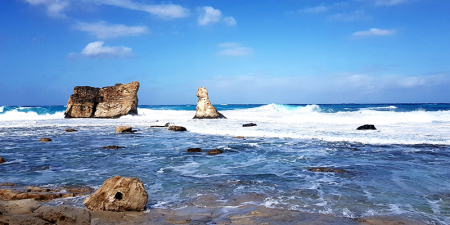
Mediterranean Sea: Coastal Beauty and Ocean Heritage

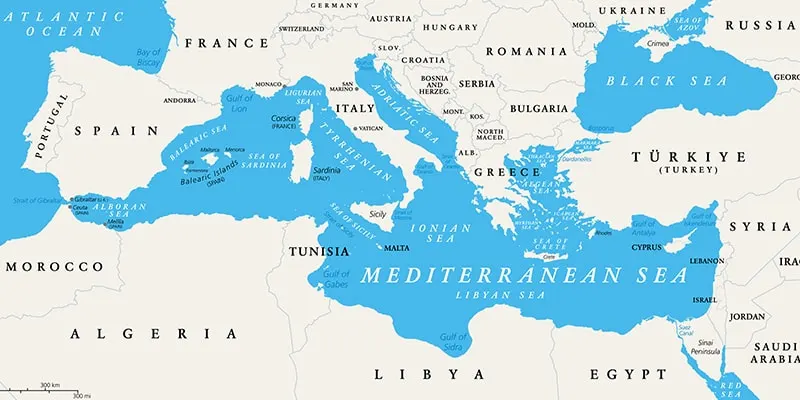
The Mediterranean Sea, the world's largest enclosed sea, stretches over 46,000 km of coastline and covers roughly 2.5 million km² (970,000 sq mi). Despite occupying only 0.7% of the global ocean surface, it has earned the title "the incubator of Western civilization." Its azure waters conceal ancient secrets, with lost cities lying beneath the waves along the Mediterranean coast. From the Strait of Gibraltar to Turkey, the Mediterranean has been central to the development of civilizations that shaped human history. Today, over 220 million tourists visit countries around the Mediterranean Sea annually, often unaware they swim above submerged historical treasures.
The Mediterranean Sea has been a central hub for trade, culture, and migration, connecting countries around the Mediterranean Sea and fostering civilizations along the Mediterranean coast for thousands of years.
The Mediterranean Sea occupies a strategic position between Europe, Asia, and Africa, serving as a crossroads for trade, culture, and human migration for thousands of years. Its irregular shape, dotted with islands, bays, and straits, naturally connected communities along the Mediterranean coast. The sea links to the Atlantic Ocean via the Strait of Gibraltar, to the Black Sea through the Dardanelles and Bosporus, and to the Red Sea via the Suez Canal. These connections made the Mediterranean a hub for trade, communication, and cultural exchange, influencing civilizations across continents.
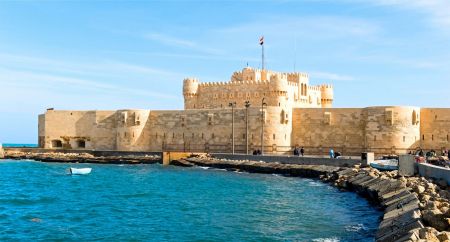
From 3,000 BCE onward, Egyptians, Mesopotamians, Phoenicians, Greeks, and Romans thrived along the Mediterranean coast. Cities like Alexandria, Carthage, and Piraeus became major trading centers, attracting merchants, artisans, and thinkers. The warm climate, rich marine ecosystems, and strategic location contributed to their growth. The Mediterranean coast was ideal for settlements, offering protection, trade opportunities, and access to food resources from the sea.
Its connections to the Atlantic, Black, and Red Seas allowed countries around the Mediterranean Sea to thrive in trade, navigation, and cultural exchange along the Mediterranean coast.
The Mediterranean Sea provided trade routes, natural protection, and rich resources, enabling settlements along the Mediterranean coast in countries around the Mediterranean Sea to prosper.
Natural disasters, geological shifts, and human activity have submerged several ancient cities beneath the Mediterranean Sea. These underwater settlements provide glimpses into civilizations that flourished along the Mediterranean coast.
Yes. Cities such as Heracleion, Pavlopetri, and Baiae remain preserved underwater, revealing life on the Mediterranean coast of various Mediterranean countries.
Get in touch with our local experts for an unforgettable journey.
Plan Your Trip
Most underwater cities along the Mediterranean coast fell due to natural forces intensified by human activity:
Earthquakes, tsunamis, rising sea levels, and human activity caused many Mediterranean coast cities to submerge beneath the Mediterranean Sea.
The Mediterranean also inspires legends of lost civilizations. Plato's account of Atlantis, a kingdom swallowed in a single day and night of misfortune, has captivated imaginations for centuries. While no archaeological evidence confirms Atlantis, real events, like the Santorini volcanic eruption, link historical catastrophes to these myths. Ancient texts often inspired modern discoveries; Heracleion, for instance, remained legendary until its rediscovery in 2000, validating descriptions from Herodotus and other sources.
The submerged cities of the Mediterranean coast act as a vast underwater museum, offering lessons about human resilience and nature's power. Pavlopetri demonstrates urban planning over 5,000 years ago, while Heracleion-Thonis highlights Egypt's maritime trade dominance. Baiae shows that even Rome's luxurious resorts could not withstand geological change.
These cities reveal that natural forces like earthquakes, tsunamis, and rising seas, often worsened by human actions, have repeatedly reshaped the Mediterranean coast. Modern coastal cities face similar risks from climate change and unstable terrain. Current ports may one day join the ranks of submerged settlements if protective measures are not taken.
Scientific advancements in underwater archaeology now allow exploration of these sites without disturbing them, revealing insights into ancient life. Every submerged city underlines the fragility of civilizations, reminding us that human achievements are temporary against the forces of nature.
Countries around the Mediterranean Sea continue to thrive, yet the underwater cities below their waters remind us of history’s lessons. Swimming along the Mediterranean coast, tourists encounter not just beautiful beaches, but ancient streets, temples, and harbors lying quietly beneath the waves. These remnants highlight the region’s rich maritime history and cultural significance.
The Mediterranean Sea remains central to human civilization, connecting Europe, Asia, and Africa through trade, culture, and exploration. Its underwater cities serve as a testament to the ingenuity of past societies and the unstoppable power of nature. By studying these sunken worlds, we better understand our history and the need to protect current coastal settlements against the same forces that submerged them.
The Mediterranean coast, with its unique geography and historical richness, continues to fascinate scientists, explorers, and travelers alike. Its waters tell stories of flourishing civilizations, epic trade, and legendary myths, offering a reminder that the sea is not just a body of water, but a keeper of human history.
Reveal the mysteries buried beneath the Mediterranean Sea
No verified archaeological evidence exists, but legends like Atlantis were inspired by real Mediterranean disasters.
They highlight the need to protect coastal settlements against rising seas, earthquakes, and tsunamis along the Mediterranean coast.
It connects countries around the Mediterranean coast, preserves underwater heritage, and continues shaping trade, tourism, and culture.
Discover the Eastern Desert Egypt’s rugged mountains, rich history, mineral wealth, and unique desert ecosystem.
Dive into the Mediterranean Sea to discover its rich waters, vibrant coastlines, and underwater heritage.
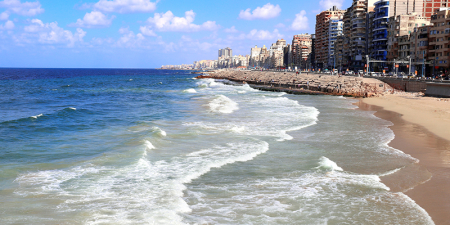
"Marsa Matrouh Egypt is a coastal paradise with turquoise waters, white sandy beaches, Agiba Marsa Matrouh, and top resorts for an unforgettable getaway."