Mummies Egyptian Museum

The Egyptian Museum's mummy collection offers a fascinating glimpse into ancient civilization. The Museum of Egyptian Antiquities, known simply as the Egyptian Museum, holds the world's largest collection of Egyptian antiquities. More than 120,000 items tell stories spanning thousands of years of history. This remarkable museum, 122 years old and located in Cairo's Tahrir Square, stands as one of Africa's largest art museums.
The museum's most treasured possessions are its ancient mummies, which made headlines not long ago. A grand procession moved 22 mummies — 18 kings and four queens — from their old home to a new museum location.
Scientists found these royal mummies in the ruins of ancient Thebes (modern-day Luxor) during the late 19th century. They traveled in special vehicles with shock absorbers to protect their delicate remains. The museum's mummy room shows how ancient Egyptians kept bodies intact for thousands of years. Howard Carter found the famous mummy of Pharaoh Tutankhamun in 1922. The oldest known Egyptian mummy belongs to a man named Hekashepes, who lived nearly 4,300 years ago. These preserved remains served a deeper purpose than science - they helped the body reunite with the soul and enter the afterlife.
Egyptian mummies are displayed at the Egyptian Museum in Tahrir Square, Cairo, and the National Museum of Egyptian Civilization (NMEC). In April 2021, 22 royal mummies (18 kings and 4 queens) were moved from the Egyptian Museum to NMEC's Royal Mummies Hall in the "Pharaohs' Golden Parade."
The Museum of Egyptian Antiquities, known as the Egyptian Museum, holds the world's largest collection of Egyptian antiquities with more than 120,000 items. This 122-year-old museum located in Cairo's Tahrir Square stands as one of Africa's largest art museums.
Ancient Egyptians began the art of mummification around 3500 BCE and spent over 2,000 years perfecting the preservation process. This sacred ritual was woven deeply into Egyptian religious beliefs about eternal life and the afterlife.
The ancient Egyptians spent over 2,000 years perfecting the art of mummification, which began around 3500 BCE. Their deep belief in eternal life drove this unique preservation method. The soul's survival depended on keeping the body intact.
Mummification went far beyond a scientific procedure. This sacred ritual was woven deeply into Egyptian religious beliefs. Death meant a transition to another realm of existence to the ancient Egyptians. They saw the soul as having nine distinct parts. Three spiritual elements stood out as most essential: the ka (the person's double), the ba (soul that could travel between worlds), and the akh (transformed spirit).
The process lasted exactly 70 days. Skilled priests removed internal organs and dried the body with natron, a natural salt. They wrapped it carefully in hundreds of yards of linen.
Priests chanted spells and tucked protective amulets between the wrappings during this process. The heart stayed in the body because Egyptians saw it as the source of intelligence.
The "Opening of the Mouth" ceremony stood as the most crucial ritual. Priests used special instruments to touch different parts of the mummy. This restored the senses needed for the afterlife.
The Egyptian museum's mummies room displays this precise preservation science today.
Visitors can see mummified animals like bulls, crocodiles, cats, and falcons - creatures sacred to specific gods.
The mummification process lasted exactly 70 days. Skilled priests removed internal organs, dried the body with natron (a natural salt), wrapped it carefully in hundreds of yards of linen, chanted spells, and tucked protective amulets between the wrappings.
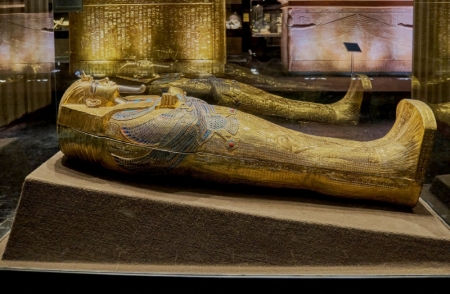
The mummies room at the Egyptian museum holds remarkable stories behind its glass cases, where ancient individuals continue to fascinate visitors today. The most significant archeological find came in 1922 when Howard Carter and his Egyptian team - Ahmed Gerigar, Gad Hassan, Hussein Abu Awad, and Hussein Ahmed - found that there was an intact royal tomb. This burial site belonged to Tutankhamun and had survived with minimal looting, which helped preserve his iconic funerary mask and coffin until their dramatic unveiling in February 1924.
The story of Seti I's mummy adds another intriguing chapter to Egyptian history. Scientists found his remains in 1881 at the Royal Cache at Deir el-Bahari. His body remained in remarkable condition, revealing he died suddenly before reaching forty. His heart rested on the right side instead of the traditional left position, showing he might have suffered from heart disease.
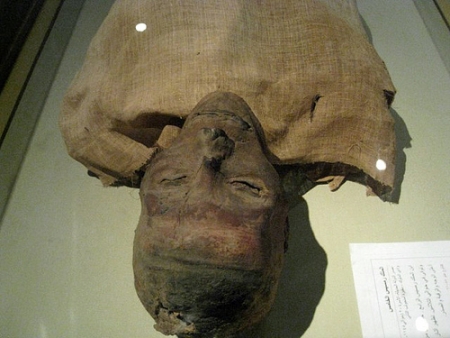
The sort of thing I love about Egyptian mummies comes from the mysterious "Screaming Mummy," also known as Unknown Man E. This body lay wrapped in ritually unclean sheepskin with bound hands and feet, its face frozen in an eternal scream. Many experts think this could be Prince Pentawere, who plotted to kill his father Pharaoh Ramesses III and later took his own life.
A breakthrough came in 2007 when scientists identified Queen Hatshepsut's mummy through DNA testing and a matching molar tooth. This discovery finally revealed the face of the prominent female pharaoh who ruled Egypt with remarkable success in the 15th century B.C.
The mysterious "Screaming Mummy," also known as Unknown Man E, lay wrapped in ritually unclean sheepskin with bound hands and feet, its face frozen in an eternal scream. Many experts believe this could be Prince Pentawere, who plotted to kill his father Pharaoh Ramesses III.
Get in touch with our local experts for an unforgettable journey.
Plan Your Trip
Cairo witnessed a historic spectacle in April 2021 when 22 royal mummies moved through the city's streets in an event called the "Pharaohs' Golden Parade". The grand procession relocated 18 kings and 4 queens from their century-old home at the Egyptian Museum to the National Museum of Egyptian Civilization (NMEC).
The transportation of these royal remains required exceptional care. Each mummy traveled in a specially designed nitrogen-filled container that protected against humidity, bacteria, and environmental damage. Decorated vehicles, reminiscent of the boats that once carried pharaohs to their tombs, transported these precious artifacts. The vehicles featured shock absorbers to ensure smooth movement. The authorities took additional precautions by repaving the parade route.
The Royal Mummies Hall at NMEC now displays 20 of these ancient rulers in state-of-the-art conditions. The hall's design creates an immersive atmosphere that reminds visitors of walking through the Valley of the Kings, the original resting place of many pharaohs. This remarkable collection represents rulers from the 17th to the 20th dynasties and includes renowned figures like Ramses II, Queen Hatshepsut, and Thutmose III.
Climate-controlled cases house each mummy and maintain precise temperature and humidity levels. The hall enhances visitors' learning through educational materials that detail the mummification process and highlight these rulers' contributions to ancient Egypt's history.
Egyptian mummies are remarkable time capsules that connect us directly to an ancient civilization's beliefs, practices, and people. These preserved remains tell stories spanning thousands of years and offer glimpses into the lives of pharaohs and ordinary Egyptians. Ancient Egyptian priests developed preservation techniques that definitely worked - bodies interred over 4,000 years ago remain recognizable today.
Royal mummies have found a new home at the National Museum of Egyptian Civilization. This carefully planned relocation will give a better way to care for these ancient rulers while keeping them available to curious visitors worldwide. State-of-the-art display cases now protect them from environmental damage and extend their remarkable preservation for future generations.
Each wrapped figure holds a unique story. Tutankhamun, the boy king's tomb escaped major looting. Seti I had an unusually positioned heart that hints at medical conditions. The mysterious "Screaming Mummy" might have been a disgraced prince who took his own life. Modern DNA testing helped identify Queen Hatshepsut, who finally received recognition after centuries of obscurity.
Egyptian mummification meant more than just preserving flesh. The complex rituals, spells, and ceremonies reflected deeply held spiritual beliefs about life after death. Careful placement of amulets, preservation of specific organs, and the vital "Opening of the Mouth" ceremony prepared the deceased for their trip through the afterlife.
These silent witnesses to history fascinate scholars and tourists alike. Museums housing them serve as scientific research centers and respectful resting places for those who once ruled one of history's greatest civilizations. Though separated from their original tombs, these ancient Egyptians would appreciate that their wish for immortality has been granted.
Howard Carter and his Egyptian team—Ahmed Gerigar, Gad Hassan, Hussein Abu Awad, and Hussein Ahmed—discovered Tutankhamun's intact royal tomb in 1922. The burial site had survived with minimal looting, preserving his iconic funerary mask and coffin until their dramatic unveiling in February 1924.
The oldest known Egyptian mummy belongs to a man named Hekashepes, who lived nearly 4,300 years ago. This discovery demonstrates the incredible preservation techniques ancient Egyptians developed thousands of years ago.
Ancient Egyptians believed deeply in eternal life and that the soul's survival depended on keeping the body intact. Death meant a transition to another realm, and preserving the body helped it reunite with the soul and enter the afterlife successfully.
Ancient Egyptians saw the soul as having nine distinct parts. Three spiritual elements were most essential: the ka (the person's double), the ba (soul that could travel between worlds), and the akh (transformed spirit that existed in the afterlife).
The "Opening of the Mouth" ceremony was the most crucial mummification ritual. Priests used special instruments to touch different parts of the mummy, restoring the senses needed for the afterlife and completing the transformation process.
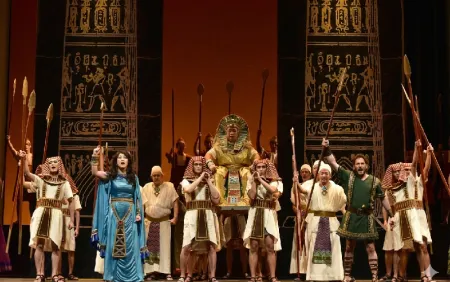
Opera Aida premiered in Cairo 1871, telling a timeless love story in ancient Egypt. Performed at Pyramids & temples, Verdi's masterpiece captivates audiences.
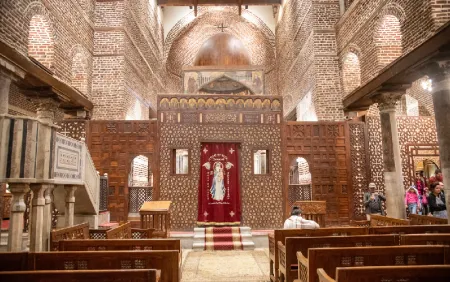
Saints Sergius and Bacchus Church were built to be dedicated to two Martyrs (Sergius and Bacchusand) traditionally believed to have been built on the spot where the Holy Family rested at the end of their journey into Egypt.
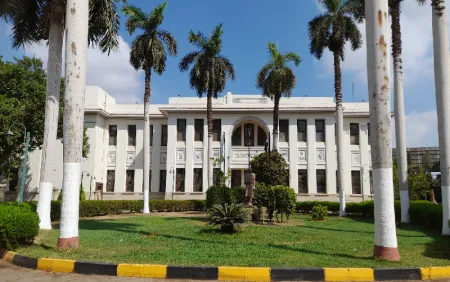
Cairo's Agricultural Museum, established 1938, features 7 halls showcasing 7,000 years of Egyptian farming history and ancient agricultural artifacts.
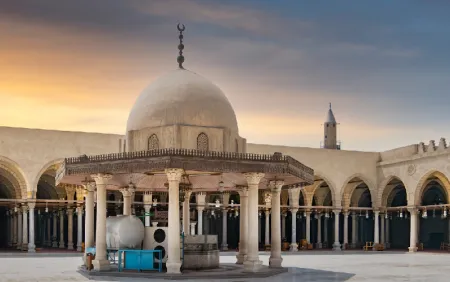
Fustat, founded 641 CE, was Egypt's first Islamic capital with 200,000 residents. This Silk Road trade hub beneath Old Cairo was deliberately destroyed in 1168.
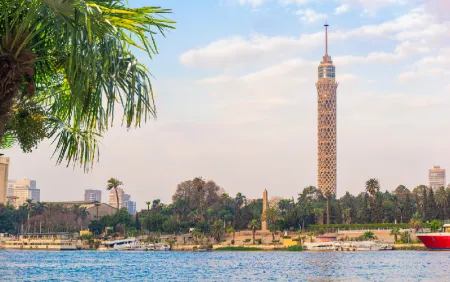
Cairo Tower's 187m lotus design offers 360° views & rotating restaurant. Discover hidden terrace & local secrets for Egypt's iconic landmark built 1956-1961.
Explore Birqash Camel Market in Cairo, where tradition and culture meet. Witness camel trading, local life, and a unique Egyptian market experience.
El Mosky is Cairo's authentic medieval marketplace from Ayyubid era. Serves locals with genuine prices, traditional crafts & spices. Metro accessible.
Learn about King Tutankhamun treasures and explore the secrets of his tomb, royal rituals, and preserved artifacts.
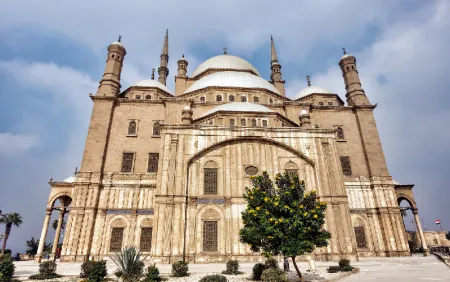
The Mohamed Ali Mosque is an Ottoman masterpiece built 1832-1857 inside Cairo Citadel. Called the Alabaster Mosque for its distinctive walls, it features a 52-meter central dome.
Egyptian mummies at Cairo's museums include 22 royal pharaohs moved in 2021 to NMEC. Features Tutankhamun, Hatshepsut, Seti I and 4,300-year-old preservation techniques.
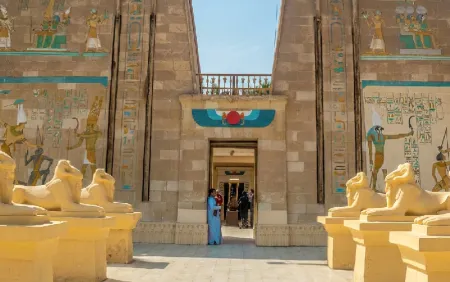
Pharaonic Village in Cairo, founded 1984, is a 30-acre living museum with 12 museums, King Tut's tomb replica & live ancient Egyptian demonstrations.
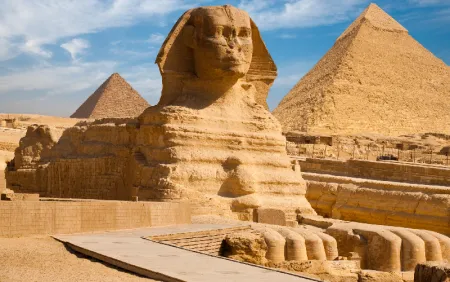
Great Sphinx of Giza, carved 2500 BCE, measures 73m long and 20m high. Contains three tunnels, hidden chambers & traces of red, blue & yellow paint.
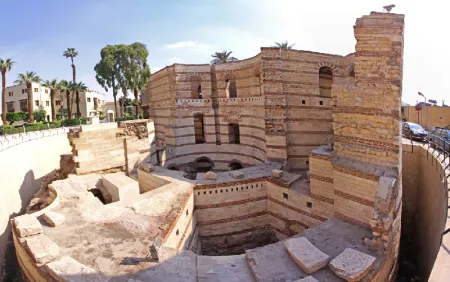
Babylon Fortress in Old Cairo, built 300 AD by Diocletian, features 10m Roman towers, Coptic churches, Ben Ezra Synagogue & museum with 16,000 artifacts.
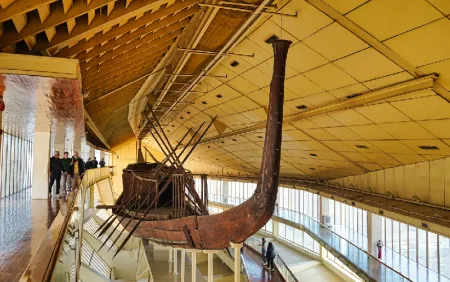
The Khufu Ship is a 4,600-year-old solar boat measuring 43.4 meters long. Built without nails using mortise-and-tenon joints, it's displayed at Grand Egyptian Museum.
Experience the Valley Temple of Khafre like never before. Explore its purpose, design, and must-see highlights—read the full guide now!