Cairo International Airport: Overview and Travel Information

Cairo International Airport commands the African continent's aviation landscape as its busiest aerial gateway, while securing its position as the Middle East's ninth most frequented hub. This remarkable transportation nexus welcomed 28,775,000 passengers throughout 2024, cementing its status as Egypt's paramount international portal. Aviation professionals recognize this facility through its designated IATA code CAI and ICAO identifier HECA, marking Egypt's largest and most active airport.
The ancient district of Heliopolis, historically revered as the "sun city," provides the geographical foundation for this aviation marvel. Positioned strategically 15 kilometers northeast of Cairo's bustling commercial core, the airport occupies a commanding presence within the metropolitan landscape. This colossal facility extends across 37 square kilometers of meticulously engineered terrain, encompassing three parallel runways whose engineering specifications accommodate the world's most sophisticated aircraft, including the magnificent A380 superjumbo [-4]. Four distinct terminal structures constitute this intricate transportation ecosystem, each contributing to the airport's operational magnificence.
Current evaluations assign Cairo International Airport a 3-Star classification, reflecting assessments across facility quality, passenger comfort, cleanliness standards, commercial offerings, culinary selections, staff performance, and security protocols. Nevertheless, recent enhancements have yielded notable improvements, particularly within Terminals 2 and 3, where passengers now encounter substantially elevated service standards across critical operational domains.
The IATA code for Cairo International Airport is CAI, the main international gateway of Egypt, handling millions of passengers each year.
Cairo International Airport is located 15 km northeast of downtown Cairo in the historic Heliopolis district, strategically connecting the city to global destinations.
Cairo International Airport's quadruple terminal configuration represents six decades of aviation evolution, each structure bearing witness to Egypt's expanding role within global air travel. Terminal 1, inaugurated during the pivotal year of 1963, operates through a sophisticated hall system where Hall 1 orchestrates departure procedures while Hall 3 manages the intricate choreography of international arrivals. Terminal 2 emerged from extensive reconstruction efforts completed in 2016, now functioning in seamless coordination with Terminal 3 to amplify the airport's operational prowess.
Terminal 3 exemplifies contemporary aviation architecture, encompassing twice the combined footprint of its predecessors while maintaining capacity for 11 million annual passengers. This engineering achievement incorporates 23 meticulously designed gates, including two specifically configured for A380 operations, alongside 110 check-in stations and 76 immigration processing points. The specialized Seasonal Flights Terminal, commissioned in 2011, demonstrates Egypt's commitment to religious tourism, accommodating 3.2 million pilgrimage passengers annually.
Sophisticated transit infrastructure connects these architectural achievements through an automated MiniMetro system, seamlessly linking Terminals 1, 2, and 3 with the AirMall and parking installations. Terminal 1's distinct positioning, approximately two kilometers from the primary complex, necessitates dedicated shuttle connectivity.
Each terminal houses carefully curated amenities spanning executive lounges, duty-free emporiums, culinary establishments from casual to formal dining, financial institutions, medical stations, and automotive rental services. Discerning passengers may access the distinguished Ahlan service, providing expedited VIP protocols through immigration and security checkpoints. This meticulously orchestrated service ecosystem ensures that Egypt's premier gateway delivers exceptional hospitality across all operational zones.
The airport has four terminals: Terminal 1, Terminal 2, Terminal 3, and the Seasonal Flights Terminal, each designed for specific passenger needs and flight operations.
Terminals feature executive lounges, duty-free shops, restaurants, medical stations, immigration counters, check-in stations, and specialized gates for large aircraft like the A380.
Yes, the airport offers Ahlan VIP service, providing expedited immigration, security clearance, and access to exclusive lounges for a premium travel experience.
Cairo International Airport's ground transportation network demonstrates sophisticated urban planning through its expansive vehicular accommodation systems. The meticulously designed parking infrastructure encompasses 86,395 square meters of carefully allocated space, orchestrating the movement of 3,612 vehicles across ten strategically positioned lots. Travelers requiring extended parking duration benefit from the multi-storey garage facility, architecturally positioned between Terminals 1 and 3, which houses 3,000 automobiles within its engineered structure.
Three distinct taxi categories serve passengers beyond terminal boundaries, each representing different service philosophies. The traditional black and white fleet operates through direct fare negotiation protocols, while contemporary white vehicles employ metered systems calculating €0.09 (EGP 5) base charges plus €0.04 (EGP 2.50) per kilometer traveled. Premium yellow taxi services extend enhanced comfort standards at correspondingly elevated pricing structures.
Public transportation routes provide economical connectivity through three primary corridors: Bus 400 delivers 50-minute journeys at €0.18, Bus 356 completes 35-minute passages for €0.36, and Bus 1138 offers 60-minute connections at €0.18. These services maintain consistent schedules from Terminal 1's dedicated bus station, operating continuously from early dawn through 23:00 hours.
Accessibility considerations reflect thoughtful architectural planning for travelers experiencing mobility challenges. The comprehensive accommodation framework includes gradient ramps, vertical elevators, automated escalators, complimentary wheelchair assistance, prioritized boarding procedures, and specially designed check-in facilities.
International car rental corporations maintain continuous 24-hour operations through offices distributed across all terminal facilities. Limousine services complement these options through fixed-rate structures determined by destination parameters and vehicle classifications, ensuring door-to-door transportation solutions.
Passengers can choose taxis (black/white, metered, or premium yellow), public buses (Bus 400, 356, 1138), limousine services, car rentals, or shuttle services connecting the terminals.
Get in touch with our local experts for an unforgettable journey.
Plan Your TripCairo International Airport emerges as an extraordinary testament to modern aviation engineering and Egypt's strategic position within global transportation networks. This magnificent infrastructure represents decades of meticulous planning and architectural evolution, where ancient Egyptian soil now supports one of Africa's most sophisticated aerial gateways. The convergence of historical significance and contemporary innovation creates a remarkable aviation achievement that commands respect across international aviation circles.
The intricate network of passenger services, operational facilities, and ground transportation systems demonstrates the careful orchestration required to manage such enormous passenger volumes. Each component—from the expansive terminal architecture to the specialized ground handling equipment—reflects the precision engineering necessary for world-class aviation operations. The facility's continuous enhancement programs signal Egypt's commitment to maintaining its position among the elite aviation hubs of the developing world.
Passengers traversing this remarkable facility encounter more than mere transportation infrastructure; they experience a carefully crafted system designed to facilitate seamless international connectivity. The airport's strategic location within the Mediterranean-Africa-Middle East corridor positions it as a critical junction for global travel patterns, while its operational capabilities ensure reliable service for diverse passenger requirements.
Felucca boats offer an authentic way to explore Egypt, with peaceful felucca rides along the Nile from Aswan to Luxor, connecting travelers to ancient river traditions through wind-powered sailing.
Plan your Egyptian adventure effortlessly! Learn how to apply for an Egypt visa or Egypt eVisa, meet all Egypt entry requirements, and avoid last-minute rejections with our complete guide.
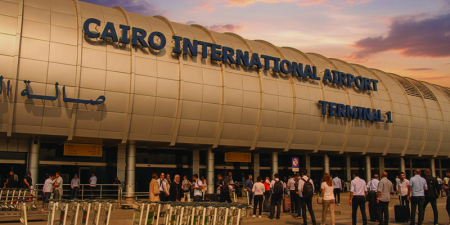
Cairo International Airport, Egypt's busiest aviation hub, serves millions of passengers annually, offering modern terminals, world-class facilities, and seamless connectivity to Cairo and beyond.
Egypt's New Year celebrations blend ancient traditions with modern festivities. Visit the Pyramids, enjoy Nile cruises & vibrant celebrations in Cairo.