Khafre Pyramid: The Second Largest Pyramid of Giza
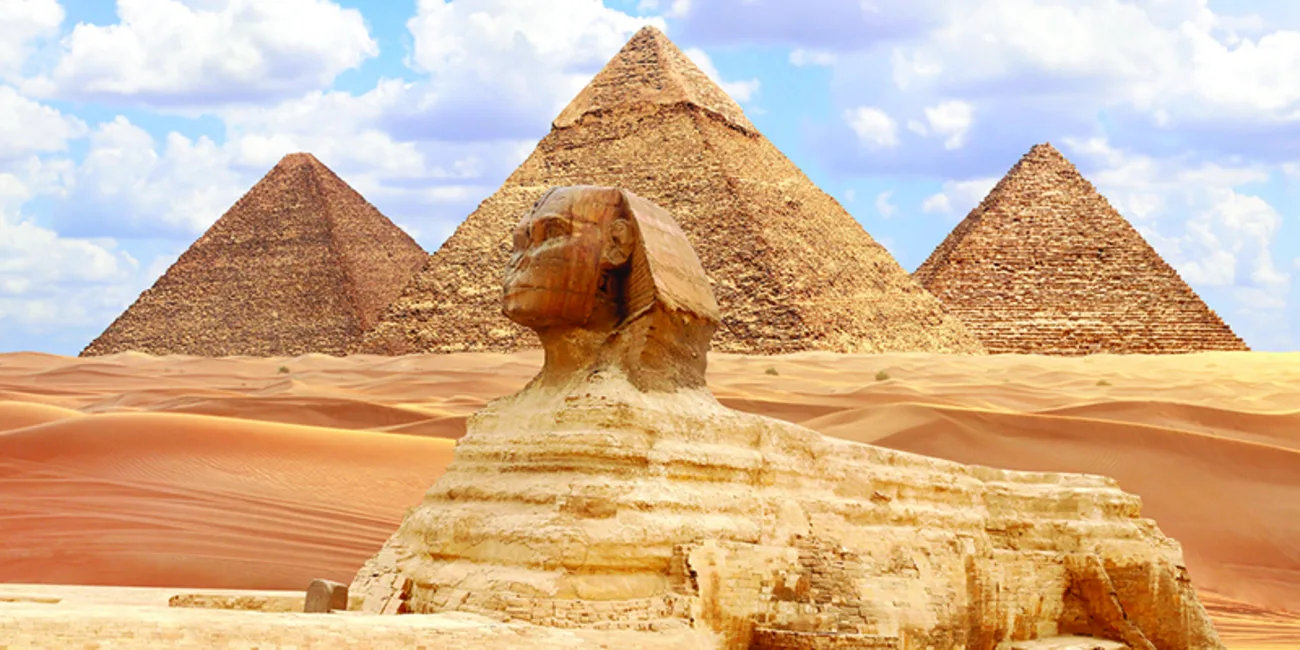
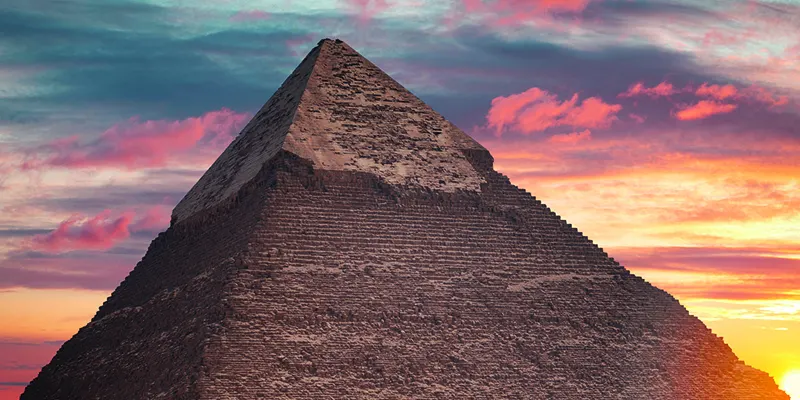
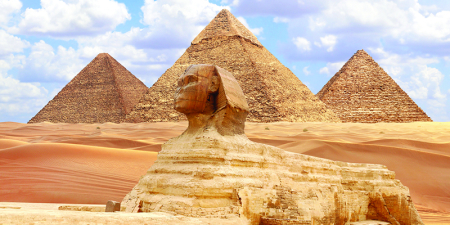
The Khafre Pyramid stands majestically at 136.4 meters (448 ft), making it Egypt's second largest pyramid and the middle structure among the three Ancient Egyptian Pyramids of Giza. Its elevated foundation—10 meters (33 ft) higher than Khufu’s pyramid—creates an optical illusion, making it appear taller to visitors despite being slightly shorter. Pharaoh Khafre (also known as Chefren) constructed this masterpiece during the Fourth Dynasty, ruling from around 2558–2532 BC. Originally, the pyramid reached 143.5 meters (471 ft) with a base of 215.25 meters (706 ft) per side, covering roughly 11 acres. Some original limestone casing still survives at the apex, providing a glimpse of the pyramid’s initial splendor.
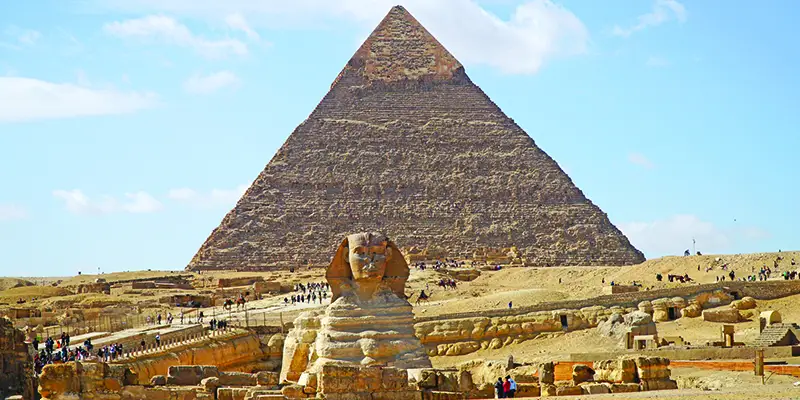
Khafre’s pyramid is part of a larger complex that includes the iconic Great Sphinx, a Mortuary Temple, and a Valley Temple. This ensemble remains one of the most complete and well-preserved pyramid sites, showcasing the pharaoh’s ambition and architectural ingenuity.
The Khafre Pyramid is on the Giza Plateau, near Cairo, Egypt, and forms part of the three main pyramids of Giza.
Pharaoh Khafre (Chefren) built it during the Fourth Dynasty, around 2558–2532 BC
Originally 143.5 meters (471 ft), it now measures 136.4 meters (448 ft), making it the second tallest pyramid at Giza.
Second tallest but appears taller
Despite being second in height, the pyramid looks taller due to its elevated location and steeper construction angle of 53 degrees compared to Khufu's 51.5 degrees. Modern measurements confirm Khafre's pyramid now measures 136.4 meters (448 ft), while Khufu's currently stands at 138.5 meters (454 ft). The visual trick has often misled early explorers and Egyptologists.
Only pyramid with casing stones at the top
Khafre’s pyramid is unique among the Giza pyramids for retaining some original limestone casing at its summit. These casing stones survived due to their placement on the peak, which was harder to access and remove than the base, offering insight into the gleaming white appearance of the pyramids when first built.
Built on higher ground than Khufu's
By positioning the pyramid on bedrock 10 meters higher than Khufu’s, the builders amplified its visual impact while reducing the number of stones needed. The combination of elevated foundation and steeper angle contributes to its impressive presence on the plateau.
Its higher foundation and steeper construction angle create an optical illusion, making the pyramid seem taller than Khufu’s, despite being slightly shorter.
It retains some original limestone casing at the top, sits on higher ground than Khufu’s pyramid, and features a simpler internal layout than Khufu’s.
The interior of the Khafre Pyramid demonstrates a simple yet effective design, reflecting the ingenuity of ancient Egyptian architects:
The pyramid features two northern entrances: the lower at ground level and the upper 11.54 meters (38 ft) above. Both are 12 meters (39 ft) east of the centerline, a peculiar design choice debated by Egyptologists. Some suggest a construction plan change; others argue the lower entrance would have been within the stone structure if the pyramid had been larger.
The lower entrance leads through a carved passage into a subsidiary chamber measuring 34 by 10 feet with a pointed ceiling. This chamber, lacking a sarcophagus, likely stored offerings or burial equipment. The passage continues upward, meeting the upper entrance corridor and leading to the main burial chamber, showing a simpler internal layout compared to Khufu's pyramid.
The burial chamber measures 14.15 by 5 meters (46.4 by 16.4 ft) with a gabled limestone roof. The sarcophagus, carved from a solid granite block and partially set into the floor, distinguishes itself from others where sarcophagi rest entirely above the floor. A nearby pit may have held the king’s canopic chest for storing mummified organs. Giovanni Belzoni found only animal bones, likely from a bull, in 1818, as Khafre’s mummy and treasures had long vanished.
Get in touch with our local experts for an unforgettable journey.
Plan Your Trip
Khafre’s pyramid complex contains several key structures beyond the main pyramid, reflecting royal ambition and religious practices:
Located next to the pyramid's eastern face, the Mortuary Temple set a new standard for Old Kingdom temples. It included an entrance hall, columned court, five niches for pharaoh statues, five storage chambers, and an inner sanctuary. Originally, it displayed over fifty life-sized statues of the king, some later removed by Ramses II.
A 494-meter causeway connects the pyramid to the Valley Temple, one of Egypt's best-preserved ancient structures. Constructed with massive limestone blocks and red granite, its white alabaster floors and T-shaped halls supported by granite pillars once held 23 statues of Khafre. These statues played a key role in purification rituals prior to burial.
The most significant statue—a seated Khafre statue—was discovered buried beneath the Valley Temple floor. Carved from diorite, it depicts the king on a lion throne, adorned with the "sema-tawy" symbol representing the unification of Upper and Lower Egypt. A protective Horus falcon encircling the pharaoh’s headdress makes this sculpture unique.
Unlike Khufu’s complex, where boat pits contained actual dismantled ships, Khafre’s pits were symbolic, representing the king’s journey to the afterlife. These empty pits reflect ritualistic rather than practical use, highlighting differences between the complexes.
The famous King Khafre statue was discovered buried under the Valley Temple floor, carved from hard diorite on a lion throne, displaying the pharaoh’s likeness and royal symbols.
The complex includes the Mortuary Temple, Valley Temple, and symbolic boat pits, all remarkably preserved and showcasing ancient Egyptian architecture and rituals.
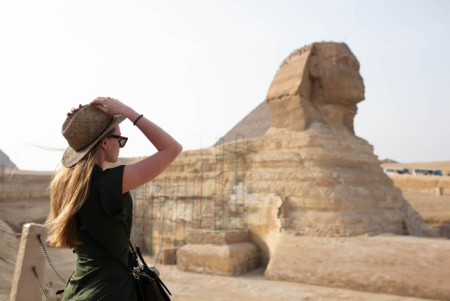
The Great Sphinx, located next to Khafre's causeway, is one of humanity’s most iconic monuments. This massive limestone statue combines a lion’s body with a human head, measuring 73 meters (240 ft) long and 20 meters (66 ft) high.
Archaeological evidence strongly ties the Sphinx to Khafre’s complex. The limestone blocks in the Sphinx Temple walls match the geological layers of the Sphinx itself, indicating contemporaneous construction. The diorite Khafre statue shares facial features with the Sphinx, further reinforcing this connection.
The Sphinx blends royal imagery with symbolic meaning: the lion’s body represents strength, while the human face likely depicts Khafre. Wearing the nemes headdress and the uraeus (cobra emblem), the statue conveyed royal power and ties to sun worship, becoming a lasting symbol throughout Egyptian history.
The Sphinx Temple, with granite pillars and sanctuaries, aligns with solar events such as equinoxes and solstices, reflecting ancient Egyptian astronomical knowledge. During the summer solstice, the sun sets between Khufu’s and Khafre’s pyramids, emphasizing the sophistication of the complex’s design.
The Khafre Pyramid embodies ancient Egyptian engineering brilliance and royal ambition. Its elevated location, steeper angle, and surviving limestone casing at the summit distinguish it from Khufu’s Great Pyramid.
Visitors marvel at the complex’s completeness: the Mortuary Temple, Valley Temple, symbolic boat pits, and the King Khafre statue all preserve the pharaoh’s legacy. The Great Sphinx, thought to bear Khafre’s likeness, continues to inspire awe. The pyramid’s construction and its astronomical alignments highlight the advanced knowledge of ancient architects and priests.
Today, the Khafre Pyramid remains a testament to ancient Egypt’s ingenuity and cultural sophistication. The complex offers modern visitors a glimpse into 4,500-year-old civilization, preserving royal power, architectural mastery, and spiritual symbolism for generations to come.
Canopic jars were vital in ancient Egypt, preserving organs and symbolizing rebirth. Explore their history, the Four Sons of Horus, and modern discoveries.
Journey along the Holy Family in Egypt's path. Learn about the historical route, significant sites, and the enduring legacy they left behind.
The Khufu Pyramid, located on the Giza Plateau in Egypt, is the largest and most famous pyramid ever built. Constructed around 2600 BC, it reflects ancient Egyptian engineering excellence, deep religious beliefs, and the divine power of Pharaoh Khufu.
Ramesses IV, a New Kingdom pharaoh, left a lasting legacy through ambitious building projects and a uniquely preserved mummy. His tomb KV2 reveals key insights into ancient Egyptian beliefs about death and eternity.
Explore the Khafre Pyramid, Egypt’s second largest Giza pyramid. Discover its unique architecture, the Great Sphinx, Mortuary & Valley Temples, and King Khafre statue in this iconic ancient Egyptian complex.
The Djoser Pyramid in Saqqara, Egypt, is the world’s first Step Pyramid, built for Pharaoh Djoser during the Third Dynasty. Designed by Imhotep, it revolutionized stone construction and ancient Egyptian burial practices, combining ceremonial, symbolic, and functional elements in a single monumental complex.
Menkaure Pyramid in Giza, Egypt, is the smallest of the three main pyramids, featuring unique dual-material casing, complex chambers, mortuary temple, and iconic King Menkaure statues
Discover how the Hathor Temple at Dendara connects ancient Egyptian religion with the stars and cosmos.