Eastern Desert: Geography, History and Environment

The Eastern Desert is one of the most distinctive regions within the desert of Egypt, covering nearly 223,000 square kilometers. Despite its vast size and rich resources, it is sparsely populated today, with fewer inhabitants than at any point in the last 6,000 years. Located east of the Nile Valley and stretching toward the Red Sea, the Eastern Desert Egypt presents a dramatic landscape shaped by mountains, wadis, and extreme climatic conditions.
This desert rises sharply from the Nile’s eastern bank and extends between 80 and 137 kilometers toward the Red Sea Hills. Unlike Egypt’s Western Desert, it contains no permanent oases, yet it has played a crucial role in Egypt’s history due to its mineral wealth, trade routes, and environmental diversity.
It is rich in minerals, historical trade routes, and played a key role in ancient Egyptian economy.
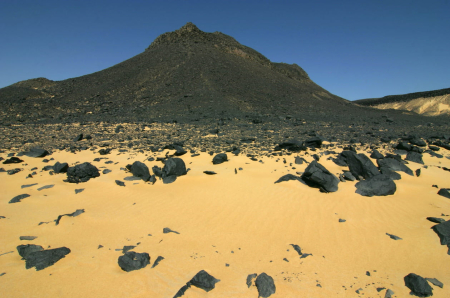
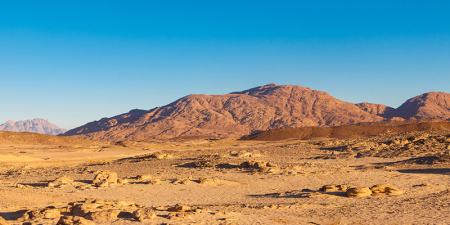
The Eastern Desert occupies about 21% of Egypt’s total land area. It lies between the Nile River and the Red Sea, extending southward into Sudan and parts of northeast Africa. Its terrain is far more rugged than other regions of the desert of Egypt, characterized by steep mountain ranges and deeply carved valleys.
Red Sea Hills and Mountain Ranges
Wadis and Plateaus
The Eastern Desert covers about 223,000 square kilometers, around 21% of Egypt’s land area.
Unlike the Western Desert, it has mountains, wadis, and no permanent oasis cultivation.
While the Western Desert is known for vast sand seas and oases, the Eastern Desert is defined by elevation, rocky terrain, and mineral-rich mountains. Agriculture is nearly impossible due to the lack of groundwater suitable for cultivation. This contrast highlights why settlement patterns developed differently across Egypt’s deserts.
The Eastern Desert Egypt experiences one of the harshest climates on Earth. Annual rainfall rarely exceeds 25 millimeters, and in some areas drops below 5 millimeters. Summer temperatures can reach 42°C, while winter nights may fall to around 10°C.
Ancient Wet Periods
Modern Climate Challenges
Yes, but rainfall is extremely limited, usually less than 25 millimeters per year.
As the region became drier, populations moved toward the Nile Valley for reliable water sources.
Get in touch with our local experts for an unforgettable journey.
Plan Your TripThe Eastern Desert has long been a center of mining activity. Its mineral wealth made it economically vital to ancient Egypt and continues to influence national development today.
Gold, Emeralds, and Minerals
Ancient Mining Techniques
Trade Routes
Resources include gold, emeralds, phosphates, manganese, and other valuable minerals.
Throughout history, gold from the Eastern Desert Egypt sustained Egypt’s wealth and power, particularly during the second millennium BCE. Today, the Egyptian government continues to invest in the region, including the development of the “Golden Triangle” between Qena, Safaga, and Quseir. Mining remains a promising sector that contributes to national economic growth and sustainable development within the desert of Egypt.
Despite extreme conditions, the Eastern Desert supports a surprisingly diverse ecosystem.
Vegetation
Wildlife
Adaptations and Conservation
The Eastern Desert is one of the most complex and historically significant regions within the desert of Egypt. Its rugged mountains, intricate wadi systems, and mineral wealth set it apart from other deserts. Once a green savannah, it later became a center for mining, trade, and economic power that helped shape ancient Egyptian civilization.
Today, the Eastern Desert Egypt remains vital despite its harsh environment. Its biodiversity demonstrates nature’s remarkable ability to adapt, while its resources continue to influence Egypt’s future. Preserving this unique region is essential, not only for its economic value but also for its environmental and historical importance.
Step into the Eastern Desert Egypt and see how history, nature, and mountains tell their story.
Egypt is home to several deserts, including the Eastern Desert, the Western Desert, the Sinai Desert, and smaller coastal desert areas along the Mediterranean and Red Sea.
Egypt has three main deserts: the Eastern Desert, the Western Desert, and the Sinai Desert, which together form most of the desert of Egypt.
Discover the Eastern Desert Egypt’s rugged mountains, rich history, mineral wealth, and unique desert ecosystem.
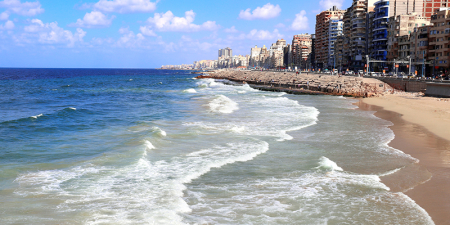
Dive into the Mediterranean Sea to discover its rich waters, vibrant coastlines, and underwater heritage.
"Marsa Matrouh Egypt is a coastal paradise with turquoise waters, white sandy beaches, Agiba Marsa Matrouh, and top resorts for an unforgettable getaway."