Moses Springs
Moses Springs trail commands distinction as Pinnacles National Park's most celebrated hiking achievement, presenting a meticulously crafted 2.4-mile journey that veteran trail enthusiasts and dedicated naturalists unanimously acclaim as "the coolest 2-mile hike" available. This precisely engineered route defies conventional short-distance expectations, concentrating an remarkable spectrum of geological phenomena within its compact boundaries.
The trail's modest 311-foot elevation profile ensures broad accessibility while preserving its dramatic visual rewards. Those who venture into the spring of moses territory encounter soaring volcanic cliff faces, shadowed talus chambers, confined lithic corridors, and expansive panoramic overlooks—all contained within a singular expedition. The pathway showcases magnificent boulder fields, seasonal botanical displays, imposing rhyolitic spires, and exceptional opportunities for observing both California condors and endemic bat populations.
Pinnacles' storied heritage traces back to its 1908 National Monument designation under Theodore Roosevelt's administration, culminating in its elevation to full National Park status in 2012—a testament to its geological significance among climbing specialists and backcountry experts.
The Moses Spring route particularly exemplifies this natural heritage, with approximately 75% of its length providing protective canopy through cave systems, beneath massive talus formations, and within deep canyon recesses. This careful balance delivers an authoritative introduction to the park's most distinguished characteristics while maintaining accessibility across diverse experience levels.
Moses Springs Trail is located in Pinnacles National Park in California, USA. Access originates at the Moses Spring Parking Area adjacent to the Bear Gulch Nature Center, reached through Pinnacles National Park's East Entrance.
Moses Springs Trail is a 2.2-2.4 mile moderately challenging circuit that encompasses 500 feet of elevation differential and requires 1-2 hours for complete traversal. The trail's modest 311-foot elevation profile ensures broad accessibility while preserving dramatic visual rewards.
Optimal execution of the spring of moses trail demands meticulous advance preparation and tactical awareness. This moderately challenging 2.2-mile circuit encompasses 500 feet of elevation differential and necessitates 1-2 hours for complete traversal.
Access originates at the Moses Spring Parking Area adjacent to the Bear Gulch Nature Center, reached through Pinnacles National Park's East Entrance. Critical logistical considerations include the facility's severely limited 10-space capacity, necessitating pre-dawn arrival strategies. Alternative staging at the Bear Gulch Day Use Area provides secondary access via a brief 5-minute approach march.
Seasonal timing proves paramount for expedition success. While year-round accessibility exists, spring and autumn periods deliver optimal conditions for moses springs exploration. Summer months present formidable thermal challenges, with ambient temperatures frequently surpassing 100°F and creating hazardous hiking conditions. Concurrent cave access restrictions may occur during critical bat colony protection periods.
Financial requirements encompass $30 vehicle permits (maintaining 7-day validity), $15 individual pedestrian fees, or the strategic $55 Pinnacles Annual Pass for frequent expedition planning.
Essential field preparations mandate minimum one-liter hydration reserves per hiking hour, appropriate technical footwear, and illumination equipment for subterranean cave systems. Trail infrastructure provides zero water resupply opportunities, rendering thorough preparation absolutely critical.
Expedition rewards include remarkable geological formations, exclusive Bear Gulch Cave access, and commanding perspectives of the historically significant Bear Gulch Reservoir.
The extraordinary character of Moses Springs stems from its concentrated assemblage of geological phenomena within remarkably confined parameters. This pathway presents an unparalleled convergence of natural marvels that exists nowhere else with such intimate spatial arrangement.
Foremost among these distinctive formations stand the talus caves—spectacular results of colossal boulder cascades that descended into constricted canyon systems, establishing labyrinthine subterranean passages. These represent mechanical cave formations rather than traditional limestone caverns, currently providing sanctuary to a thriving colony of Townsend's big-eared bats, constituting the most substantial such population between San Francisco and Mexico.
The spring of moses region culminates at Bear Gulch Reservoir, an engineering achievement completed in 1935 through the skilled craftsmanship of Civilian Conservation Corps personnel. This tranquil aquatic sanctuary now functions as essential habitat for the threatened California red-legged frog species.
Beyond these geological marvels, the corridor provides extraordinary opportunities for wildlife observation. California condors frequently grace the overhead thermal currents, particularly during dawn and dusk hours. These majestic avian specimens, distinguished by their impressive 9.5-foot wingspan, exhibit characteristic flat-winged soaring patterns that differentiate them from common turkey vultures.
The trail's architectural ingenuity renders these spectacular features accessible to diverse visitor demographics. Family groups especially value the experiential diversity—from navigating boulder scrambles to traversing engineered cave passages equipped with metal safety railings and carved stone stairways.
Young adventurers have consistently proclaimed this route as "the BEST hike" within their outdoor experiences, testament to its remarkable ability to captivate across generational boundaries.
Talus caves are spectacular results of colossal boulder cascades that descended into constricted canyon systems, establishing labyrinthine subterranean passages. These represent mechanical cave formations rather than traditional limestone caverns, currently providing sanctuary to a thriving colony of Townsend's big-eared bats.
Yes, California condors frequently grace the overhead thermal currents, particularly during dawn and dusk hours. These majestic birds are distinguished by their impressive 9.5-9.8 foot wingspan and exhibit characteristic flat-winged soaring patterns.
Get in touch with our local experts for an unforgettable journey.
Plan Your Trip
Successful navigation of Moses Springs demands specialized field knowledge accumulated through extensive trail experience. Optimal logistics require arrival before 8:00 am to secure parking access, as vehicular capacity reaches saturation rapidly, even during weekday periods. This strategic timing simultaneously mitigates exposure to peak thermal conditions, where trail microclimate temperatures elevate 10-20 degrees above regional ambient readings.
Essential equipment extends beyond standard hiking provisions to include quality optics for observing the magnificent California condors that patrol this territory. These apex avian species exhibit remarkable 9.8-foot wingspans, representing a premier wildlife encounter within the spring of moses ecosystem.
Seasoned trail specialists maintain hydration protocols of one liter per hiking hour supplemented with sodium-rich provisions such as pretzels or crackers for electrolyte stabilization. Strategic clothing selection favors light-colored, loose-fitting garments that optimize thermoregulation throughout the expedition.
Exercise particular vigilance during precipitation events, as the hand-carved stone step installations become treacherously slick. Fortunately, the route incorporates robust iron handrail systems at critical elevation transitions.
Cave section exploration necessitates portable illumination equipment, though these subterranean passages provide essential thermal refuge during elevated temperature periods. Remember that established pathway adherence serves dual purposes—personal safety and ecosystem preservation. Unlike the ancient moses springs egypt, this delicate environment depends upon conscientious visitor stewardship for continued ecological integrity.
Spring and autumn periods deliver optimal conditions. Summer months present formidable thermal challenges with ambient temperatures frequently surpassing 100°F. Cave access restrictions may occur during critical bat colony protection periods.
Moses Springs Trail emerges as Pinnacles National Park's quintessential wilderness achievement, a testament to nature's architectural mastery condensed into extraordinary brevity. This meticulously preserved pathway demonstrates how geological forces and careful conservation stewardship can create experiences that surpass those found on far more extensive expeditions. The convergence of subterranean passages, monumental volcanic formations, specialized ecosystems, and the historically significant Bear Gulch Reservoir within such concentrated territory represents a remarkable feat of natural engineering.
The route's thoughtful design principles ensure broad public access while preserving its most spectacular attributes. Its measured ascent profile accommodates diverse physical capabilities, while the extensive natural canopy systems provide environmental comfort during elevated temperature periods—a careful balance that reflects decades of park management expertise.
Successful exploration demands methodical preparation and respect for established protocols. Strategic timing secures access opportunities, adequate hydration maintains physiological balance, and proper illumination equipment unlocks the mysteries of the talus cave systems that harbor specialized wildlife communities.
Moses Springs stands as an exemplary gateway to understanding Pinnacles' distinctive geological heritage. Whether drawn by the magnificent California condors that patrol these ancient volcanic spires, the intricate rock architecture shaped by millennia of seismic activity, or the simple pursuit of natural discovery, this trail validates the scientific wisdom behind Pinnacles' 2012 elevation to National Park status. Every visitor departs with renewed appreciation for why seasoned explorers unanimously regard this route as an unparalleled hiking achievement.
Pinnacles' heritage traces back to its 1908 National Monument designation under Theodore Roosevelt's administration, culminating in its elevation to full National Park status in 2012—a testament to its geological significance.
The trail presents an unparalleled convergence of geological phenomena including soaring volcanic cliff faces, talus caves, confined rock corridors, Bear Gulch Reservoir, and exceptional opportunities for observing California condors and endemic bat populations—all within a compact 2.4-mile route.
Bear Gulch Reservoir is an engineering achievement completed in 1935 through the skilled craftsmanship of Civilian Conservation Corps personnel. This tranquil aquatic sanctuary now functions as essential habitat for the threatened California red-legged frog species.
Financial requirements encompass $30 vehicle permits (maintaining 7-day validity), $15 individual pedestrian fees, or the $55 Pinnacles Annual Pass for frequent visitors planning multiple expeditions.
Essential field preparations mandate minimum one-liter hydration reserves per hiking hour, appropriate technical footwear, and illumination equipment for subterranean cave systems. Trail infrastructure provides zero water resupply opportunities.
Approximately 75% of the trail's length provides protective canopy through cave systems, beneath massive talus formations, and within deep canyon recesses, offering essential thermal refuge during elevated temperature periods.
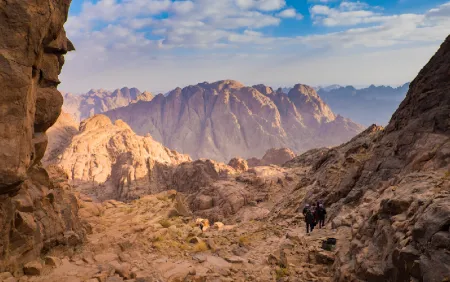
The Sinai Peninsula in northeastern Egypt spans 23,000 square miles bridging Africa and Asia. Home to Mount Sinai, 6th-century Saint Catherine's Monastery and Bedouin tribes.
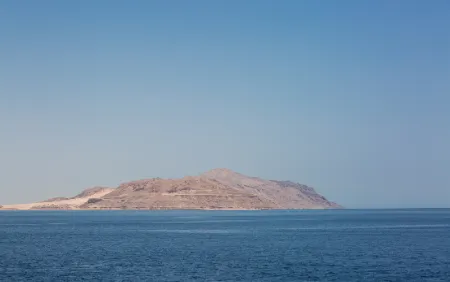
Tiran Island, 25km from Sharm El Sheik, spans 80 square kilometers with 4 legendary reef systems. Offers snorkeling tours, diving and encounters with dolphins, sharks and sea turtles.
Sharm El Naga, 40km south of Hurghada, is a Red Sea paradise rated 4.3/5. Features shore-accessible reef, 200+ coral species, sea turtles & beach resort.
Ras Mohammed, 25km from Sharm El Sheik, features 220+ coral species, Magic Lake, rare mangroves & Earthquake Crack. Rated 4.6/5 stars.
Nuweiba features 15km coastline, 70km south of Taba. Offers Bedouin camps, pristine beaches, Colored Canyon & eco-friendly lodges.
Naama Bay Sharm El Sheik—vibrant nightlife with promenade sunset walks, Egyptian dining, belly dancing shows, shisha cafés, night diving & Casino Royale.
Moses Springs in Pinnacles National Park is a 2.4-mile trail with talus caves, California condors, Bear Gulch Reservoir & volcanic cliffs.
Giftun Island near Hurghada features 6 beaches including Orange Bay, 196 coral species & 1,000+ fish species. Egypt's first marine park since 1986.
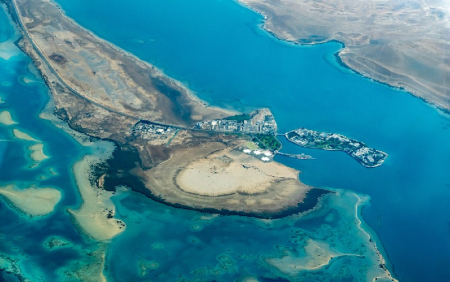
Soma Bay is a gated peninsula 45km from Hurghada with 6 luxury hotels, 20 dive sites & 300-day kitesurfing. Hurghada offers vibrant city culture.
St Anthony Monastery in Egyptian desert is the world's oldest, inhabited 2,000 years. Built 356 AD with 4th-century cells beneath glass flooring.
St Paul's Monastery, founded 4th century, houses the cave where Paul of Thebes lived from 250 AD. Features natural spring flowing 4 cubic meters daily and 500 active monks.